

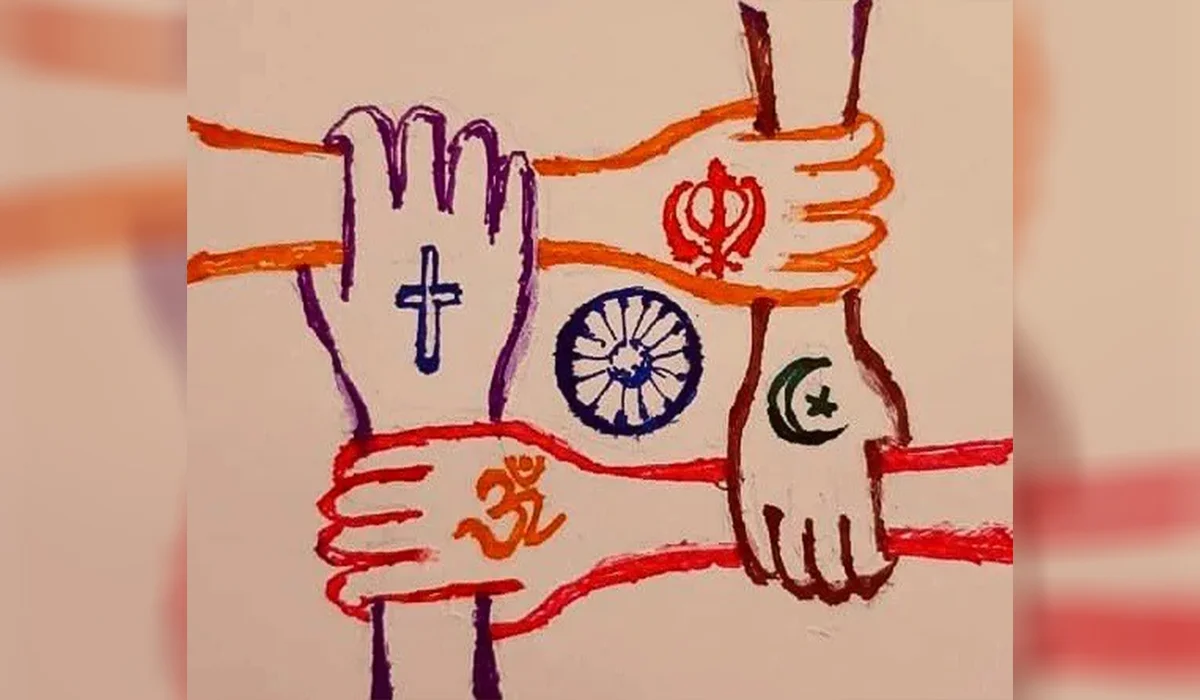

“He used to worship idols like a true devotee. When he was sick, he would ask me to do all the work of bathing the idols in the morning, dressing them, and offering them flowers, sweets, incense sticks, etc. At such times (during illness), his bed would be brought near the idols, and he would sing bhajans as needed. From the deep feeling and regularity with which he used to worship them, I drew a clear conclusion that he was a staunch idol worshipper. But now this fact raises doubts in my mind because he used to recite the Sikh banis Sukhmani Sahib and Rehras Sahib with such regularity and deep feeling in the morning and evening.”
These words are from the memoirs of Ruchi Ram Sahni (1863-1948), a famous scholar, scientist, and educationist of Punjab, about his father, in the book ‘Memoirs of Ruchi Ram Sahni’ (Editor Narendra K. Sehgal, Subodh Mahanti) (page 132). The last battle of the Sikhs against the British, in which the Sikhs fought bravely but lost, and the British occupied Punjab (1849), is described by the Punjabi storyteller Shah Muhammad in his story ‘Jangnama: Singhs and Firangis’. In this story, he praises Ranjit Singh’s ‘Khalsa Raj’, describes the brotherhood of the Punjabis, and expresses his anger against the British:
Razi bahut rehnde musalmaan te hindu.
sir doha’n de utte aafat aayi.
Shah Muhammada vich Panjab de ji
kade nahi’n sii teesri zaat aayi.
Meaning – (The Muslims and Hindus who lived in peace, Disaster came upon both of them. Shah Muhammad says that, Punjab had not ever seen a third party)
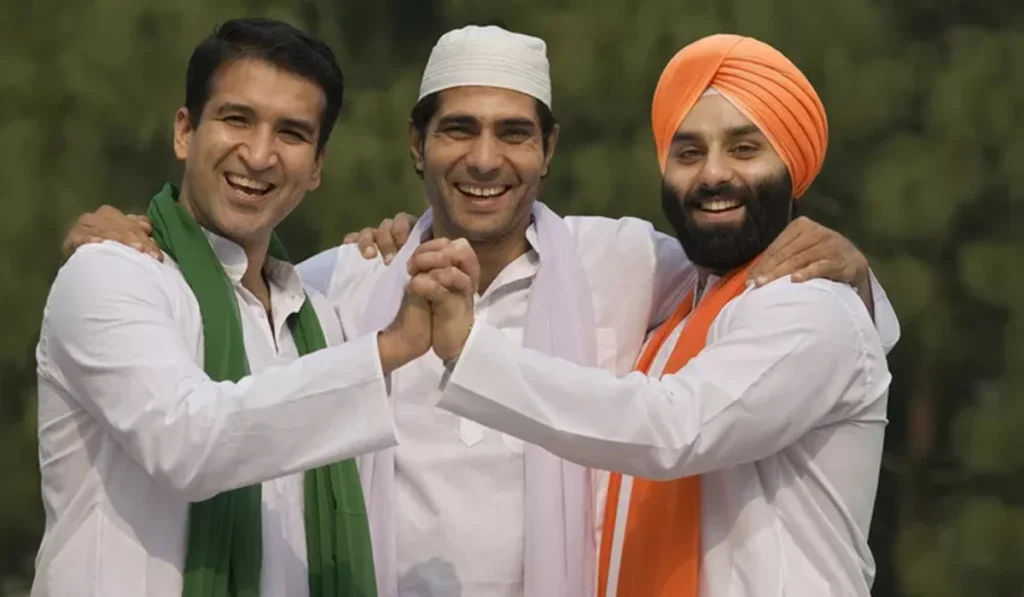
By the time the British took over Punjab, the religious practices and beliefs of the people of different religions in Punjab were so intertwined that it was difficult to distinguish between them. All this was very surprising to the British. They were astonished that thousands of Hindus would pay homage to the shrines of Muslims, and many Muslims would practice the Hindu customs and social relations of their ancestors. Sikhs and Hindus were already mixed together. This fact forced Sir Denzil Ibbetson, Superintendent of 1881 Census Operations for the Punjab region, to write a note in the Census Report saying “With the exception of caste, no other detail is as difficult or requires so much explanation as in the matter of religion…”
Later, other census officials also gave similar reports that it was difficult to collect data on religion. The number of people of different religions in the same area kept increasing or decreasing from one census to the next. Sometimes, many Hindus would call themselves Sikhs, and Sikhs would call themselves Hindus. Both would bow down at the shrines of Muslims and seek solace from Muslim fakirs. It seems as if these innocent and pure-hearted Punjabis, unaware of the boundaries of religions, were repeating the words of their common revered father, Baba Nanak: ‘Na ko Hindu na ko Musalmaan’. As if they had memorized the words of their elder Sufi Bulleh Shah:
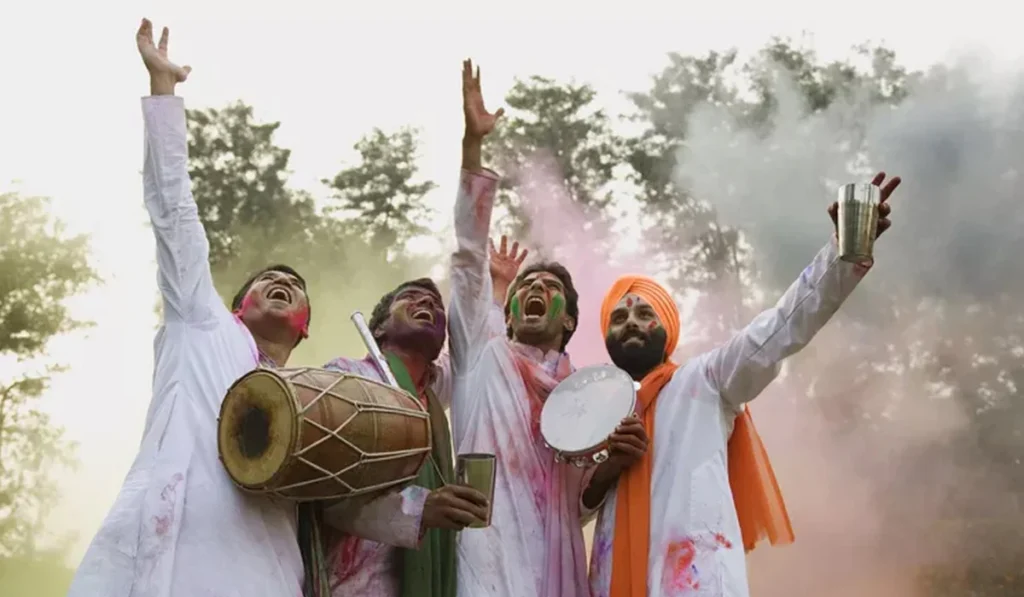
“Na main moman vich Mseeta’n, na main vich kufar diyan reeta’n
na main paaka’n vich pleeta’n , na main moosa na faraaun
Bullha ki jaane main kaun”
Meaning – (Neither am I a believer in mosques, Nor do I belong to a blasphemous cult. Neither am I a pious person among the pious, Neither am I Moses, nor Pharaoh -Who knows who I am? )
In fact, the two major intellectual revolutions of Punjab, Gurbani and Sufi ideology, conveyed the message of solidarity and love to the Punjabis. The impact of the Bhakti movement in this region attempted to free Punjab from religious fanaticism. The pro-people movements that took place in Punjab during the freedom movement, including the Ghadar movement, the Babbar Akali movement, and the socialist movement of Bhagat Singh and his companions, not only created a desire for freedom and building a new society among the people of this region but also communicated progressive ideas and the thought of secularism to fight for truth and justice. The Ghadar movement not only created a dialogue between Punjabis and the country and the world but also conveyed the message to the people to rise above religious fanaticism and unite in the fight for their rights and freedom. The poetry of the Ghadris is a living example of this:
“Khatar desh dii ladan ton khauf aawe, palan pet taaii’n puja khan wale,
hoka mazhab pakhand da paye dinde, sauda bechde jiven dukaan wale.
ulta asar painda loka’n bholiyaa’n te, jhagde chedde ved kuraan wale.
raula pawande narak suwarg wala, bachan dasde nahin giyaan wala.
Aasi’n yudh firangi naal karna, sidhe bol han sach sunan wale.
bina Gadar de hor sabh kamm jhoothe, dhokha dewande putt saitaan wale.
Meaning – (For the sake of the country, fear should come to those who worship until their stomachs are full. They spread the word of religion and hypocrisy, selling their goods like shopkeepers. The people have the opposite effect; the people of the Vedas and the Quran stir up disputes. The people of hell and heaven make noise; the people of knowledge do not speak words. We wage war with the firangi; the people of truth speak directly. All other actions without treason are false; the sons of the devil deceive.)
sanu Lod na pandta’n kaazii’n diii, nahi’n shauk hai beda gubavne da.
mandar mashida’n kise na kamm sade,chaddo khiyaal Gurudware bnavne da.
kise kamm na pothiyaan pichliia’n jo, aaiwe’n dhang sii wakht langhawne da.
japp jaap da wakht bateet hoiaa , vela aa giyaa teg uthavne da.
galla’n fokeeya’n naal na kamm hunde , wela aa gya yudh machavne da.
naam ohnan da vich jhaan raushan, jinha’n shauk shaheediyaa’n pawned a.
Meaning – (We do not need Pandits and Qazis; we do not like to sink ships. Temples and mosques are of no use to us; leave aside the thought of building Gurdwaras. The books of the past are of no use; that was just a way to pass the time. The time for chanting and singing has passed; the time has come to raise the sword. Words are of no use with empty words; the time has come to wage war. The world is illuminated by the names of those who are eager to attain martyrdom.)
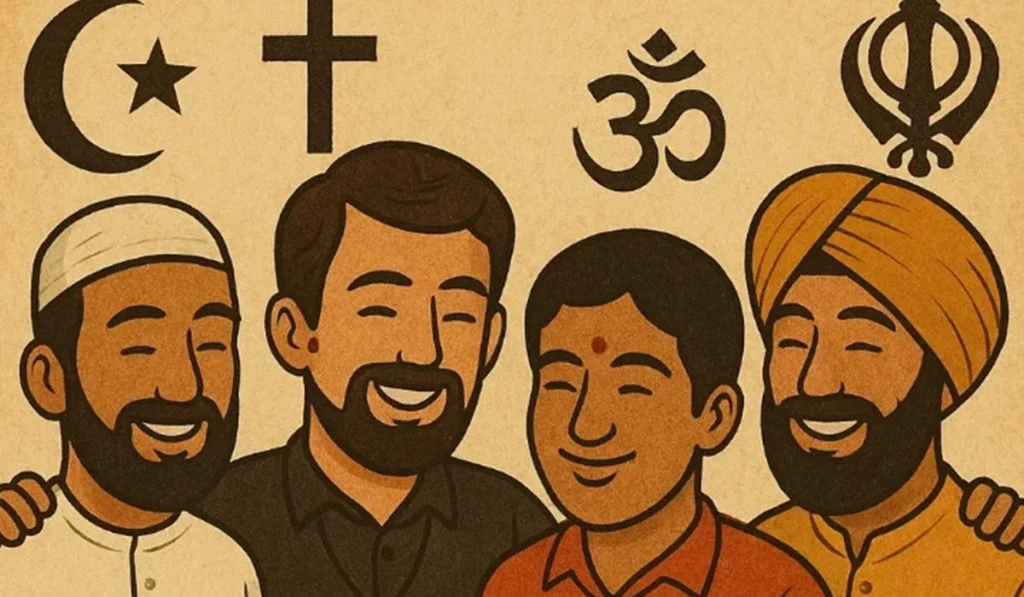
The census initiated by the British served to divide Punjabis on the basis of religion. There was a religion box that had to be filled. Based on the census, government jobs were allocated to different religions, and later, representation in assemblies was granted on the basis of religion, further strengthening these divisions. With the religious propaganda of Christian missionaries, fundamentalist movements arose among Sikhs, Hindus, and Muslims, which promoted religious purity and fanaticism. The opposition between the Singh Sabha and Arya Samajis became pronounced. This phenomenon led Punjabis to forget their heritage of communal harmony. Based on this religious hatred, the country was divided in 1947. This is a dark chapter in world history. Punjabis killed their own people and violated their own people under the sacred slogans of their religion. In this partition, more than 1 million Punjabis were killed on both sides (some figures estimate around 1.5 million), hundreds of thousands of women were raped, and 10 million Punjabis were displaced.
Yet, in this hostile atmosphere, great personalities like Gehal Singh Chhajjalwadi, Megh Singh, Suba Singh, and Sai Umru Din emerged, sacrificing their lives to save innocents from religious fanatics. The dark era of the 80s saw Punjab suffering from oppression by the state and from terrorists who committed massacres in the name of Khalistan. While the police were detaining turbaned individuals and abusing them, terrorists were pulling them off buses at gunpoint and killing those with shaved heads. Many incidents during this period shamed humanity, including the military operation on Darbar Sahib.
After the assassination of Indira Gandhi, Sikhs were massacred by fanatical non-Sikh mobs in Delhi and other parts of the country, led mainly by the Congress leaders of that time. However, the names of BJP and RSS leaders appeared in FIRs registered at various police stations in Delhi. In fact, at that time, Shaheed Bhagat Singh’s nephew Prof. Jagmohan, along with fellow human rights activists, published a booklet titled ‘Who are the Guilty?’ in which Congress leaders, as well as individuals from the BJP and RSS, were mentioned.
Nevertheless, even in this era of hatred, Punjabis attempted to preserve their brotherhood. In many villages of Punjab, Sikhs became shields for their Hindu brothers. Many precious lives were lost in the effort to protect the brotherhood of Punjab.
In reality, the communal ploy in Punjab succeeded only when the rulers of the time exploited it for their political gains. Essentially, communal harmony was evident among the people. Now the assembly elections are approaching in Punjab once again. Political parties will play the card of religion and caste once more. Punjabis must reflect on whether to embrace their heritage of Gurus, Sufis, Bhagat Singh, and Kartar Sarabha or fall victim to the dirty politics of clever politicians or political parties, thereby harming themselves and Punjabiyat. Regardless of the designs of political parties, the heritage of great commonality always has the power to guide.

Leave a Comment