
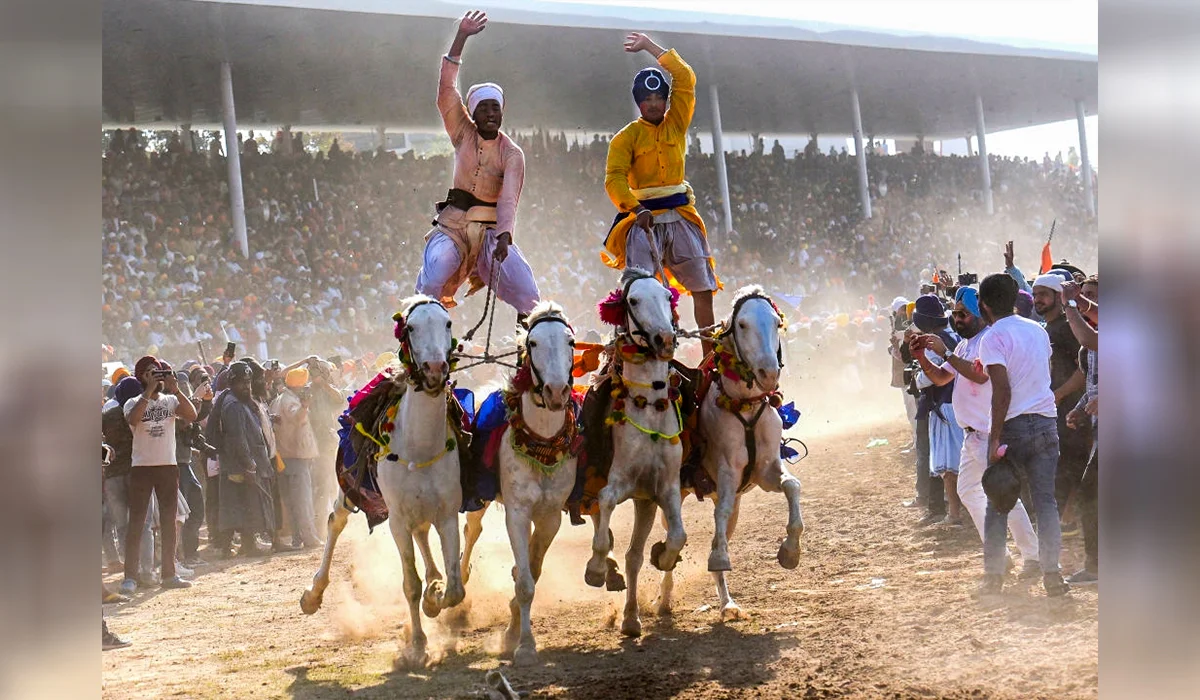

In our country, many festivals are celebrated in connection with different seasons, as well as religious and historical events. Among them is the festival of Holi. While Holi is linked to seasonal change and the arrival of spring, it is also deeply connected to people’s faith, religion, and mythology. Holi is a festival that is celebrated across the country in one form or another by people of different communities and backgrounds.
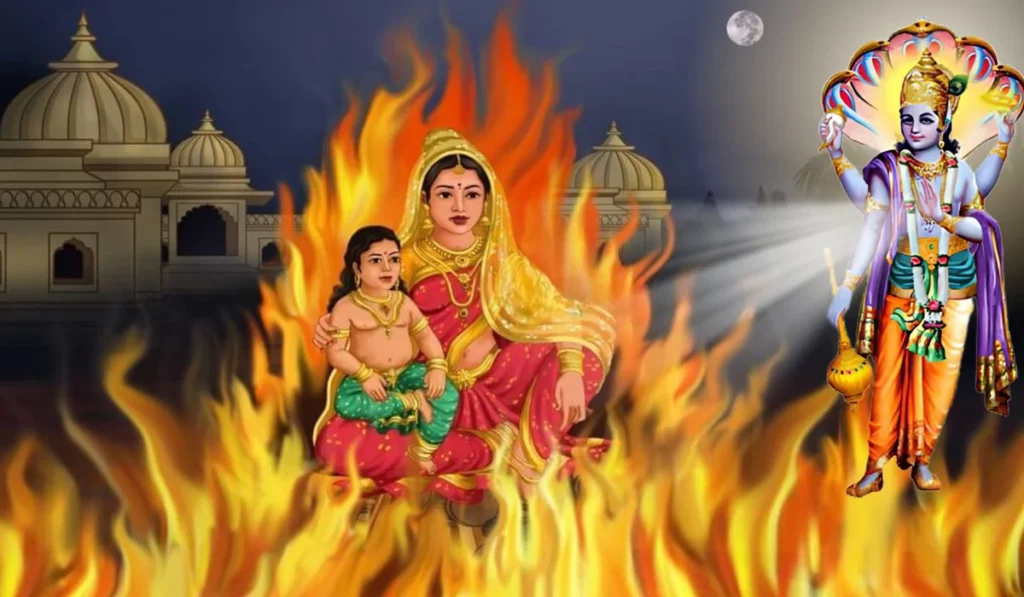
Observing the changing and, at times, deteriorating form of Holi, the Tenth Sikh Guru, Sri Guru Gobind Singh Ji Maharaj, transformed it into Hola Mohalla. Even today, Hola Mohalla is celebrated by Sikhs with great enthusiasm and Khalsa grandeur. While Holi is associated with the story of Hiranyakashipu and the devotee Prahlad, Hola Mohalla stands as a symbol of the martial wisdom and vision of Sri Guru Gobind Singh Ji.
Let us briefly reflect on both these festivals.
The Mythological Background of Holi
According to a well-known mythological story, there was once a cruel king named Hiranyakashipu. His arrogance grew so extreme that he began declaring himself to be God. However, his own son, Prahlad, remained devoted to the Divine and refused to worship his father. Enraged by this defiance, Hiranyakashipu decided to have his son killed.
He entrusted this task to his sister Holika, who had received a boon that fire could not burn her. Following her brother’s command, Holika sat in a blazing fire with Prahlad in her lap. However, she was reduced to ashes, while Prahlad was miraculously saved by divine grace.
Regarding Hiranyakashipu, Sri Guru Amar Das Ji says in his bani:
Dust sabha meh mantar pakaiaa.
Prahlad ka raakha hoi Raghuraiaa.
Haath kharag kar dhaaiaa ati ahankaar.
Har tera kaha tuj le ubaar.
Khin meh bhaiaan roop nikasiaa thamm upaad.
Harnaakhas nakhee bidaariaa Prahlad leaa ubaar.
Sant janaa ke Har jeeo kaaraj savaare.
Prahlad jan ke ikeeh kul udhaare.
Gur kai sabad haumai bikh maare.
Nanak Ram naam sant nistaare.
Even today, Holika Dahan is observed across the country, and Holi is celebrated by throwing colors at one another. According to the myth, the Divine later appeared in the form of Narasimha, half-lion and half-man, and destroyed Hiranyakashipu. The father who plotted so elaborately to kill his own son is remembered as a tyrant, while Prahlad continues to be revered as a supreme devotee in the hearts of people.
The Beginning of Hola Mohalla
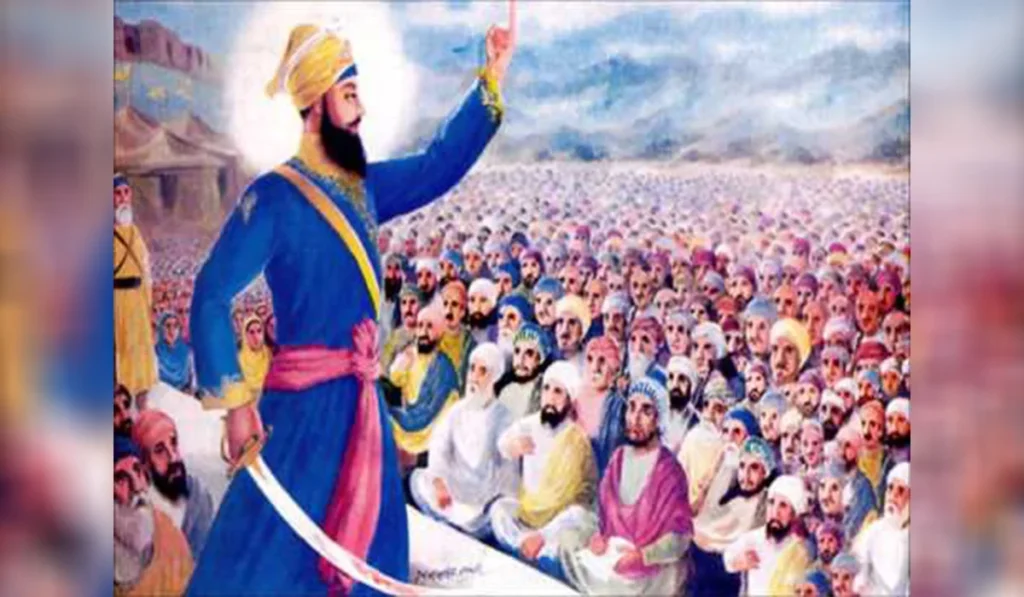
The Tenth Sikh Guru, Sri Guru Gobind Singh Ji Maharaj, sought to instill new courage and spirit into people who had been crushed under tyranny and oppression. In 1699 CE, he established the Khalsa Panth. Shortly thereafter, instead of celebrating Holi in its conventional manner, he introduced the tradition of Hola Mohalla.
Near Sri Anandpur Sahib, in an open field close to a village named Agampur, the Guru invited people to gather. This took place on the day following Holi. Addressing the Sikhs, the Guru declared that the time had come to stand firmly against injustice and oppression.
To inspire bravery and martial spirit, he divided the Sikh warriors into two groups and encouraged them to participate in horse riding, spear fighting, swordsmanship, Gatka, and wrestling. The Sikhs were trained to carry out mock attacks against one another as part of military practice. The Guru awarded prizes to the victors and directed that this festival be observed permanently.
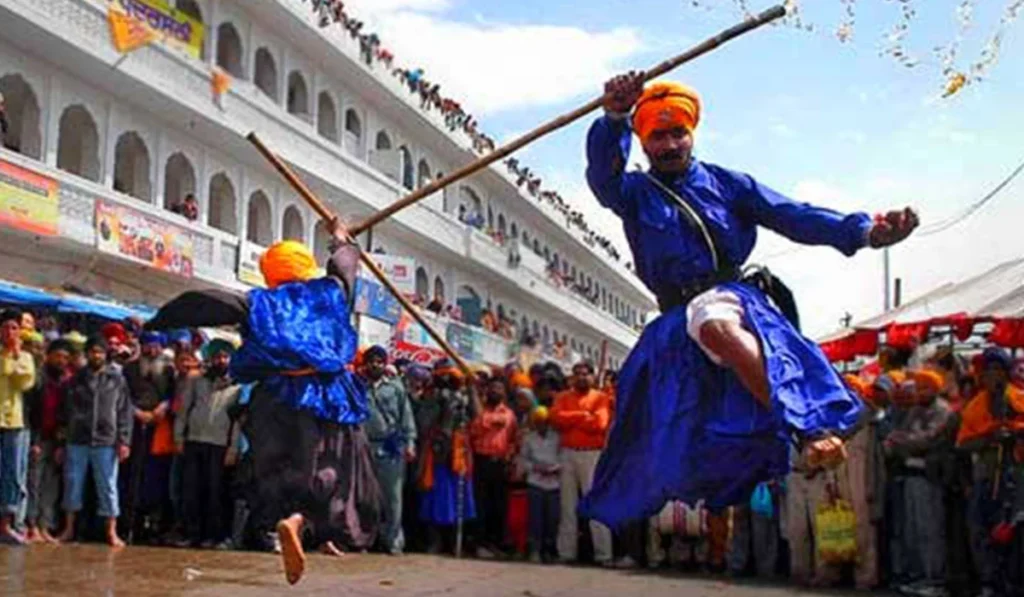
Even today, following the ancient tradition, Sikhs organize a three-day kirtan congregation at Sri Kiratpur Sahib. Thereafter, with great splendor, they proceed on horseback from Sri Anandpur Sahib to Qila Holgarh, where Hola Mohalla is celebrated with vigor. Gulal is thrown, flowers are showered, and displays of martial skill are performed. In this way, Hola Mohalla has become world-renowned.
Holi in Sikh Devotional Spirit
Sri Guru Arjan Dev Ji Maharaj also describes Holi in Raag Basant:
Aaj hamaare bane phaag.
Prabh sangi mil khelan laag.
Holi keeni sant sev.
Rang laga ati laal dev.
Man tan maulio ati anoop.
Sookai naahee chhaav dhoop.
Through this spiritual lens, Holi is seen not merely as a festival of colors, but as a celebration of divine love and spiritual blossoming.
Leave a Comment