
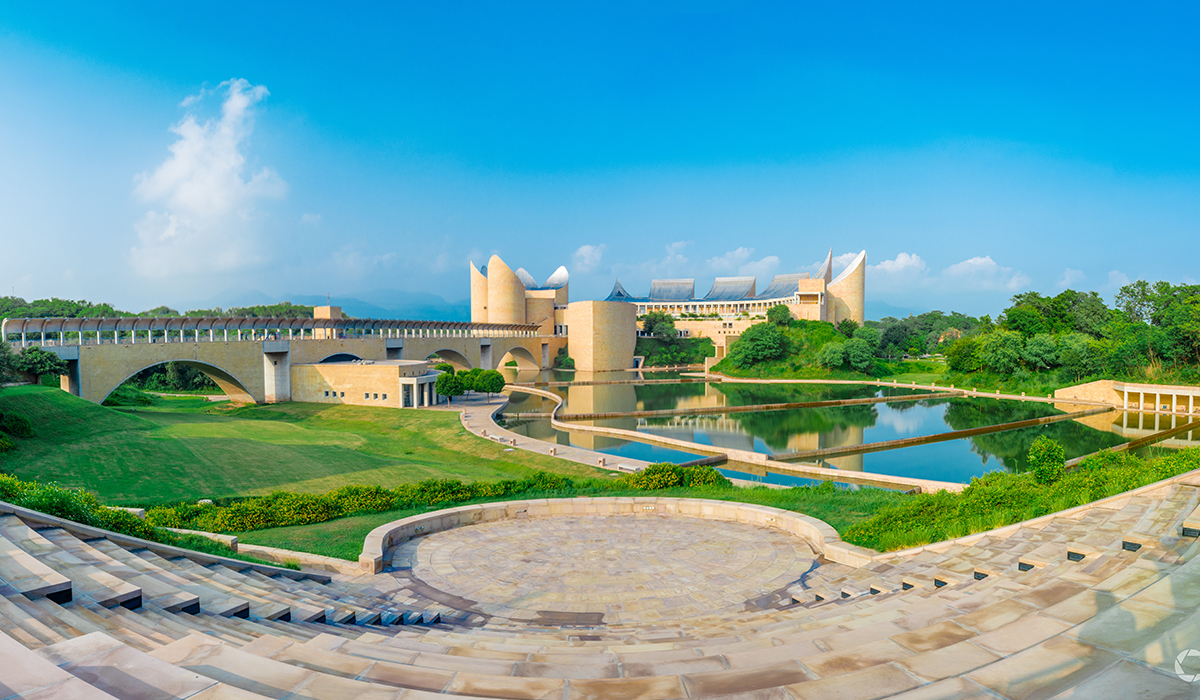

Takht Sri Anandpur Sahib, the place where Guru Gobind Singh Ji laid the foundation of the Khalsa Panth, where the Panj Pyare were baptized and made the Guru’s Singh, the museum “Virasat-e-Khalsa” has been built on the land of Sri Anandpur Sahib.
“Virasat-e-Khalsa” is one of the most visited museums in India. On December 6, 2011, 20,000 people visited “Virasat-e-Khalsa” in a single day, which is still a record today, “Virasat-e-Khalsa” has been built near Gurudwara Takht Sri Keshgarh Sahib.
Foundation Stone and History
The foundation stone of “Virasat-e-Khalsa” was laid in the year 1999 to celebrate the 300th anniversary of the Khalsa Panth. The main objective of building it was to commemorate the 550-year history of Sikhism and the historic moment of the 300th anniversary of the formation of the Khalsa Panth, so that future generations can be aware of the proud history of Punjab and Sikhism and its importance.
The complex was built between 2004 and 2011 and “Virasat-e-Khalsa” was opened to the general public on 25 November 2011. The event was inaugurated by the then Chief Minister of Punjab “Sardar Parkash Singh Badal”.
Architect and Structure
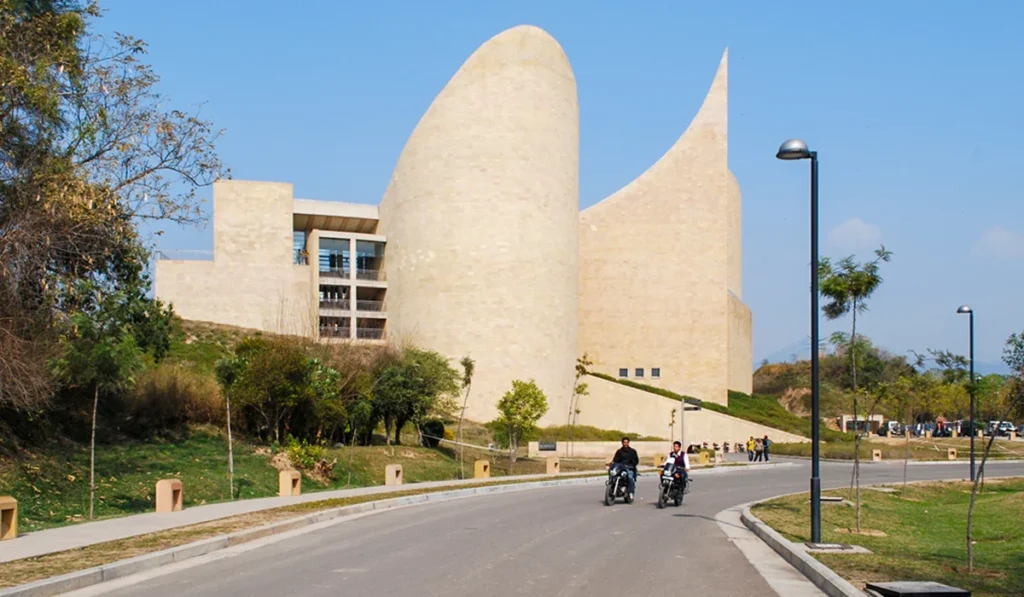
“Virasat-e-Khalsa” was designed by the world-renowned Canadian-Israeli architect Moshe Safdie. The building of the complex is mainly divided into two parts.
i. Museum/Exhibition Block (East Complex)
ii. Library, Archives and Auditorium Block (West Complex)
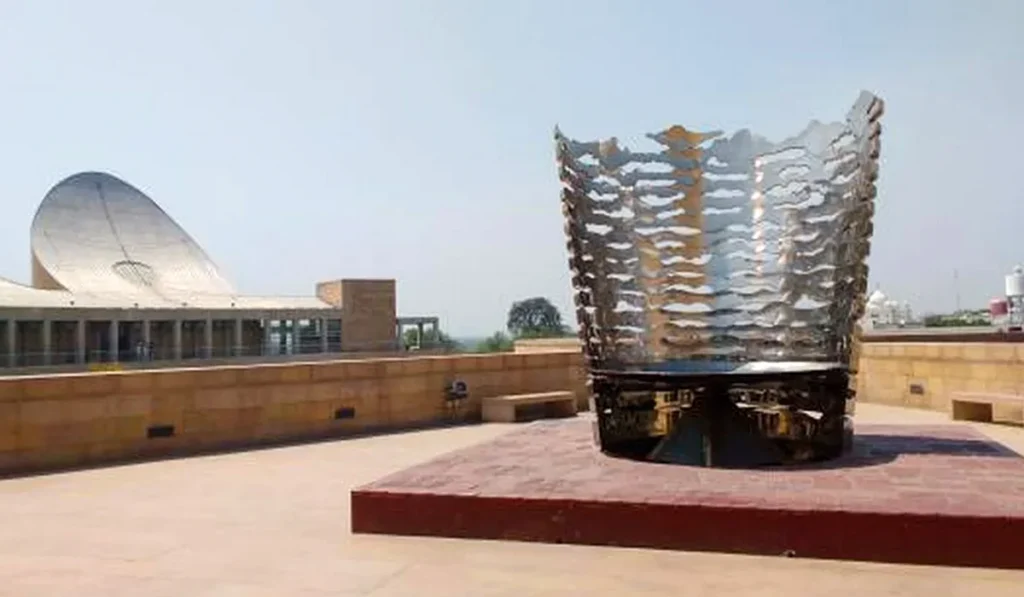
These two sections are connected by a footbridge, the design is inspired by the Shivalik Mountains, the outline of the building (especially the tower-like structure of the East Complex) is designed in such a way that they reflect the undulating slopes of the hills behind, making the building feel as if it has grown out of the site itself.
This bridge connecting the two complexes symbolizes the continuous journey of Sikhism and Punjab from ancient times to the modern era. There are large water pools around the building which represent the influence of “water” (water element) in Sikh spirituality. Along with this, these water pools also work to reduce the heat in the complex. The complex uses earthy tones of concrete, angled stainless steel roofs and natural light in places. During the day, the mood of each gallery changes according to the direction of the sunlight. This is called the “Dynamic lighting effect”. The light inside the complex changes according to the sunlight and gives a lively look to the galleries and sculptures. Its theme is ‘experience-based storytelling’, meaning listening to a story that is felt, as if you are watching the history happening before your eyes.
Theme and Inspiration –
Two Open Hands:
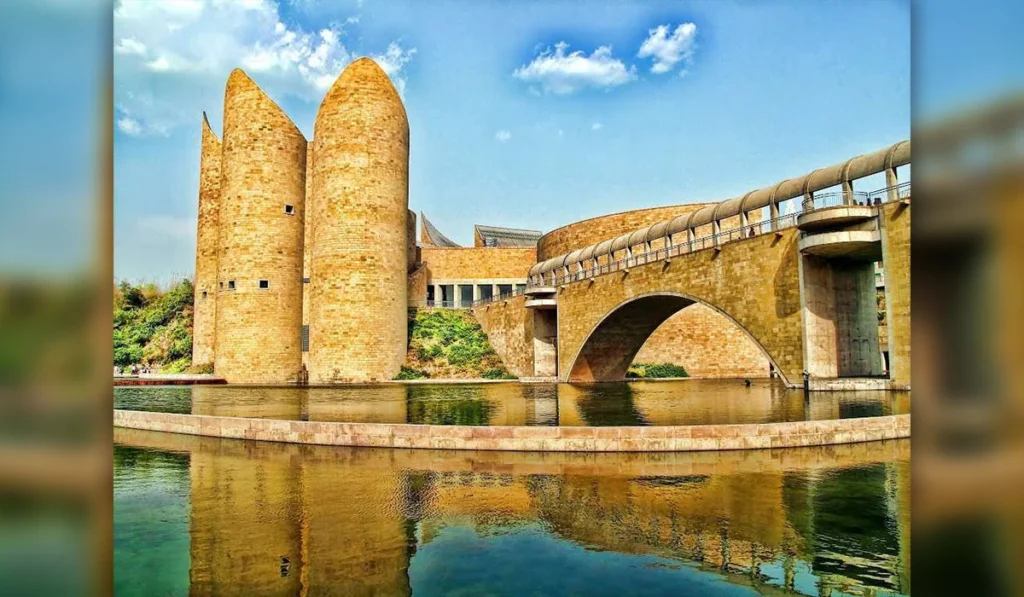
The two parts of the complex (East and West) are located opposite each other and connected by a ceremonial bridge, reflecting the fundamental principles of Sikhism – ‘Seva’ (selfless service) and sharing.
Fort Style:
The galleries of the East Complex are inspired by the architecture of the regional forts of Punjab. The sandstone tower-like structures are reminiscent of the historic fortifications of Anandpur Sahib.
Panj Kakkar/Panj Tat:
The towers of the main museum of the East Complex are divided into five groups, symbolizing the Panj Kakkar or Five Virtues of Sikhism.
What are the Galleries? Overview
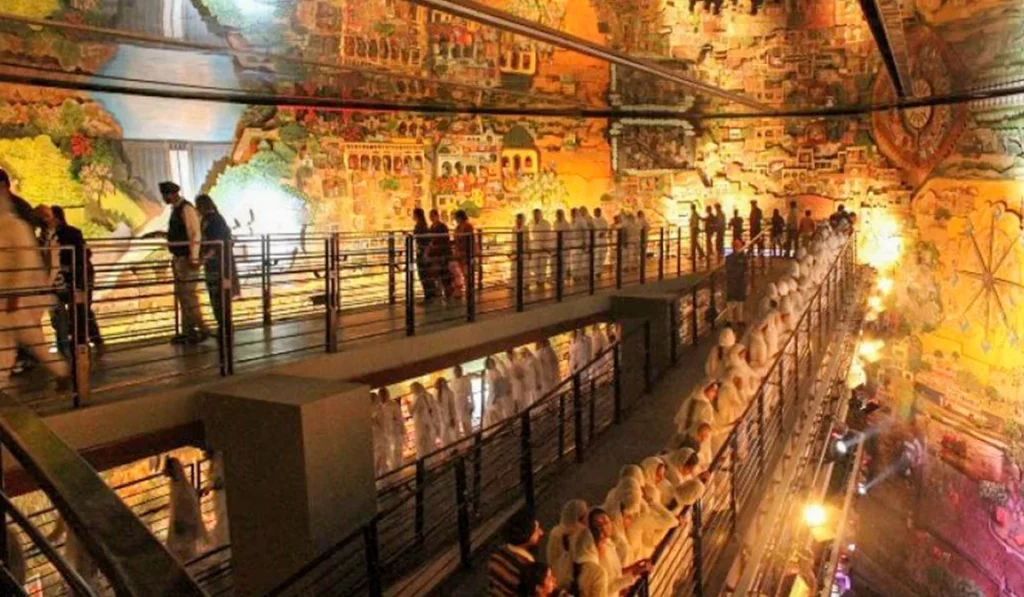
Virasat-e-Khalsa has a total of 27 exhibition galleries, which are mainly divided into two complexes: the Boat Building (Western Complex) and the Moon/Flower Building (Eastern Complex Tower).
Western Complex (Library, Archives and Auditorium Block) –
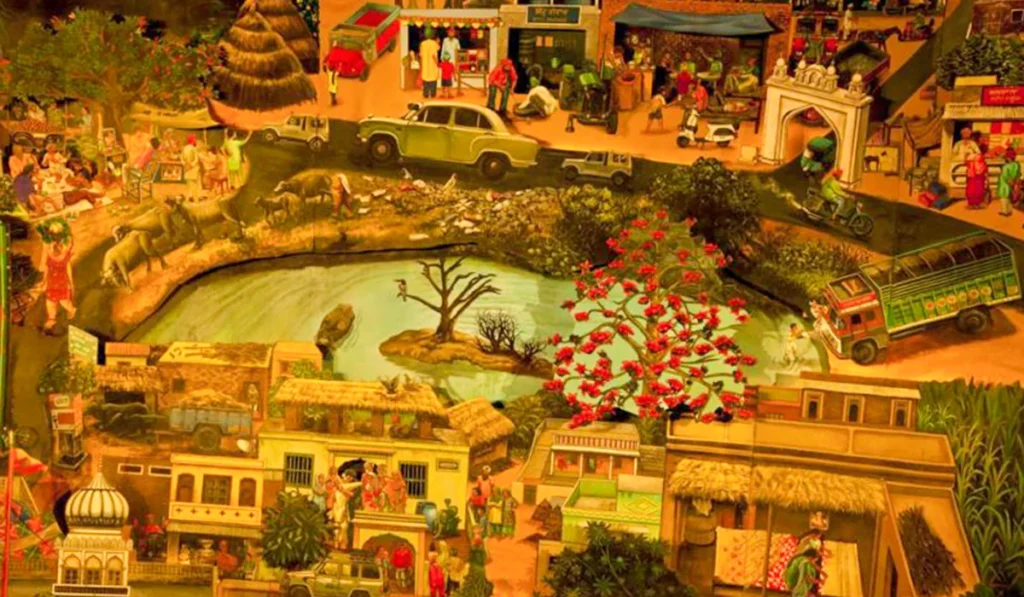
This is the part from where the journey begins, it depicts Punjab before the formation of the Khalsa Panth, this part is often called the ‘Boat Building’, which feels like floating on a pool of reflecting water, the main attraction of this place is India’s largest hand-painted 360-degree mural, which is spread over three floors, the mural depicts rural and urban life of Punjab. It includes natural landscapes, Punjabi seasons, fields, five rivers (Panj Aab) and fauna, along with cultural scenes such as fairs, Teej, Baisakhi, wedding ceremonies, folk dances (Bhangra, Giddha), etc. The mural uses over 24,000 meters of fiber optics to present 3D effects and lighting artwork, making it seem as if all the scenes are breathing, i.e. alive.
Entrance and ‘Panj Paani’ (Boat Building)
The journey of “Viraasat-e-Khalsa” first begins from the Preface Gallery, where the visitors are given a map of the entire museum through a beautiful and engaging film presentation. Here, sitting in a large theater-like hall, people are introduced to the history of Punjab, the foundation of Sikhism, and what stories they are going to get through the galleries ahead. All this is seen in an exciting way, the aim of this gallery is to prepare the mind and attention of the viewer, so that they can feel the experience ahead with better effect, along with the visual projection, audio narration and modern lighting used in it create a wonderful atmosphere.
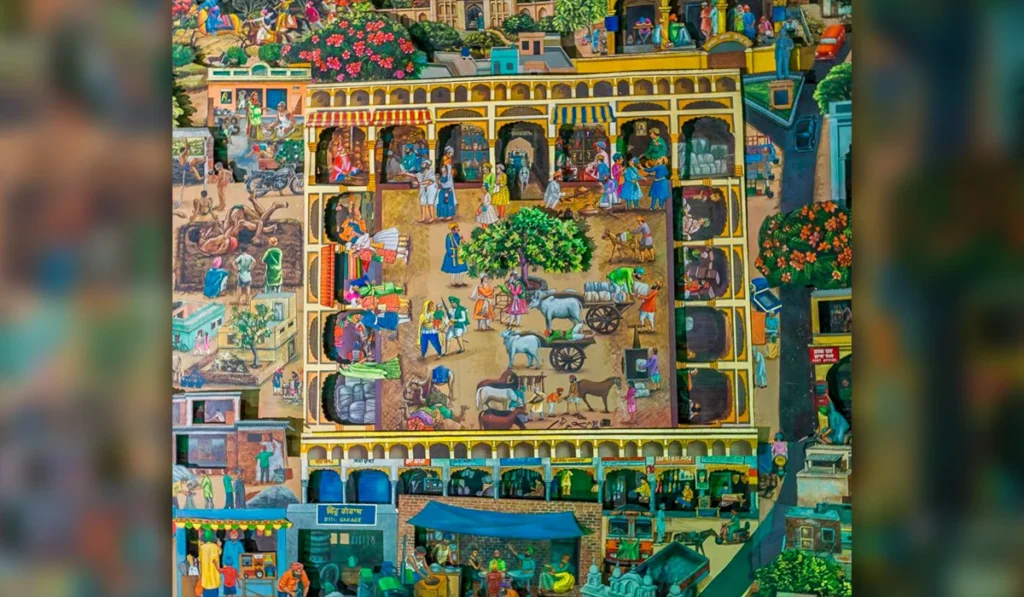
Gallery of Ancient Punjab
This gallery shows the civilization of Punjab that inhabited this land thousands of years ago, entering it, it feels as if the people of the ancient Indus Valley have come alive and stood in front of you. The 3D scenes of clay houses, clay pots, handmade tools and old villages have been created with great care, in which the rituals and daily life of the people of that time have been presented in a very commendable manner. Natural lighting and natural sound effects of the villages of Punjab make this gallery absolutely lively, as if the viewer has come back thousands of years ago.
Rural Life Gallery
This gallery presents a soft, beautiful and authentic look at the villages of old Punjab. The gallery has scenes that give a sense of reality, such as a mill spinning inside a house, village women churning milk, bullock carts running, and glimpses of Punjabi festivals. This whole atmosphere, combined with impressive lighting and folk music, creates a world that embraces the Punjabi of today.
Eastern Complex – Historical Tower (Phul/Chand Mridham) –
This is the main museum, where important events of Sikh history are depicted. Here, galleries 9-11 are called ‘Phul Mridham’ and galleries 12-27 are called ‘Chand Mridham’.
Galleries related to the Ten Gurus –
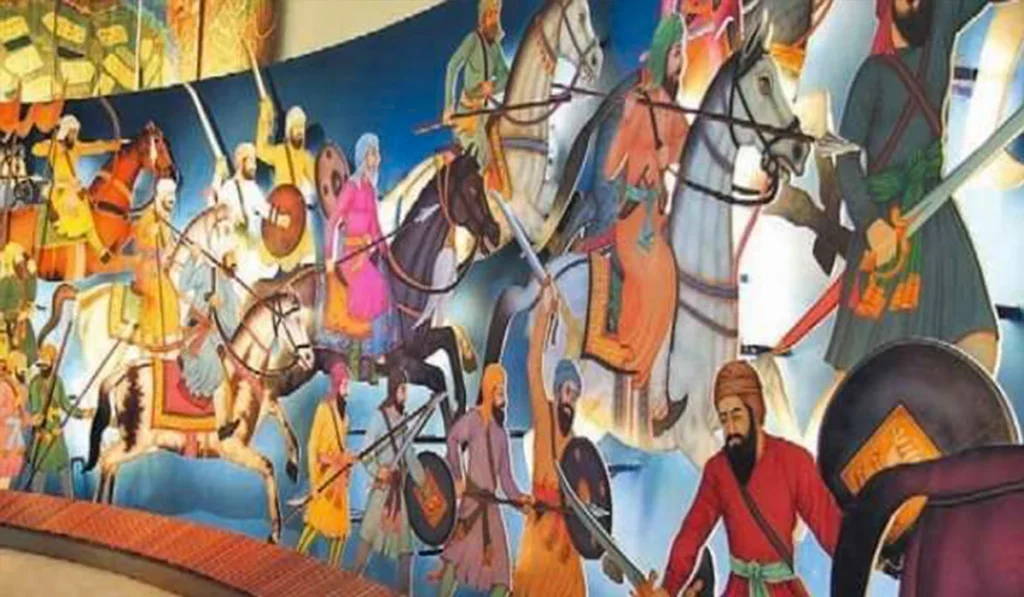
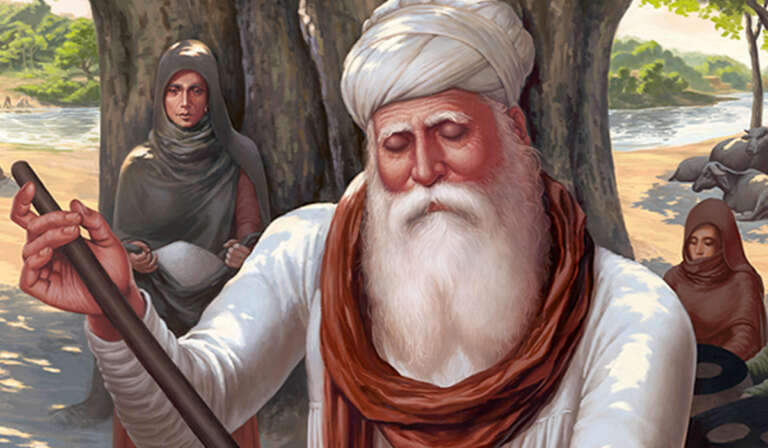
Gallery 9 creates a spiritual experience dedicated to the sacred life of Guru Nanak Dev Ji. In this, the composition of the four Udasis of Guru Nanak Dev Ji is presented through large and beautiful video scenes. While looking at the life of the Guru Sahib, you will hear the lines of Gurbani playing slowly, which makes the experience of this gallery even more peaceful. This gallery does not just show history, but also instills the spiritual message of the Gurus directly in the mind of the viewer.
In these galleries of the ten Gurus, important events in the life of each Guru Sahib are presented with large murals, 3D models, impressive lighting and realistic sound effects. Along with this, Gallery 12 beautifully presents the concept of Miri-Piri of Sri Guru Hargobind Sahib Ji, the establishment of Akal Takht and the release from the Gwalior Fort. Gallery 13 gives a glimpse of the lives of Guru Har Rai Ji and Sri Guru Har Krishan Ji. In Gallery 14 (Hind Di Chadar), the life of Sri Guru Tegh Bahadur Ji, his protection of Kashmiri Pandits and his supreme sacrifice at Chandni Chowk (Delhi) are depicted through emotional dioramas.
In these galleries of the ten Gurus, from the creation of the Gurmukhi script by Guru Angad Dev Ji, the creation of Sri Harmandir Sahib by Guru Arjan Dev Ji, the emotional scene of the martyrdom of the Guru Sahib at Tatti Tawi, the thinking of Miri-Piri of Guru Hargobind Ji, the martyrdom of Guru Tegh Bahadur Ji, and the entire life journey of Guru Gobind Singh Ji to the Sikh state, each major event is presented as a continuous story. This gallery seems to revive Sikh history.
Creation of the Khalsa Panth and the martyrdom of the Sahibzadas –
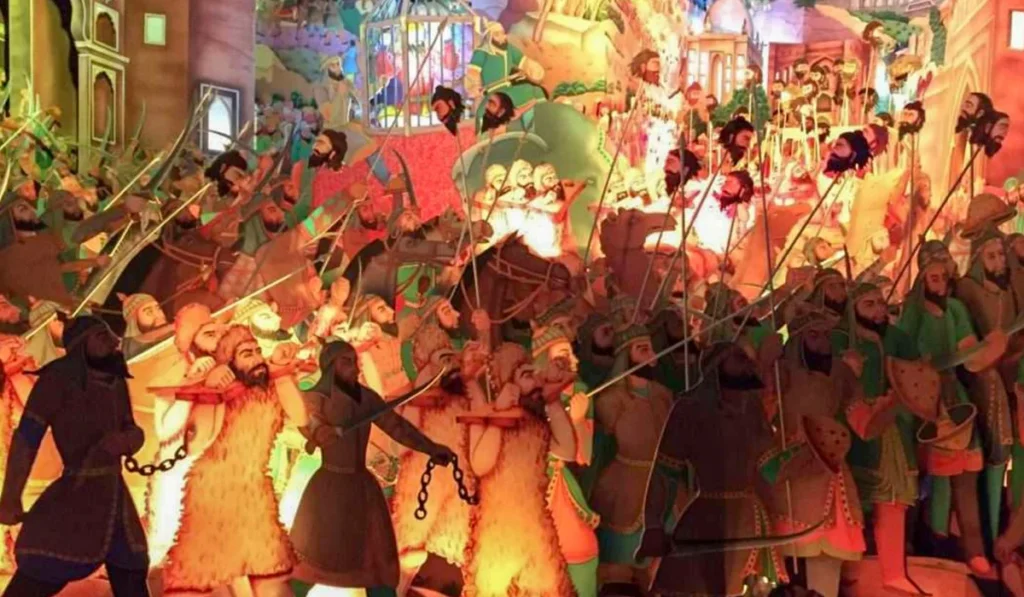
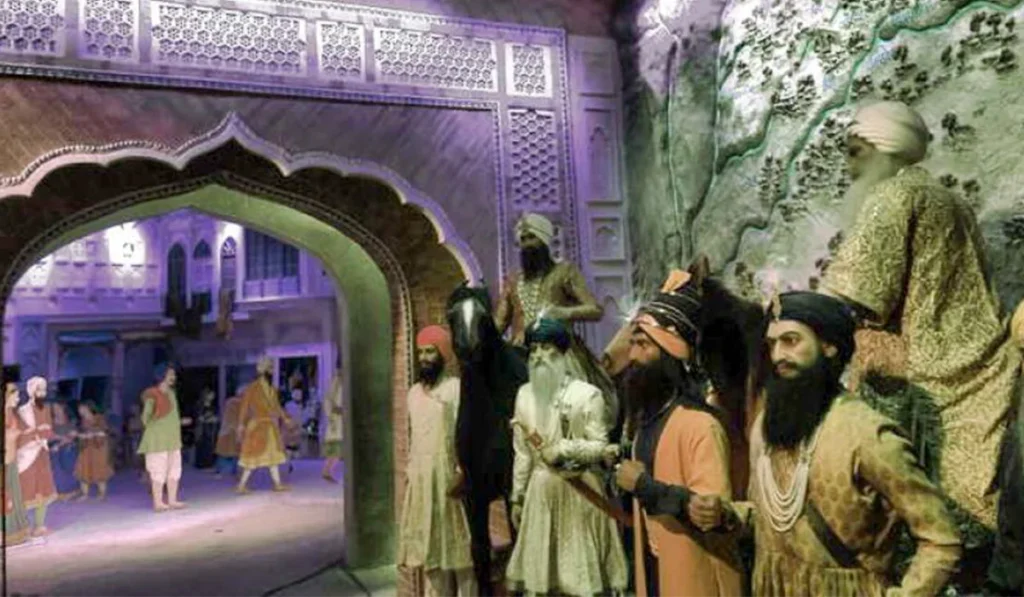
Here, the court of Guru Gobind Singh Ji has been recreated in Anandpur Sahib, where poets, warriors, scholars and political envoys used to come and attend. The atmosphere of the court, the models of weapons, the presence of warriors have been depicted in a very impressive and profound way. This gallery presents a picture of Guru Gobind Singh Ji’s strong leadership and creative knowledge. Gallery 16 here is the most impressive and soul-stirring place in the entire museum. Here, the entire scene of Vaisakhi 1699 has been recreated like reality, where Guru Gobind Singh Ji called the Panj Pyares and created the Khalsa Panth. Immersive sound, lighting and 3D modeling make this gallery absolutely lively and emotional. The viewer feels himself standing at the time and place where history was being created.
Apart from this, the gallery of Sahibzadas has beautifully depicted the battles, bravery and sacrifice of Guru Sahib’s Sahibzadas. The gallery of martyrdom of Sahibzadas is the most emotional gallery of the museum. The martyrdom of the elder and younger Sahibzadas in Chamkaur Sahib and Fatehgarh Sahib (Sirhand) has been depicted in such a way that the heart of the viewer is moved. The cool and solemn lighting, the slow-moving story narration and the depth of the scenes make this gallery a spiritual experience. This gallery does not only show martyrdom but also explains the meaning of truth, courage, religion, sacrifice and passion.
Khalsa Raj and Struggle –
These galleries depict the political, military and social history of the Khalsa Panth since its birth. Galleries 17-20 depict the establishment of the Khalsa Raj under the leadership of Baba Banda Singh Bahadur, the conquest of Sirhind, and the tragic struggle of the Sikhs with the Mughal rulers. It also depicts the great sacrifices (martyrs) of the Sikhs and scenes of small and big massacres.
The whole story of how the Sikh community divided into different misls after the Gurus and then reunited is seen in this gallery. The areas of the misls, main leaders, routes of battles, maps and 3D models of historical events are the specialty of this gallery.
Galleries 21-24 depict the rise and expansion of the Sikh empire under Maharaja Ranjit Singh, making Lahore the capital, social reforms, and the modernization of the Fauj-e-Khas (Special Army). The greatness of Sher-e-Punjab and the cultural scene of his court are well seen here.
This gallery depicts the glory of the golden age of Punjab, by seeing the large model of the Lahore Darbar built here and the 3D models of the memories of the Sikh kingdom, the viewer realizes how the Sikh Empire was born as a great power.
Modern Punjab Gallery
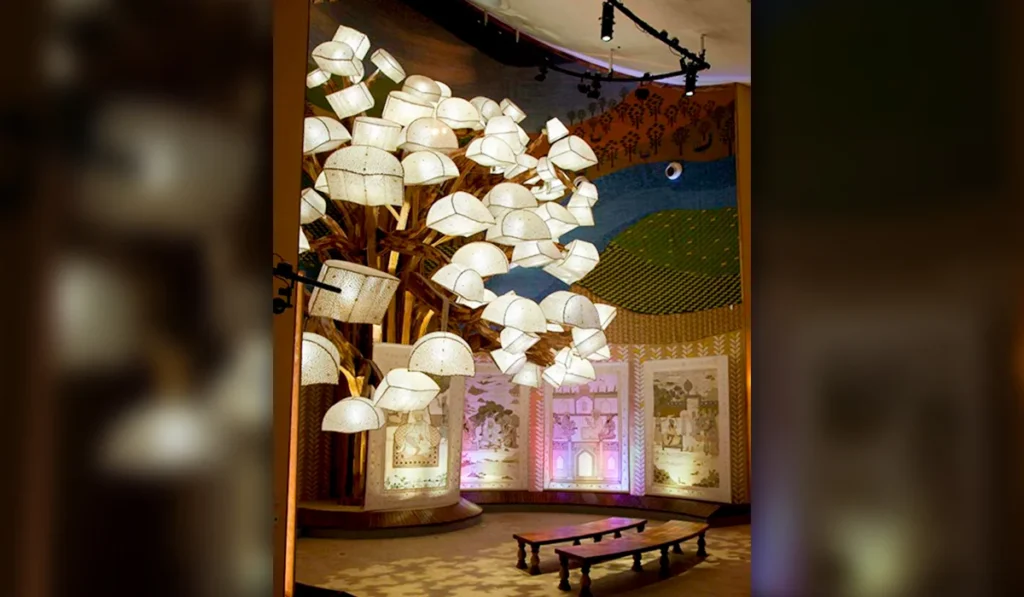
This gallery depicts the story of the new era of Punjab, from the partition of Punjab in 1947 to the Punjabi Suba Morcha, Punjabi language movement, agricultural development, folk art, music, dress and modern culture, this gallery tells how Punjab changed and strengthened itself over time…
However, it is not possible to describe each gallery of “Virasat-e-Khalsa” and the experience felt there in a few words. Therefore, only some of the main galleries have been mentioned above, and the information about each gallery is given briefly. Because in the complex of “Virasat-e-Khalsa” spread over about 100 acres, you will find each gallery very large and full of information. Each gallery offers a very different experience, and the galleries make you feel like you are stepping back in time and seeing history unfold before your eyes.
Technical Features and Visitor Experience –
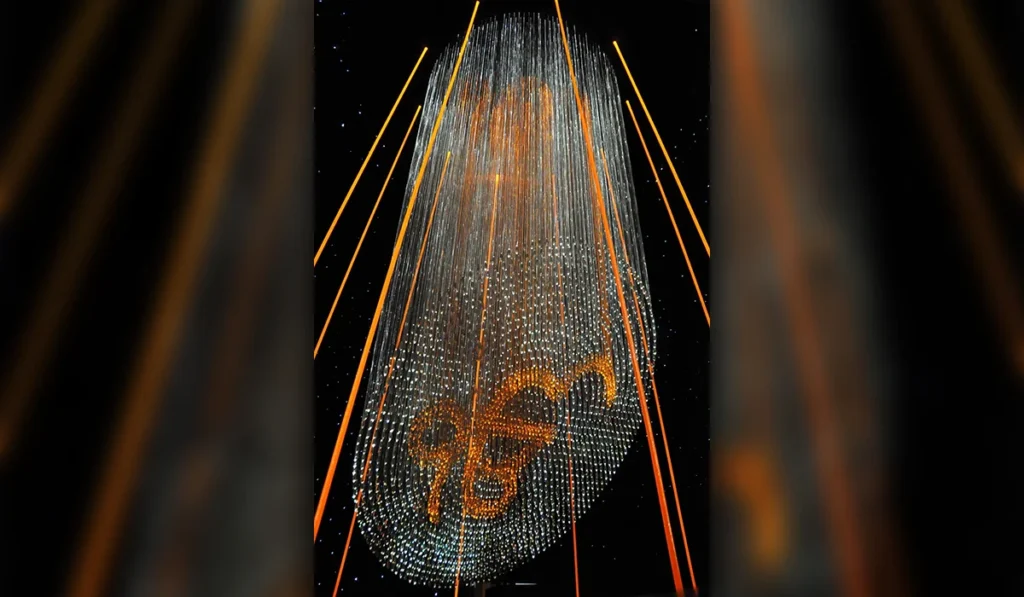
Most historical events are depicted through life-size dioramas, where human figures are dressed in historical costumes and weapons. The galleries use automatically playing films, 3D projections, and special sound effects to make history come alive and impactful.
Audio guides in Punjabi, Hindi, and English are available for visitors, which are automatically activated upon entering the galleries. The visitor gets a continuous tour of 2–3 hours. The atmosphere of the complex is very peaceful, with water pools outside, high-quality visuals inside, soothing music, and a large open area making it a spiritual experience. Lighting has been used meticulously to highlight the artwork and exhibits, and to create an emotional atmosphere. Safdie’s design uses the mood of natural and unnatural light in such a way that the atmosphere of the different volumes can be created.
It usually takes 3 to 4 hours to see the entire museum, there is no ticket required to see “Virasat-e-Khalsa”.
Need and importance of publicity
The extremely beautiful complex of “Virasat-e-Khalsa” not only makes you aware of history but also makes you feel every historical event to the soul, coming here you feel an emotional, spiritual, enthusiastic, proud of your history in every way.
Many people are still unaware of this museum i.e. “Virasat-e-Khalsa”, which is built with extremely high-level technology and bears witness to the history of Punjab and Sikhism. There is a need to spread awareness about it, so that the people of Punjab, today’s young generation and the coming generations of Punjab can know, see, feel their history and be proud of their heritage.
People should look at their history, understand it, know their duties towards it, try to elevate their lives, try to take inspiration from their history and make changes in their lives, make their lives better and connect with the Guru, so that the great history of Sikhism and Punjab continues to be spoken by the tongues of many generations to come.
So that the heirs of the land of five rivers can always keep “Sikhism-Punjab-Punjabiat” in the forefront and protect their existence, identity, history well….

Leave a Comment