
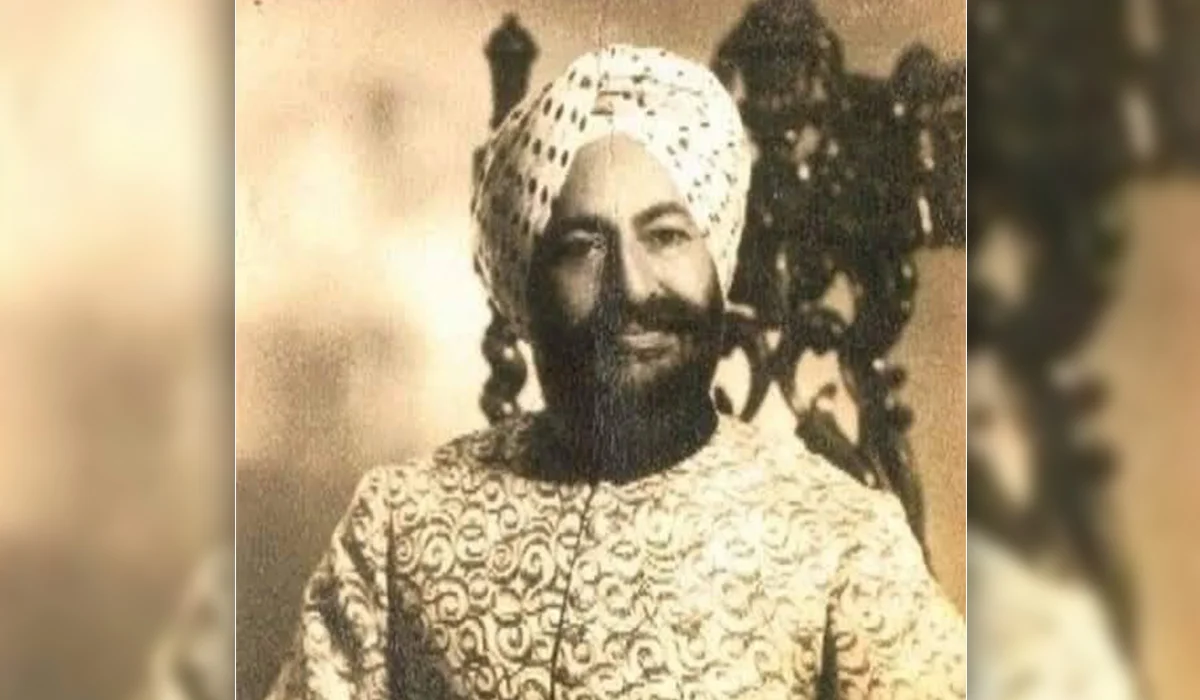

The landscape of Urdu poetry is filled with many voices. Some voices thunder—loud, powerful, and unforgettable. But Kunwar Mahinder Singh Bedi ‘Sehar’ was like the gentle light of dawn in this vast expanse. He did not raise his voice; his words did not divide, but instead healed broken hearts.
Born on March 9, 1909, in Chak Bedi, District Montgomery, Punjab (now in Pakistan), Sehar grew up in a land rich with folklore, Sufi songs, and the warmth of shared living. His pen name, Sehar, meaning “the light of dawn,” was more than just a name. It seemed as if destiny had foretold that one day his poetry would become a ray of hope in times of despair.
Hum un ke sitam ko bhi karam jaan rahe hain
Aur wo hain ki is par bhi bura maan rahe hain
But history had something else in store. The Partition of 1947 tore Punjab apart, shattering families, friendships, and centuries-old shared culture. Sehar and his family were forced to leave their ancestral land and rebuild their lives in Fazilka, India. This wound of displacement left a deep mark on him.
Unlike poets who only imagined pain, Sehar lived it. He transformed that loss into poetry, which is why millions of displaced and broken people saw their own reflection in his verses.
Muskuraana kabhi na raas aaya
Har hansi ek vardaan bani
For him, poetry was not an ornament of language—it was a mirror of human emotions. And in that mirror, Sehar ensured that every reader, whether Hindu, Muslim, Sikh, or Christian, could see themselves.
Shaped by Pain, Softened by Compassion
The years after Partition were not easy for Sehar. Imagine a land where every second home carried stories of migration, where families longed for homes they would never return to, where villages were filled with silence. Sehar grew up in this environment, yet instead of bitterness, he chose compassion.
He understood what it meant to lose everything—land, identity, neighbors, roots. And so, he transformed his sorrow into empathy, his pain into poetry.
Marna to laazim hai ek din jee bhar ke ab jee to loon
Marne se pehle mar jaana mere bas ki baat nahin
Sehar’s home in exile did not become a place of mourning. Instead, it remained filled with laughter, the rhythm of Punjabi folk traditions, and the melody of Urdu couplets. His poetry echoed one message again and again—that pain is universal, and humanity is shared.
When others wrote with anger, Sehar wrote with kindness. When others saw divisions, he saw bridges. His poetry reminded people that even if history separates communities, hearts everywhere beat in the same rhythm.
Shokhi shabaab husn tabassum haya ke saath
Dil le liya hai aap ne kis kis ada ke saath
This is what made Sehar different. He was not just a poet for literary circles, but a poet of the people. A refugee could hear him and feel understood. A farmer could recite his lines and feel strength. He proved that poetry is not just for books—it is meant to heal broken souls.
Humor, Wit and Mushairas
If you think Sehar was only about sorrow, you would be mistaken. He possessed another gift—a brilliant sense of humor. His wit was sharp, but never cruel; playful, yet thought-provoking.
In mushairas—poetic gatherings where poets from across the country assembled—Sehar was a star performer. His rapport with fellow poets often made audiences laugh one moment and applaud in admiration the next.
Utha suraahi ye sheesha wo jaam le saaqi
Phir is ke baad khuda ka bhi naam le saaqi
He often used satire to expose social hypocrisy. Religious leaders and politicians who preached one thing but practiced another frequently found themselves reflected in his poetry. But unlike harsh critics, Sehar’s humor did not sting—it healed.
His jokes carried wisdom; his laughter carried lessons. He reminded people that even in darkness, there is space for laughter, and even in laughter, there can be truth.
Phir is ke baad hamein tishnagi rahe na rahe
Kuch aur der murawwat se kaam le saaqi
The gatherings of Jashn-e-Sehar became cultural festivals where boundaries dissolved. From India to the UAE, his poetry sessions turned into celebrations of harmony. People from all walks of life gathered not just to hear his verses, but to feel part of something larger—a community of hearts united through words.
A Voice for Unity Beyond Borders
Perhaps Sehar’s most enduring quality was his voice for unity. At a time when Partition had left deep wounds and hatred between communities, Sehar rose above politics. Through his poetry, he reminded people of what they had forgotten—that saints, prophets, and teachers belonged to all humanity, not to any one religion.
His famous couplet still resonates today:
Mardaan-e-paakbaaz the, aabid the, nek the
Nanak, Masih, Krishna, Muhammad sab ek the
These lines were more than poetry—they were philosophy. Sehar believed that poetry should not be a wall that divides people, but a bridge that connects them. In an age of rising hatred, his verses became medicine.
Struggles Behind Fame
Behind the applause of mushairas and the glow of fame, Sehar’s personal life was filled with struggle. Like many poets of his time, he did not enjoy wealth or financial stability. Manuscripts had to be mortgaged, publishers delayed payments, and survival was often uncertain.
His autobiography “Yaadon Ka Jashn” (The Celebration of Memories) reveals the stark truth of these struggles.
Ishq aur muhabbat kya hote hain kya samjhaoon waaiz ko
Bhains ke aage been bajaana mere bas ki baat nahin
Yet, Sehar never allowed hardship to break his spirit. Whether performing in a small village for farmers or in a grand hall for international audiences, he brought the same warmth and energy. His humility became legendary.
Balancing Two Lives: Administrator and Poet
What makes Sehar even more fascinating is how he balanced two very different worlds. Professionally, he served as an officer in the Indian administration, even holding positions like District Commissioner. By passion, he was a poet.
For him, administration and poetry were both forms of service.
Zindagi maut ban gayi hoti jaan se hum guzar gaye hote
Itne ishra t-zada hain hum ki agar gham na hota to mar gaye hote
By day, he worked with refugees, farmers, and ordinary citizens. By night, he poured those experiences into poetry. His administrative work gave authenticity to his poetry, and his poetry gave compassion to his administration.
Works, Legacy, and Timeless Relevance
Sehar’s works are milestones in Urdu literature. His famous collection “Tulu-e-Sehar” reflects lyrical beauty and intellectual depth. His autobiography “Yaadon Ka Jashn” is an important cultural document of Partition-era Punjab.
When Sehar passed away on July 18, 1998, India mourned the loss of a poet who was also a healer. His legacy lives on through the Kunwar Mahinder Singh Bedi Award established by the Haryana Urdu Academy.
Even today, in a world troubled by intolerance, his poetry feels essential:
Ishq ho jaaye kisi se koi chaara to nahin
Sirf Muslim ka Muhammad par ijaara to nahin
A Gentle Dawn
Kunwar Mahinder Singh Bedi ‘Sehar’ was not just a poet. He was a bridge-builder, a healer, and a gentle dawn that rose after one of history’s darkest nights.
His life was a lesson in resilience, his poetry a call for unity, and his personality a light of humility. He transformed the pain of displacement into verses of empathy, the bitterness of division into songs of unity, and the wounds of history into lessons of humanity.
Even today, Sehar shines like the morning—soft yet steadfast, humble yet eternal. Beyond borders, beyond beliefs, beyond politics, his words remind us of a timeless truth. Humanity is one.

Leave a Comment