
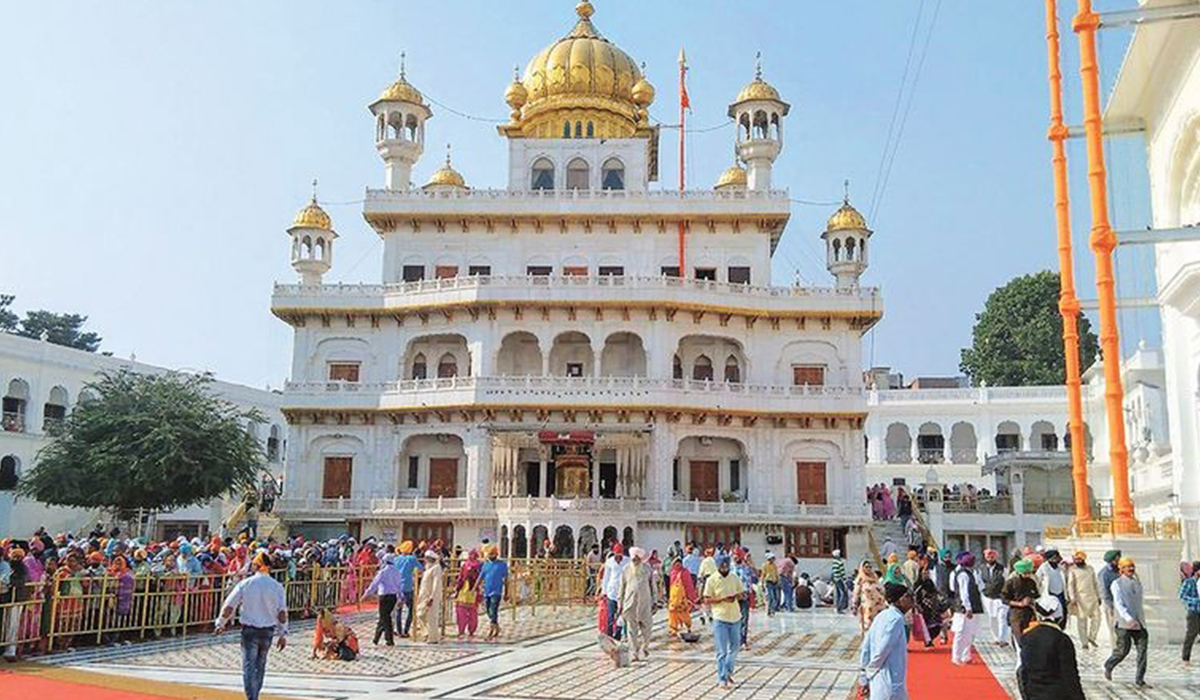

Adorning the holy land of Sri Amritsar, situated directly opposite Sachkhand Sri Harmandir Sahib (Sri Darbar Sahib), Sri Akal Takht Sahib is the unique centre of the spiritual, historical, and Panthic consciousness of the Sikh faith. The master of Miri-Piri, the Sixth Guru, Sri Guru Hargobind Sahib Ji, heralded a new era in Sikh life by creating this great Takht in 1606 CE. It is not merely a building or a historical monument, but a symbol of the fundamental principle of Sikhi that encompasses spirituality along with the inspiration for human freedom, justice, fearlessness, and standing up against oppression.
The concept of Sri Akal Takht Sahib reflects the synthesis of Miri and Piri in Sikh life. While Sri Harmandir Sahib connects an individual with spiritual peace, Naam-Simran, and Gurbani, Sri Akal Takht Sahib connects that very spirituality with social responsibility, justice, and the protection of human rights. That is why Sri Akal Takht Sahib is the source of inspiration for unwavering dignity, independent thought, and the welfare of all (Sarbat Da Bhala) for the Sikh Panth.
The Creation and Historical Background of Sri Akal Takht Sahib
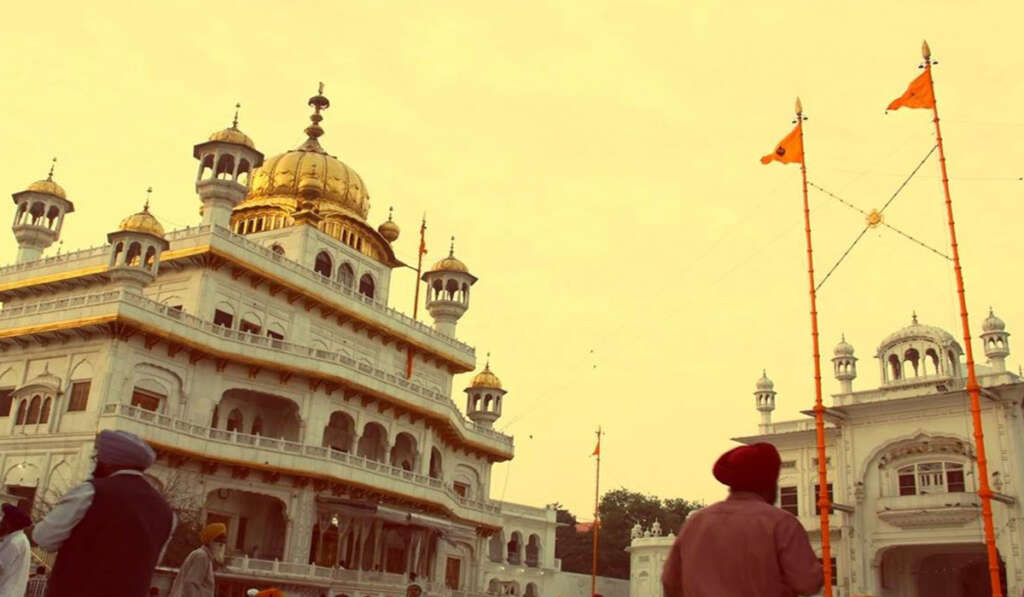
The martyrdom of the Fifth Guru, Sri Guru Arjan Dev Ji, was a decisive turning point in Sikh history. By attaining martyrdom for the protection of religion, truth, and human freedom, the Guru showed the Sikh Panth the path to stand steadfast against injustice. Following the martyrdom of Guru Arjan Dev Ji, the Sixth Guru, Sri Guru Hargobind Sahib Ji, highlighted the need for worldly responsibility and self-defense alongside spirituality in Sikh life.
In this very background, Sri Akal Takht Sahib was created in 1606 CE. Guru Hargobind Sahib Ji laid the foundation of this holy Takht with his own blessed hands. According to historical tradition, Baba Buddha Ji and Bhai Gurdas Ji played a crucial role in its construction. The establishment of Sri Akal Takht Sahib made it clear that in Sikhi, religion is not limited solely to a personal spiritual experience, but is also related to the establishment of justice and truth in human life and society.
This Takht presented a concept distinct from the political thrones of that time. The authority of worldly thrones relies on human power, rule, and governance, whereas the sovereignty of Sri Akal Takht Sahib was linked to Akal Purakh (the Timeless Being). That is why it became a symbol of spiritual freedom and human dignity for the Sikhs.
The Great Principle of Miri-Piri
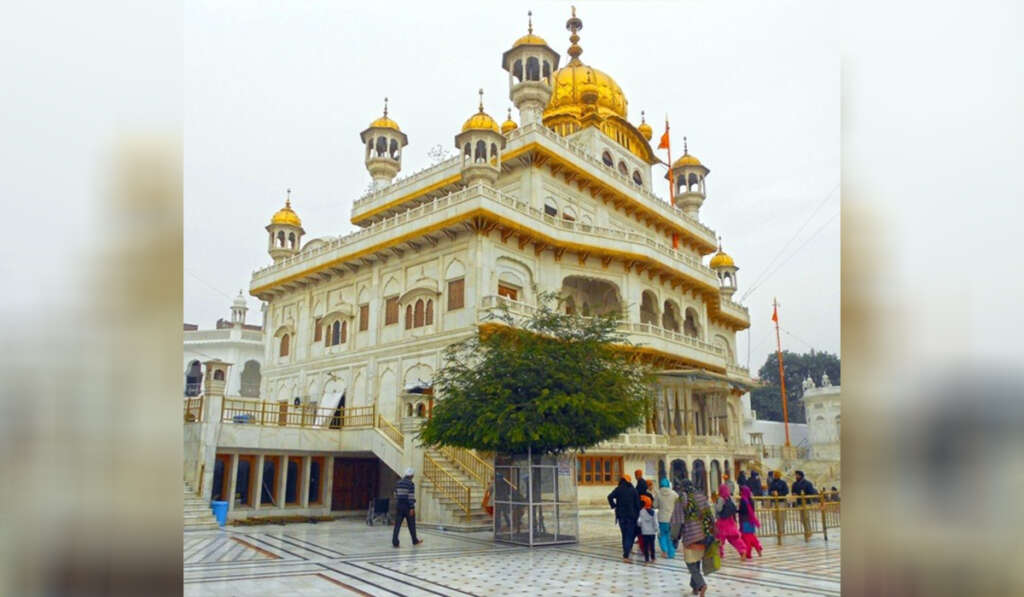
To understand the greatness of Sri Akal Takht Sahib, it is essential to understand the principle of Miri-Piri. By donning two swords (Sri Sahibs), Guru Hargobind Sahib Ji gave the message to the Sikh Panth that religion and worldly responsibility cannot be separated from each other.
‘Piri’ represents spirituality, Naam-Simran, compassion, humility, truth, and Gurmat wisdom, while ‘Miri’ is considered the symbol of social responsibility, justice, self-defense, and the power to confront oppression. Thus, the ideal of Sikhi does not restrict individuals solely to their spiritual development, but also inspires them to fulfill their responsibilities toward society.
The coexistence of Sri Harmandir Sahib and Sri Akal Takht Sahib is also a symbol of this very thought. On one hand, there is the spiritual message of Gurbani, Kirtan, and Naam; on the other, there is the resolve to stand up for the protection of truth, justice, and self-respect. Together, these two aspects present the complete picture of Sikh life.
The centre of Sri Akal Takht Sahib’s ideology is human freedom and fearlessness. Gurmat gives the message to individuals neither to fear anyone nor to strike fear in anyone. In the Bani of the Gurus, special importance is given to human equality, freedom, and one’s rights.
The principle of “Bhai kahu kau det nah, nah bhai manat aan” (Do not frighten anyone, nor be afraid of anyone) inspires a person to live a fearless life. This means that a person neither oppresses anyone nor endures oppression. This thought is a crucial aspect of the conceptual greatness of Sri Akal Takht Sahib.
In Sikh tradition, this freedom is not limited to just one community. A person should have the right to live life according to their religion, faith, and beliefs. That is why Sri Akal Takht Sahib is also viewed as the voice of human dignity, religious freedom, and rights.
Hukamnama, Martial Arts, and the Tradition of Heroic Poetry (Bir-Ras)
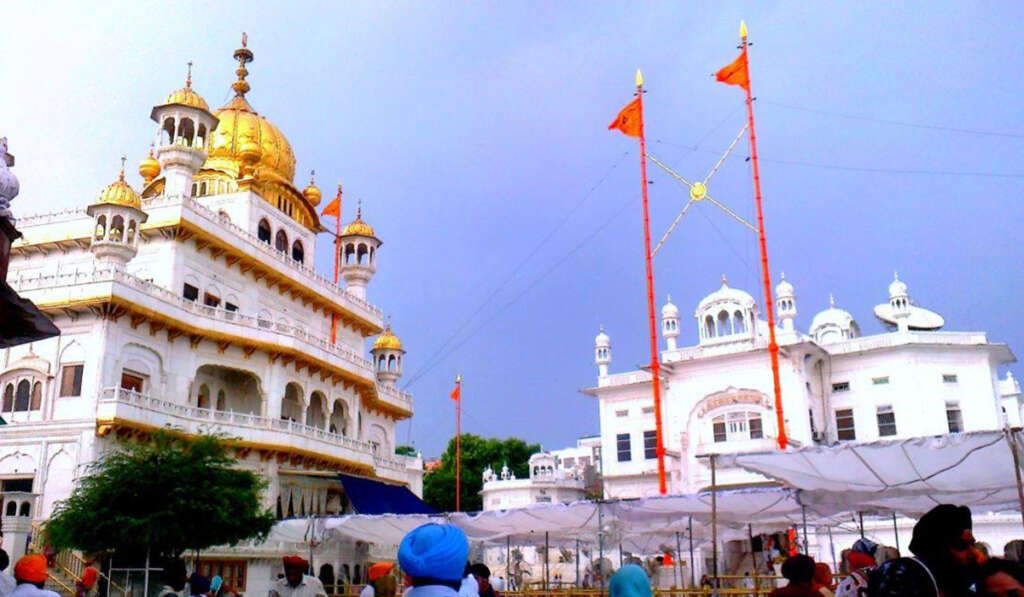
After the establishment of Sri Akal Takht Sahib, Guru Hargobind Sahib Ji inspired the Sikhs to become physically and mentally strong. According to historical tradition, Hukamnamas were sent by the Guru to the Sangat, through which they were asked to offer good horses, weapons, and youth to the Guru’s court.
Martial arts (Shastar-Vidya), horse riding, and physical exercise were encouraged in front of Sri Akal Takht Sahib. The Guru himself would oversee the preparation of the youth and instill a spirit of fearlessness and valor in them.
During this time, the tradition of Dhadi Vaars (heroic ballads) also secured a special place in Sikh life. Dhadis like Abdullah and Natha Mall instilled a spirit of courage, sacrifice, and standing firm against oppression among the congregations through their heroic ballads. This tradition remains important in Sikh history to this day.
Sri Akal Takht Sahib During the Era of Struggle
During the era of Mughal and later Afghan invasions, the Sikh Panth had to face tremendous struggles. Many times, the Sikhs had to take refuge in forests, mountains, and far-flung areas to save their lives. Despite this, the Sikhs’ connection with their central religious and Panthic shrines was never broken.
On occasions like Vaisakhi and Diwali, the Sikh congregations would gather at Sri Akal Takht Sahib at great personal risk. Here, discussions on Panthic issues were held, and collective decisions were made. The tradition of Gurmata gave Sikhs the strength of collective thinking and joint decision-making.
Even during the era of the Sikh Misls, Sri Akal Takht Sahib remained the centre of Panthic unity. This era of Sikh history is associated with the sacrifices of Nawab Kapur Singh, Sardar Jassa Singh Ahluwalia, Baba Deep Singh Ji, and other brave warriors. During the Afghan invasions, Sri Harmandir Sahib and Sri Akal Takht Sahib were repeatedly targeted, but the Sikh Panth restored and preserved these holy shrines every time.
Sri Akal Takht Sahib has also been the centre of Panthic unity in the Sikh faith. When Sikhs belonging to different regions and organizations gathered here, they would deliberate upon common Panthic issues. This process strengthened the sense of collective responsibility and Panthic consciousness among the Sikhs.
The core essence of the Gurmata tradition was that decisions regarding Panthic issues should be made on the basis of Gurmat principles and collective deliberation. In this way, Sri Akal Takht Sahib did not just remain a place for issuing commands, but also became the centre of the collective consciousness of the Sikh Panth.
The Tragic Event of June 1984
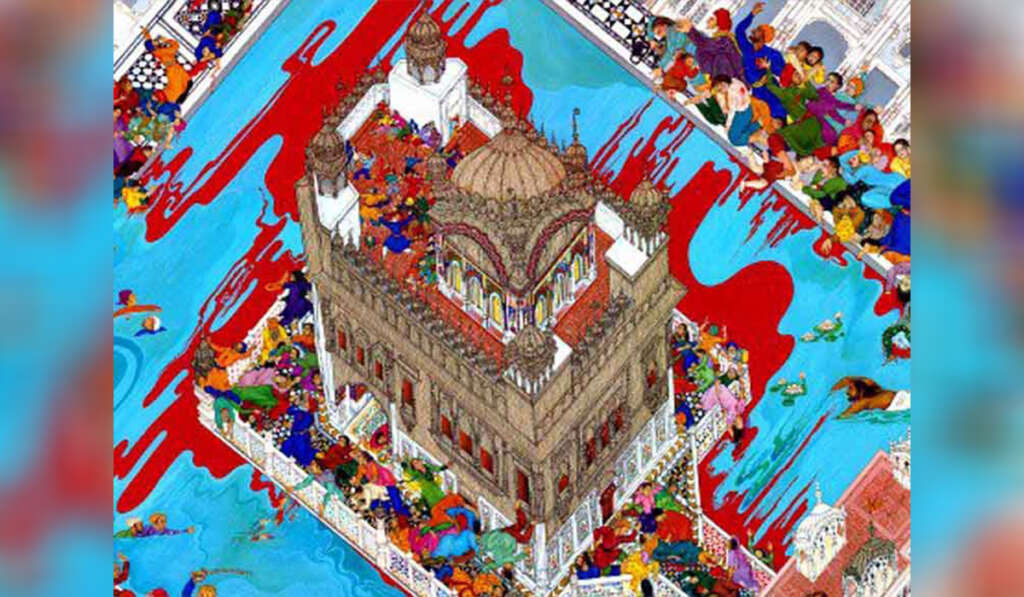
The military operation carried out by the Indian Army in the complex of Sri Harmandir Sahib and Sri Akal Takht Sahib in June 1984 is one of the most tragic and controversial events in Sikh history. During this operation, the building of Sri Akal Takht Sahib suffered heavy damage, and a large number of people were killed.
This event had a profound impact on Sikh minds. The damage caused to the building of Sri Akal Takht Sahib was not merely seen as damage to a historical structure, but was viewed in connection with the sentiments and religious consciousness of the Sikh Panth.
After this tragic event, Sri Akal Takht Sahib was rebuilt. Over time, this holy shrine continued to inspire the congregations with its historical and religious significance once again. The memory of this event remains an important part of Sikh history and collective consciousness.
In the Sikh Ardas (prayer), there is a plea for “Sarbat Da Bhala” (the welfare of all). This thought is also deeply connected to the conceptual greatness of Sri Akal Takht Sahib. The ideal of Sikhi is not limited to one’s own welfare but is linked to the betterment of all of humanity.
In the Sikh Ardas, the gifts of Sikhi, Kesh (uncut hair), Rehat (discipline), faith, and unwavering trust are sought, and at the end, the message of “Nanak Naam Chardi Kala, Tere Bhane Sarbat Da Bhala” (Through Nanak, may Thy Name be exalted, and may all prosper by Thy grace) is delivered. The vastness of Sikh life is encapsulated in this message.
Sri Akal Takht Sahib is the significant centre that connects Sikhs living around the world with their history, the teachings of the Gurus, and Panthic traditions.
In Sikh tradition, Sri Akal Takht Sahib holds the status of the supreme Panthic seat. Here, no special privilege is recognized on the basis of a person’s social or economic status. Several such incidents are recorded in Sikh history where even the most powerful individuals bowed their heads before Panthic Maryada (code of conduct).
The historical incident related to Maharaja Ranjit Singh is often cited as an example in this context. This conveys the message that in Sikh tradition, Panthic Maryada and Gurmat principles are given precedence over any individual.
Sri Akal Takht Sahib is that great centre of Sikh history, religion, and Panthic consciousness which has, for centuries, given Sikhs the message of fearlessness, justice, dignity, service, and independent thought. Its creation manifested the principle of Miri-Piri in Sikh life and demonstrated that spirituality and social responsibility are not separate from each other.
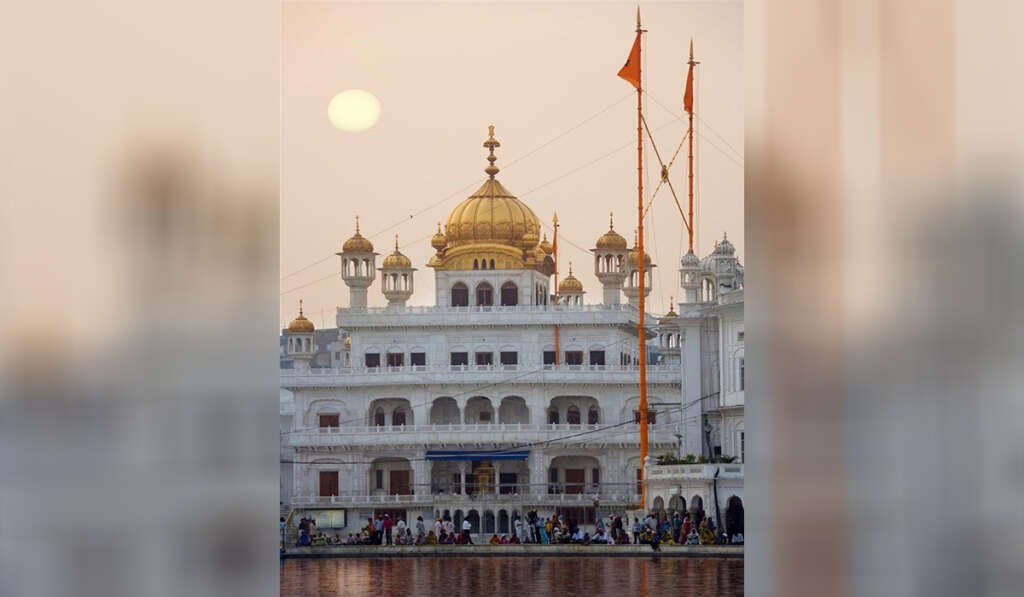
The history of Sri Akal Takht Sahib is linked to a long tradition of sacrifices, struggles, Panthic unity, and human freedom. This holy shrine taught the Sikhs that standing courageously to protect the truth, opposing oppression, and valuing the freedom and self-respect of every human being is a vital part of religion.
Despite many political and historical changes over time, the significance of Sri Akal Takht Sahib has endured. Embedded in its foundations are the foresight of the Sikh Gurus, the sacrifices of brave warriors, and the unwavering devotion of the Sangat. Even today, this holy Takht inspires Sikhs to connect with their heritage, follow Gurmat principles, protect human rights, and actively work for the welfare of all.
Therefore, Sri Akal Takht Sahib is not merely a historical relic of the past, but a living ideological inspiration for the present and the future. It will forever stand glorious as the symbol of the Sikh Panth’s independent identity, the principle of Miri-Piri, the spirit of justice, a fearless life, and the concept of the welfare of all.

Leave a Comment