

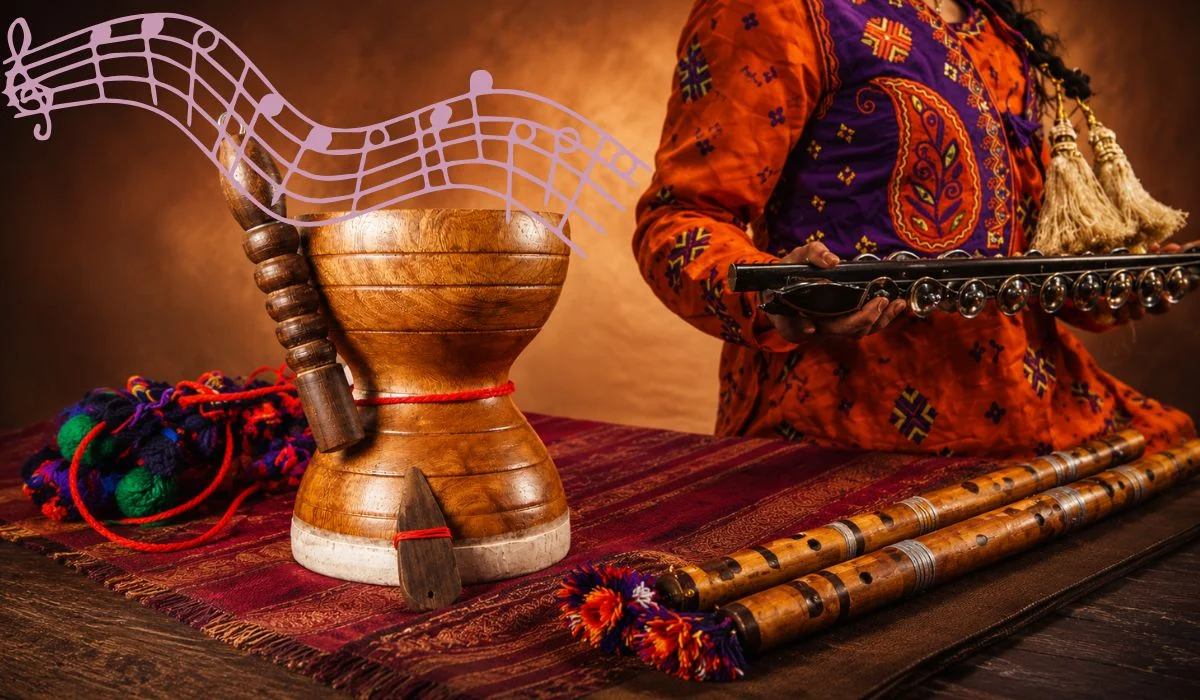

Music rises from the soil of Punjab because its sound does not belong only to stages or recording studios — it comes from green fields, village courtyards and festive fairs. Behind every instrument stands a village artisan who crafted it by hand and passed it down from one generation to the next. On World Music Day, let us revisit those old folk instruments that have kept Punjabi giddha, bhangra and Sufi singing alive for centuries. These instruments do not merely create melody; they are living proof of Punjab’s history, culture and spirit.
Tumbi
The Tumbi is one of Punjab’s most famous string folk instruments, believed to have originated around the 16th century. It is made from a wooden stick and a gourd shell, over which a single metal string is stretched. It weighs only about 200 grams and is roughly 55 centimetres long, which makes it easy to play while dancing. It is played by plucking the string with the index finger of the right hand, while the left hand presses along the neck to alter the notes.
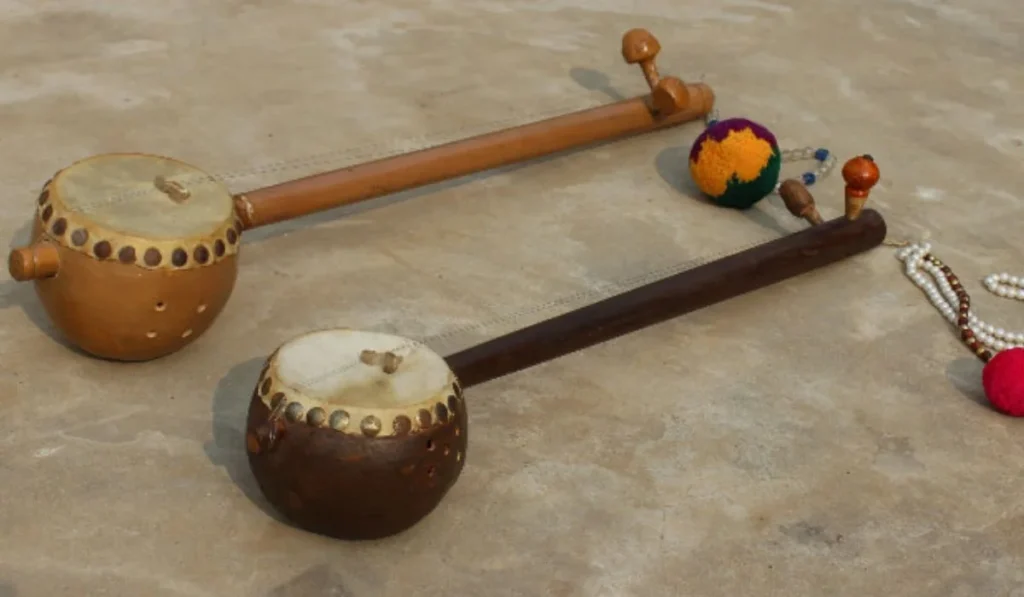
The toombi is the soul of bhangra and Punjabi folk songs. It was popularised by Lal Chand Yamla Jatt, and later played by legendary singers such as Kuldeep Manak, Muhammad Sadiq and Amar Singh Chamkila. Its international journey is equally fascinating — American singer Missy Elliott used the sound of the toombi in her 2001 hit song Get Ur Freak On.
Algoza
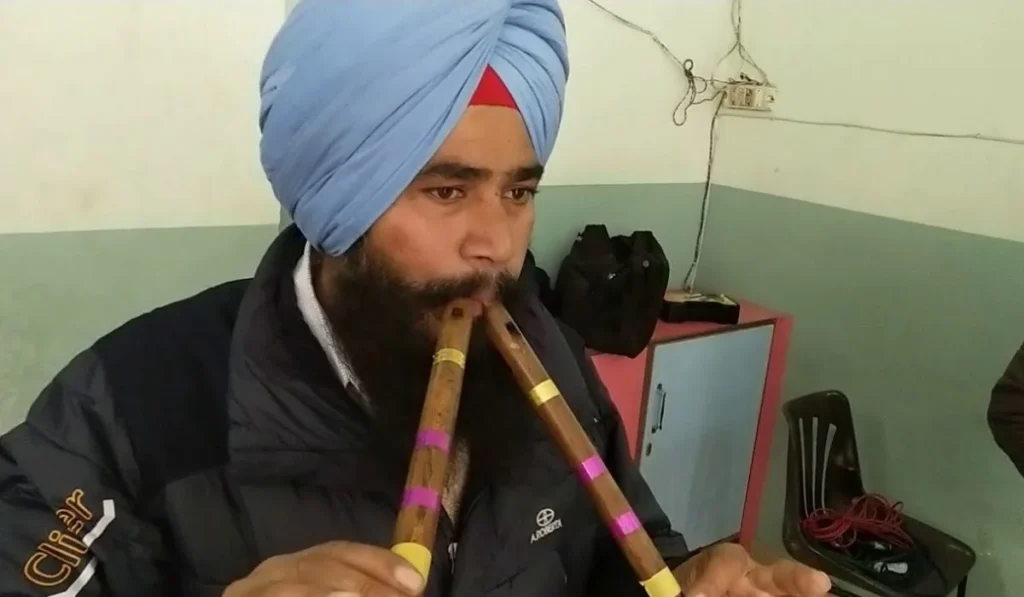
The algoza is a wind instrument made of two flutes played together, and its roots are often linked to the Indus Valley civilisation. One flute is used for the melody and the other for a continuous drone, both played simultaneously. In the medieval era, it became popular among shepherds and Sufi faqirs, who paired it with their poetry and songs. Playing the algoza requires a continuous stream of breath, which is why mastering it takes years of practice.
It is especially common among Baloch, Saraiki, Sindhi, Kachhi, Punjabi and Rajasthani folk musicians. Punjabi singers use the algoza in songs such as Jugni, Jindua, Mahiya and Mirza. The two flutes are often imagined as a pair — the longer flute is called the “male” and the shorter one the “female.”
Dhol
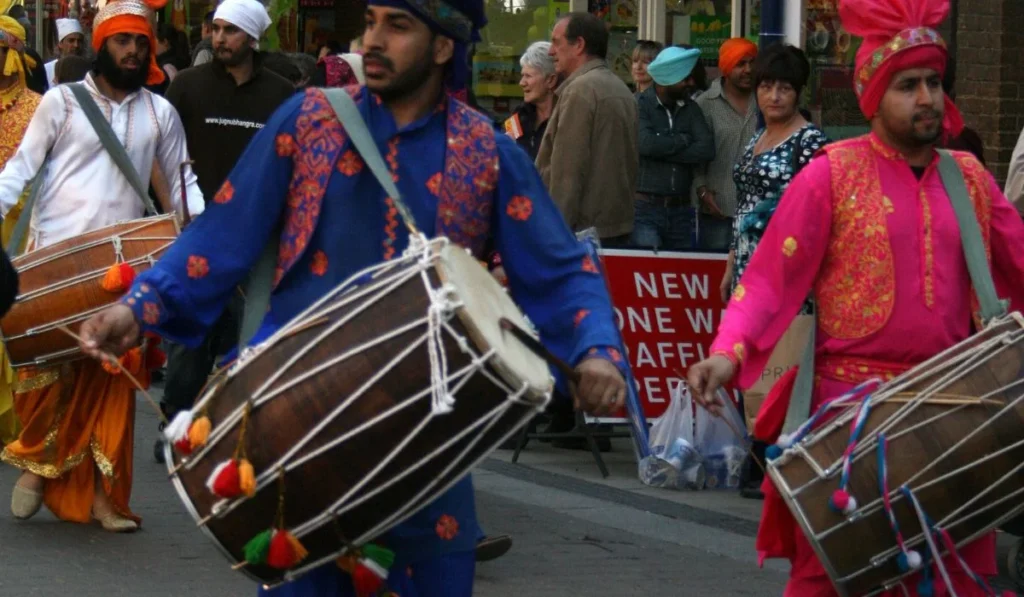
The dhol is one of Punjab’s strongest cultural symbols and the most iconic instrument of bhangra. Its history is ancient. A traditional dhol is made from strong wood such as mango, sheesham or tahli, and both sides are covered with goat skin. One side has a thicker skin that produces a deep bass sound, while the other side has a thinner skin that creates a sharper treble beat.
No Punjabi wedding, Baisakhi celebration or joyful gathering feels complete without the beat of the dhol. One striking example of its global impact came in 2002, when the dhol rhythm in Punjabi MC’s hit song Mundian To Bach Ke helped the track reach No. 5 on the UK Singles Chart and brought bhangra music to an international audience.
Chimta
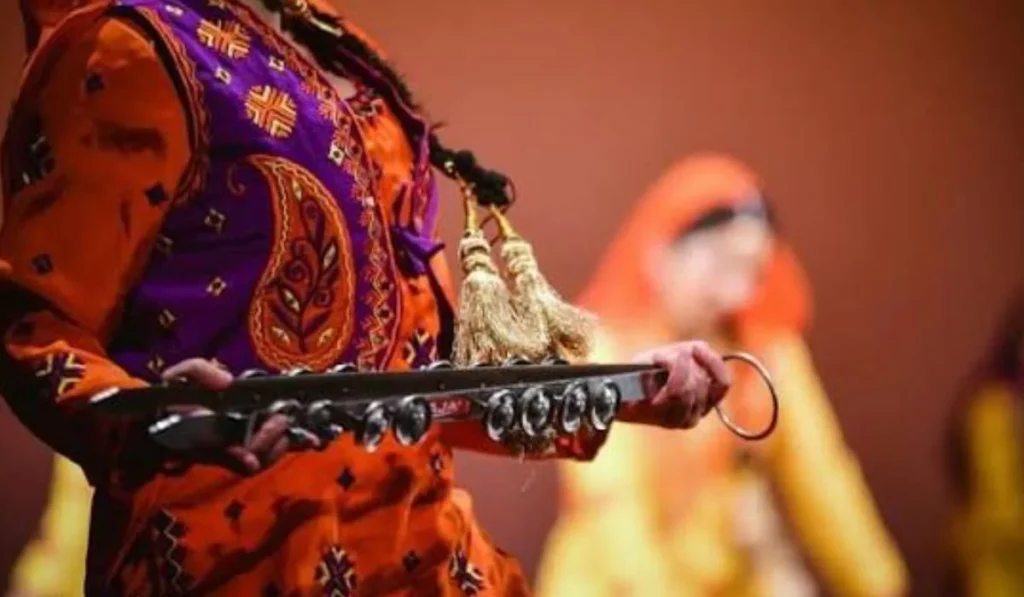
The chimta originally began as a pair of tongs used to handle fire, but over time it evolved into a musical instrument by adding brass jingles to it. It is made of two flat steel strips joined at one end, with small metallic discs or jingles fixed along its sides. The choice of steel is important because the instrument needs both flexibility and strength to withstand repeated opening, closing and bending.
It is widely used in Punjabi folk songs, bhangra and Sikh devotional music. The celebrated folk singer Alam Lohar gave the chimta a distinct identity around the world. One interesting detail about its design is that the iron ring fixed at the end was originally meant only for hanging it on a wall, but today it has become an important part of the technique used to play it.
Sarangi
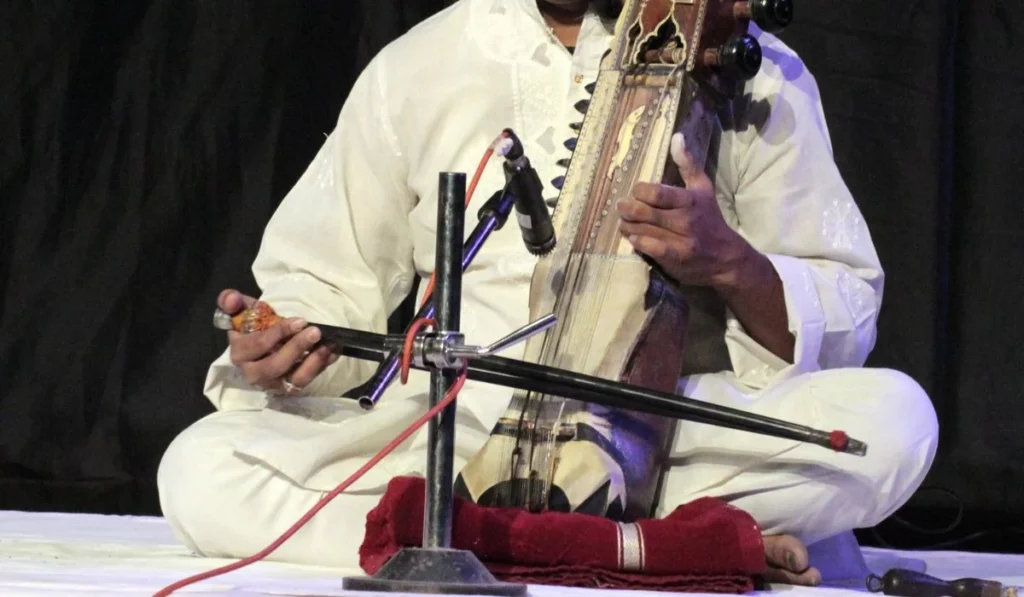
The sarangi is a short-necked string instrument played with a bow. It developed largely through Rajasthani folk traditions and went on to play a major role in Hindustani classical music. Its sound is considered one of the closest to the human voice. The sarangi is made by hollowing out a single block of wood and covering the front with skin. It usually has four main strings.
It is regularly played alongside singers in Punjabi and Rajasthani folk music. The sarangi’s greatest strength is its ability to imitate the glides and tremors of the human voice — the meend and gamak — something that is extremely difficult for most other instruments to reproduce.
Bugchu
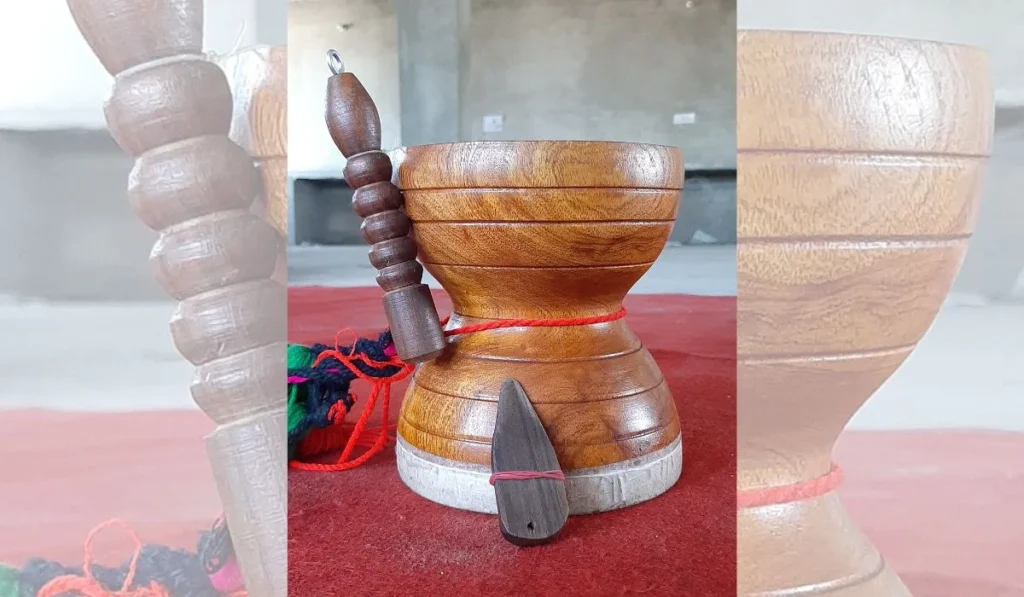
The bugchu is an hourglass-shaped instrument that resembles the damru. It has leather stretched across both ends, with a thick string passing through the middle and tied to a wooden knob at one end. To play it, the instrument is tucked under the elbow, and the same hand pulls the string while the fingers of the other hand, or a small stick, strike it. By tightening or loosening the string, the pitch can be raised or lowered. Today, the instrument is seen less often, but some old folk artists of the Malwa region still preserve and play it.
It is used in Punjabi folk dances such as bhangra and Malwai giddha. Even its name has an amusing origin — it is said to come from the distinctive “bugchu” sound it produces, and in some regions it is also known as khamak or bugdu.
These instruments are not just tools that create music; they are symbols of Punjab’s villages, fields and cultural togetherness. Remembering them on World Music Day is, in many ways, a salute to our own roots and to Punjab’s rich cultural heritage.

Leave a Comment