
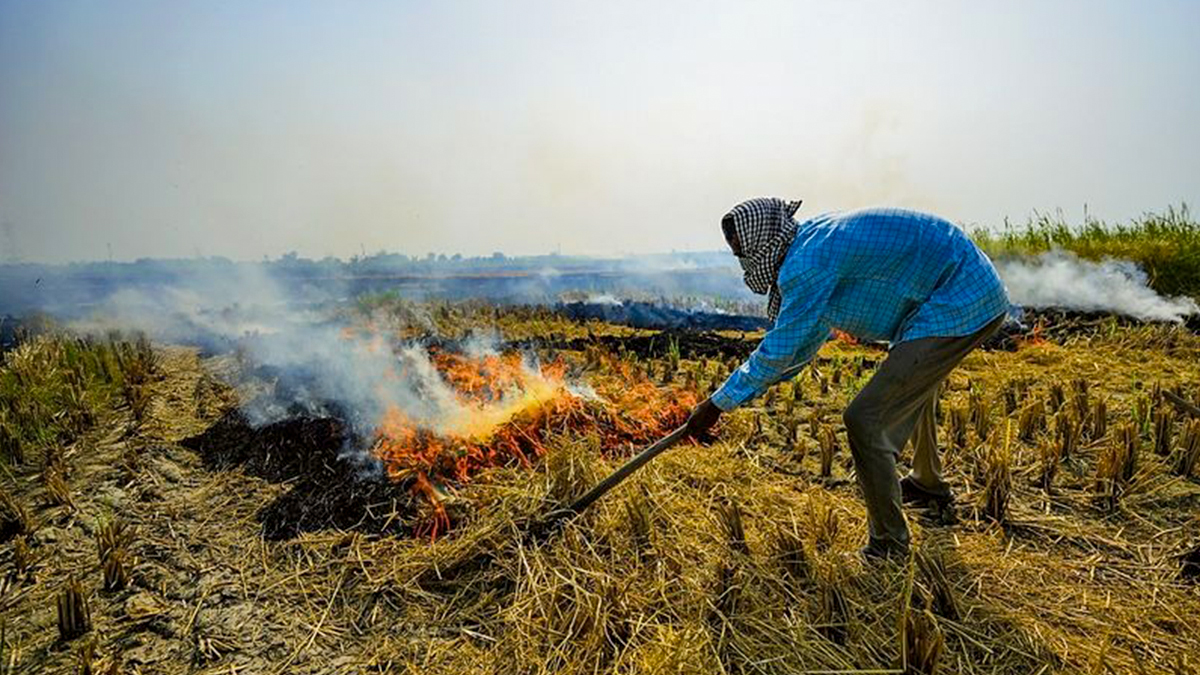

Major success achieved through agricultural mechanization, scientific techniques, and farmers’ participation; 11.4 million tonnes of stubble managed within the fields in Punjab.
Chandigarh: A massive reduction has been recorded in stubble burning incidents in Punjab and Haryana over the last six years. According to satellite data from the Indian Agricultural Research Institute (IARI), stubble burning incidents in 2026 have decreased by 95 percent in Punjab and 98 percent in Haryana compared to the year 2020. Agricultural mechanization, scientific interventions, and the increasing participation of farmers are considered the main reasons for this success.
According to data monitored by the CREAMS laboratory of ICAR-Indian Agricultural Research Institute, 2,196 incidents of stubble burning were recorded in Punjab from September 15 to November 3 this year, whereas during the same period in 2020, this number was 43,994. Similarly, in Haryana, compared to 2,699 incidents during 2020, only 52 incidents were reported this year.
The statistics indicate that there has been a major shift in stubble management methods in both states. In this regard, ICAR’s Deputy Director General (Agricultural Extension and Engineering) Rajbir Singh said that the agricultural mechanization scheme launched by the Central Government in 2018 has played a crucial role behind this improvement. Under this scheme, financial and institutional support was provided for specialized machines and Custom Hiring Centres (CHCs) to manage crop residue within the fields. This gave small and marginal farmers the opportunity to use expensive machines without having to buy them.
He informed that by the year 2025-26, a total of 3,45,789 agricultural machines were provided across the country, and 43,276 Custom Hiring Centres were established. Punjab had a major contribution in this, where about 1.48 lakh machines were provided and 25,917 centers were set up. Similarly, 6,775 Custom Hiring Centres were built in Haryana.
11.4 million tonnes of stubble managed within the fields in Punjab
According to the data, there has also been a massive increase in the process of in-situ management of stubble within the fields in Punjab. During the year 2025-26, about 11.4 million tonnes (1.14 crore tonnes) of paddy stubble was managed in the fields itself, which is about 60 percent of the total stubble generated in the state.
With this process, farmers are estimated to save more than Rs 600 crore in agricultural input costs. In addition, better soil and moisture management is estimated to save about 571 million cubic meters of groundwater.
Along with this, about 7.85 million tonnes of stubble generated in Punjab during the year 2025 was used outside the fields (ex-situ) for various purposes. This includes the use of stubble in industrial boilers, biomass and thermal power plants, animal fodder, compressed biogas, brick kilns, and bioethanol production.
Rajbir Singh said that the increased use of stubble in industries is creating new employment opportunities in rural areas and also boosting the bio-economy. However, to sustain this process in the long run, assured procurement of stubble, remunerative prices for farmers, and the development of an effective supply chain are essential.
Stubble burning incidents decreased year by year
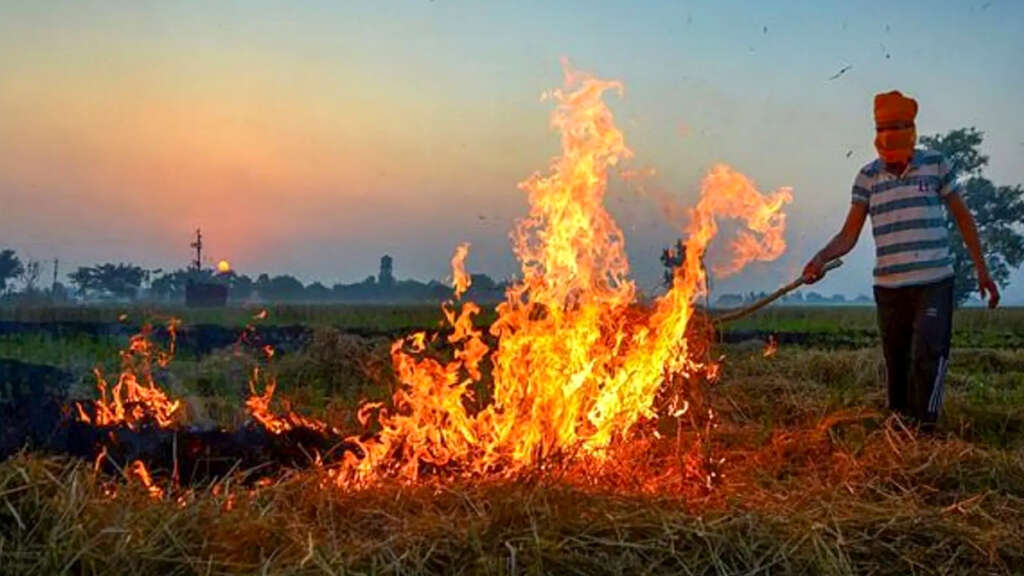
According to the annual data of the CREAMS laboratory, the decline in stubble burning incidents in Punjab has not been uniform every year. In 2021, 20,578 incidents were recorded, and in 2022, 24,146 incidents were recorded. After this, the number decreased to 12,813 in 2023, 4,132 in 2024, and 2,518 in 2025.
In Haryana, 3,438 incidents of stubble burning were recorded during 2021, which decreased to 2,377 in 2022, 1,372 in 2023, 857 in 2024, and 145 in 2025. Compared to the previous year, a further decrease of 12.8 percent was recorded in Punjab and 64.1 percent in Haryana in 2026.
Apart from this, stubble burning incidents in Uttar Pradesh also dropped to 359 this year compared to 1,534 in 2020. In Delhi, only two incidents were recorded during this period. On the other hand, a reverse trend was observed in Madhya Pradesh, where stubble burning incidents increased from 570 in 2025 to 708 in 2026, which is an increase of 24.2 percent.
Department of Agricultural Research and Education (DARE) Secretary M.L. Jat said that the proper management of crop residue proves that a sustainable change can be brought about in the agricultural sector with scientific innovation, effective policies, and the active participation of farmers.
He said that in the next phase of the campaign, there is a need to focus specifically on villages with a high incidence of stubble burning, provide agricultural machinery on time, and develop a strong market for stubble utilization. Along with this, a proposal has also been made to start a ‘Zero Burning Mission’ at the village level with the help of Krishi Vigyan Kendras (KVKs), Gram Panchayats, farmers’ organizations, and local entrepreneurs, which can further strengthen the campaign against stubble burning.

Leave a Comment