


The Sikh community has long been known for its rich culture, bravery, integrity, and deep commitment to service. A thoroughly researched new book titled “Sikhs in Banking: The Legacy of Trust, Excellence, and Economic Impact in India and Beyond,” published on the occasion of the 350th martyrdom anniversary of Guru Tegh Bahadur Ji, highlights the contributions of 40 Sikhs in the banking sector.
The book is authored by S. Gurmeet Singh, a retired Chief Manager of Punjab & Sind Bank and a founding member of the Guru Gobind Singh Study Circle. According to the author, the book is deeply rooted in Sikh history and Gurbani. It presents a cultural narrative that connects Sikh spiritual philosophy with economic development, institutional integrity, leadership, and social responsibility.

Historical Foundations: Sikh Values Shaping Banking
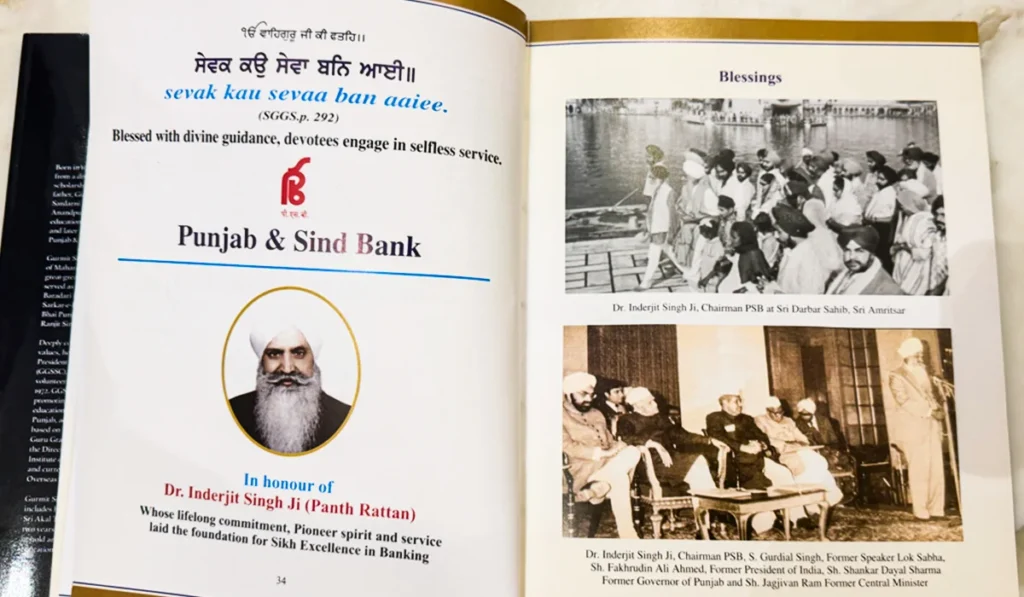
The book traces Sikh economic participation back to early historical figures such as Baba Banda Singh Bahadur and Maharaja Ranjit Singh, who incorporated justice, self-reliance, and equality into governance and economic systems. This foundation reached a significant milestone with the establishment of Punjab & Sind Bank in 1908, often regarded to as the “cradle of Sikh bankers.”
An important section of the book profiles nearly 40 distinguished Sikh bankers from India and abroad. These leaders exemplify trust, excellence, and social impact. They have influenced leading institutions such as Punjab & Sind Bank and other nationalised banks in post-independence India, as well as global financial systems. The book examines how these individuals prioritized ethical practices and community welfare, guided by the Sikh principles of Seva (selfless service) and Sarbat da Bhala (welfare of all).
Structure and Scope of the Book
Drawing from extensive experience in the banking sector and deep research, the book documents the significant contributions of Sikhs in banking. The book cover includes images of former Prime Minister Dr. Manmohan Singh, S. Inderjit Singh, S. Sunder Singh Majithia, and World Bank President Ajay Banga.
The book is divided into six sections covering:
• The Sikh spirit in global banking
• Historical evolution
• Leadership roles
• Institutional contributions
• Social impact
A Less-Known Yet Influential Chapter in Financial History
The book highlights a relatively less documented yet influential chapter of financial history. It highlights the enduring role of Sikhs in shaping India’s banking culture through ethics, service, and institution-building.
A special chapter is dedicated to Punjab & Sind Bank, a bank established by Sikhs, which produced many renowned Sikh bankers who played a crucial role in strengthening India’s financial system.
According to the author, the primary objective behind the book is to highlight the strong and sustained presence of the Sikh community in the banking sector.

Bridging Past and Present
From the ethical foundations of early banking to the achievements of contemporary pioneers, the Sikh community’s influence on commerce has been deep and continuous.
This 340-page illustrated book showcases the immense contributions of Sikhs in banking across India and around the world. It presents their work as being guided not merely by profit, but also by trust, ethics, and selfless service.
The stories demonstrate that true success includes uplifting others — a principle as relevant today as it was centuries ago.
Gurmeet Singh’s book seeks to honour historical contributions while encouraging future generations1 to strive for excellence with integrity, trust, and commitment to the greater good.



Leave a Comment