

The Sikh separatist bogey which has bedevilled India-Canada relations may have been laid to rest due to a combination of three fortuitous circumstances. For years, supporters of a separate Sikh-majority state have repeatedly sabotaged India-Canada ties. Their actions have ranged from the deeply disrespectful act of daubing provocative graffiti on Indian temples in Canada to taking out processions with floats that mocked the Indian state and its leaders.
The first of these circumstances was the hunter becoming the hunted. Canada, under Prime Miniter Justin Trudeau, had encouraged what is known as “Proto Diplomacy’’. It was politically expedient for him since he had to depend on outside support for a Parliamentary majority. Trudeau encouraged Sikh separatists in Canada to engage in Proto Diplomacy – try to play a critical role in shaping global politics and diplomacy while functioning outside the boundaries of traditional diplomacy. This lasted till Canada itself began feeling the pain of Proto Diplomacy with the advent of Donald Trump in the neighbouring United States.
The separatist issue in the Canadian province of Alberta has seen a revival with reports of leaders of its independence movement having covertly met US State Department officials. Political leaders committed to a united Canada are apoplectic. British Columbia leader David Eby termed the meetings between Alberta separatists and US State Department officials as ‘treason’.
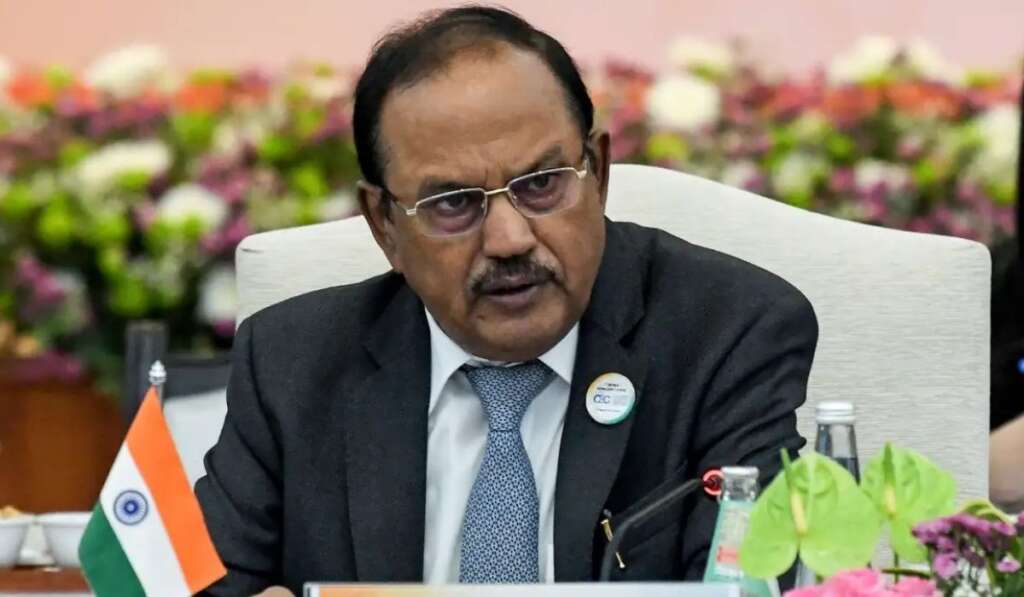
When National Security Advisor Ajit Doval visited Canada last week to put the finishing touches on Prime Minister Mark Carney’s India visit next month, the Alberta headache would have been weighing on the minds of Canadians as they discussed past political encouragement to the Sikh separatist movement. In the event of the Alberta separatists turning serious about the referendum, the federal government would need every vote for staying united. If things came to such a pass, the Indians living in Alberta, numbering nearly 300,000, would be an interest group hard to ignore.
The scaling back of the Canadian Government’s support to the Sikh separatist issue is also linked to the new numbers thrown up by the Canadian general elections last year that ended Justin Trudeau’s political career and ushered in Mark Carney. Unlike Trudeau’s snap elections in 2020, Carney came away politically more empowered. He not only led his party to more votes than the Conservatives but also managed to close the gap in reaching a majority to a manageable three seats. In contrast, the Labour got less votes under Trudeau in 2019 and were short of a majority by more than 10 seats. This was what prompted Trudeau’s mollycoddling of Sikh separatists, which received support from his Sikh Cabinet colleagues as well as the National Democratic Party (NDP) of Jagmeet Singh.
Today, support for the Sikh separatists has waned. The NDP was decimated in the 2025 elections, having lost its official party status for not being able to win the required minimum of 12 seats. Carney has reshuffled the Punjabi representation in his Cabinet. Compared to the three Sikhs and a Punjabi origin woman in the Trudeau Cabinet, Carney’s Cabinet includes two Sikhs and two Punjabi women, including Foreign Minister Anita Anand, who is half Tamilian, and Secretary of State for Combatting Crime, Ruby Sahota. While the gravity of the situation in Alberta is one reason behind the waning support for the Sikh separatists, a government less dependent on radical Sikh support is another.
The third, and perhaps the most consequential event in India-Canada ties, has been US President Donald Trump’s snub to the leaders of both the countries. Given its economic prowess and large market, India is likely to remain a close ally of the US, but Canada has lost nearly all hope of restoring the good times with Washington. In the Trump era, middle powers have increasingly sought each other out for business, trade and security after the White House belittled Canada by calling it the “51st state’’, berated the EU for being a free-rider and feckless and stunned India with a 50 per cent tariff.
Canada realizes that derisking from the US is as important as avoiding putting all the eggs in the China basket. That leaves India, with a huge market and an appetite to integrate itself in the global supply chain, as the better option.
This is where Carney’s profile makes a difference. No one in the Canadian Parliament understands the changing role of economics and trade better than him. Having served as the head of the Financial Stability Board for seven years, Carney understands how economics drives the world. India and Canada had much unfinished business before their ties cratered on the Sikh separatist issue. With a near majority in Parliament and support on the issue from the Conservatives, the second largest party in Canadian Parliament, Carney has the political capital to sidestep this issue and press for a closer economic relationship with India. The fruits of such an alliance, it is hoped, will bring more revenues to Canada and help it ride out the criticism over its backtracking on support to the Sikh separatist movement.

Leave a Comment