

The Narrative That Has Become Its Own Kind of Poison
A six-part reckoning with the drug crisis that is hollowing out India’s most storied martial state — and what it will actually take to stop it
A certain image of Punjab has taken shape in public perception: a state where young people are shown as surrounded by drugs; where families are being destroyed by addiction; where the pain of some villages is presented as the identity of the entire state; and where music, cinema, political speeches, diaspora WhatsApp groups and international reporting repeatedly view Punjab through the same lens.
This portrayal deserves scrutiny, not to deny the drug crisis, because the crisis is real and has been analysed in detail in the earlier articles of this series, but to ask whether this one-sided image of Punjab has itself become a separate problem.
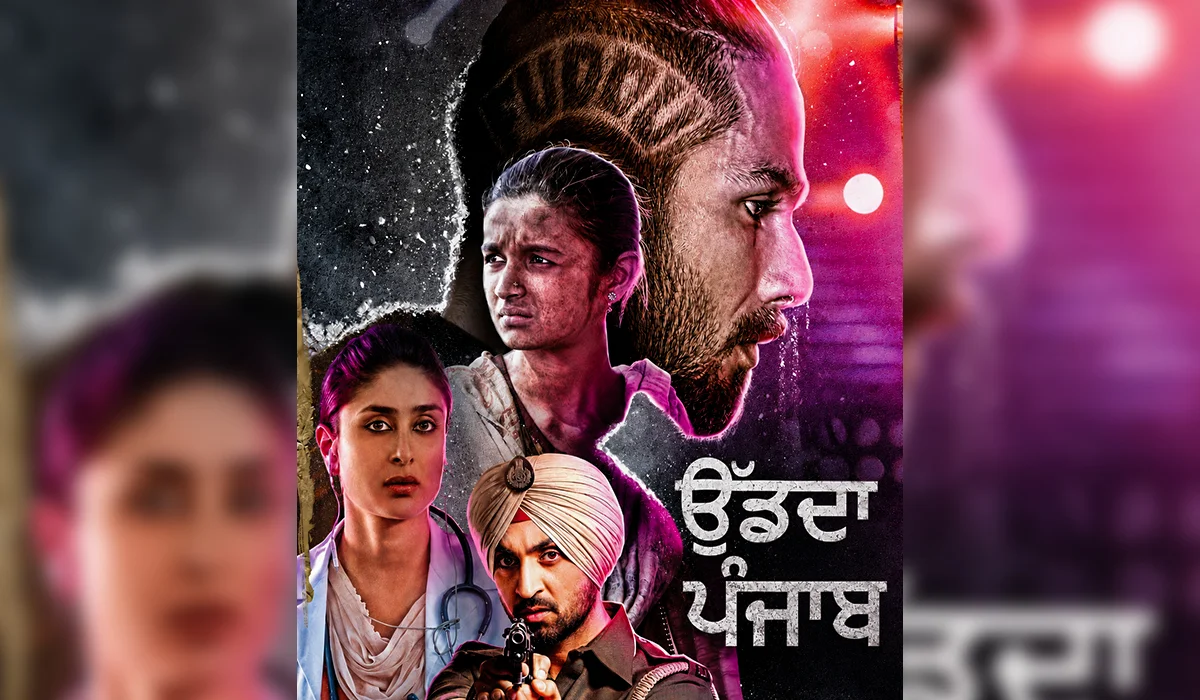
The 2016 film Udta Punjab was an important and courageous artistic effort. It brought the drug problem into national consciousness. But after the film’s release, Punjab’s drug problem was often presented without full context, partly on the basis of small studies and their misinterpretation. Data from studies conducted in a few villages near Jalandhar was sometimes applied to the entire state, even though Punjab’s population and social diversity are much larger. Such methodological limitations were often ignored.
Honest numbers are serious even without exaggeration. In the 2022 state household survey, 15.4 percent of residents admitted to drug use, which also means that 84.6 percent did not. The 2015 PODS survey estimated around 2.3 lakh opioid-dependent individuals, a small but serious portion of Punjab’s total population. This is worrying. But presenting it as the collapse of an entire society is not correct.
The Music Industry: Mirror or Maker?
The presence of songs in the Punjabi music industry that glorify guns, gangsters, alcohol and exaggerated masculinity is a serious cultural concern. Social media and digital platforms have amplified this trend further. In 2019, the Punjab and Haryana High Court also expressed concern over the glorification of alcohol, drugs and violence in songs.
The projection of Jatt identity, arrogance, weapons, alcohol and performative masculinity as markers of identity is not new in Punjabi culture, but the digital age has turned it into a large market. It is also true that music is not only a mirror of society; sometimes it also strengthens social trends.
This cycle damages Punjab’s reputation. A song glorifying chitta, weapons or gangster life gets millions of views. The same song is then played at weddings, events and in diaspora Punjabi groups. After that, another negative perception of Punjab is formed. In this way, entertainment, anxiety and stigma get trapped in the same cycle.
Every tragic story, such as the death of several young people from the same family or the helplessness of a mother, may be true and painful in itself. But when such stories are stitched together without context and presented as the collective identity of all Punjab, the picture becomes incomplete and unfair.
Punjab is a state that has made major contributions to the Indian Army, agriculture, entrepreneurship, diaspora achievements and democratic politics. Defining it only through the drug crisis is neither factually correct nor morally fair.
Punjab: Less the Criminal, More the Victim
A retired DGP-rank officer of the Punjab cadre made an important point in a conversation with The KBS Chronicle. According to him, Punjab is often presented as a guilty state in the context of drugs, while in reality, it has often also been a victim of larger supply chains, border smuggling and external networks.
Referring to the experience of some senior officers who have served in Chandigarh and Delhi, he argued that the drug problem is not limited to Punjab. In India’s major cities, especially metropolitan centres, drug use and misuse are also serious concerns. But the public narrative created there is different from the one created around Punjab.
When an officer says that drug use in Delhi may be much higher than in Punjab, it is not a verified statistic, but an observation based on experience. It should not be treated as a statistical conclusion, but as an indication that the drug problem is a national problem. It is not limited to villages or border states. It may also exist in large cities, elite classes, schools, colleges and entertainment cultures.
The comparison with the discussion around Delhi’s air pollution offers a useful caution. Often, Punjab’s farmers and stubble burning are presented as the main reason for Delhi’s pollution, while scientific studies show that Delhi’s own local sources, such as traffic, construction, industry and urban dust, also contribute significantly. This does not mean the stubble-burning problem does not exist. It means that pushing complex problems onto one state or one community is bad policy.
The same caution is needed in the case of drugs. Concerns have been raised from time to time about the use of psychotropic medicines, alcohol and other substances in some elite schools, colleges and residential areas of Delhi and other metropolitan cities. But they do not attract the same public or political narrative that has been built around Punjab. So the issue is not only the geographical presence of drugs, but also the selective nature of public attention.
This observation does not minimise Punjab’s crisis. This series has recorded Punjab’s drug problem clearly and seriously. But it does say that when a national problem is presented only as a “Punjab problem”, the solution also remains incomplete.
The people of Punjab, who have suffered both the drug crisis and the stigma attached to it, have the right to demand that the discussion be based on facts, context and balance.
The writer is a retired IAS officer of the 1984 batch, Punjab cadre, and the founder-editor of The KBS Chronicle. This is the fifth article in a six-part series on Punjab’s drug crisis.
This article was originally published on the author’s personal blog, The KBS Chronicle.


Leave a Comment