
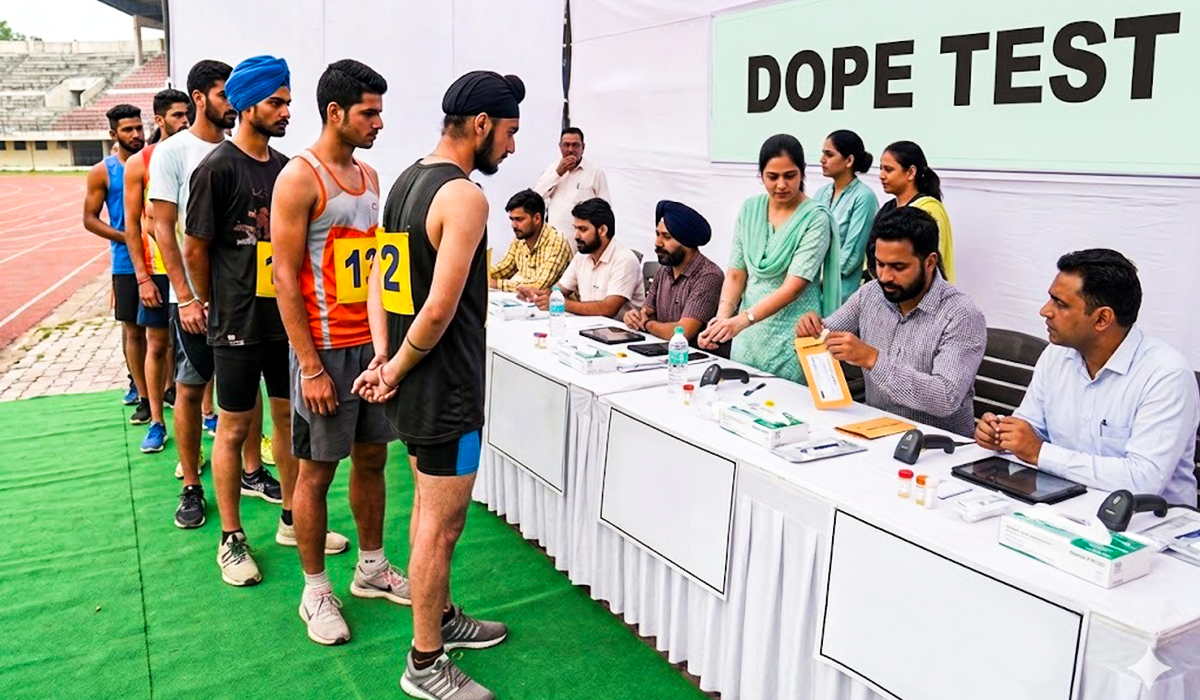

When dope testing becomes a health check of nationality
A six-part reckoning with the drug crisis that is hollowing out India’s most storied martial state — and what it will actually take to stop it
A state that once strengthened India’s military is now seen lagging behind in its own fitness tests. These figures are not just hearsay. They are systematic, verifiable and very serious – and the political class has shown a collective tendency to turn a blind eye to them.
Punjab contributes 89,000 soldiers to the Indian Army – 7.7 percent of the total force – even though the state’s population is only 2.3 percent of the country’s total population. The Punjab Regiment, the Sikh Regiment, the Sikh Light Infantry: these are not just institutional structures. They are vital pillars of India’s defence system. Add to this the border deployments of the BSF, CRPF, CISF and state police, and a picture emerges of a society that has made an extraordinary contribution to the security system of the Indian state for generations. Now this tradition is facing a serious challenge from within.
Figures that should have been a national concern
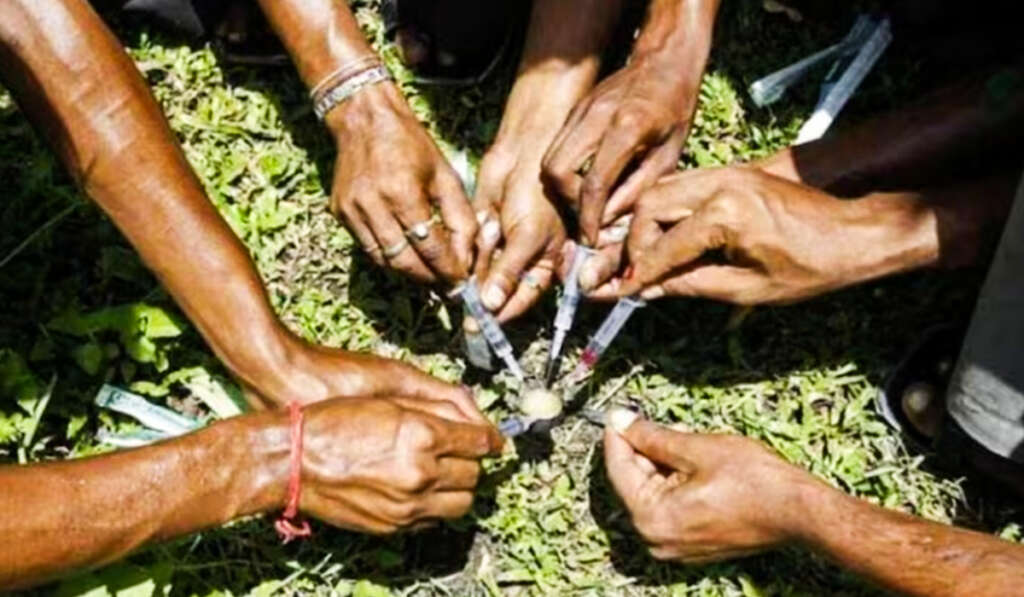
Let’s start with a 2023 parliamentary panel report. According to this report, the number of drug users in Punjab is 6.6 million – while the total population of the state is 31 million. Of these, 697,000 people are children between the ages of 10 and 17. A 2022 population survey found that 15.4 percent of the state’s total residents use drugs. The 2015 Punjab Opioid Dependence Survey conducted by AIIMS, New Delhi, had already established that among males aged 18 to 35 – the same age group from which every uniformed service, such as the army or police, recruits – 15 out of every 100 used opioids, and 4 out of every 100 were fully dependent. Over the past decade, due to a lack of concrete policy direction, these figures have shown little improvement.
Now, consider the issue from the perspective of recruitment. An RTI filed by activist Sanjeev Goyal has revealed figures that should have led to serious policy action. Between 2018 and 2025, out of 365,872 people who underwent the dope test required for renewal of arms licenses across Punjab, 55,318 tested positive for dope – more than 15 percent across the state. In Amritsar district, nearly 30 percent of applicants failed the test. In Tarn Taran, 6,100 people tested positive. In Bathinda and Patiala – both home districts of former chief ministers – more than 4,000 people tested positive.
This is not a marginalized population. These are adult men, many of whom come from landowning and ex-military families, who present themselves for a regular civilian transaction. One in six is using opioids, benzodiazepines, cannabinoids or synthetic drugs. The population holding arms licenses and those recruited into the uniformed services are not the same, but they are closely linked. Men aged 18 to 35 who turn up for army recruitment rallies, police constable recruitment or BSF recruitment often come from the same villages, families and social circles as applicants for arms licenses. When a border district like Amritsar reveals a 30 per cent positivity rate in dope tests among adult men, it is a significant warning to recruiting officers.
What recruiters know, but don’t publish
The Indian Army does not publish state- or district-wise drug abuse data related to its recruitment rallies. The Defence Ministry also does not usually make public details of drug abuse cases found during pre-recruitment medical tests. Paramilitary forces – BSF, CRPF, CISF – treat data on candidates rejected on fitness grounds as “inside” information. The political reluctance behind this is also clear: no government in Punjab -regardless of party affiliation – wants to formally admit that a section of its youth is failing the uniformed services medical test due to drug problems.
The evidence is coming out in pieces. During the Punjab Police Constable recruitment drive in 2016, 47 out of 600 candidates called at one centre tested positive for drugs. Officials said these were the ones who actually came for the test; many others did not even come for fear that the test would, in their own words, “intrude on their privacy regarding their addiction.” In May 2025, six constable recruits at a training centre in Hoshiarpur – who had already been temporarily recruited – were sent home after failing dope tests conducted inside the training centre. The problem is now visible not just at the door, but also within the system.
Hidden groups: Women and children
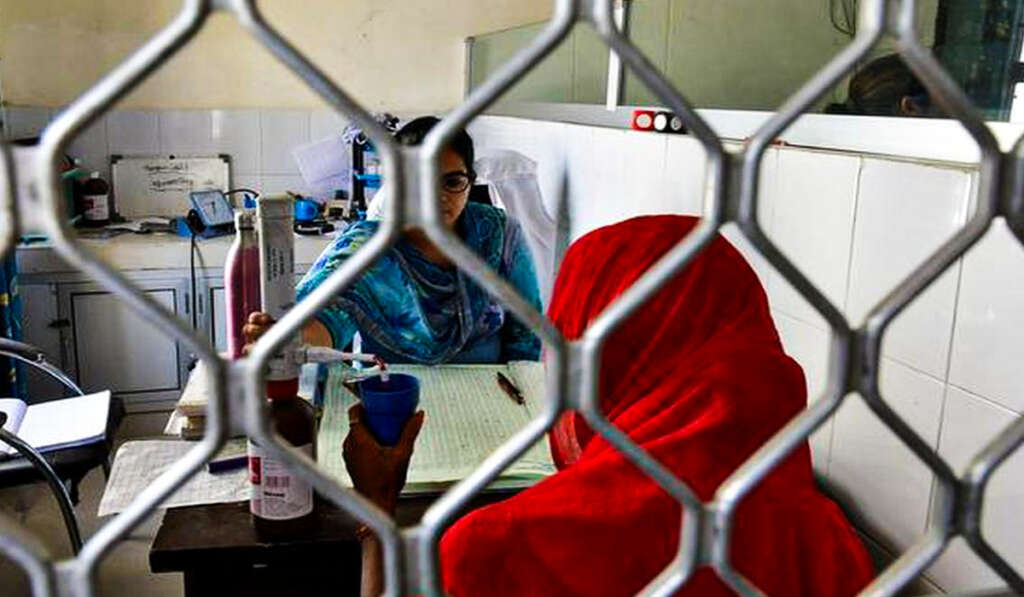
Punjab’s drug crisis is often portrayed in public discourse as a problem for men only. But the figures tell an even more disturbing story. A 2023 Rajya Sabha reply cited the 2018 National Survey on the Extent and Patterns of Drug Use. According to the survey, 7.87 lakh women in Punjab use cannabis, 45,000 women use opioids, and 52,000 use sedatives. When an organisation, Navjeevan, ran a pilot outreach programme targeting 225 women in Kapurthala district, they found 400 women. It is now estimated that the actual number of such women in that district alone could be over 1,000.
There are 31 government-run drug de-addiction centres in Punjab. Of these, only one – located in Kapurthala – is for women only. The treatment structure reflects a deeply embedded social hierarchy: Families often allocate resources to men struggling with drug problems; while women struggling with drug problems often face stigma and abandonment. Children reveal the most alarming reality of this situation. A parliamentary committee has identified 697,000 children aged 10 to 17 as drug users. Any new recruit who fails an army dope test in 2025 is likely to have started using drugs years ago.
Treatment system: Need for supervised reform
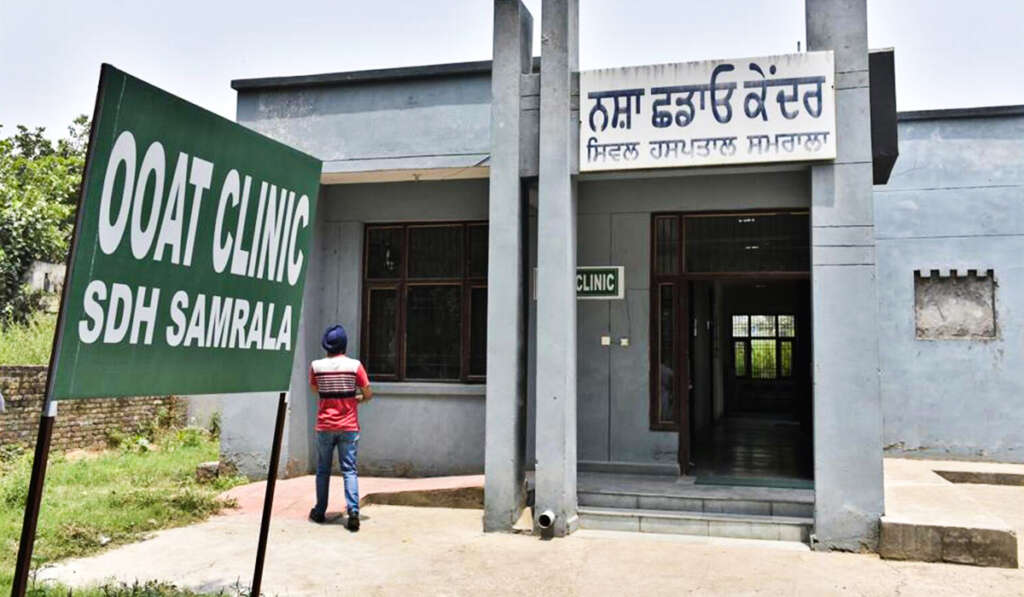
Punjab launched its outpatient opioid assisted treatment – OOAT – program in 2017 with full integrity. There are now 547 government OOAT clinics and 177 licensed private centres, where over 1.031 million registered drug addicts are receiving daily buprenorphine-naloxone tablets. The health minister reported in March 2023 that between 2017 and February 2023, the recovery rate at government OOAT centres was 1.4 per cent. At private centres, the rate was 0.47 per cent.
A single operator in Patiala sold 2.6 million BNX tablets in seven and a half months – while he had only 55 names on his list of registered patients. Each tablet given free at government centres sells for ₹300 in the market. The programme, designed to wean Punjab off opioid addiction, appears to be devolving into a subsidised opioid distribution network in some places. Of the 177 private centres, 117 centres are under the control of just 10 people.
Fifteen percent of adult males in Punjab – the least well-known government estimate – fail dope tests. In border areas, the figure appears to reach one in three. Less than two out of every 100 people who seek treatment in the state’s treatment system return fully cured. Punjab is not just fighting a war against drugs; it is also fighting a war to save the generation that once gave the country’s uniformed services the strongest human base.
The author is a retired IAS officer of the 1984 batch of the Punjab cadre and the founder-editor of The KBS Chronicle. This is the first article in a series on Punjab’s drug crisis.
This article was originally published on the author’s personal blog, The KBS Chronicle.

Leave a Comment