

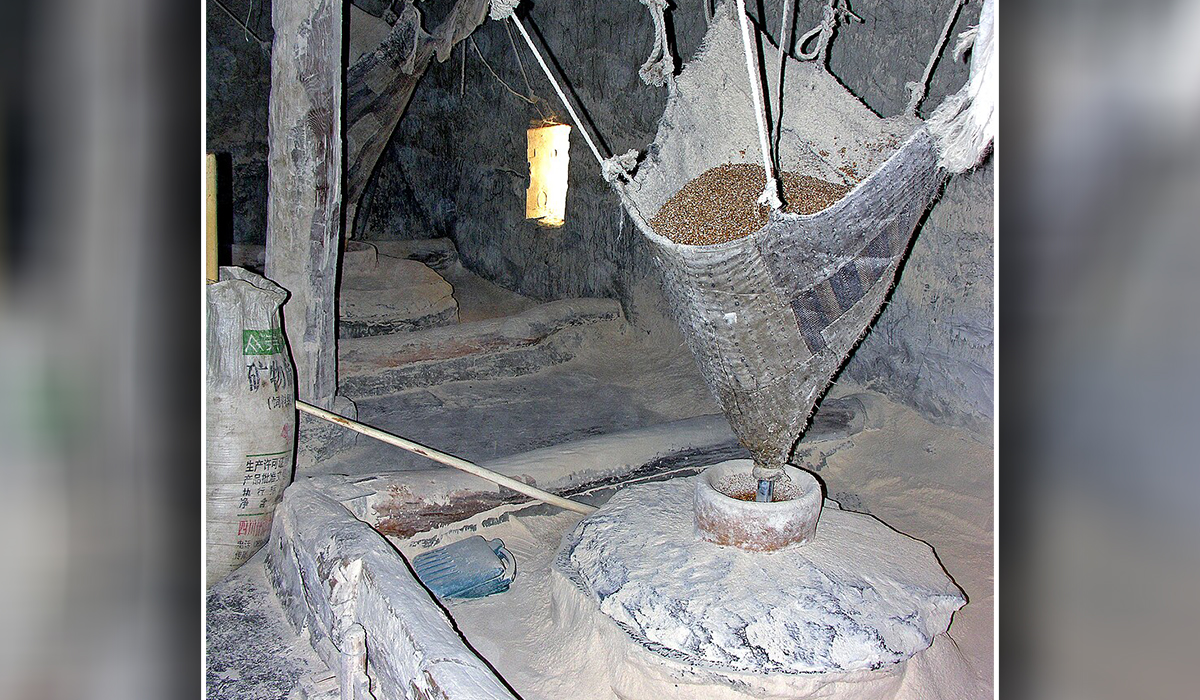

In earlier times, people depended on natural resources to meet their daily needs. One very important traditional technology among them was the water-powered flour mill, known in Punjabi and in many hilly regions as a gharat. It was a mill that ran on the force of water from a river, canal, or small stream and was used to grind wheat, maize, and other grains.
Today, most flour mills run on electricity, but the water-powered flour mill was a traditional and environmentally friendly method. This technique remained a part of people’s lives for centuries, and the flour ground in it is still considered by many to be healthier.
What is a water-powered flour mill?
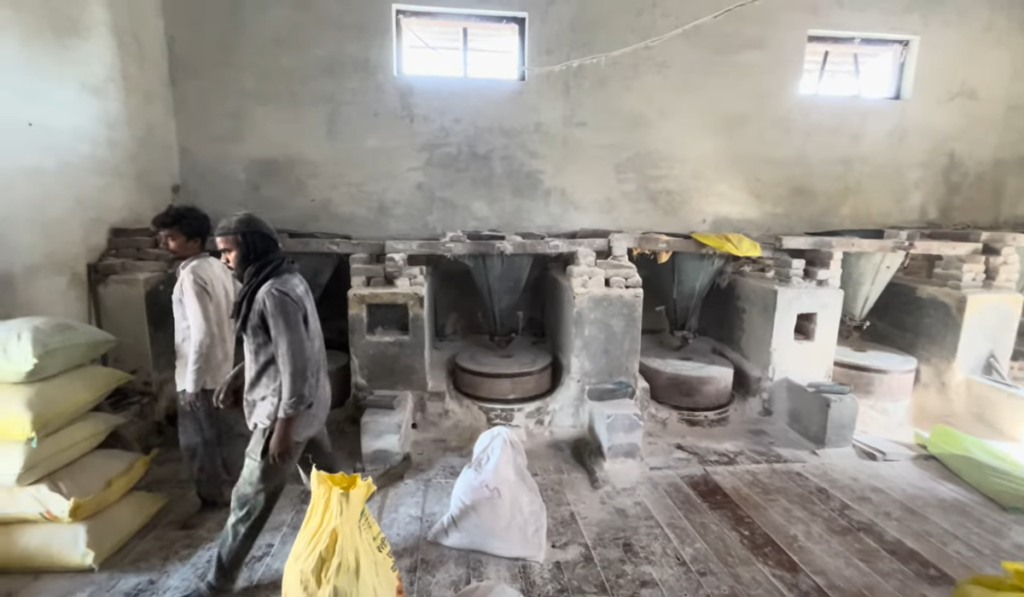
A water-powered flour mill is a device in which the speed of flowing water turns a wheel. This wheel is connected to a shaft, which rotates the upper grinding stone. When the upper stone turns, the grain placed between the two stones is ground into flour.
The entire process works through natural force alone. It requires neither electricity nor fuel. For this reason, it is regarded as a low-cost and environmentally safe method.
History of the water-powered flour mill
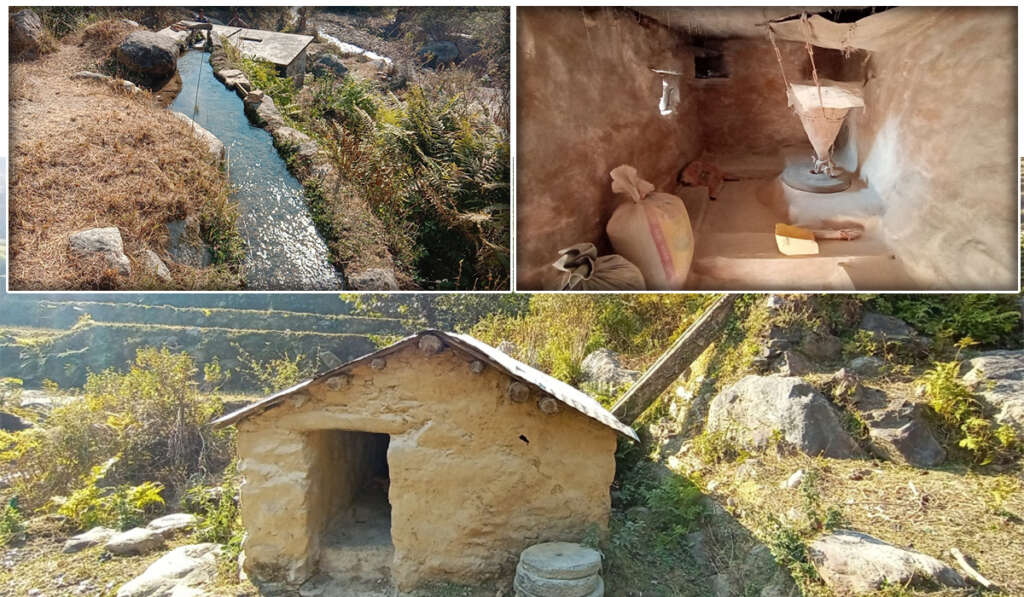
The history of water-powered mills is very old. This technology is believed to have been used in different parts of the world for thousands of years. In India, such mills were especially common in hilly regions like Himachal Pradesh, Uttarakhand, and Jammu & Kashmir, where they have long been known as gharats.
In earlier times, villagers would build a gharat near a river or a small stream. People brought grain from their homes and got it ground there. In this way, the mill was not just a machine, but also a center of village social life.
Main parts of the mill

A water-powered flour mill has several important parts that work together to operate it properly.
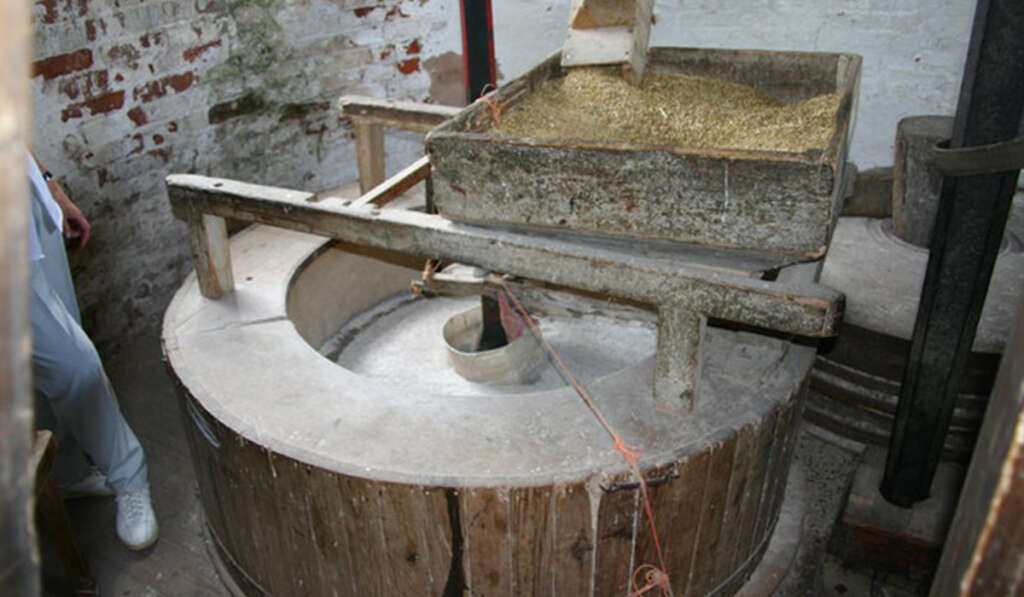
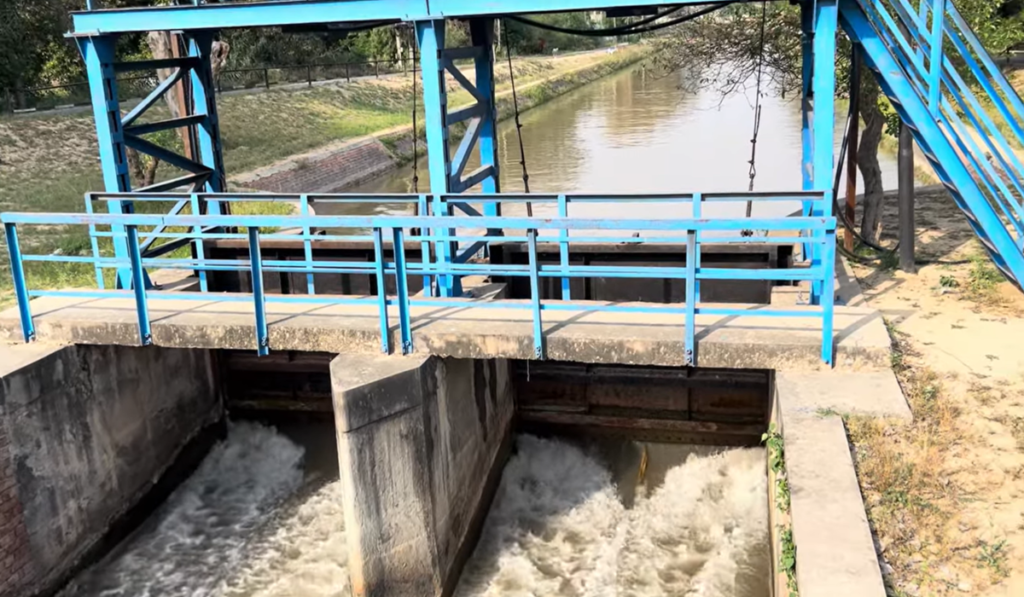
First, water from a river, canal, or stream is brought toward the mill through a channel or small watercourse. In many areas, this channel is called a kuhl. When the water strikes the wheel with force, the wheel begins to turn. The wheel is usually made of wood or metal and is connected to a long shaft. As the wheel turns, the shaft also turns, which sets the upper grinding stone in motion.
The mill has two stones. The lower stone remains fixed, while the upper stone rotates. There is also a small hopper above, into which grain is poured. The grain slowly falls between the two stones, where it is ground into flour. In this way, all these parts work together to keep the water-powered flour mill running.
How does the water-powered flour mill work?
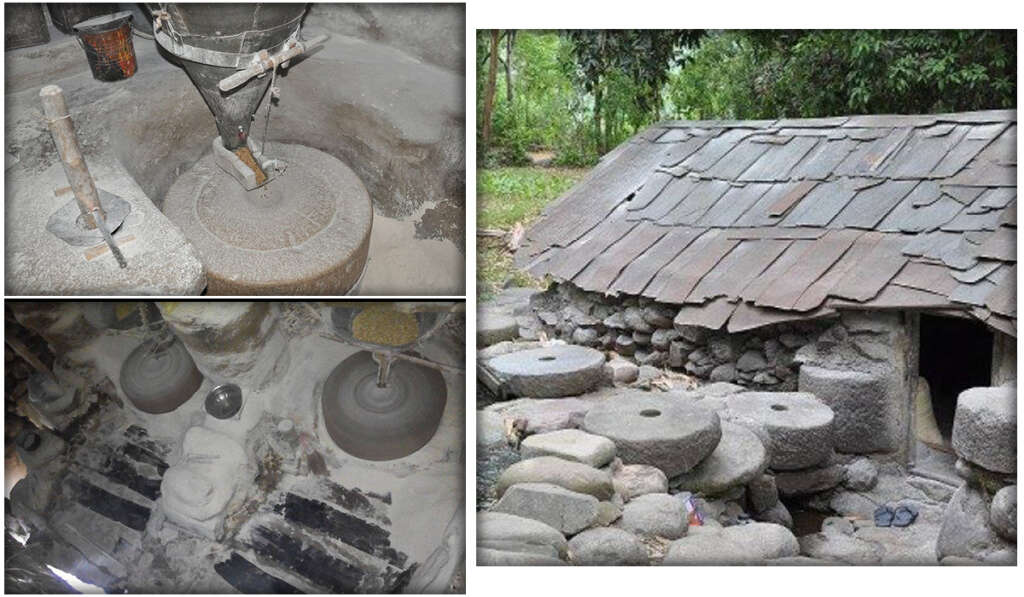
First, water is directed toward the mill through a channel. As it hits the wheel at speed, the wheel starts rotating. The shaft attached to the wheel also rotates, and this turns the upper stone.
The grain placed in the hopper falls slowly between the two stones. As the stones rotate, the grain is ground into flour. The prepared flour comes out from the side of the mill and is collected.
Benefits of the water-powered mill
The water-powered flour mill offered several important advantages, which is why it was widely used in villages in earlier times.
Its biggest advantage is that it does not require electricity. It runs entirely on the natural force of water, which makes it an inexpensive and simple method. It is also environmentally friendly because it produces no pollution. Since it operates through water power, it remains in balance with nature and does not consume fuel or electricity. Traditional gharats are widely described as low-cost, low-maintenance, and eco-friendly technologies.
In addition, the flour ground in a water mill is often considered better for health. The grain is ground slowly, which helps preserve the natural fiber, bran, flavour, and other qualities of the flour. A recent Tribune report on Punjab’s Sular Gharat also notes that its slow grinding preserves natural fibre, bran, and flavour better than many high-speed commercial mills.
It also costs little to operate because neither electricity nor other fuel is needed. For this reason, such mills were highly beneficial for rural communities, allowing people to grind household grain easily.
The importance of the gharat in earlier times
In the old days, the gharat was an important place in village life. People came there with their grain and often sat and talked while waiting. In this way, the gharat also became a place that brought villagers together.
Sular Gharat’s flour mill is still running today
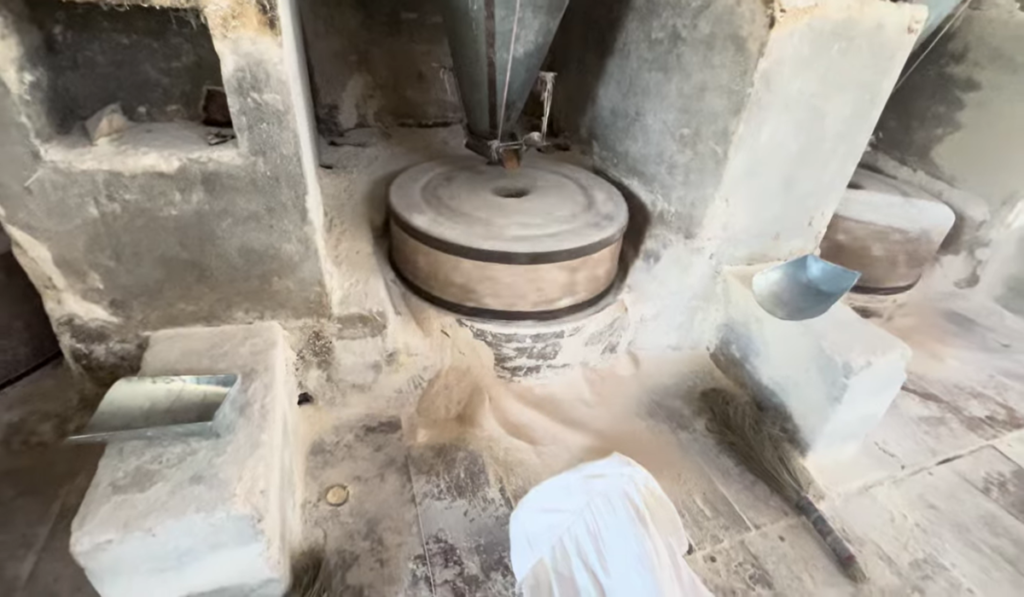
The flour mill at Sular Gharat is a very old and distinctive traditional mill that still runs on the power of water. According to a 2025 Tribune report, Sular Gharat in Dirba, Sangrur, is described as Punjab’s only functional water-powered flour mill, and it was reportedly built by the British in 1875.
What makes this mill special is that it uses flowing water instead of electricity. When canal water or a water current strikes the wheel with force, the wheel turns, and the attached stones grind grain into flour. In this way, the mill operates entirely on natural energy and continues to produce fresh flour for people.
In today’s modern age, when most flour mills run on electricity or machines, Sular Gharat stands as a living example of old heritage. People still come here to get grain ground because flour produced in this way is considered more natural and nutritious. Many also visit simply to see it, because it is one of the very few surviving water-powered mills in Punjab. This makes Sular Gharat not just a machine, but an important symbol of our traditional technology and culture.
The water-powered flour mill, or gharat, is an important part of our ancient culture and traditional technology. It was not merely a machine, but a significant element of village life.
This method is inexpensive, environmentally friendly, and beneficial from a nutritional point of view. Even in the modern era, we can learn from this technology and use it to maintain a better balance with nature.
For that reason, the water-powered flour mill is not just an old technique, but a heritage that deserves to be preserved.

Leave a Comment