


India’s current anti-Naxal moment should not be seen only as a security operation nearing its deadline. It should be understood as the visible end phase of a violent ideology that is losing space, losing cadres and most importantly losing belief. That is what makes the present moment important. The story is no longer only about guns recovered, camps built, or operations intensified. It is about an insurgent worldview that once claimed inevitability, now appearing exhausted, cornered, and increasingly irrelevant. That is exactly the point at which the comparison with Punjab becomes useful. Sikh separatist terror in Punjab was not defeated only when militants were neutralised. It was defeated when the ideology lost its hold on society, lost its territorial confidence, and was gradually pushed out of Punjab into exile politics and diaspora posturing. The anti-Naxal trajectory now appears to be moving in a similar direction.
The March 31, 2026 deadline set by Union Home Minister Amit Shah has become a major psychological and operational benchmark in this process. Officially, the government has reiterated that Naxalism will be eradicated from the country by that date. Whether every final pocket is fully dismantled exactly by the deadline is less important than what the deadline has already done. It has imposed urgency, aligned security pressure, and signalled to cadres, sympathisers, and local populations that the movement is no longer being treated as a permanent internal reality. It is being treated as something entering its final decline. In counter insurgency terms, that shift matters because movements often collapse when they stop appearing durable.

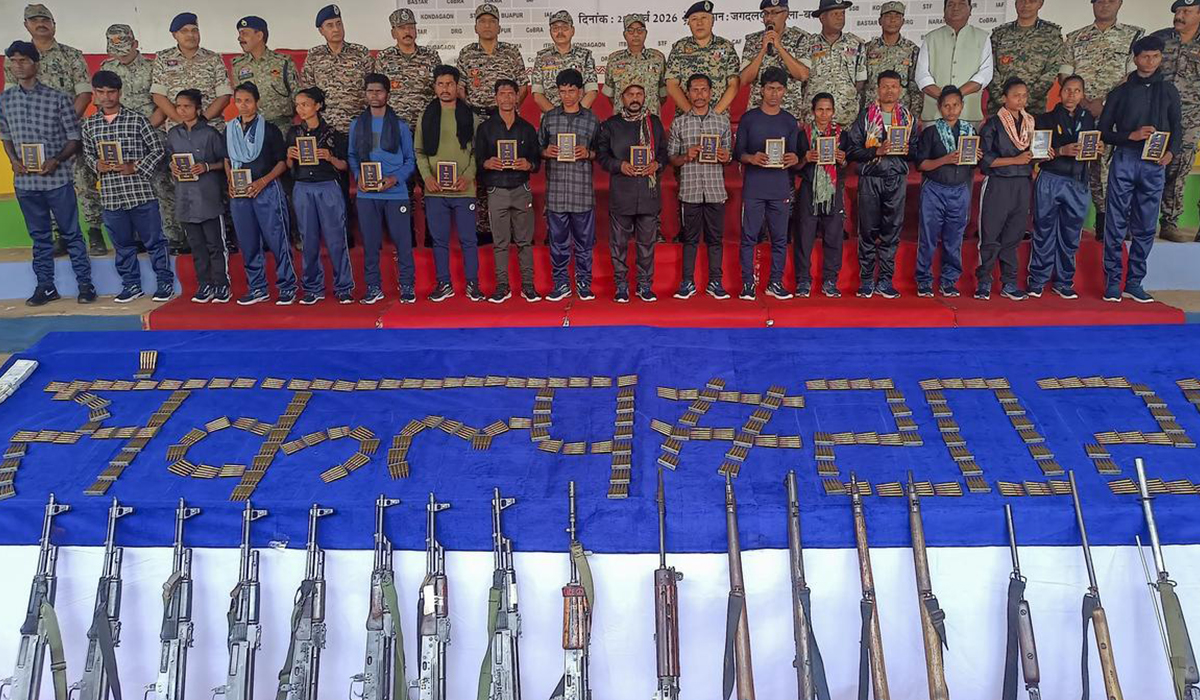
That is why the reported surrender of senior Maoist commander Papa Rao carries meaning far beyond one individual. Recent reporting describes him as a long time Maoist leader, active for decades and seen by security circles as one of the last major commanders in Bastar. His decision to surrender, along with members of his team, is important because it signals not merely operational attrition but ideological fatigue. When a veteran cadre concludes that the path ahead lies not in continued armed struggle but in laying down arms, the message reaches the entire insurgent ecosystem. It tells remaining cadres that even those who once embodied endurance no longer see strategic future in the cause. In Punjab too, the decisive turn came when militant violence stopped looking like destiny and started looking like decay. The gunman’s aura broke before the gun itself fully disappeared.
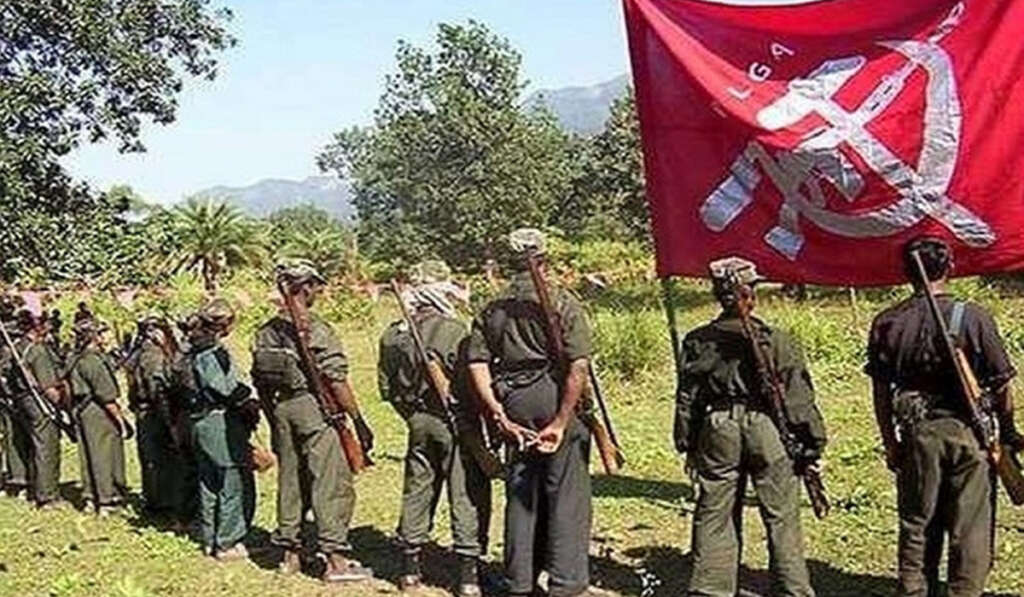
The territorial picture reinforces the same conclusion. Recent reporting says about 96 percent of Bastar is now free from Naxal influence, with only a small number of cadres left in remote pockets. Odisha has also declared districts such as Rayagada and Kalahandi free of Maoist influence. These are not minor administrative updates. They indicate that the insurgency’s geographical base is shrinking in visible ways. Naxalism depended heavily on geography. Dense forests, remote habitations, weak roads, and absent governance gave it both operational shelter and political theatre. It could present itself as the force that truly ruled the forgotten map. Once that map begins to close, the ideology loses more than safe havens. It loses mythology. Punjab offers the same lesson in another form. Sikh separatist terror was once rooted in local intimidation, symbolic domination, and territorial presence. Once that local hold weakened, what remained was largely rhetoric from outside Punjab rather than durable control inside it.
That comparison is the heart of the matter. Sikh separatist ideology did not vanish as a slogan. It lost Punjab. And once it lost Punjab, it lost the claim to shape the future of Punjab. What remained was exile language, foreign mobilisation, and performative radicalism disconnected from the everyday priorities of people on the ground. The same kind of separation now appears to be happening in the Naxal belt. The ideology may survive in statements, underground literature, or scattered networks. But if it loses its territorial relevance, its social confidence, and its ability to command fear, then it has already entered its end stage. An ideology can continue to speak long after it has lost the power to govern the lives of people. That is a form of political exile even when the language of the movement survives.
Another reason the Punjab analogy matters is that it helps clarify how violent ideologies truly die. They do not die only from force. They die when society rejects the cost of violence. They die when ordinary life becomes more compelling than revolutionary romance. They die when roads, schools, welfare access, and local dignity become stronger aspirations than underground command and coercive control. Recent reporting from Bastar makes this contrast especially vivid. Nearly 400 security camps are now expected over time to be repurposed into public infrastructure such as schools, hospitals, and collection centres. That image captures the deeper meaning of the present transition. Places once defined by the need to contain insurgent violence are being imagined as places that deliver civilian normalcy. In Punjab too, the long-term defeat of terror required not just forceful response but the return of everyday life as the stronger organising principle.
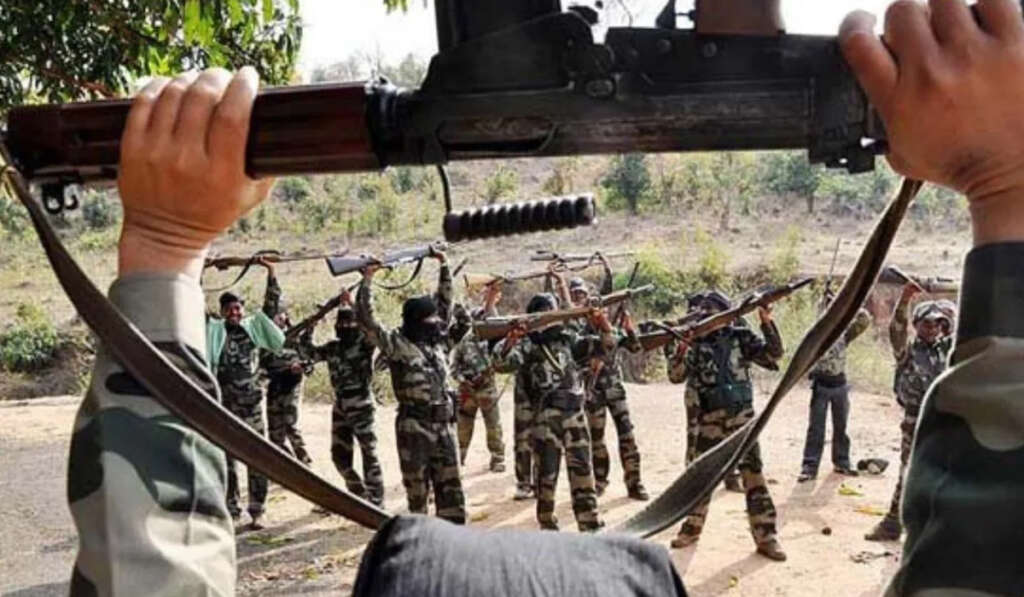
This is why the current anti-Naxal moment should be framed in national interest, not party interest. The issue is not merely that the state is winning. It is that regions long trapped between neglect and violence may finally be moving toward a more stable civic future. Naxalism claimed to speak for the excluded, but in practice it often trapped already vulnerable populations inside extortion, fear, underdevelopment, and the suspension of normal administration. Punjab saw a version of this contradiction too. Militancy claimed to act in defence of a larger cause, but in the end it burdened society with fear and grief while destroying the very normalcy people wanted restored. Once that contradiction became undeniable, the ideological base weakened.
The strongest way to understand the present moment, then, is this: Naxalism is not merely being fought. It is losing the ground beneath it in the same way Sikh separatist terror once lost the ground beneath it in Punjab. One lost its claim to Punjab and drifted into exile politics. The other now risks losing its claim to the forest belts it once dominated and drifting into irrelevance. If that process continues, the end of Naxalism will not be remembered simply as a security deadline met. It will be remembered as the point at which a violent ideology stopped commanding territory, stopped commanding belief, and stopped commanding the future.
That is the real victory. Not just surrendered weapons, but surrendered inevitability. Not just reduced violence, but reduced ideological hold. Not just operational success, but the collapse of fear as a system of governance. When that happens, the gun may still echo for a while, but the ideology has already lost.

Leave a Comment