

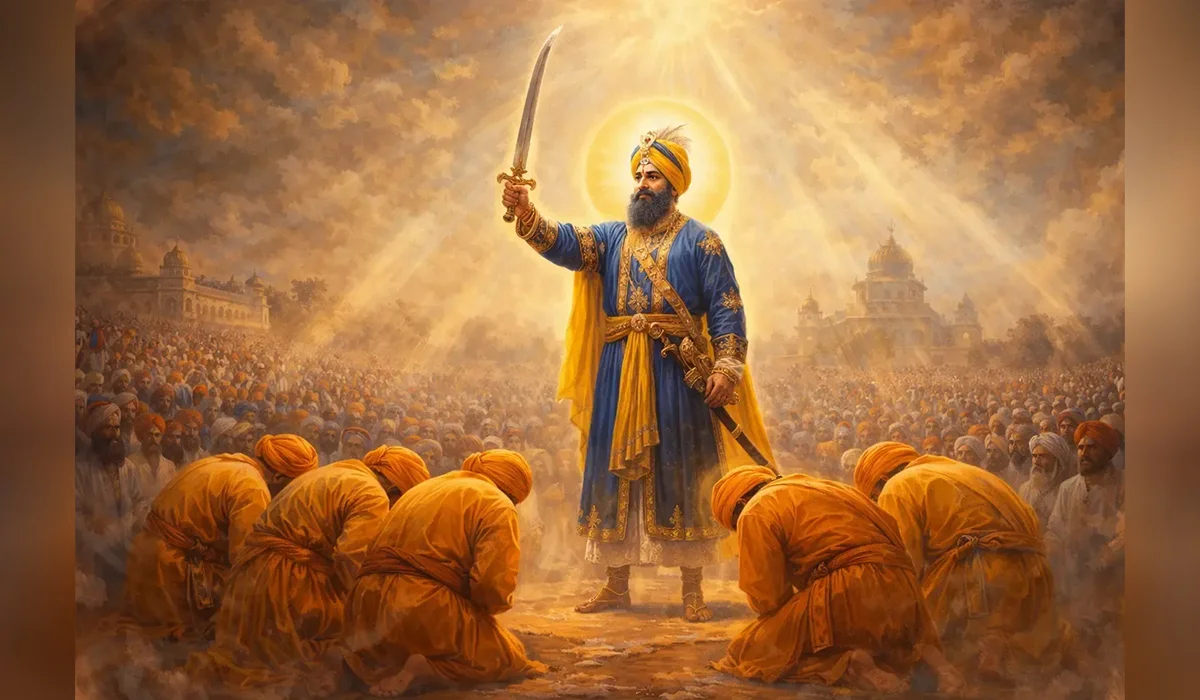

Vaisakhi is a significant festival of Punjab, which began as a cultural celebration of fairs and harvest but gradually evolved into a major religious identity. Dr. Ravinder Singh, Assistant Professor in the Department of History at Guru Tegh Bahadur Khalsa College, shared in a special conversation with Sada Punjab how Vaisakhi and the creation of the Khalsa Panth brought a profound transformation in history.
The tradition of celebrating Vaisakhi dates back to the time of Guru Nanak Dev Ji. However, it was Guru Gobind Singh Ji who gave this day a unique and defining meaning by establishing the Khalsa Panth, thus granting the Sikh community a distinct identity.
The Historic Vaisakhi of 1699
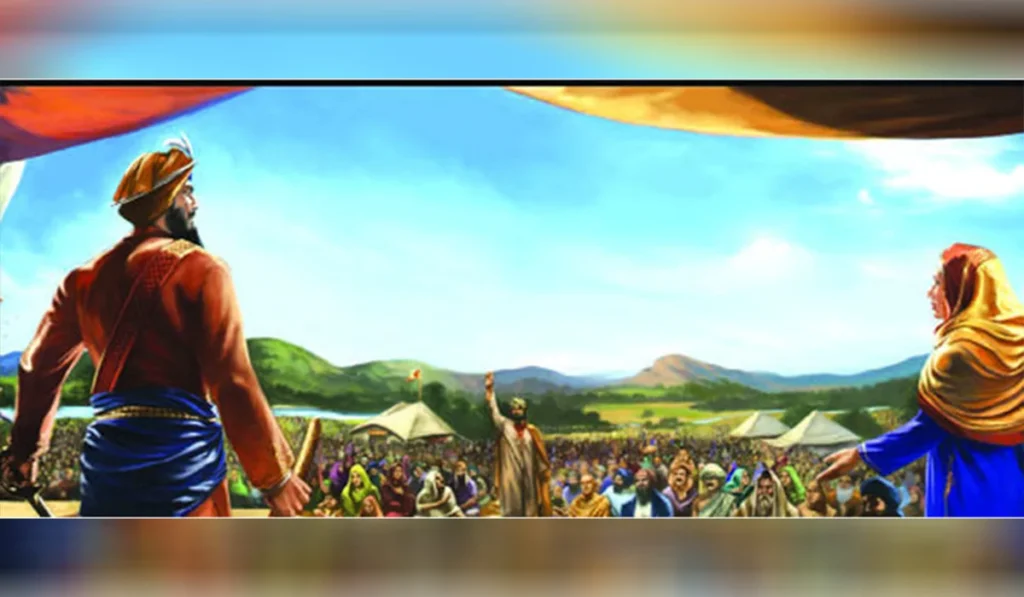
The Vaisakhi of 13 April 1699 stands as one of the most significant moments in history. On Guru Gobind Singh Ji’s call, a massive gathering of approximately 80,000 to 85,000 devotees assembled at Takht Sri Kesgarh Sahib in Anandpur Sahib.
The congregation was not limited to Punjab alone. People traveled from far-off regions including Lahore, Central India, Odisha, and even Karnataka in South India.
The Selection of the Panj Pyare
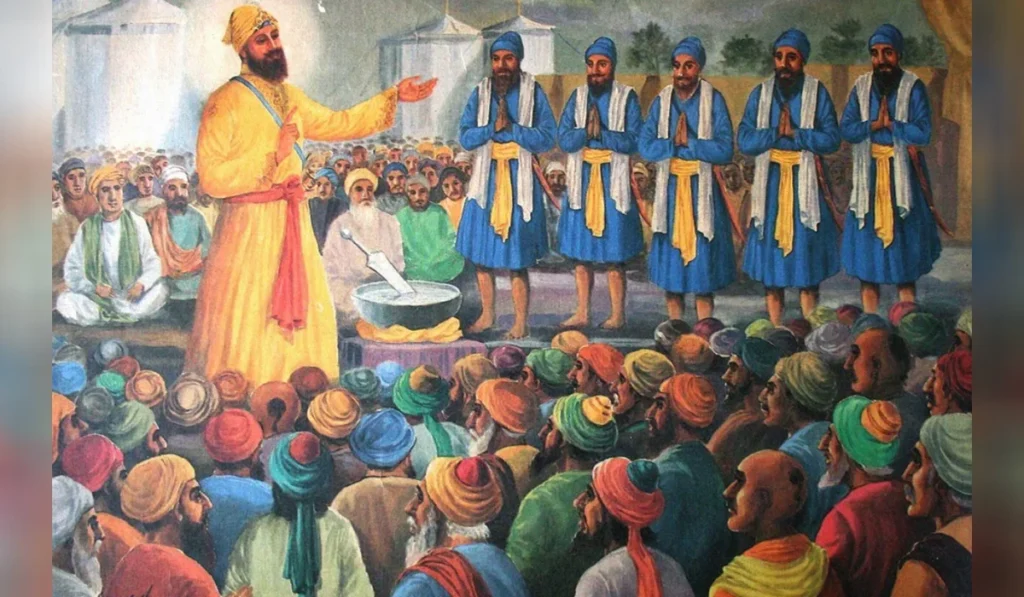
In this grand assembly, Guru Gobind Singh Ji, holding a drawn sword, asked for five heads. One by one, five Sikhs stepped forward, ready to offer their lives:
• Bhai Daya Ram
• Bhai Dharam Das
• Bhai Himmat Rai
• Bhai Mohkam Chand
• Bhai Sahib Chand
These five were honored as the Panj Pyare (Five Beloved Ones).
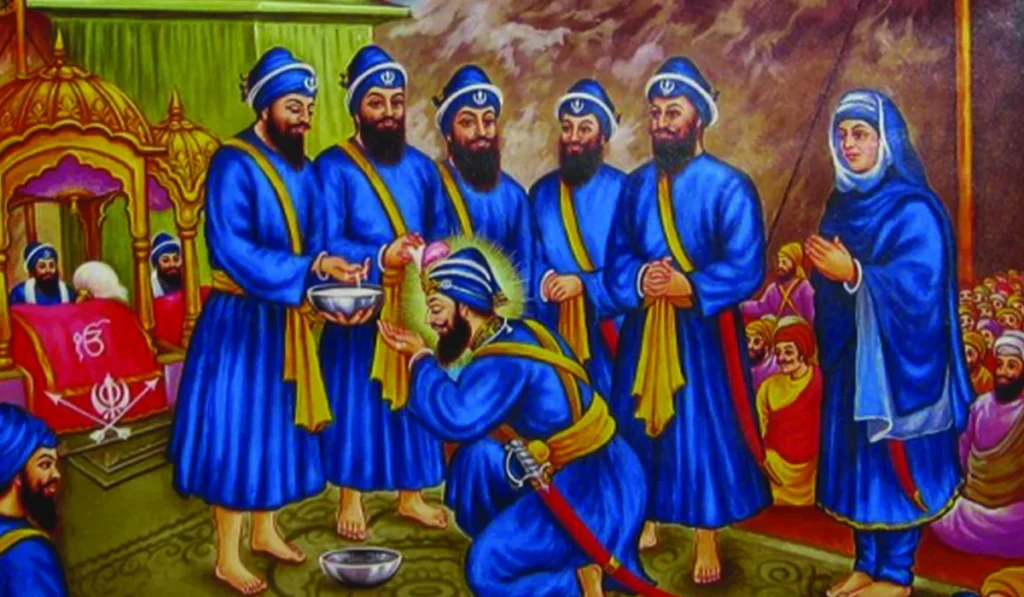
Guru Ji replaced the earlier practice of Charan Pahul with the initiation of Khande di Pahul (Amrit). He first administered Amrit to the Panj Pyare and then humbly received it from them himself, symbolizing equality. This moment echoed with the spirit captured in the line:
“Waho Waho Gobind Singh, Aape Guru Chela”
(Guru Gobind Singh himself became both the Guru and the disciple.)
After initiation, the five were given the surname “Singh”, becoming:
• Bhai Daya Singh
• Bhai Dharam Singh
• Bhai Himmat Singh
• Bhai Mohkam Singh
• Bhai Sahib Singh
A Distinct Identity for the Khalsa
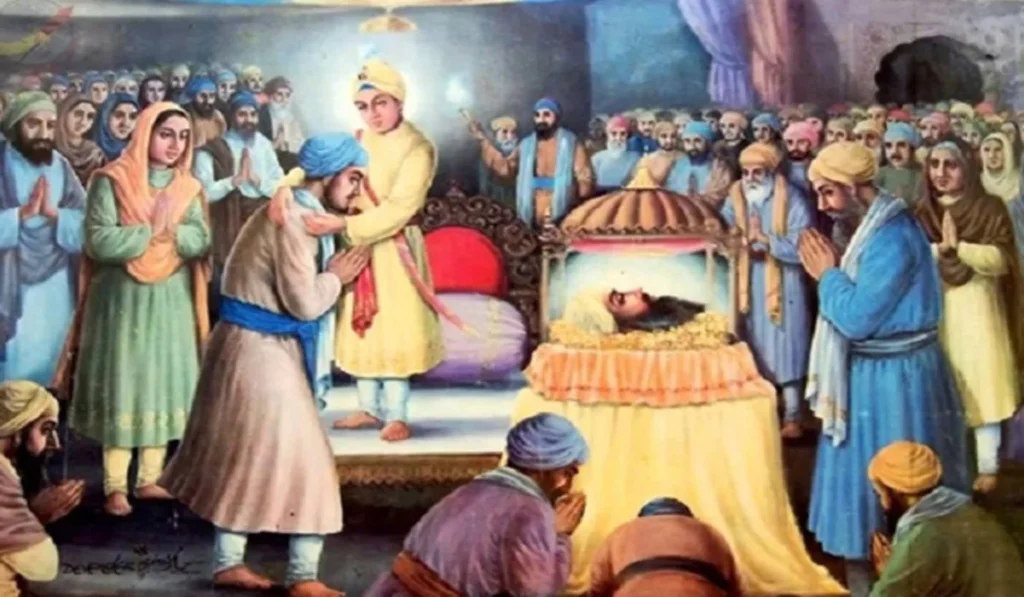
The creation of the Khalsa had deep historical roots. After the martyrdom of Guru Tegh Bahadur Ji in Delhi, Bhai Jaita Ji brought his severed head to Anandpur Sahib. At that time, the young Gobind Rai asked whether any Sikh was present at the scene. The reply was that no one could be identified as a Sikh in the crowd.
It was then that Guru Ji resolved to create a Sikh identity so distinct that it would stand out even among thousands.
The Five Ks and a Unique Existence
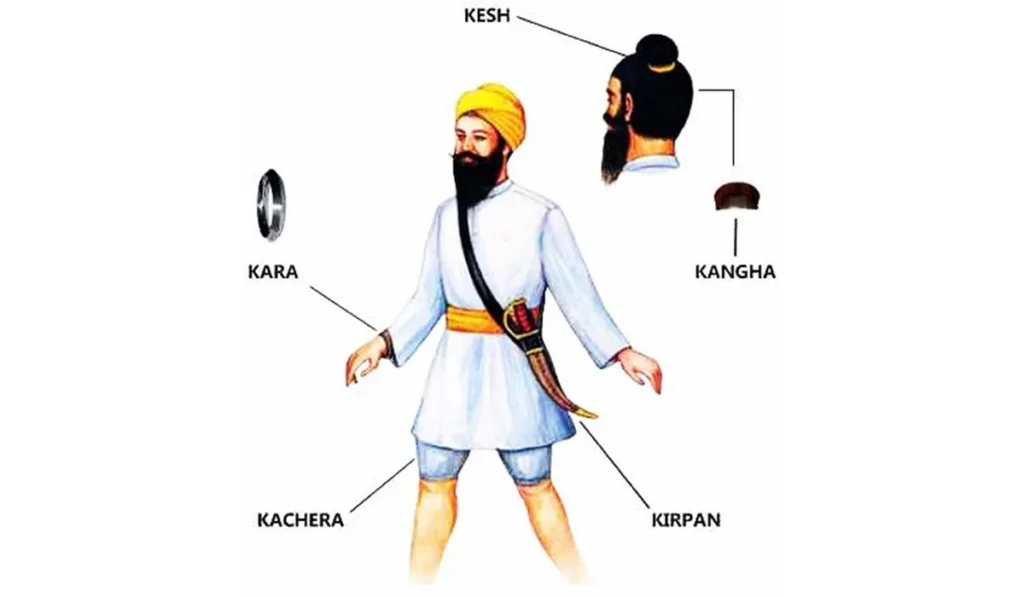
To fulfill this vision, Guru Gobind Singh Ji introduced the Five Ks (Panj Kakaar):
• Kesh (uncut hair)
• Kangha (comb)
• Kara (steel bracelet)
• Kirpan (sword)
• Kachhera (shorts)
He gave men the surname “Singh” and women the name “Kaur”, establishing equality and dignity.
The word “Khalsa” means pure or one directly connected to the Divine. Through this transformation, Guru Ji not only gave a religious identity but also shaped Sikhs into “Saint-Soldiers”, creating a new and unparalleled identity in world history.
In Essence
Vaisakhi is not just a festival. It marks a moment when identity, courage, equality, and spiritual strength came together to redefine a community and leave a lasting imprint on history.


Leave a Comment