

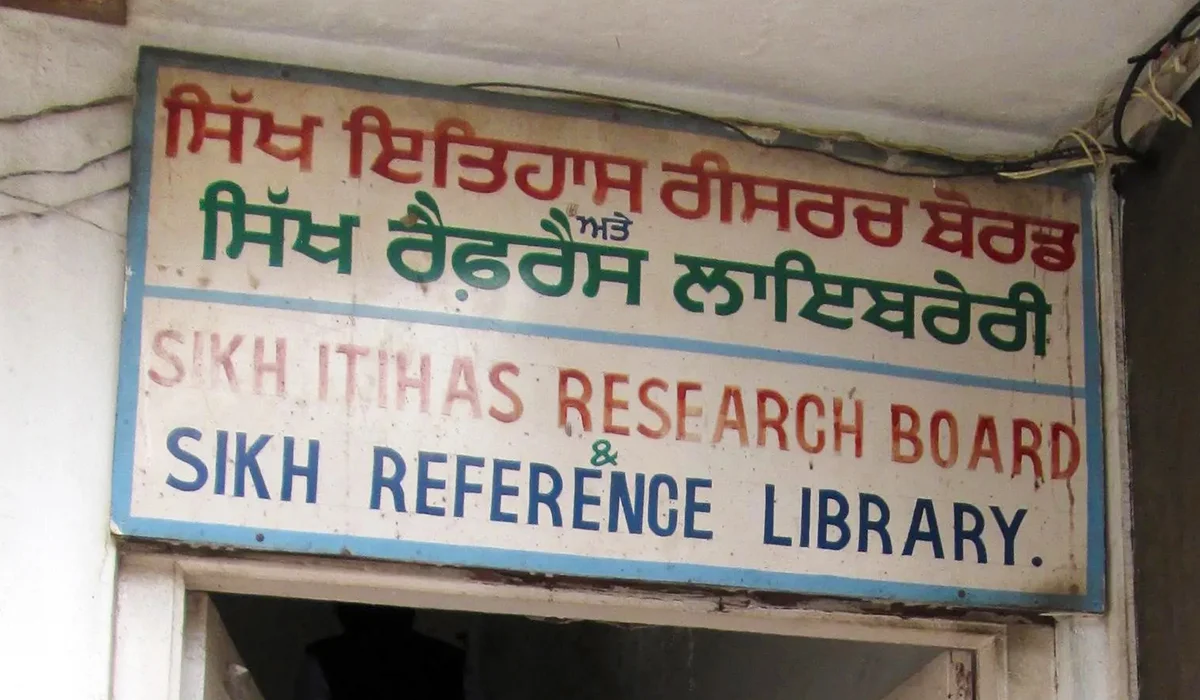

The existence of any community lies hidden in its history, culture, and literature. For the Sikh community, the Sikh Reference Library, located within the Sri Harmandir Sahib complex, is not merely a library, but a treasure house of the spiritual and historical legacy of the Sikh Gurus, saints, devotees, and freedom fighters, a legacy whose value cannot be measured against any jewel or precious stone in the world. The damage inflicted on this library during Operation Blue Star in 1984 was not only an unbearable tragedy for the Sikhs, but also for the intellectual heritage of all humanity.
The Sikh Reference Library was established on 8 February 1946 by the Shiromani Gurdwara Parbandhak Committee (SGPC). Its main purpose was to collect rare manuscripts and books related to Sikh religion, history, and the Punjabi language under one roof.
Before the 1984 attack, the library held 20,000 rare manuscripts
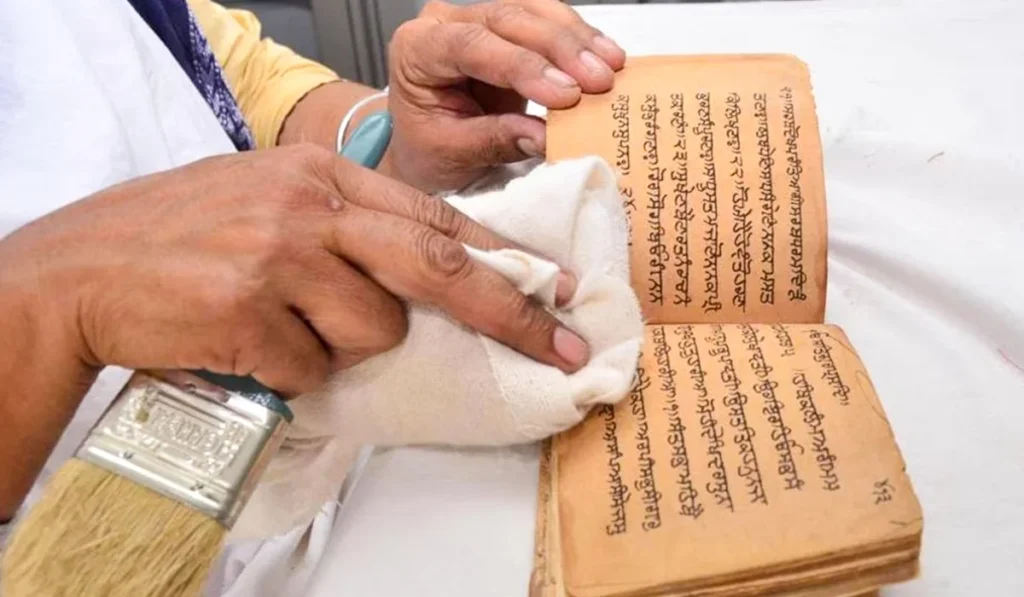
Before the 1984 attack, the library housed around 20,000 rare manuscripts. According to media and SGPC reports, this treasure included 12,613 rare and ancient books, 512 handwritten saroops and birs of Sri Guru Granth Sahib Ji, around 2,500 other handwritten religious texts, 20–25 original hukamnamas issued by the Sikh Gurus, and important documents related to the Sikh misls and the era of महाराजा रणजीत सिंह. From 1984 till now, major Sikh religious bodies, including the SGPC, have continued to raise this issue, but it still remains unresolved.
The fire of 1984 and the memory of Nalanda
In June 1984, when the army attacked Sri Harmandir Sahib, the Sikh Reference Library became one of its major targets. According to witnesses and historians, the library was set on fire. This incident recalls those dark chapters of world history when universities like Takshashila and Nalanda were burned down and centuries of knowledge turned to ashes. For Sikhs, this loss was far deeper than physical injury. The destruction of handwritten birs and the disappearance of relics connected to the Gurus amounted to an intellectual genocide, one whose loss has never been fully repaired.
For many decades, Sikh organizations have maintained that much of the library’s material was seized by central agencies and has still not been fully returned.
The issue of restoring this heritage echoed in Parliament

Recently, Rajya Sabha Member Satnam Singh Sandhu raised this sensitive issue forcefully in Parliament. Through a Calling Attention Motion, he informed the House that the literary treasure of the Sikhs that was either damaged or seized during the 1984 attack must be revived for the honor of the community and the preservation of history. Sandhu demanded that the documents lying with central agencies should be returned, and that those that were damaged should be restored through modern technologies. He argued that the Sikh Reference Library is not only a religious institution, but an important part of India’s shared cultural heritage.
AI and modern technology: a new ray of hope
In response to Satnam Singh Sandhu’s question, Union Culture Minister Gajendra Singh Shekhawat shared a very encouraging update. He said that the Central Government is ready to work in this direction under the Gyan Bharatam Mission. Two major technologies have been suggested for this restoration.
Multi-spectral imaging technology helps in reading documents that have been badly damaged by fire or moisture, or whose ink has faded away. By using different wavelengths of light, it can reveal hidden writing again.
With the help of Artificial Intelligence (AI), incomplete texts can be understood in context and reconstructed. This technology can also prove revolutionary in the digitization and translation of manuscripts.
The Gyan Bharatam Mission and the Sikh Library
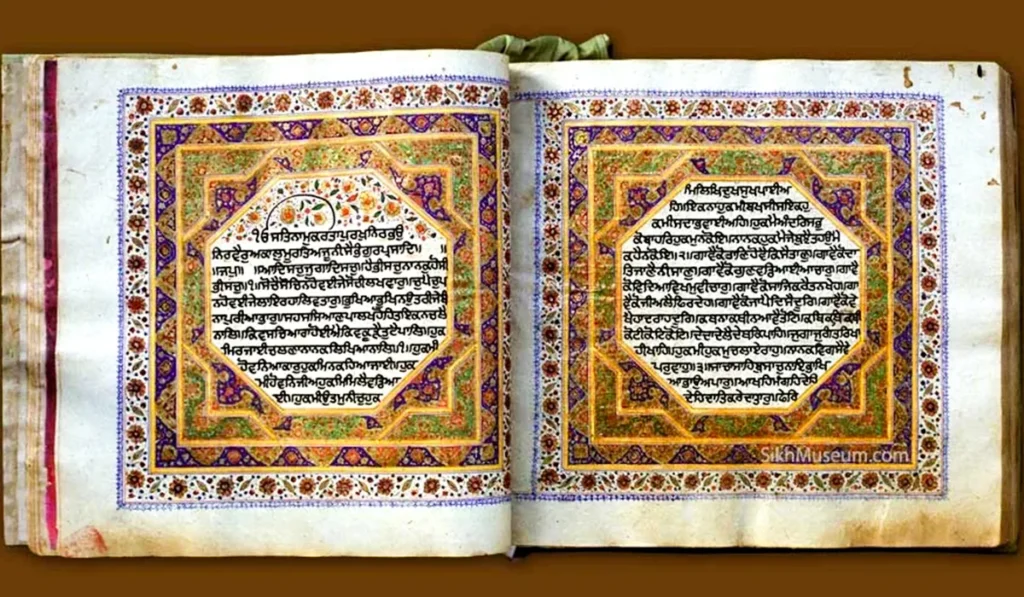
The Government of India’s Gyan Bharatam Mission is committed to preserving the country’s ancient manuscripts. If, under this mission, the holdings of the Sikh Reference Library are digitized, it will be a great gift for future generations. This will not only preserve historical facts, but will also allow researchers across the world to access the depth of Sikh history with a single click.
It must be said that the restoration of the Sikh Reference Library should not remain merely a government exercise. It should be a shared responsibility of the Sikh community, the SGPC, and the Government of India. To heal the wounds of 1984, it is essential that the lost portion of Sikh literature be recovered and preserved through scientific methods. Through modern technologies such as AI and digital archiving, we can bring our glorious history back to life. If we do not preserve these historical writings today, the next generation will drift away from its roots.


Leave a Comment