


There is a kind of pride that does not need a microphone or a stage. It spreads quietly through a village lane, settles on the faces of older men sitting outside shops, and finds its way into the eyes of children who have not yet learned the name of the game but already understand that something worth celebrating has happened. That was the mood in Ghorenhbia village on the day kabbadi player Manga Singh came home.
The Return of a Village Son
Manga Singh, known in kabaddi circles as Bullet Ghorenhbia, had been away for a month. He had travelled to New Zealand as part of the Baba Bir Sahib Club’s touring squad. He played four competitive matches on foreign soil, and returned with something that cannot be folded into a suitcase: pride in his journey from a farming family in rural Punjab to the international stage.
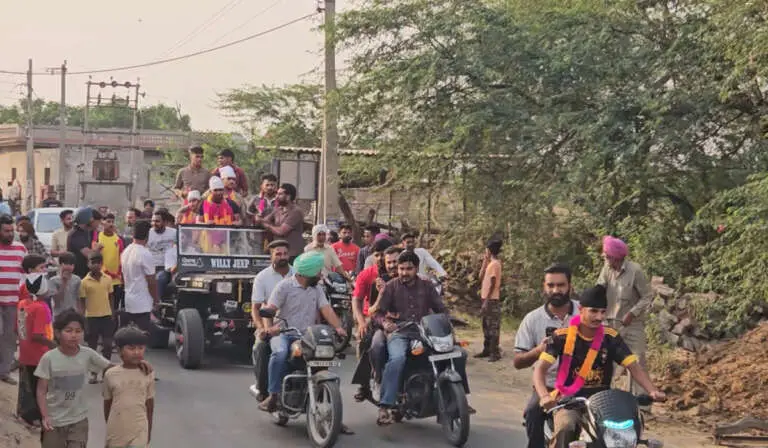
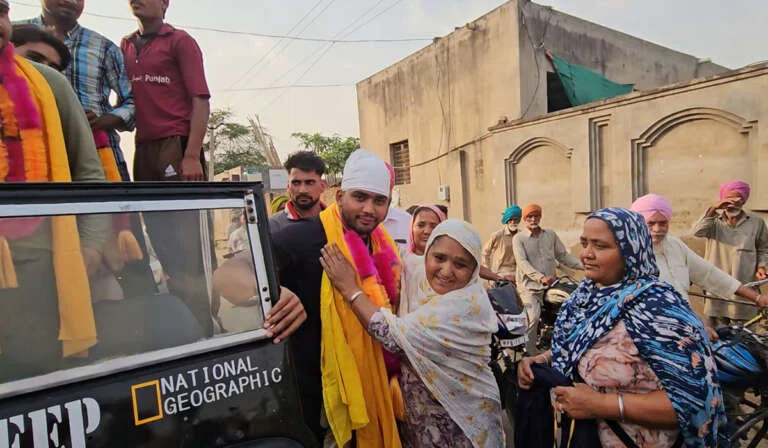
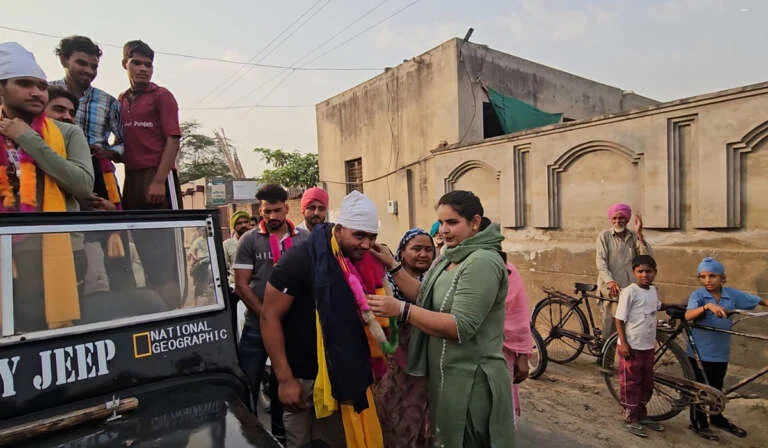
His arrival in the village was not heralded with pomp and show. There were no printed banners, no hired sound systems. Those gathered at the village entrance were people who knew him, people who had watched him grow up, people who had seen him practice on the same patch of earth where the village children still play after school. They came out on their own.
A Motorcycle and What It Meant
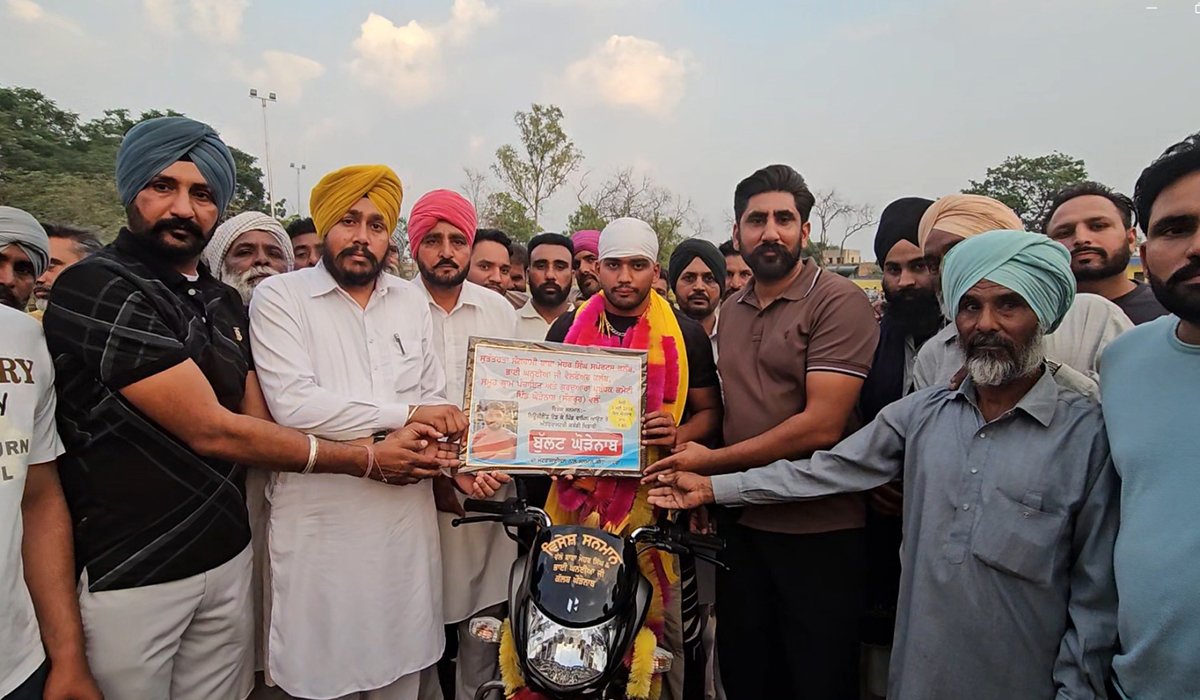
Formal recognition followed soon after. The Baba Mehar Singh Sports Club, the Bhai Ghaniyya Welfare Club, the Gurdwara Prabandhak Committee, and the Gram Panchayat jointly presented Manga Singh with a motorcycle as a mark of honour. The motorcycle was a statement: that hard work done quietly, without complaint or fanfare, does not go unnoticed. That a son of Punjab had carried its name across an ocean and returned with honour.
Sarpanch Lakhveer Singh said that Manga Singh, the son of an ordinary farmer, had trained on the fields of this village and gone on to represent it internationally. He called him a guiding light for the younger generation. Any young person who brings recognition to the village, he said, will be honoured in the same way.
Four Years of Work, One International Tour
Manga Singh has been playing kabaddi for four years. He is not a product of an academy or a well-funded sports program. He learned the game on the kind of ground that most urban sports administrators would not bother to survey: uneven, dusty, and far from any spotlight.
This year, after joining the Baba Bir Sahib Club, he was selected for the New Zealand tour. By the standards of international sporting events, it was a modest assignment. By the standards of Ghorenhbia village, it was historic. Manga Singh is the first player from this village to have played kabaddi abroad.
Speaking after his return, he was measured and grateful. He thanked God and the people of his village. He spoke about what the experience had given him and what he hoped others might take from it. Then he said something that struck a chord with the village elders and sports enthusiasts: he appealed to the youth of the area to quit drugs and take up sports instead. It was not a speech. It was a request from someone who had found, through sport, what life had to offer.
Dharminder Singh Gaggi, president of the Baba Mehar Singh Sports Club, placed the achievement in its proper context. Manga Singh is the first player from the village to play internationally. That alone made the occasion worth celebrating. But Gaggi says the honour will also inspire the next generation of children and young people towards glory through sport.
What a Village Communicates Through Recognition
There is a wider meaning to this story, one that rural Punjab and the area’s sports lovers understand better than others. When a community comes together to honour one of its own for doing something honest and difficult, it sends a positive message that travels further than any individual ceremony.
Young men in villages across Punjab are often described, in newspaper reports and government studies alike, as being particularly vulnerable to drug abuse. The reasons are structural and complicated. But the recognition that Ghorenhbia gave Manga Singh operates as a counterweight. It tells a young person, in the plainest possible terms, that there is another route. That the road that runs through practice grounds, through physical discipline, through the grinding monotony of training on a village field in the early morning, can lead somewhere meaningful. The people of Ghorenhbia are not under any illusion one celebration will solve a regional crisis. But they understand that culture is built out of small, repeated choices. Honouring Manga Singh was one such choice.
From Dirt Fields to an International Stage
Manga Singh’s story does not follow the template of the celebrated athlete. There is no talent scholarship, no coach who spotted him at a district tournament and arranged for him to train at a specialised facility. He learned the game in the village, stayed there, joined a local club this year, and was selected for an international tour.
What makes the story worth telling is its ordinariness. Across Punjab, there are hundreds of young men at the same starting point. Most of them will never get the opportunity Manga Singh received. But his story at least confirms that the opportunity is not impossible, that the path from a farming family and a village field to an international kabaddi ground remains open to those willing to put in the effort.
A Village That Chose to Pay Attention
In a country where recognition for rural athletes is more often promised than delivered, a village that celebrates its son is worth recording. ‘Bullet Ghorenhbia’ is in his twenties and has been playing kabbadi for four years. He has a long career ahead of him if he stays injury-free. What he carries back from New Zealand, beyond the experience of playing at the international level, is the knowledge that the village he comes from was watching and cheering him on. That is something a young man does not forget.
Leave a Comment