

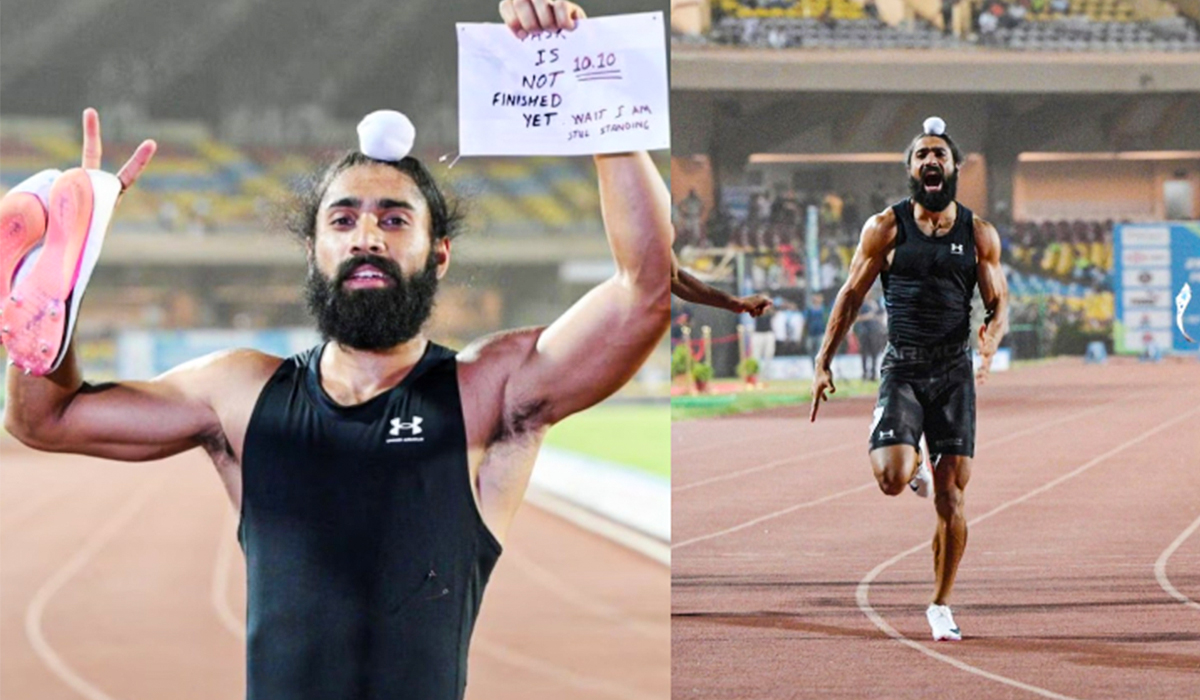

When the curtains came down on the 65th National Inter-State Senior Athletics Championships in Bhubaneswar last month, Punjab had quietly announced itself as one of the country’s fastest-rising athletics states. The medals came from every corner of the track and field arena.
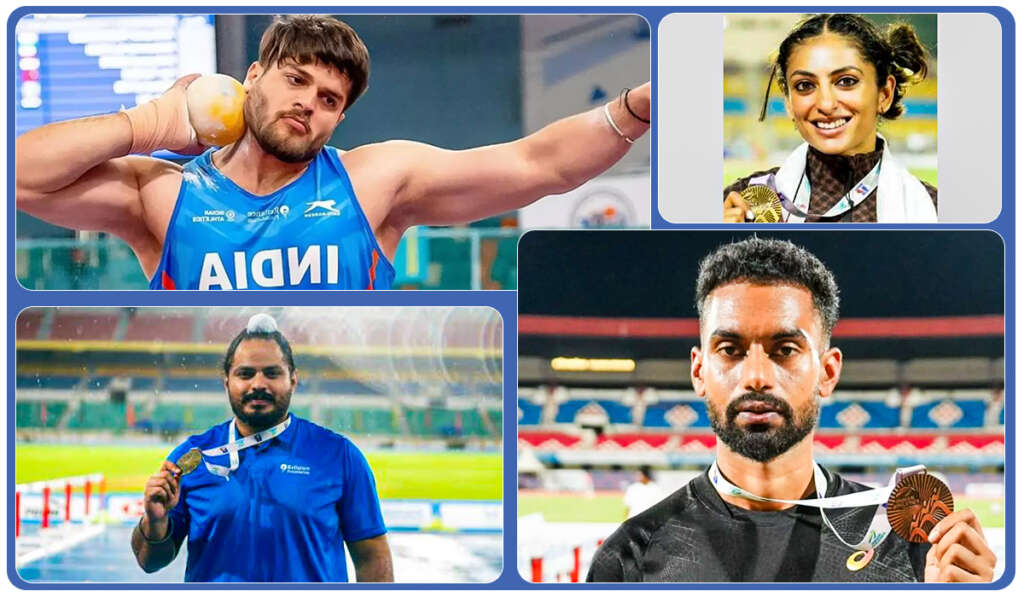
Karanveer Singh struck gold in the men’s shot put with a best effort of 20.49m, while Damneet Singh topped the podium in the men’s hammer throw with 69.72m. Niharika Vashisht clinched silver in the women’s triple jump with 13.22m, Harmanjot Singh produced a gritty bronze in the men’s 5000 metres in 13:54.60, and Punjab’s mixed 4×400m relay team added another silver to the state’s tally.
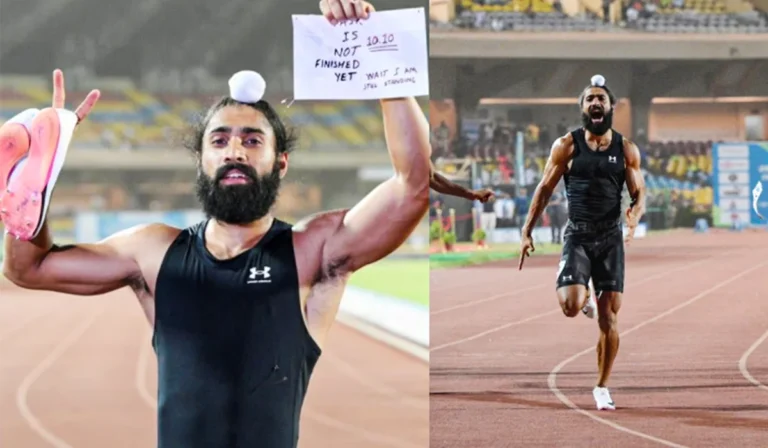
These performances came barely weeks after Gurindervir Singh rewrote Indian athletics history by clocking 10.09 seconds in the men’s 100 metres to become the fastest Indian ever, underlining what many in Indian athletics have begun to notice- Punjab is no longer producing isolated champions. It is producing a generation.
More Than a Good Season
Punjab has given legendary athletes Milkha Singh, Gurbachan Singh Randhawa, Ajmer Singh and Makhan Singh, who made the state and the country proud with their achievements till the 1960s.
Since then, Punjab’s sporting identity has revolved around hockey, wrestling and kabaddi. Those sports continue to thrive, but athletics is once again emerging as a bright spot in the sports landscape of Punjab.
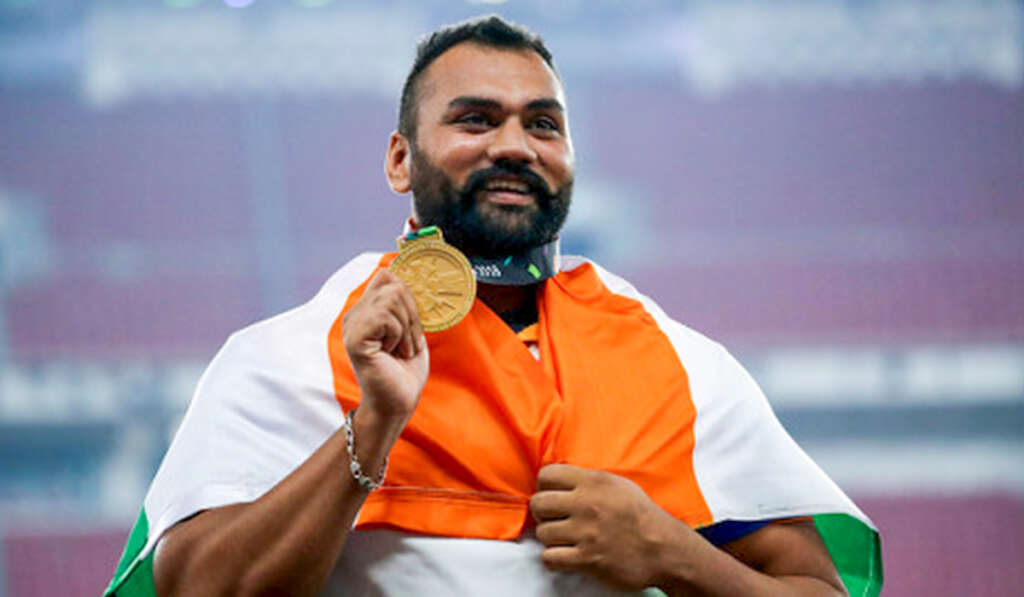
From Gurindervir Singh’s record-breaking sprint to Tajinderpal Singh Toor’s dominance in shot put, from Damneet Singh’s emergence in hammer throw to the rise of Harjit Singh, Rashdeep Kaur, Niharika Vashisht and Harmanjot Singh, Punjab is steadily building one of India’s strongest athletics pipelines.
What’s striking is the diversity of these achievements. The state is winning medals in sprinting, throws, jumps, relays and even distance running- a sign of a maturing athletics ecosystem rather than dependence on one discipline alone.
The Punjab Advantage
Punjab has always possessed one ingredient that cannot be manufactured- sporting culture. Across villages and towns, sports remain an integral part of everyday life. School competitions, village tournaments, kabaddi leagues and wrestling akharas have traditionally nurtured speed, strength, discipline and competitive spirit.
For years, naturally gifted youth gravitated towards wrestling or kabaddi. Today, more and more are choosing athletics.
The reasons are obvious. Athletics offers greater opportunities at the Asian Games, Commonwealth Games, World Championships and Olympics, besides government jobs and scholarships. Young athletes now see the running track as a realistic pathway to a professional sporting career.
From Patiala to Private High-Performance Centres
No discussion on Punjab athletics is complete without acknowledging the contribution of the Netaji Subhas National Institute of Sports (NIS), Patiala. For over six decades, NIS has served as India’s premier coaching institution, producing generations of athletes, coaches and sports scientists. It laid the foundation for much of India’s athletics development.
But today’s success story of Punjab is no longer built on one institution alone.
The biggest transformation in Indian sports has been the emergence of corporate-backed high-performance programmes. Organisations such as the Reliance Foundation, JSW Sports, and other elite training initiatives have introduced sports science, biomechanics, nutrition, physiotherapy, recovery management and performance analytics into athlete preparation.
Gurindervir Singh and Damneet Singh’s association with the Reliance Foundation is a reflection of this changing landscape. Elite athletes today train with multidisciplinary support teams rather than depending solely on individual coaching. Similar pathways are increasingly available to promising athletes from Punjab, allowing them to transition from district meets and state camps to world-class training environments.
Rather than replacing institutions like NIS, these private initiatives have strengthened the overall ecosystem, giving athletes access to facilities and expertise once available only in leading sporting nations.
Corporate high-performance programmes do not recruit athletes based on geography- they recruit them based on medal potential. The fact that Punjab’s athletes are increasingly finding places in these elite systems reflects the quality of talent the state is now producing. Gurindervir Singh and Damneet Singh are already part of that ecosystem, while the performances of athletes such as Karanveer Singh, Harmanjot Singh and Niharika Vashisht suggest that Punjab’s pipeline is only getting stronger.
Champions Inspire Champions
Sporting success has a multiplying effect. When the youth watch Gurindervir Singh become India’s fastest man or see Tajinderpal Singh Toor dominate Asian competition, they begin to believe that international success is possible without leaving Punjab.
Every champion creates the next generation.
That growing belief is visible in training centres across the state, where athletics is attracting youth who once would have chosen only hockey, wrestling or kabaddi. Punjab is no longer celebrating individual breakthroughs. It is beginning to expect them.
The Next Challenge
The journey, however, is far from complete. Winning national medals is one milestone; consistently producing Asian champions, World Championship finalists and Olympic medallists is another.
That will require continued investment in grassroots coaching, women’s athletics, sports science and athlete welfare. It will also depend on stronger collaboration between government institutions, private foundations and experienced coaches.
Yet the momentum is unmistakable. The performances at the National Inter-State Championships, Gurindervir Singh’s national record, and the emergence of athletes across multiple disciplines suggest that Punjab is witnessing something more significant than a successful season. It is witnessing an athletics renaissance.
For generations, Punjab gave India hockey legends and wrestling icons. The next decade may well see it become the state’s most productive nursery for track and field athletes. And if the current trajectory continues, India’s next athletics superstar may once again emerge not from chance- but from Punjab.

Leave a Comment