



When someone enters a gurdwara in Punjab, they are usually greeted by the sweet aroma of Karah Prasad. Today, however, a new kind of fragrance is emerging from some historic Sikh shrines: the scent of fresh soil, young saplings and indigenous seeds. Across several religious sites in Punjab, native tree saplings and heritage seeds are now being distributed as prasad, putting the teachings of the Sikh Gurus into practice. This is not merely an environmental initiative; it is a unique blend of spirituality and ecological stewardship rooted in centuries-old Sikh philosophy.
Respect for Nature in Gurbani

Sri Guru Granth Sahib establishes a profound relationship between humanity and nature. Guru Nanak Dev Ji, in Japji Sahib, declared:
“Pavan Guru, Pani Pita, Mata Dharat Mahat”
(Air is the Guru, Water is the Father, and Earth is the Great Mother.)
Sikh history also offers remarkable examples of environmental stewardship. The Seventh Guru, Sri Guru Har Rai Ji, established magnificent gardens such as the famous “Naulakha Bagh” at Kiratpur Sahib, demonstrating Sikhism’s deep connection with nature. Gurbani references numerous trees including neem, berry, mango, jamun, sandalwood and date palm, showing that for the Sikh Gurus, trees and plants were not ordinary objects but sacred elements of God’s creation.
Prasad and Greenery: A Unique Initiative

In November 2025, during the 556th birth anniversary celebrations of Guru Nanak Dev Ji, a historic “Green Nagar Kirtan” was organized in Phagwara. During the procession, two tractor-trolleys loaded with saplings were distributed to devotees as prasad.
The Nagar Kirtan passed through historic sites such as Gurdwara Guru Ka Bagh, Gurdwara Bebe Nanaki Da Ghar and Gurdwara Sri Ber Sahib. Addressing the congregation, Rajya Sabha Member Sant Balbir Singh Seechewal stated that Guru Nanak Dev Ji had delivered the message of protecting air, water and soil centuries ago, and that this same message offers solutions to today’s global climate crisis.
Earlier, the Delhi Sikh Gurdwara Management Committee (DSGMC), during the 550th birth anniversary celebrations of Guru Nanak Dev Ji, distributed more than 200,000 saplings of trees mentioned in Gurbani, including neem, berry, jamun, amla and mango. The committee also launched a target of planting 100,000 trees across its schools and colleges. Additionally, newly admitted students were required to plant and care for ten trees as part of their academic projects.
Green Missions at Historic Gurdwaras
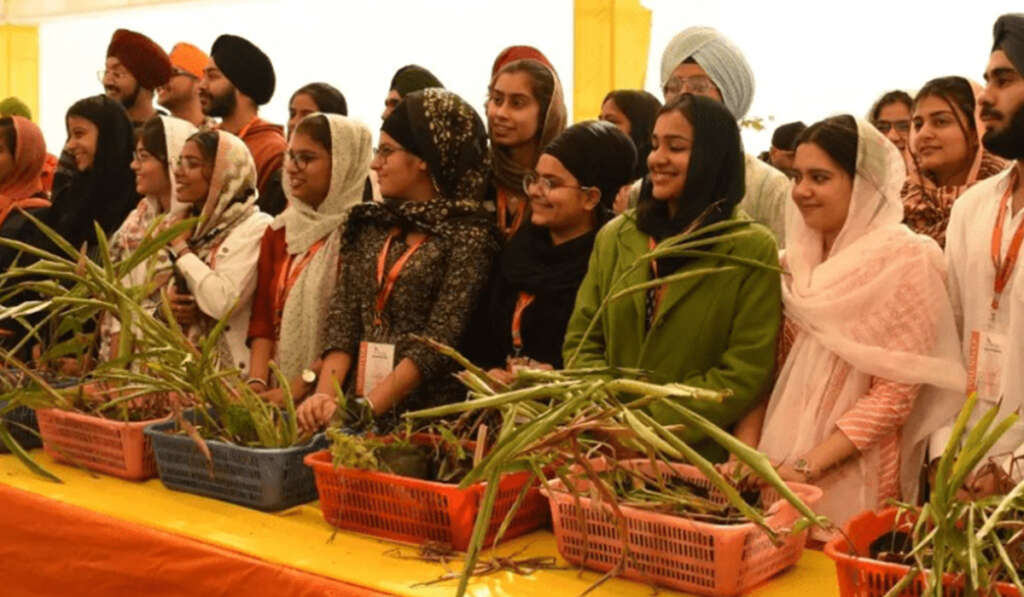
In Khadur Sahib, the historic town associated with Guru Angad Dev Ji, millions of saplings have been distributed and planted under the leadership of Sewa Singh, Director of Nishan-e-Sikhi Charitable Trust. Today, many of those saplings planted by devotees along roadsides have grown into mature trees.
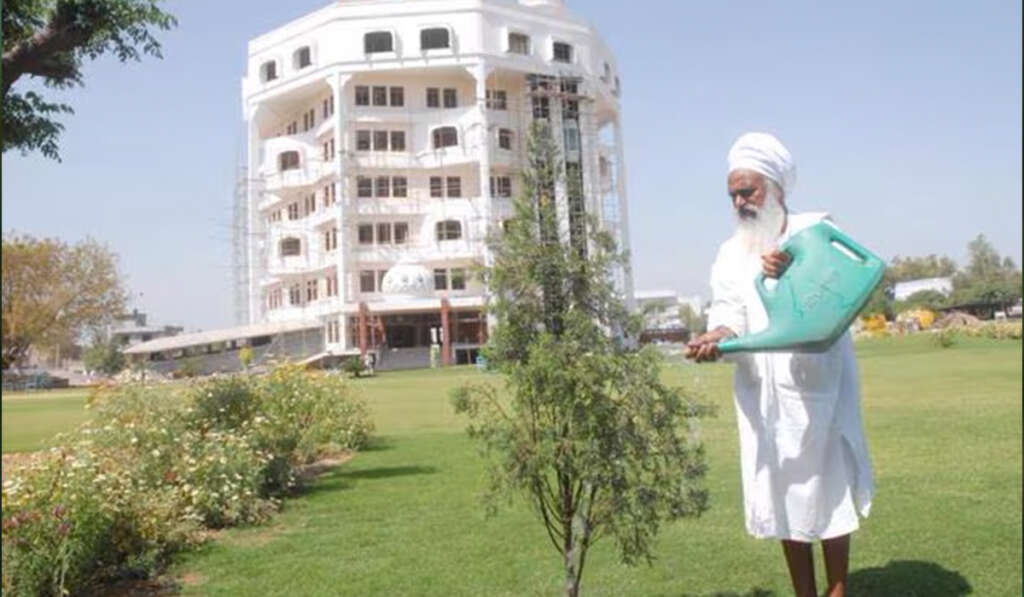
Similarly, the organization EcoSikh has supported the revival of Guru Har Rai Ji’s historic Naulakha Bagh at Kiratpur Sahib and has emphasized the preservation of medicinal plants to keep traditional herbal knowledge alive.

EcoSikh has also established a five-acre “Guru Granth Sahib Bagh” at the historic Gurdwara Gurusar Sahib in Patto Hira Singh village, Moga district. This unique garden contains 6,000 trees representing 58 different species mentioned in Sri Guru Granth Sahib. Informational plaques accompany each tree, displaying its Punjabi and English names, botanical name and relevant Gurbani references.
The garden serves not only as an environmental project but also as a living educational resource for children and young people.
Sant Seechewal’s Message

Sant Balbir Singh Seechewal, who launched the historic environmental campaign to clean the polluted Kali Bein in 2000, continues to promote the practical implementation of Sikh teachings.
He emphasizes that Gurbani identifies air, water and earth as the foundations of human life, yet human greed has placed all three under threat. Seechewal has also urged Parliament to make environmental education a compulsory subject in schools across India so that children can develop a connection with nature from an early age.
Sikh Environment Day: Planting Trees as a Religious Duty

EcoSikh observes “Sikh Environment Day” every year on March 14, marking the Guruship Day of Guru Har Rai Ji. In 2013, the Jathedars of all five Sikh Takhts officially recognized the occasion.
First launched in 2010, the initiative operates with support from international environmental organizations, including UNDP and ARC. EcoSikh encourages gurdwaras to distribute native tree saplings among devotees, particularly species suitable for Punjab’s climate, such as neem, arjun, jamun, mulberry and berry trees.
Why This Initiative Is Important for Punjab

Today, Punjab’s forest cover stands at only about 3–4 percent, compared to the ideal target of 33 percent. Intensive chemical farming has contributed to declining groundwater levels, increasing air pollution and reducing soil fertility.
In such circumstances, initiatives led by gurdwaras are not only religiously significant but also socially vital. When a devotee receives a sapling from a gurdwara, it is viewed as a sacred gift from the Guru and is cared for with devotion. This spiritual connection becomes a powerful force for environmental conservation.
Guru’s Teaching, Earth’s Protection

Gurdwaras have always been the soul of Punjabi society. Today, as these sacred institutions promote environmental stewardship, they demonstrate that Sikh teachings are not only concerned with the peace of the soul but also with the well-being of the planet.
A sapling or indigenous seed received as prasad and planted in a courtyard is not merely a plant. It is a seed of Guru Nanak Dev Ji’s message that teaches us that serving nature is, in essence, serving the Creator.

Leave a Comment