

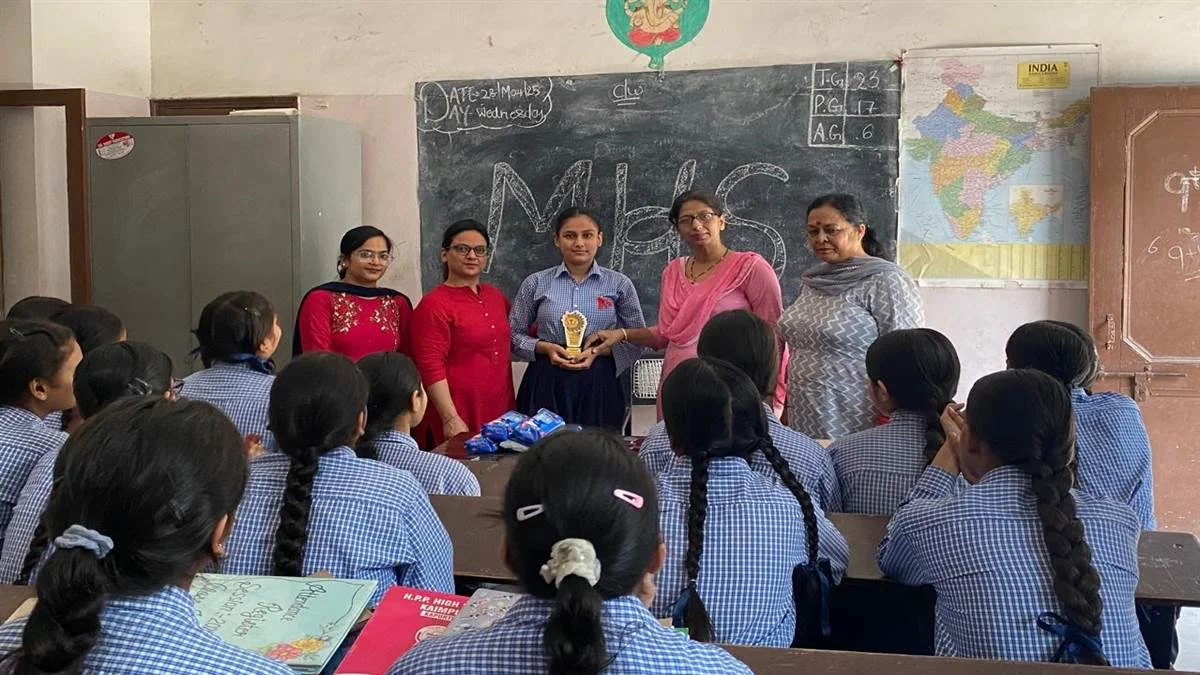

Every year on 28 May, Menstrual Hygiene Day encourages governments, health experts, schools, and communities to speak openly about menstruation. The conversation often focuses on sanitary products, awareness campaigns, and the social stigma that still surrounds periods. However, across large parts of India, another problem receives far less attention. For millions of women and girls, menstrual hygiene is inseparable from access to water.
When wells dry up, hand pumps stop working, and water becomes scarce, the burden falls disproportionately on women. In drought-affected regions, menstruation is no longer only a matter of health. It becomes a daily struggle for water, privacy, sanitation, and dignity.
As rising temperatures, erratic rainfall, and recurring droughts affect many parts of the country, the link between climate stress and women’s health is becoming increasingly evident. Behind statistics on water scarcity lies a quieter story, one that affects women in their homes, schools, and communities every month.
A Daily Reality in Water-Stressed Regions
In many villages across Rajasthan, Bundelkhand, and parts of central India, women begin their day long before sunrise. Carrying buckets and containers, they walk considerable distances or wait in queues to collect water for their families.
Even under normal circumstances, this task consumes time and energy. During menstruation, the challenge becomes significantly greater.
Maintaining personal hygiene requires additional water for bathing, washing reusable cloth, cleaning toilets, and safely managing menstrual products. When water supplies are limited, these basic requirements often become difficult to meet.
In several drought-prone communities, families are forced to prioritise drinking water, cooking, and livestock over personal hygiene. As a result, women frequently reduce their water use, often at the expense of their health and comfort.
What appears to be a simple water shortage can quickly become a question of personal dignity.
What the Research Reveals
The relationship between drought and menstrual hygiene has recently received greater attention from researchers.
A study published in BMC Women’s Health in 2025 examined data from the National Family Health Survey 5 and combined it with satellite-based drought mapping across 707 districts in India. The findings offered one of the clearest pictures yet of how water scarcity affects menstrual hygiene practices.
Researchers found that nearly 45 percent of the population lived in areas experiencing drought-like conditions. Around 30 percent of households lacked water facilities, while approximately 18 percent had no toilet facilities.
These numbers point to a serious challenge. When households lack reliable access to water or sanitation infrastructure, managing menstrual hygiene safely becomes far more difficult.
The study also found that women in drought-affected areas were more likely to face barriers related to hygiene management. Limited water availability often forced households to rely on unsafe or inadequate practices.
The findings were particularly significant in western and central India, where drought conditions have become increasingly common. However, challenges related to menstrual hygiene were also evident in states such as Uttar Pradesh, Bihar, and Assam.
The research highlighted an important reality. Water scarcity is not merely an environmental issue. It directly shapes women’s health outcomes and everyday living conditions.
Health Risks Extend Beyond Discomfort
Menstrual hygiene is often discussed in terms of convenience, but the consequences of poor hygiene can be far more serious.
According to the World Health Organization, inadequate menstrual hygiene can increase the risk of infections and other health complications. When women lack sufficient water to wash themselves, clean reusable materials, or maintain sanitary conditions, health risks rise significantly.
In many rural communities, women continue to use old cloth, ash, or other materials because safer alternatives are unavailable, unaffordable, or difficult to manage in water-scarce conditions.
The problem becomes more severe when toilets are absent or poorly maintained. Privacy is limited, sanitation suffers, and women are left with fewer options to manage their periods safely.
For many women, menstruation becomes a source of stress rather than a routine biological process.
The Impact on Education
The effects of inadequate menstrual hygiene extend well beyond health.
Across India, thousands of adolescent girls miss school during menstruation. The reasons are often straightforward. Schools may lack clean toilets, running water, disposal facilities, or private spaces where girls can manage their periods comfortably.
Several studies conducted between 2018 and 2022 found that between 20 and 30 percent of girls missed school during menstruation because of inadequate facilities.
Absenteeism may appear temporary, but repeated interruptions can affect academic performance, confidence, and long-term educational outcomes.
For girls living in water-stressed regions, the challenge is even greater. Limited infrastructure at school often mirrors the conditions they experience at home.
As a result, menstruation can become one more obstacle in an already difficult educational journey.
A Global Challenge With Local Consequences
India is not alone in facing these difficulties.
The joint WHO and UNICEF report published in 2023 revealed that 2.2 billion people worldwide still lack access to safely managed drinking water. An estimated 3.5 billion people lack adequate sanitation services.
The report also found that one in three schools globally continues to operate without basic hygiene facilities.
These figures demonstrate that menstrual health remains closely linked to broader issues of water access, sanitation infrastructure, and public health.
While the challenge is global, its consequences are often felt most sharply at the local level, particularly among women and girls living in vulnerable communities.
India’s Progress and Remaining Gaps
Over the past decade, India has introduced several initiatives to improve menstrual health and sanitation.
The Menstrual Hygiene Scheme, launched in 2011, aimed to raise awareness and improve access to sanitary products among adolescent girls. The Swachh Bharat Mission, launched in 2014, expanded toilet construction across rural and urban areas.
These programmes have helped improve conditions in many parts of the country.
However, experts continue to point out a critical limitation. Toilets alone cannot solve the problem if reliable water supplies are unavailable.
A toilet without water often remains underused or unusable. Similarly, access to sanitary products provides only partial relief when women lack the water needed for safe hygiene practices.
According to NFHS 5 data, only 64 percent of Indian women and girls aged 15 to 24 use hygienic menstrual protection methods. The figure rises to 77 percent in urban areas but falls to 57 percent in rural regions.
These differences reveal persistent inequalities in access and infrastructure.
Punjab’s Mixed Experience
Punjab offers an example of both progress and continuing challenges.
In November 2025, the state government expanded the Navin Disha Scheme, under which free sanitary pads are distributed every month through Anganwadi centres.
By March 2026, more than 13.65 lakh women had benefited from the programme, and over 7.37 crore sanitary pads had been distributed through more than 27,000 Anganwadi centres across the state.
The initiative aims to improve menstrual hygiene while encouraging open discussion about a subject that remains sensitive in many communities.
However, despite these efforts, challenges persist.
Several rural areas continue to face irregular water supply. In some villages, toilets exist but lack adequate water connections. Women still travel considerable distances to collect water, particularly during the summer months when groundwater levels decline.
These realities demonstrate that menstrual health cannot be addressed solely through product distribution.
Water remains a fundamental requirement.
Looking Beyond Menstruation
Menstrual hygiene is often treated as a women’s issue, but its roots extend far beyond gender.
It is linked to water security, sanitation systems, education, public health, and climate change. Each of these factors influences the others.
As temperatures rise and water stress intensifies across many regions, policymakers and communities will increasingly need to view menstrual health through a broader lens.
The challenge is not simply about providing sanitary products or constructing toilets. It is about ensuring that women have access to the basic resources required to manage a natural part of life safely and with dignity.
Menstrual Hygiene Day serves as an important reminder of that responsibility.
Because when water disappears, the consequences extend far beyond dry fields and empty reservoirs. They quietly reach into classrooms, homes, and healthcare outcomes, affecting the dignity, health, and opportunities of millions of women across India.

Leave a Comment