


In today’s age of globalization, the world has shrunk into a small village. No nation can remain untouched by the social, political, economic, cultural, linguistic and philosophical influences of other nations. Under the cover of globalization, capitalist nations have very cleverly extended their own capitalist, colonial, neo-colonial and imperial policies into developing and underdeveloped countries—not only in the economic sphere, but also in their social, political, linguistic, cultural and philosophical domains. As a result, weaker nations have begun to feel that their very existence is under threat. They have therefore started to deeply examine their own culture, language and philosophy so that they can assert their distinct identity before their own people as well as before the world, and respond firmly to the onslaught of dominant capitalist nations.
While the entire world is becoming more conscious of its identity, the tragedy of the “Punjabi nation” (Punjabiyat) is that it is not even fully conscious of its own selfhood. The urge to ask “Who are we?” seems largely absent from this community. Until the “Punjabi nation” (Punjabiyat) becomes aware of its own identity, it will remain difficult for Punjab to walk proudly on the world map. Punjabis have neither fully embraced the pluralistic nature of their region’s intellectual tradition, nor allowed it to flourish freely; instead, they have often confined it within the boundaries of religion and sectarian interpretation. Yet Punjabi literature does preserve markers of a distinct Punjabi identity—markers that not only set it apart from the wider Indian region, but also teach Punjabis a lesson in secularism.
It is only by examining Punjab’s philosophy, culture and language that one can begin to understand what Punjab is, what Punjabiyat is, and where Punjabis themselves stand. A serious study reveals that while Punjab’s culture, history and philosophy contain many harsh and condemnable elements, they also contain many admirable and elevated ones.
A reading of Punjab’s overall intellectual tradition shows that Punjabi thought is layered and plural. It cannot be confined to any one doctrine, sect or ideology. Different and often opposing ideas have collided here over centuries, and from these clashes new ideas have emerged. The nature of this interaction has been dialectical. Punjab’s thought has been shaped not only by its geography and environment, but also by mutual influence among different schools of thought, as well as by foreign intellectual currents.
From the Rigveda to the present, Punjabi thought has evolved considerably. To say simply that Punjabi thought is primarily spiritual would be to diminish its richness; nor can any one doctrine be described as its final culmination. On this very land, if spiritual philosophies flourished, materialist philosophies and the Charvaka school also left their mark. Even the spiritual traditions of this region do not completely reject the material world. In the contemporary era, Marxism and scientific rationalism also have their own significance.
Broadly speaking, the Rigveda was the first major text composed on the soil of Punjab. The Vedas, Vedanta and the Shastras influenced Punjabi thought. Alongside them, the Gita, Jainism, Buddhism, Yogic traditions, Charvaka thought, Islam, the Bhakti movement, Sikhism, Sufism, the Guru Granth Sahib, Marxist thought, and modern materialist and scientific ideologies—all these philosophies, texts, religions and movements together form the foundation of Punjabi thought.
Punjab’s great intellectual traditions—Vedanta, Sufism and Gurbani—have all carried the message of “the divine dwelling in every being.” This idea has connected human beings to one another and proclaimed that all human beings are equal. Modern socialism and scientific thought have also tried to explain how human equality can be realized in practical terms.
Punjab’s culture too is distinctive. Since Punjab has historically been the gateway to India, many communities entered this land, often as invaders. Many eventually settled here, married local women and became part of the region. As a result, a mixed culture emerged in Punjab. Out of the different customs, lifestyles and practices of diverse tribes, sects and religions arose the shared qualities of Punjabi culture. Despite minor regional differences, the Punjabi language bound the entire population of this region together. There were also different scripts used to write Punjabi. Even though the scripts and letters differed, they shared common features. There was broad social acceptance of these writing systems. In everyday life, people commonly used the script of oora-aira (the Gurmukhi tradition). Many of its letters resembled Brahmi, Sharada and Takri scripts, while the older Landa script too had strong similarities with Gurmukhi.
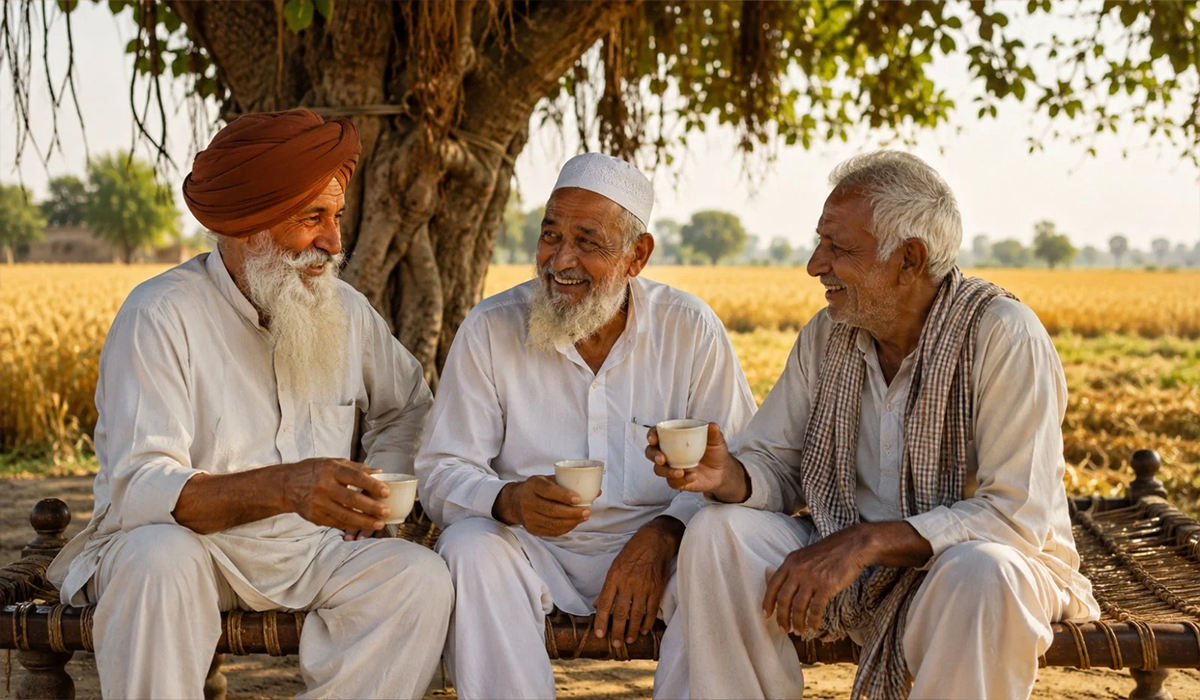
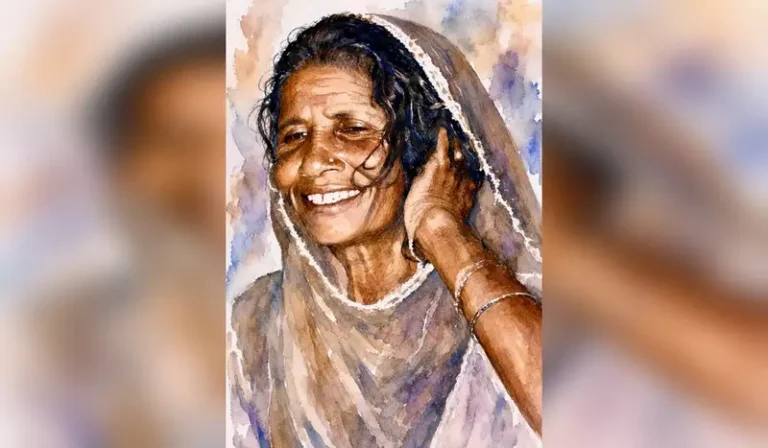
Thus, while Punjab’s great intellectual traditions, its culture and the Punjabi language have all conveyed a message of unity, the actual condition of Punjabis has often been very different. Consciously or unconsciously, the three great sons of “PUNJABO BEBE” — Faqir-ud-Din, Faqir Singh and Faqir Chand—laugh and live together, sharing joys and sorrows, daughters and sisters, and seeing Farid, Nanak and Krishna with equal reverence. But this harmony lasts only until some manipulative religious agenda begins to take effect. Once communal politics intervenes, the same people violate one another’s honour, turn away from their mother tongue, and betray the very values they once shared. These religious conflicts among the sons of “PUNJABO BEBE” have caused enormous damage to the region, to the “Punjabi nation” (Punjabiyat), and to Punjabi philosophy. Nor has there been any political force capable of uniting them in the name of Punjabiyat.
Even after independence, the situation did not improve. During the Partition of India and Pakistan, Punjab too was divided into western and eastern Punjab. Punjabis know very well what Punjab lost in that division. In such circumstances, any sensitive Punjabi could only weep. In western Punjab, Punjabi has continued to face grave injustice. Ironically, its own people have often been complicit in suppressing it. Punjabis dominate almost every field in Pakistan. If they can assert power over smaller provinces and control their resources, why can they not do something for their own mother tongue and secure for it the respect it deserves? The plain truth is that if they were to do so, they fear they might lose their grip on Pakistan’s national politics. Religious zeal has also contributed to this neglect. The late Ghulam Haider Wyne, a deeply Punjabi chief minister of western Punjab, was once given the option by Pakistan’s central government to introduce mother-tongue-based primary education. Yet even he declined to do so.
In eastern Punjab (on the Indian side) too, neither Punjab nor Punjabiyat could fully flourish. After independence, Indian states were reorganized on a linguistic basis, yet Punjab was denied this right for a long time. This created a deep sense of alienation among many Punjabis. The Akalis launched the Punjabi Suba movement, and even the communists supported it. In response, the Jana Sangh launched the Maha Punjab movement. While the communists’ struggle was for the interests of all Punjabis, the Akalis and Jana Sangh were motivated largely by sectarian concerns. Punjabi Hindus were encouraged to declare Hindi, not Punjabi, as their mother tongue. On 1 November 1966, a “crippled Punjabi Suba” was finally created. It may have satisfied the Akalis’ hunger for political power, but it did not fulfill the real purpose of Punjabi Suba, because many Punjabi-speaking areas remained outside Punjab. This “crippled Punjabi Suba” became not a Punjab of Punjabis, but effectively a Punjab of Sikhs.
In this newly formed Punjabi state, Punjabi was granted the status of official language. Punjabi University and the Language Department were established. New hopes arose for Punjabi literature and journalism, and Punjabi newspapers began appearing in large numbers. Yet despite all this, a genuine sense of Punjabiyat still failed to emerge among Punjabis.
Punjabis themselves have increasingly turned away from their mother tongue. Many now prefer hearing their children speak non-Punjabi languages instead of Punjabi as their first language. Public schools mushrooming across Punjab’s cities and villages have played a leading role in the erosion of Punjabi, and these schools enjoy full state patronage. At the same time, Hindi and English newspapers continue to expand their influence in Punjab.
This absence of Punjabiyat among Punjabis is not only an obstacle to Punjab becoming a true nation; it is also harmful for the Punjabi language and for Punjabi identity itself. Instead of understanding the plurality of Punjabi philosophy and Punjabi culture—the philosophy of unity in diversity—Punjabis have reduced it to religion and continue to beat their own sectarian drums.
In eastern Punjab, Punjabis have not found a political party that sincerely speaks of their unity. What they have found instead are parties that harvest votes on sectarian lines. It is this politics of hatred that also pushed Punjab into the dark years of the 1980s and 1990s and kept the fires of conflict burning.
In the end, one can only say that the greatest damage to “PUNJABO BEBE” has been done by her own three sons—Hindu, Muslim and Sikh. Until these three faqir brothers (Faqir-ud-Din, Faqir Singh and Faqir Chand) remove the blindfolds of religious fanaticism from their eyes, nothing meaningful can be achieved for the philosophy of the “Punjabi nation” (Punjabiyat) or the identity of Punjab.
Today, the need of the hour is for the three sons of “PUNJABO BEBE” to learn from a new scientific consciousness and cast aside religious fanaticism; to give priority not to being Hindu, Muslim or Sikh, but to being Punjabi. Instead of Faqir-ud-Din, Faqir Singh and Faqir Chand, they should become simply Faqira. Instead of Bhola Singh, Bhola Khan and Bhola Nath, they should become simply Bhola. Instead of Mehr Din, Mehr Singh and Mohr Chand, they should become Mehra or Mehru. In that alone lies the welfare of the “Punjabi nation” (Punjabiyat).

Leave a Comment