

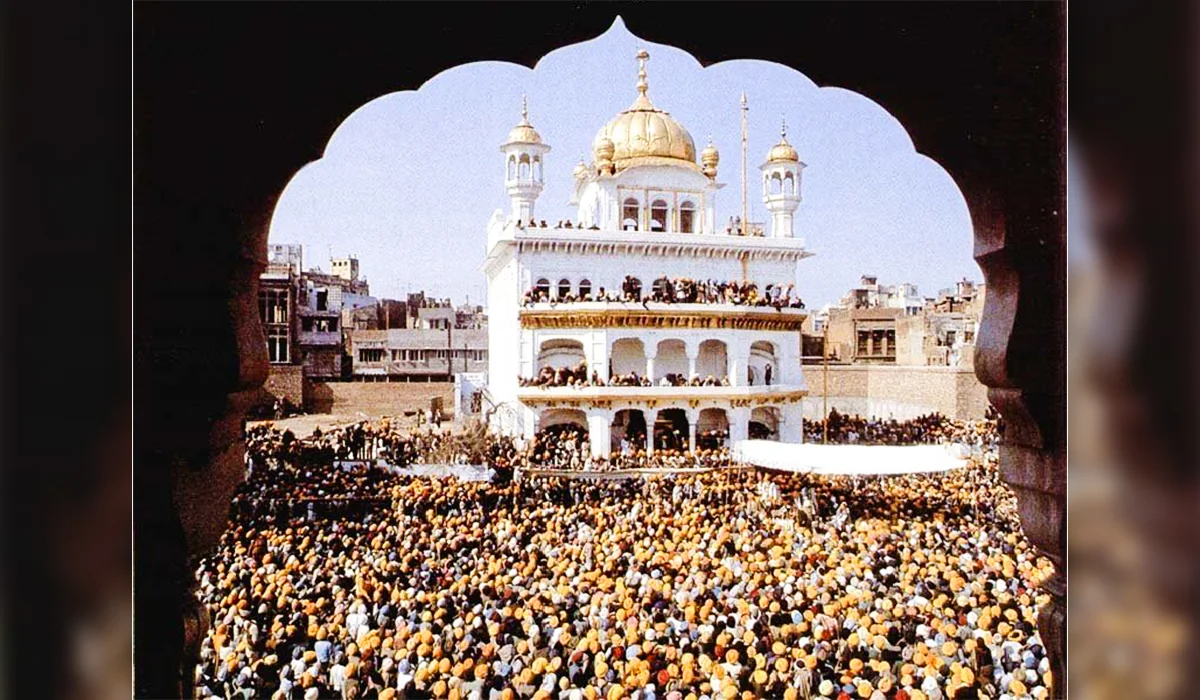

Sighting of Sri Harmandir Sahib In the west of Diudhi, in front of it, first at the time of Sri Guru Ram Dass Ji and then at the time of Sri Guru Arjan Dev Ji, a raw clay platform was formed by throwing the soil of Amritsar Sarovar here. Sri Guru Arjan Dev ji built a Kothari at this place for his comfort during the construction of Sri Harmandir Sahib, which is called Kotha Sahib today. In 1604 AD, the Kotha Sahib was built at this place in which Sri Guru Arjan Dev Ji reigned. Sri Guru Granth Sahib was first published in Sri Harmandir Sahib in 1604 AD. Baba Budha ji asked the satgurus that where should Guru Granth Sahib ji be seated
Grinth rahai kit nis mahai? Taan uttar vich Satgur’an keha:
Bahuro le jaavahu asvaara, Jisee kothri rahan hamaara.
Satgur’an de is hukam anusaar, raat di samapti di ardaas uparant:
Budha grinth leen sir dhaari, Chavar karahi Gur vaaranvaari.
Rahain kothri mahi Gur sada, Gamanahi sadan aapne kada.
Tahaan nivaas grinth kau keeno, Shri Gur bhootal nikat aseeno.
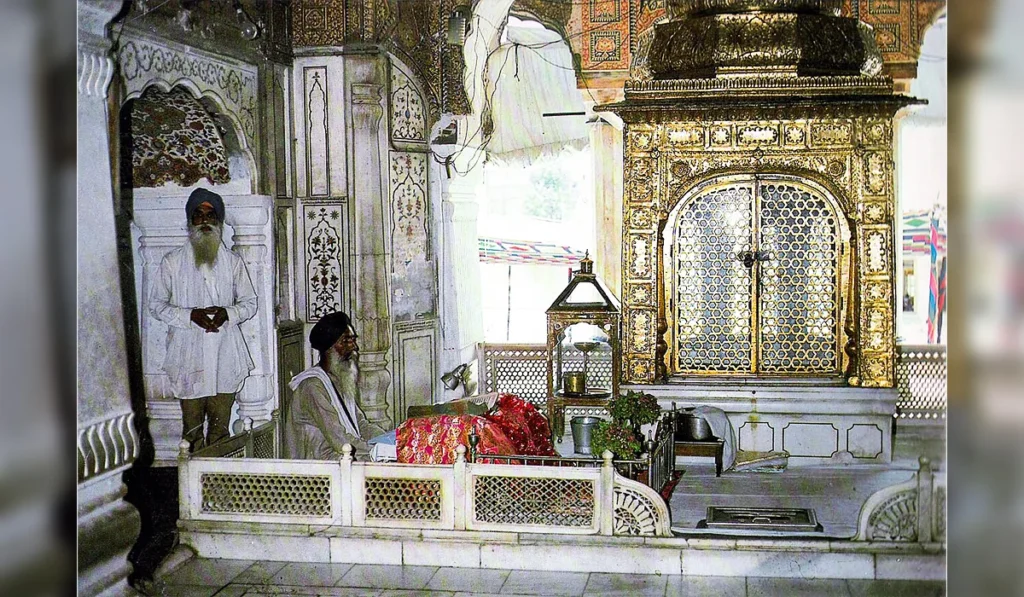
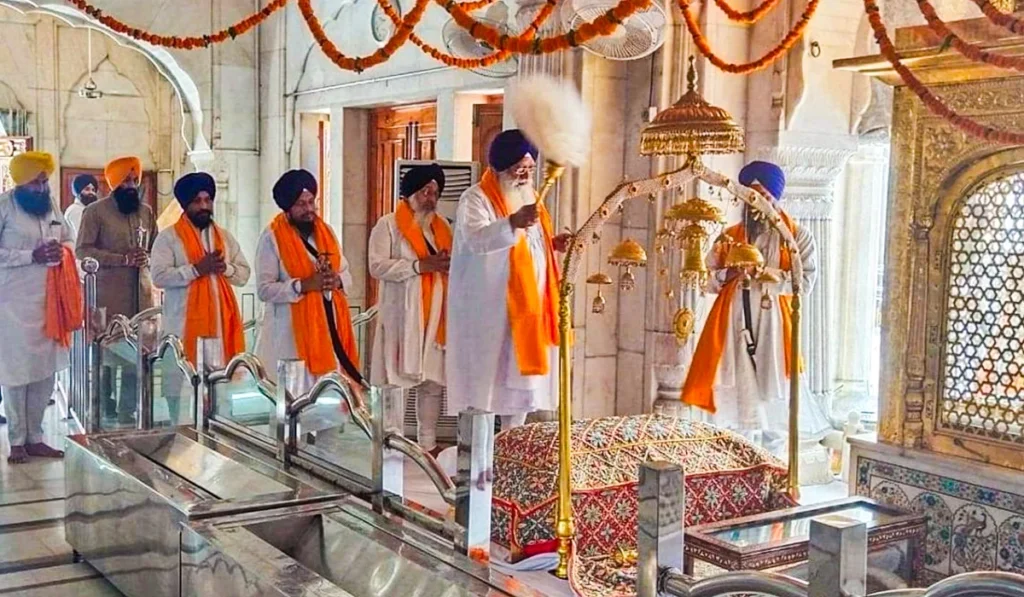
In this Kothari Sahib, which today is called Kotha Sahib, Guru Arjan Dev used to sit on the bed. From that day till today, the bier of Sri Guru Granth Sahib ji, which is lit inside Sri Harmandir Sahib, is placed on the bed inside this Kotha Sahib. The sixth Patshah Sri Guru Hargobind Sahib ji Maharaj, while maintaining the respect of Kotha Sahib, made the concrete platform of Sri Akal Takht Sahib with Kotha Sahib’s left hand. Sitting on which Aap ji wore two swords of Miri Piri. From 1606 to 1774 during the time of the sixth Satguru, it remained only a fixed platform. The first floor of the Akal Takht was built in 1774 AD during the Sikh Missals. The remaining four floors were built by Maharaja Ranjit Singh. Since then the Kotha Sahib became a part of the new building of Sri Akal Takht. Report The book named Sri Darbar Sahib, which was written and published by the Sri Darbar Sahib Committee in 1930 AD, has been written about Kotha Sahib as follows. This shrine is inside Sri Akal Takht Sahib Ji and it is the holy place which was raised by the fourth and fifth Patshahi by throwing their handigar. Here Sri Harmandir Sahib ji and Sri Guru Granth Sahib ji are enshrined. At the time of Guru Sahib Ji, Sri Guru Granth Sahib Ji was worshiped at this holy place. Maharaj Ji’s ride always starts two hours after the gate of Sri Darbar Sahib opens. Before reaching the Kotha Sahib Sri Akal Takht Sahib of Granthi Singh, countless Sangats are sitting like chakaur in the aspiration of having the darshan of Satguru Ji. At this time, Granthi Sahib reaches Kotha Sahib and the Nagare Par Chot sounds. After the end, the ride is taken to Kotha Sahib in the same way. The firm foundation of Sri Akal Takht Sahib is solid. While Bhora is below Kotha Sahib, there are two floors above Kotha Sahib. On the roof of the Kotha Sahib and its front part, the roof and the doors above the walls before the walls were made of flower plants made of cement and filled with different colors. The golden color in them is a color created by grinding gold. It is called the munawat of gach. During the clashes between the 4th and 6th of June 1984 AD, the dome of the Akal Takht Sahib was heavily damaged in front of the Akal Takht Sahib building, but the Kotha Sahib room was not damaged. The reason was that the tanks used to fire from both the north and south sides of the reservoir. The bullets fired from the southern direction hit Sri Akal Takht Sahib in front and the bullets fired from the northern direction hit the office and upper floors of the Akal Takht. Kotha Sahib was between the two and behind, due to which the bullets kept hitting Kotha Sahib right and left and Kotha Sahib remained safe. Just like the golden bungalow Nagara on Sri Akal Takht Sahib and the wooden structure on which the Nagara was placed and the wooden cupboard containing the weapons were burnt to ashes overnight but the wooden bed in the Kotha Sahib was not affected.
Sri Guru Arjan Dev ji Maharaj, understanding the situation during his time, consulted with Baba Budha ji before going to Lahore, took Guru Hargobind Sahib with him and came to Kotha Sahib’s room in 1606 AD. According to the order of Satguru Ji, Baba Budha Ji placed a gurta of saffron and sandalwood on the throne as per the etiquette of Guru Ghar. In 1606 AD, after the martyrdom of Guru Arjan Dev Ji Maharaj, the 5th Patshah came to Lahore with a masand sali, mala, cap and manji according to the custom of Gurmat, then Guru Ji told Baba Ji to dress us in a turban. We have to fight in armor. According to the order of Satguru, these items were sent to Taushekhana. After praying, Baba Budha ji made a turban to Guru Hargobind Sahib ji and performed a turban ceremony.
Haadh pritham ekam thit maheen.
Harigobind Gur paag bandhaheen.
Then the Masands, the chief Sikhs, the dignitaries of the city, the Sikh congregations of the country and the state offered turbans and money to the Guru Ji. Karah Prasad was served and the congregation ate langar. But as per the need of the time, Sri Guru Hargobind Sahib Ji wanted to build a Takht. After consulting Baba Buddha Ji and Bhai Gurdas Ji, he fixed the day of Har Wadi Panchami and ordered to prepare bricks and lime etc. to level the place from above. On the day of Har Wadi Panchami at the appointed time, Sri Guru Hargobind Sahib walked from the Guru’s palace and entered Sri Harmandir Sahib along with Baba Ji and Bhai Gurdas Ji, paid homage, performed parikrama and returned to the place of Sri Akal Takht Sahib. After praying, Sri Guru Hargobind Sahib Ji placed the first brick of the Takht Sahib with his sacred lotuses.
Sri Harimandar bandan kare. Chatur pradachhan ke hit phire.
Bahuro aai darshani paur. Pikh Akaal bunge ki thor.
Aais daee suthal sudharaavahu. Hit baithan ke chaar banaavahu.
Pratham aapne le kar haath. Dhari eent bal tej ki saath.
The confirmation of Guru Hargobind Sahib placing the first brick with his own hands on Har Badi Panchami is also given by the following text of Guru Biyal Patshahi the sixth.
Haadh Panchami ko din jaan. Sri Gur udam keen mahaan.
Pritham neev Sri Gur rakhi abachal Takhat suhaai.
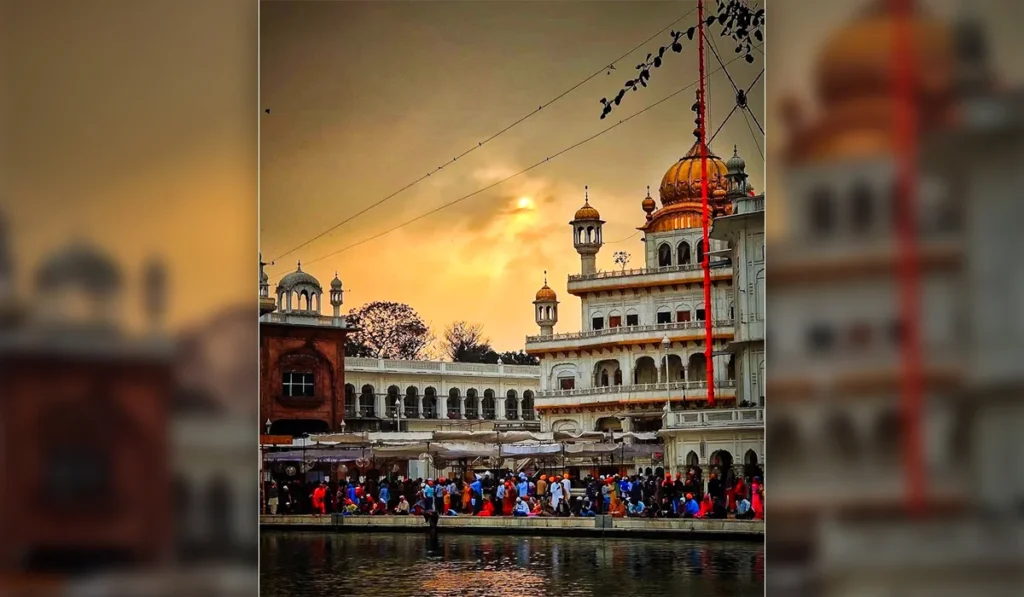
This Takht was built as a solid foundation. After the first brick of the foundation laid by the holy lotuses of Guru Ji, no state touched it, only Baba Buddha Ji and Bhai Gurdas Ji built it. Keeping in mind the respect for Sri Harmandir Sahib, Sri Guru Hargobind Sahib Ji placed the tree of Sri Akal Takht Sahib slightly towards the north. The tree of Kotha Sahib is directly towards Sri Harmandir Sahib. The size of the platform is 14 feet long, eight feet wide and seven feet high. The Satguru named this platform Sri Akal Takht Sahib from his head. In a few days, the permanent platform was ready. The date of the Tilak ceremony of the Takht Nashini was fixed on the tenth day of Har Sadhi. The Satguru sent Hukamnamas to the Sangats of the country to arrive on this occasion with great enthusiasm. He also wrote that at that time, instead of gold, silver ornaments and precious clothes, they should bring offerings of good weapons and horses. By the evening of the ninth day of Har Sudi, a large gathering of Sangats of the country reached Amritsar. On the 26th Sunday of Har Sudi, a royal throne like a king was decorated for the Satguru to sit on Sri Akal Takht Sahib.
Dasmi thit udaar mahurat gaadh ke.
Dasmi sudi Asaadh majhaari.
Aadit vaar tej bal bhaari.
Sri Guru Hargobind Sahib Ji along with Baba Buddha Ji and Bhai Gurdas Ji left the palace, went inside the Darshani Deodhi, paid obeisance, performed Namaskar and then returned to Sri Akal Takht Sahib. Sri Guru Hargobind Sahib Ji reached Sri Akal Takht Sahib and sat on the beautifully decorated throne. The Sikh congregation was crowded with people in front of and below the Takht Sahib. Satguru was wearing a very beautiful and precious yellow dress. A beautiful turban was decorated with a kalgi on his head. Angad was adorning his arms. While a shield was decorated on his back. The congregation was looking at the moon-like face of Guru Ji with devotion and emotion like a circle. The Satguru ordered to bring the weapons that we have made
Aanahu shastar jo ham banvaae.
Jin kai haatik adhik lagaae.
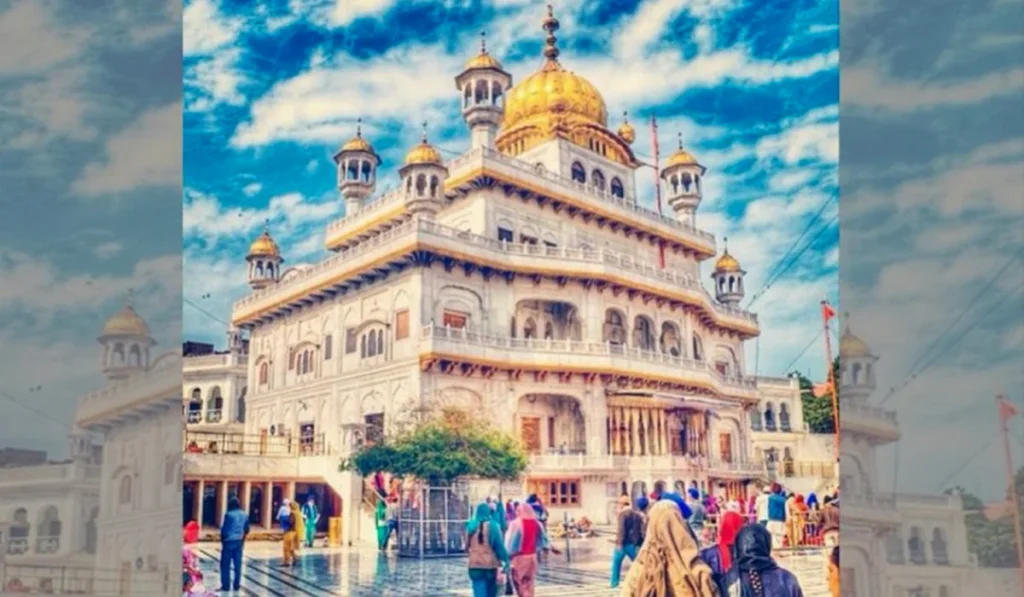
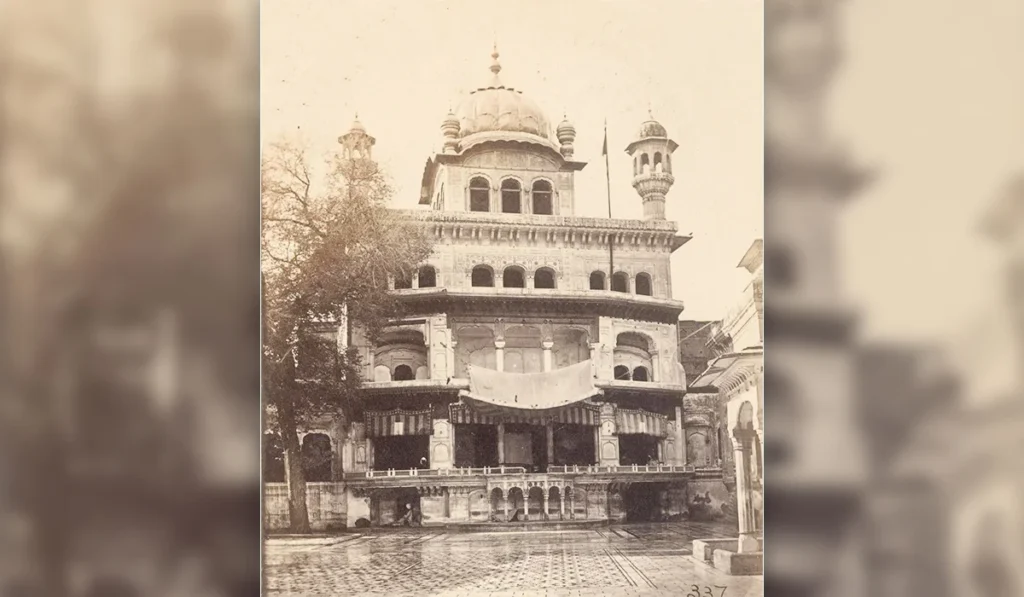
The servants kept all the weapons in front of the Satguru. According to the order of the Guru, Baba Buddha ji clothed both sides of Sri Sahib Satgur. An allowance full of arrows decorated with lacquer. He held a heavy bow in his left hand and an arrow in his right hand. Guru Ji’s attendants, Dhadi Abdullah and Nathamal, came and recited Guru Ji’s Jas. After that, like the kings, the throne was placed on the head of Satguru Sri Hargobind Sahib. First of all, Baba Buddha ji offered offerings on his own behalf, then Bhai Gurdas, Masandan, the chief Sikhs, Chaudhary of the city and the Sikh Sangat of Desh Pradesh offered their own offerings. According to history, after Sri Guru Hargobind Sahib Ji, Akal Takht Sahib remained only in the form of a platform till 1774 AD. According to the writings of Giani Gian Singh Ji, the construction of the first floor of Shri Akal Takht Sahib was done in 1774 AD under the supervision of Jassa Singh Ahluwalia. The rest of the upper floors were prepared by Maharaja Ranjit Singh at a cost of 2 lakh 95. The last bungalow and the dome were built by Sardar Hari Singh Ji Nalwa and the dome was gilded. At that time, 3 lakh rupees were spent on this five-storey building. In the beginning, Sardar Hari Singh Nalwa made a gold prayer of 25 thousand rupees with the idea of making the entire Akal Takht Sahib golden like Sri Harmandir Sahib. But soon, due to their martyrdom, all that gold was lost. At the time of the sixth Satguru, Sri Akal Takht Sahib remained adorned only in the form of a fixed platform. On top of this, having decorated the throne like the emperors, Guruji wore two swords, a lead and a quiver and a bow and arrows on his shoulders, a bow and arrows tied around his waist, holding an arrow in his hand, sitting on the throne listening to beer, giving darshan to the devotees, settling disputes, pronouncing decisions, issuing orders. He used to listen to the pleas of the afflicted and remove their sufferings, give due punishment to the culprits and do full justice to everyone. Whatever decision was taken at Akal Takht Sahib was made in the presence of Sarbat Khalsa. Sri Guru Hargobind Sahib ji did not allow anyone to be pushed and everyone was given full justice. In 1619 AD, a well was installed outside the back of the Takht Sahib, which was named Akal Sir. Sahib’s ablution has been done with the water of this well. The actual sitting place of the Satgurs is where the historical weapons are decorated in the golden bungalow. This bungalow was also built and gilded by Maharaja Ranjit Singh. Near it, Sri Guru Granth Sahib is illuminated on the inner platform. In front of Sri Akal Takht Sahib, there was a tamarind tree towards the south. With which the punishment of whipping was imposed on Maharaja Ranjit Singh by Akali Phula Singh. Under that tamarind, there used to be a fountain in the Sangmarmari army, in which the water of the Akal Sir well was falling. This fountain was made of screw, on the days of Gurpurabs, the floor was scented by putting rose extract in the fountain. But nowadays it has not been for a long time. In 1984 AD, the tamarind tree dried up due to the explosion of tanks and gases etc. Which was later uprooted as the experts of Agriculture University Ludhiana opined that this tree can no longer be green. The five-storied building including the Bhore of Sri Akal Takht Sahib was completed during the time of Maharaja Ranjit Singh and remained in its proper form during the English rule. When the panthak management came, apart from its proper repair, in some places valuable work of Munawat Tukdi and Munawat Aadi beautiful art of carving Muharakshi Gaj was also done.
During the Ghallughara massacre of June 4-6, 1984, two large holes were made in the dome due to the shelling of the Indian army tanks. The golden dome tower built on one corner of the big dome was blown away. The front part of the three floors was heavily damaged. The golden bungalow with the weapons above the Takht Sahib was also blown away. The marble pillars in front fell and the windows of the upper two floors were broken. This means that the building of Sri Akal Takht Sahib suffered heavy damage. Later, the central government repaired the damaged part by using its state workers, but the Panthic circles did not accept it. As per the joint Panthic decision of the Panthic five Singh Sahibs, Shiromani Akali Dal and Shiromani Gurdwara Parbandhak Committee, it was decided to demolish the old building and construct a new one. The entire building including the hole was demolished and this service was entrusted to the five saints of Kar Sewa. The original foundation, the first brick of which was laid by Sri Guru Hargobind Sahib Ji with his lotus feet after the prayer and was not touched by any state, only Baba Buddha Sahib Ji and Bhai Gurdas Ji built it and the historical foundation which was named Sri Akal Takht Sahib by the Satgurus, this foundation was solid and very strong from the foundation to the top. This too was being demolished on the insistence of the Panj Singh Sahibs and other Panth heads. This is an immortal memorial of the hands of Guru Ji. It should be maintained. In this way, this historical foundation was saved. The new building has been extended from the first building. The corner in front of the first building was 1 foot and an inch but now it has been increased to 77 feet. The width was 41 feet and an inch which has now been increased to 44 feet. The rest of the construction is 85 feet 3 inches high from the floor of the parikrama to the top of the golden dome. The ceilings of all the floors, including the stele, have become higher than before. The sizes of the rooms, including the Kotha Sahib, have also increased. The stairs used to go up from one side inside, now they have been built from two sides. The Akal Sar Khuh was earlier outside the building, now it has been built inside, and the dome has been plated with gold. Akal Takht Sahib is the center of the highest religious and worldly (Miri) authority of the Sikh Panth. Akal Takht Sahib is a symbol of justice, freedom, truth, self-respect and the inspiration to stand firm against oppression in Sikhism.
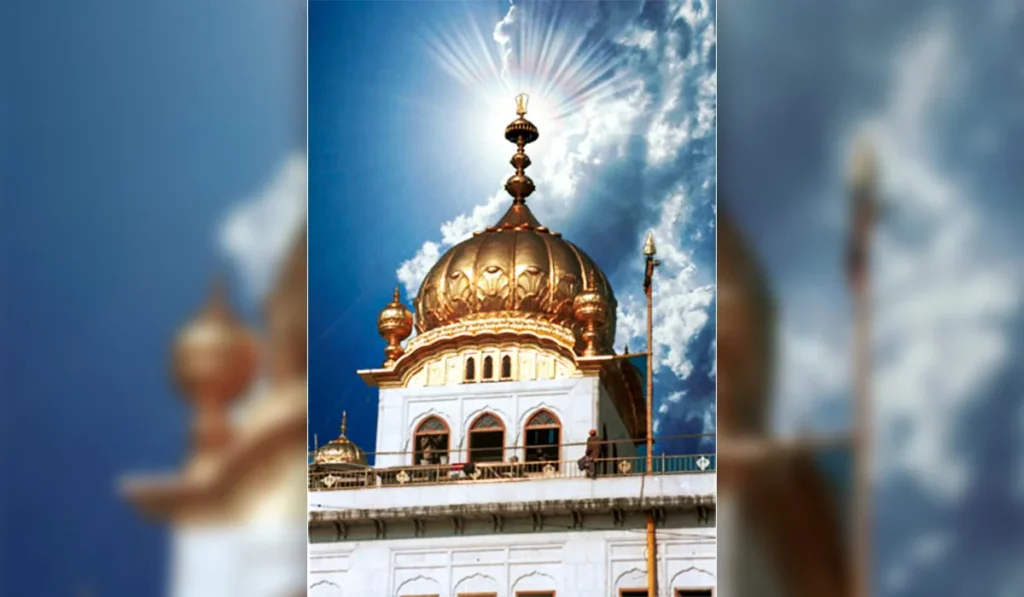
The main purpose of establishing Akal Takht Sahib was to give the message to the Sikhs that they should fulfill worldly responsibilities (Miri) along with spirituality (Piri). It is from here that important decisions, Gurmats and Panthic orders related to the Sikh Panth are issued. Akal Takht Sahib is the center of unity, self-respect and justice of the Sikh community. Whenever a crisis has befallen the Sikh community in history, Akal Takht Sahib has provided direction and leadership to the Panth. It inspires Sikhs to protect religion, protect human rights and stand firm against injustice. Akal Takht Sahib is not just a building, but a living symbol of the Sikh Panth’s dignity, welfare of all, equality, justice and Chardi Kala. Therefore, it is very important for every Sikh to respect Akal Takht Sahib and live according to its principles.

Leave a Comment