


What is the historical background of Gurdwara Patshahi Chhevin, Lahore, which has reopened to the Sikh community after 79 years?
The Partition of India and Pakistan in 1947 was not merely a division of land and borders; it also tore apart the hearts, cultures, and historical-religious heritage of millions of people. During that bloody and painful period, lakhs of Sikhs were forced to leave their birthplace, homes, and sacred religious sites and migrate towards East Punjab in India. Hundreds of historic gurdwaras connected with Sikh history were left behind on the soil of Pakistan—shrines that bear witness to the footsteps of the Guru Sahibs and to a rich historical legacy.
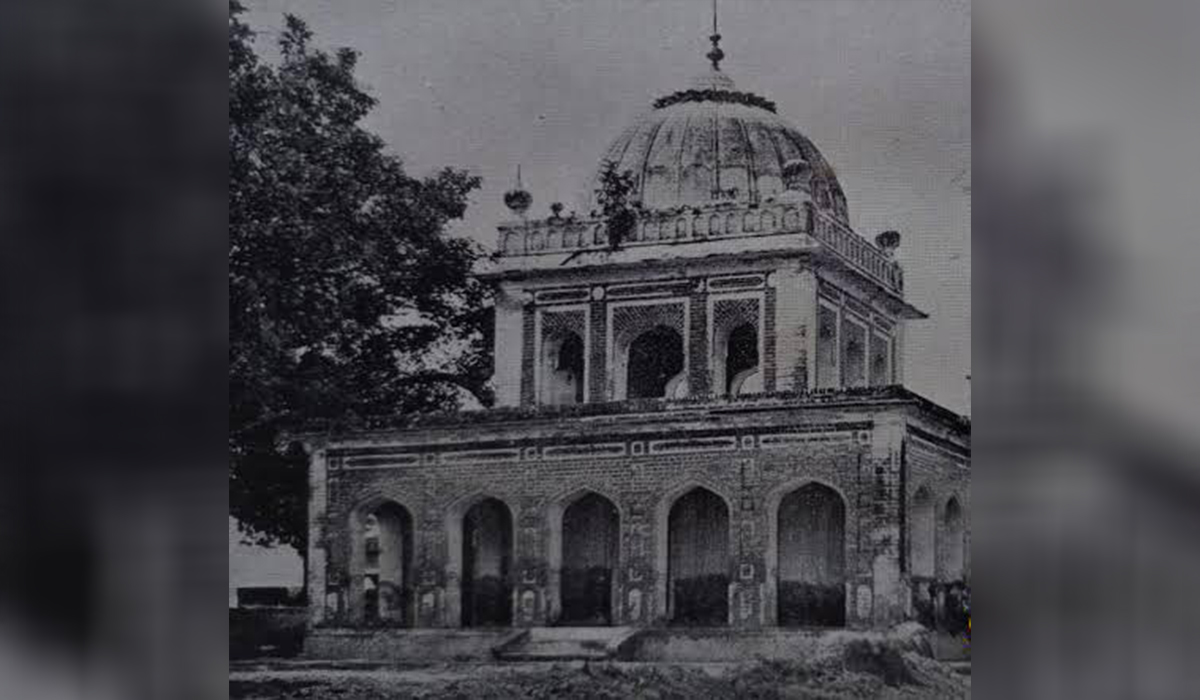
Among these sacred places is the highly revered and historic Gurdwara Patshahi Chhevin, located in Lahore. Closed after Partition in 1947, this holy site has now been reopened after a long wait of nearly 79 years. Following the careful renovation of the building, it has formally been dedicated once again for the Sangat’s darshan, worship, and maintenance. This is a significant occasion of gratitude and joy not only for Pakistan’s minority Sikh community but also for the Nanak Naam Leva Sangat living across the world.
A deeply spiritual and emotional atmosphere was witnessed during the reopening ceremony at the historic village of Amar Sidhu, which has now become an important part of Lahore city because of expanding urbanisation. Members of the local Sikh community, religious leaders, and devotees from Lahore and nearby areas gathered during the second week of July 2026 and recited Sri Sukhmani Sahib.
After the completion of the recitation, an Ardas of gratitude was offered at the feet of Waheguru for the restoration of the Gurdwara Sahib. When, after 79 years, the sound of Gurbani and the cries of “Jo Bole So Nihal, Sat Sri Akal” once again echoed through the building, the eyes of every devotee present were filled with emotion and reverence. The ceremony symbolised that no matter how much time may change, the spiritual bond between the Sangat and the Guru Sahibs can never be broken.
What is the historical background of Gurdwara Patshahi Chhevin, Lahore?
The life and journeys of Sri Guru Hargobind Sahib Ji, the Sixth Guru and the Master of Miri-Piri, hold a special place in Sikh history. The Guru Sahibs shared a deep connection with the city of Lahore. There are mainly three historic gurdwaras in Lahore associated with the Sixth Guru, and among them, Gurdwara Patshahi Chhevin at Amar Sidhu is an especially significant site.
According to historical references and Sikh tradition, when Guru Hargobind Sahib Ji was returning from his religious travels in Kashmir, he stayed at this place in Lahore before proceeding towards Sri Amritsar Sahib. Guru Sahib connected the Sangat with Naam and Bani and delivered spiritual teachings here.
Another major historical importance of this place is its close association with Mata Bibi Kaulan Ji. Bibi Kaulan Ji, who was the daughter of Lahore’s Qazi Rustam Khan, had become a devoted follower of the Guru’s house while living in the company of Sai Mian Mir Ji, a devotee of Sri Guru Arjan Dev Ji. It is believed that she accompanied Guru Hargobind Sahib Ji along with the Sikh Sangat during this journey. This adds even greater spiritual and historical significance to the site.
The history of the construction of the Gurdwara Sahib

According to Davinder Singh Dhillon, editor of the Gurdwara Pedia portal and a noted historian, in the early period there was only a very simple platform or memorial at this site in memory of Guru Sahib. Local devotees would light lamps there and bow their heads in reverence.
In 1923, with the special support of the Sikh Sangat of Lahore and the tireless efforts of Bhai Mohan Singh Akali, a Nihang, construction of a grand Gurdwara Sahib was started at the site. Nihang Singhs of Lahore and ordinary devotees participated enthusiastically in the seva of its construction.
One of the most distinctive features of the building’s design and layout was that it was prepared under the supervision of the renowned civil engineer of that period, Sir Ganga Ram. Sir Ganga Ram was known for designing many historic, educational, and charitable buildings in undivided Punjab during the British period, including institutions such as the Lahore Museum and Aitchison College. He made a valuable contribution to the construction of this religious building.
Before Partition, the Gurdwara complex possessed nearly 17 kanals of land. The vast complex had a magnificent dome, airy verandahs on all sides, and an elegant marble floor. The names of Sikh devotees and donors who had contributed financially and physically to its construction were inscribed on marble slabs in both Gurmukhi and Shahmukhi, or Persian, scripts.
A large langar hall and residential rooms had also been built for Sangats arriving from distant places.
There was a sacred sarovar beside the Gurdwara Sahib, and a green garden had been developed around the platform where Guru Sahib had rested. Before Partition, the entire site was managed in an organised manner by the local Gurdwara management committee and the Sangat under the supervision of the Shiromani Gurdwara Parbandhak Committee.
The destruction of 1947, abandonment, and illegal encroachments
Historical records show that the Partition of the country and the communal violence of August 1947 completely changed the fate of this sacred site. After the Sikh population migrated to India, the vast and magnificent Gurdwara Sahib was left entirely deserted.
In the absence of care and maintenance, the building gradually began to turn into ruins. Over the past eight decades, the historic structure suffered extensive damage. The sacred sarovar adjoining the Gurdwara Sahib was filled with soil and garbage and eventually closed.
Large portions of the complex’s 17 kanals of land were illegally occupied by people living nearby. According to reports, the sacred complex remained under the control of one family for many years. The situation worsened when the grave of a local pir was constructed within the complex, completely affecting the original character of the building.
This was not only the destruction of a religious site but also a symbol of the disappearance of an important architectural and cultural heritage of undivided Punjab.
In recent years, the Pakistan Sikh Gurdwara Parbandhak Committee and the Evacuee Trust Property Board have begun efforts to identify Sikh gurdwaras in Pakistan that had been closed or were falling into ruin and to restore them. As part of these efforts, Gurdwara Patshahi Chhevin at Amar Sidhu was freed from illegal encroachments.
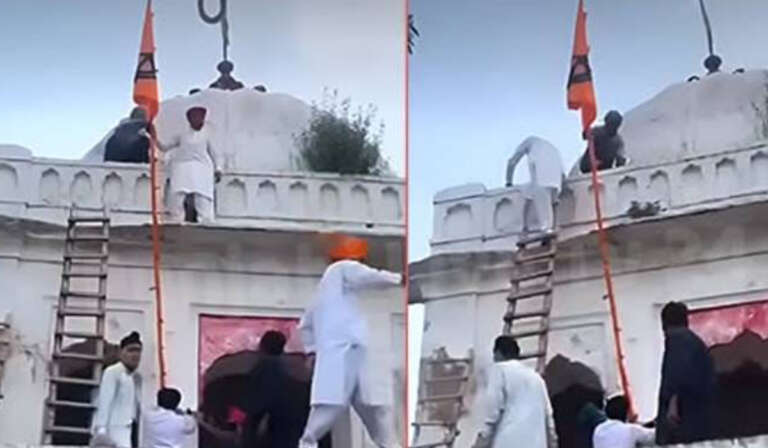
After this, repair, cleaning, and renovation work on the building was started. Efforts were made to restore the old dome and verandahs to their original beauty. With the reopening of this historic site, the place has once again become accessible to local Sikhs and pilgrims from across the world.
It is worth noting that apart from famous shrines such as Lahore, Nankana Sahib, Panja Sahib, and Kartarpur Sahib, the reopening of neglected gurdwaras creates new opportunities for religious pilgrimage in Pakistan. Sikhs around the world are encouraged to visit their historic religious sites.
The success of the Kartarpur Sahib Corridor has proved that religious heritage can become a bridge of love, peace, and goodwill between the people of both countries. The restoration of this Gurdwara Sahib in Lahore is also part of the same process and strengthens the message of peace and harmony.
The restoration of such sites brings back into public view those chapters of Sikh history that had been buried under the dust of time. By studying the old inscriptions written in Gurmukhi and Shahmukhi, researchers can gain a better understanding of the social and religious fabric of the year 1923.
The reopening of Gurdwara Patshahi Chhevin at Amar Sidhu village in Lahore after 79 years is not merely the repair of a building; it is a victory of faith, devotion, and heritage.
It is living proof that true history and spiritual heritage can never be erased. Today, when we offer the Ardas seeking “the blessing of open darshan, worship, and service of those gurdwaras and shrines from which the Panth has been separated,” the reopening of such historic places creates hope that this prayer is gradually being fulfilled.
This initiative marks the beginning of a new era in the preservation of Sikh heritage in Pakistan. The Sangat hopes that in the future, other closed historic Gurdwara Sahibs will similarly be freed from illegal encroachments and opened for the darshan of devotees.

Leave a Comment