

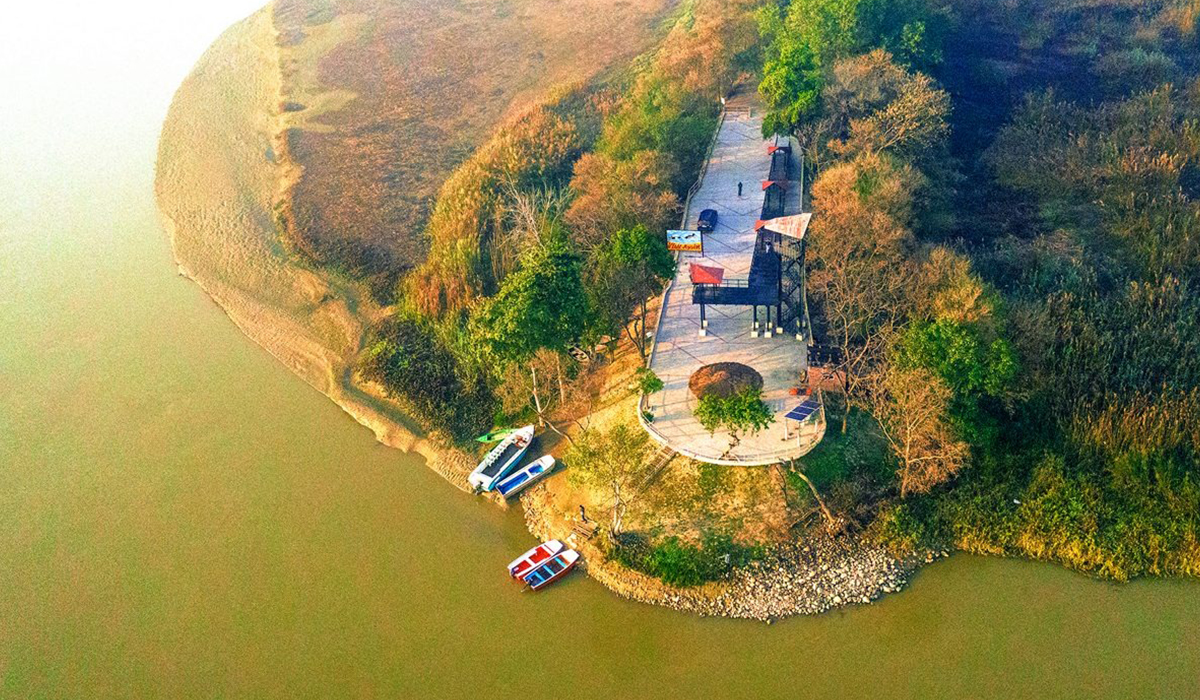

Over the past few weeks, one of Punjab’s most prominent locations, Harike Pattan, has become the focus of intense national and international discussion. This attention is not merely because of its geographical significance, but also because of Punjab’s painful past and its portrayal in contemporary cinema, which has reopened historical wounds that had remained buried for decades.
In actor and singer Diljit Dosanjh’s new film Sutlej, the historic bridge at Harike Pattan is depicted as the place from where, during Punjab’s dark period in the 1980s and 1990s, the bodies of many Sikh youths were allegedly thrown into the river by the police and security forces. These scenes, brought before audiences through online cinema, have revived public memories of both the importance of the Sutlej River and the alleged human rights violations that took place along its banks.
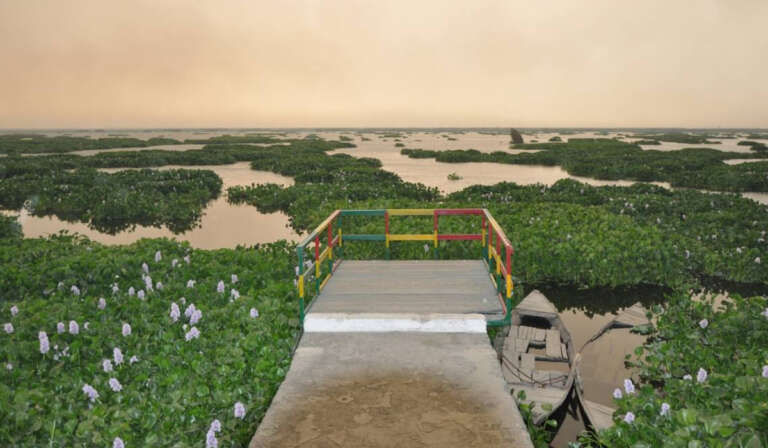
This is the same Sutlej River that, for centuries, has been the lifeline of Punjab’s agriculture, economy, and very existence. Tragically, the passage of time transformed this life-giving river into a silent witness to numerous human tragedies.
Paying tribute to this painful history and to the memory of the martyrs, on 14 July, several human rights activists and religious leaders, including the Acting Jathedar of Sri Akal Takht Sahib, Giani Kuldeep Singh Gargaj, gathered at Harike Pattan. There they offered Ardas for the spiritual peace of the unidentified and innocent martyrs who lost their lives during the 1980s and 1990s.
On this occasion, a major announcement was also made: the Shiromani Gurdwara Parbandhak Committee (SGPC), with the support of the entire Sikh Panth and the Sangat, will construct a grand Shahidi Pattan Memorial at Harike Pattan. This memorial will preserve the story of that painful period in Punjab’s history for future generations—a time when Punjab’s waters, instead of quenching people’s thirst, turned red with tears and blood.
Following the Jathedar’s announcement, discussions about the history of the Sutlej River, and particularly Harike Pattan, gained fresh momentum. Everyone wants to know the story of Harike Pattan—now being referred to as Shahidi Pattan—a place whose history stretches back for centuries.
In reality, the Sutlej is not only Punjab’s river but also one of the longest and most significant rivers of the Indian subcontinent. Its geographical journey is as vast as it is fascinating.
The Sutlej originates near Lake Manasarovar, from Rakshastal Lake in Tibet (China), where it is known as Langqên Zangbo. Flowing through Tibet’s high, snow-covered mountains, it enters India through the Shipki La Pass in the Kinnaur district of Himachal Pradesh. It then rushes through the mountains, gorges, and valleys of Himachal before entering the plains of Punjab.
After flowing across Punjab, the river continues alongside the India–Pakistan international border before eventually entering Pakistan. There it joins other major rivers, particularly the Chenab—which by then has already been joined by the Jhelum and the Ravi—to form the Panjnad (the confluence of the five rivers). Ultimately, these combined waters merge into the mighty Indus River, which finally empties into the Arabian Sea.
The Sutlej Divides Punjab’s Two Major Regions—Malwa and Majha
The Sutlej River serves as a natural boundary in Punjab’s geographical and cultural landscape. It divides the state’s two major regions—Malwa and Majha.
To the northwest of the Sutlej lie the regions of Majha and Doaba, while the vast plains to its south are known as Malwa.
Further downstream, the river also forms a natural and political boundary between East Punjab (India) and West Punjab (Pakistan), silently narrating the painful story of the 1947 Partition.
Harike Pattan, located in Punjab’s border district of Tarn Taran, is the historic and geographical site where Punjab’s two major rivers—the Sutlej and the Beas—meet in a magnificent confluence.
The Historical Significance of the Word ‘Pattan’
In earlier times, when large concrete bridges like those of today did not exist, special river crossings or ghats were created to help people cross rivers. In Punjabi culture and history, the word “pattan” was used for such a river crossing, from where people, traders, and caravans crossed the river in boats. Boatmen were the principal operators of these pattans.
For centuries, Harike Pattan remained one such important crossing point, connecting people from different districts and regions. Geographically, this place touches the boundaries of Tarn Taran, Ferozepur, and Kapurthala districts.
Harike Pattan is important not only from a religious or historical perspective but also as a major ecological centre of global significance, known as the Harike Wetland. According to data available on the official websites of the Tarn Taran and Ferozepur district administrations, Harike Wetland is the largest man-made wetland in northern India. It is spread across a vast area of nearly 86 square kilometres.
Recognising its ecological richness and biodiversity, it was designated a Ramsar Site of International Importance in 1990 under the United Nations Development Programme. This recognition placed the site on the global map for environmentalists and ornithologists.
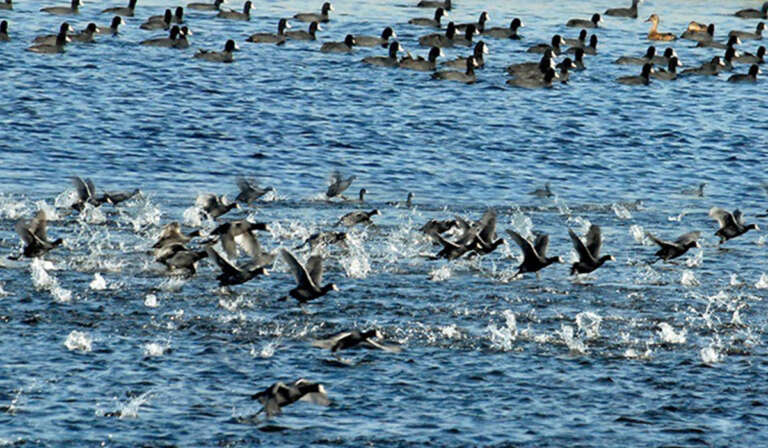
Every year, when severe winter conditions prevail across the Northern Hemisphere, Harike Wetland becomes the centre of a spectacular natural phenomenon. Thousands of migratory birds travel here from icy and remote regions thousands of kilometres away, including Siberia, Mongolia, Kazakhstan, Russia, and the Arctic.
These birds include various species of ducks, geese, coots, and several rare birds. They spend many winter months in Harike’s calm, water-rich environment, making the wetland a major attraction for visitors.
Harike Headworks and the Canal System
In 1953, the Government of India completed a major engineering project just downstream from the confluence of the Sutlej and Beas rivers. This project came to be known as the Harike Headworks. It forms the backbone of northern India’s irrigation network.
According to senior officials of the Central Water Commission of India and the Water Resources Department of the Punjab Government, water from several sources converges at Harike Headworks.
Water is released into the Sutlej from the Rupnagar, or Ropar, Headworks. Regulated water from the Pong Dam on the Beas River also reaches this point. Under the Ravi-Beas Link Project, diverted Ravi water from the Madhopur Headworks travels through the Beas and ultimately reaches Harike.
The construction of the Rajasthan Feeder, also known as the Indira Gandhi Canal, which originates from Harike Headworks, brought a major transformation to India’s geographical and agricultural landscape.
According to a media report, water from this canal transformed the dry and desert regions of Rajasthan, including Sri Ganganagar, Bikaner, and Jaisalmer, and led to the expansion of agriculture in these areas.
However, this also raises a serious legal and political issue. Under international riparian law, the first right over river water belongs to the state or region through which the river flows.
Along the Banks of the Sutlej
The Sutlej is not merely a geographical flow of water. Several historic events took place along its banks that changed the course of Punjab’s and India’s history.
The day of 23 March 1931 is regarded as one of the darkest days in Indian history. On that day, the nation’s great sons—Shaheed Bhagat Singh, Rajguru, and Sukhdev—were hanged at Lahore Central Jail before the officially scheduled time.
The British government was so fearful of public anger and a possible uprising that the bodies were secretly removed through the rear of the jail.
Under the cover of darkness, British officers carried the bodies to Hussainiwala on the banks of the Sutlej near Ferozepur. There, they hurriedly and brutally conducted an incomplete cremation in secrecy before fleeing.
When local villagers learned of the incident, they gathered there in large numbers. With deep respect and tearful eyes, they collected the sacred remains of the martyrs and performed their final rites again with full honour.
Today, the Hussainiwala National Martyrs Memorial, standing at that very place along the Sutlej, continues to narrate an immortal story of patriotism.
The Sutlej River also served as an important political boundary between the Sikh Empire, or Khalsa Raj, and the British Empire.
In 1831, a historic agreement was reached on the banks of the Sutlej at Ropar, now Rupnagar, between Maharaja Ranjit Singh, the ruler of the Sikh Empire, and British Governor-General Lord William Bentinck. It is known as the Treaty of Ropar.
Historian Dr Sukhdyal Singh explains that, at the time, the princely states located beyond the Sutlej towards the southeast—such as Patiala, Jind, Nabha, and Faridkot—were already under British influence or control. These were known as the Cis-Sutlej States.
The British were fully aware of Maharaja Ranjit Singh’s military strength and the influence of the Sher-e-Punjab. Therefore, to secure their own territories and establish the limits of their empire, they reached an agreement with the Maharaja that the Sutlej would be treated as a permanent boundary between the two powers.
Ranjit Singh would not interfere in British-controlled territories south of the Sutlej, while the British would not enter the boundaries of the Khalsa Raj to the river’s northwest.
While the history of the Sutlej has been both glorious and painful, its present condition points towards a major ecological tragedy.
Today, people living in villages around Harike Pattan and environmental activists are confronting a deeply disturbing reality. At the place where the Sutlej and Beas rivers meet, a highly alarming natural scene is clearly visible.
On one side, the water of the Beas, flowing down from the mountains, appears comparatively clean and naturally earthy in colour, or lightly blue-green. On the other side, the water of the Sutlej appears intensely black and toxic.
Villagers in the Harike region say that even after the two rivers meet at the confluence, their waters do not mix completely for a considerable distance.
This visible line between the black water and the cleaner water tells the story of the death of Punjab’s rivers.
There is no natural reason behind the black and polluted water of the Sutlej. It is the result of human greed and administrative failure.
Harike Pattan today serves as a mirror reflecting Punjab’s past, present, and future. It reminds us that the river which gave us life, along whose banks historic treaties were signed, and which received the remains of the country’s greatest martyrs into its embrace, is now itself begging us for mercy.
If we truly wish to honour our martyrs and protect Punjab’s very existence, then along with building a memorial at Harike Pattan, we must also launch a major people’s movement to free the Sutlej River from pollution.

Leave a Comment