
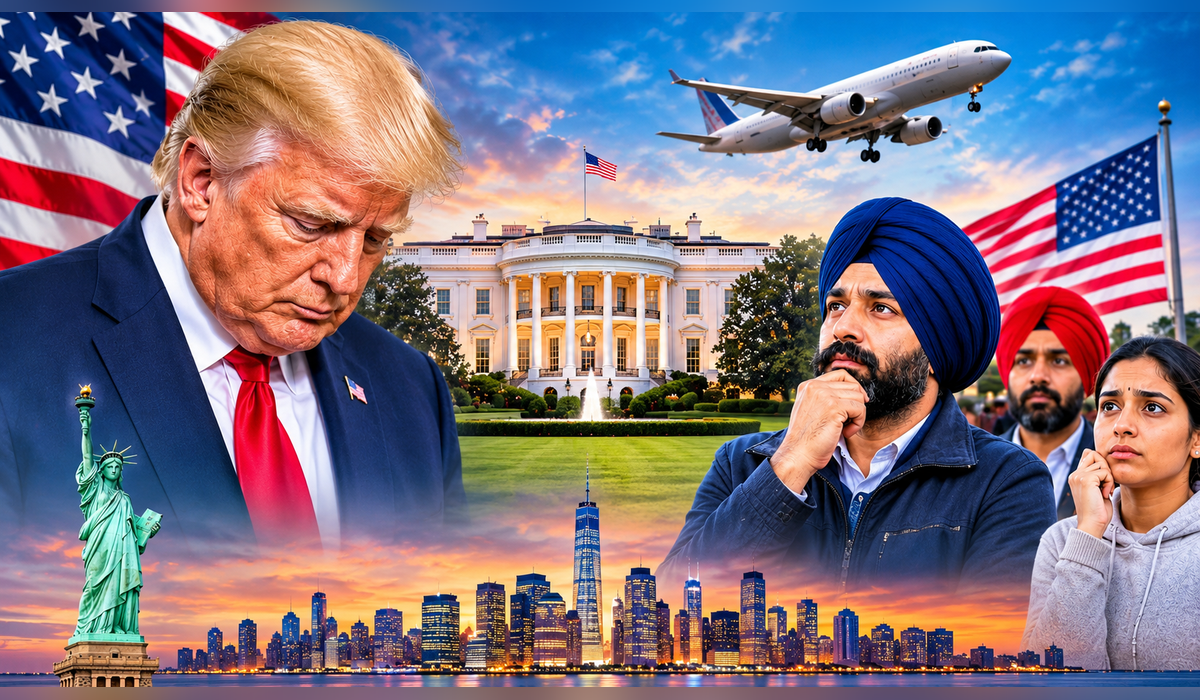

What the US midterms mean for the Punjabi American dream
Every Punjabi family with a son in Fresno, a daughter on a student visa in Texas, or a cousin waiting on a green card in New Jersey has been asking the same question since Wednesday morning. The Democrats have taken both Houses of the American Congress. Does the gate to America open a little wider now?
The short answer is no. It will probably not close much further through legislation either. At best, expect the status quo, and do not expect it to improve.
Let me first count our own, and then explain why the rope will not move.
Our Own on the Ballot
Punjabi-origin candidates had a good night, and it deserves to be recorded. Ro Khanna, the Silicon Valley Congressman born in Philadelphia to Punjabi immigrant parents, was re-elected comfortably from California. Manka Dhingra, Deputy Majority Leader in the Washington State Senate, returned to her seat. So did Ash Kalra in the California Assembly. Ranjeev Puri, the House Minority Leader in Michigan and among the highest-ranking Sikh Americans in state politics, was re-elected as well.
The first-timers made the better story. Jyot Singh, the son of working-class Punjabi immigrants, won a Georgia House seat with 68 per cent, becoming the first Sikh American and the first Indian American in the Georgia General Assembly. Pooja Sethi, an immigration lawyer, became the first Indian-American woman elected to the Texas Legislature. Tina Sodhi became the first woman of Punjabi heritage elected a County Court Judge in Albany, New York.
On the other side of the ledger, Dr Jasmeet Bains, the California Assemblywoman, had already fallen in June, finishing third in the Democratic scramble for a Central Valley Congressional seat which has a large Punjabi farming community. Himat Singh Bainiwal, a Republican, lost to Kalra.
A word of caution, however. A Punjabi name on an American ballot does not translate into a Punjabi policy. These men and women answer to voters in Georgia and Michigan, not to Jalandhar. Their rise is a matter of pride, and of long-term influence. It will not move a single file at a consulate.
Rassa-Kashi on Capitol Hill
Anyone who has watched a village rassa-kashi knows the sight: two evenly matched teams, every muscle straining, and the knot at the centre of the rope scarcely moving. That is Washington for the next two years.
President Trump has lost the Senate as well as the House, which take on their new form on 3 January 2027. Any further restrictive law he wants, say on birthright citizenship or legal immigration, now dies in a Democratic Congress. That is the good news.
The bad news is its mirror image. Democrats cannot pass a liberal immigration reform either. They do not have the 60 votes needed to get past a Senate filibuster, still less the two-thirds needed to override a veto, and the President has already promised to be “Mr. Veto”. So no relief for the green card backlog, no regularisation for the undocumented, no fresh legal pathway. Nor will the deportation machinery run short of money, since a Republican Congress used the budget route to give ICE and the Border Protection agency $239.5 billion in 2025 and 2026, beyond the reach of ordinary annual bargaining.
What the Democrats do acquire is the gavel: committee chairs, hearings, subpoenas, and some leverage over future spending. That means embarrassment for officials, and perhaps better conduct at the margins. It does not mean a new law.
The Gate Is Kept by Memos, Not Members
Here is the point most easily missed. Almost everything that has hurt the aspiring Punjabi emigrant over the last two years did not come through Congress in the first place. It came through proclamations, memos and rules. Therefore, a change in Congress changes very little. The real contest now lies between the executive and the courts.
The green card from inside America. In May, the immigration agency, USCIS, announced that someone in the country temporarily, a visitor visa holder included, must go home and apply through the consulate, save in extraordinary circumstances. The Homeland Security Department later softened this, saying it was a reminder of case-by-case discretion and not a blanket rule. But the memo stands. Since August, officers may reject a deficient application outright without first asking for the missing papers. Unions, professors and applicants went to court in Boston on 5 October, and when last reported, no court had stayed either policy. The old Punjabi calculation, go on a visitor visa and sort out the rest there, has become a very dangerous bet.
H-1B to green card to citizenship. The wage-weighted lottery is in force, and it favours the better paid over the fresh graduate. The notorious $100,000 fee was struck down by a Boston court in June, and the appeals court refused to revive it in July, so it is not being collected today. The government’s appeal continues, and the question may yet reach the Supreme Court. The long queue for Indians waiting on employment green cards stays exactly as it was, because only Congress can change those numbers, and Congress will not.
The student route. This matters most to Punjab’s IELTS generation. On 8 October, the Homeland Security Department proposed that colleges pay $70,000 before a student’s first post-study work authorisation under the Optional Practical Training programme, and $30,000 for each one after. It remains a proposal, and it will surely be litigated. If it survives, it will ration the very bridge which carries a student from a degree to a job.
The child born in America. Here is the one piece of settled good news. President Trump’s executive order of 20 January 2025, which sought to deny citizenship to children of parents who are neither citizens nor green card holders, is no longer in limbo. The Supreme Court struck it down 6–3 on 30 June 2026 in Trump v. Barbara, and it never took effect. The President then asked Congress to act. After this election, that door is shut too. A child born on American soil remains an American. But the ruling protects the child, not the status of the parents.
Neutral on Paper, Punjabi on the Highway
None of these measures names Punjabis. No policy in the offing has been written to aid or to hinder us as a community. Yet a neutral rule can fall very unevenly, and two of them do.
The first is trucking. Since 16 March, a new federal rule has confined commercial licences for non-domiciled drivers to three visa categories, and has shut out asylum seekers and refugees. Some 200,000 drivers are expected to lose their licences over time. Punjabi trucker associations place between 1.3 and 1.5 lakh drivers from Punjab and Haryana on American roads. A federal appeals court refused to stop the rule in May.
The second is asylum, the route used by so many who went by the donkey path. Punjabi speakers made up nearly two-thirds of Indian asylum seekers between 2001 and 2022, so every tightening there lands first on villages in Doaba and Malwa. A Democratic Congress can hold hearings on all of this. It cannot undo it.
Do Not Sell the Land Yet
So what should a family in Punjab conclude?
First, do not read the headlines as a change of weather. Nothing that takes effect on 3 January makes a visa easier. Second, treat the courts, not Congress, as the place to watch, and remember that a court win today can be reversed on appeal tomorrow. Third, take advice from a licensed American immigration lawyer, not the local agent, before selling an acre. And above all, stay off the donkey route. The enforcement money has already been spent in advance.
The gavels change hands in January. The gate stays where it is, and so does the man guarding it.

Leave a Comment