
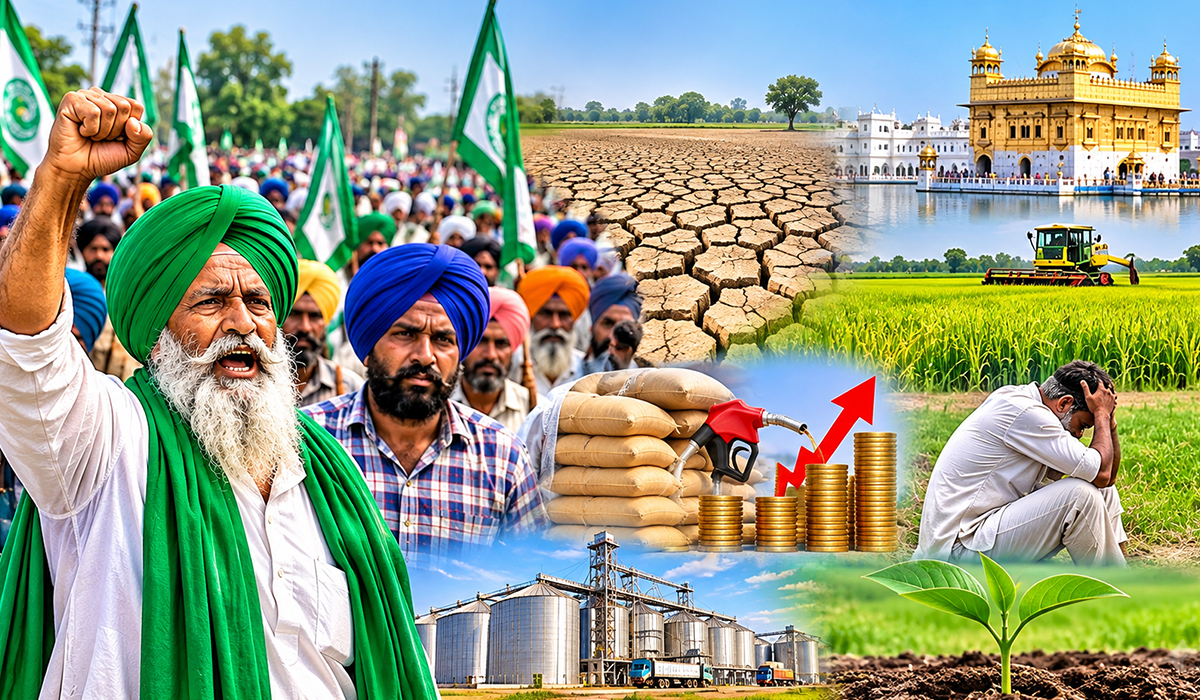

Punjab has been the food-bowel of India ever since Independence but it assumed more importance after its reorganisation in 1966 which coincided with the advent of green revolution. With just 1.53 per cent of India’s geographical area , Punjab contributed 73 per cent wheat and 45 per cent rice to the central pool (buffer stock) in 1980-81. The respective share declined to 47 per cent and 21 per cent in 2024-25. In absolute sense it is 125 lakh metric tonnes of wheat and 173 lakh metric tonnes of paddy, respectively, which is very high proportion of wheat and paddy production in the state. Despite the declining share, the state is still contributing very high proportion of wheat and rice to the central pool. Clearly, Punjab continues to be the food-bowel of the country and is providing much-needed food security. Given the fact that in rest of India nearly 45 percent agricultural area is dependent on rain for irrigation Punjab is bound to provide major share in country’s food security.
However, wheat-paddy crop rotation in Punjab is the manifestation of green revolution promoted by creating an enabling environment through institutional and technological factors supported by the policies of central and state governments. The objective was to address the problem of hunger and food-deficiency in the country by developing Punjab as the food-granary of the country. With R&D in high yielding variety seeds of wheat and paddy, assured irrigation, and subsidised supply of chemical fertilisers along with public investment and government supported extension services (from lab to field) and farmers’ willingness to adopt the new technology, Punjab became the front-runner state in food-grain production and the foremost success story of green revolution. As a consequence, India became self-sufficient in food-grains which also helped the country from getting rid of the US-food-aid under PL-480 and thereby from the arm-twisting food-politics of the USA.
But Punjab had to pay a heavy price in terms of serious depletion of water table and deterioration of soil health, besides doing away with diversified-organic-cropping pattern. There are estimates that if water table continued to deplete at this rate Punjab will have to face a serious water shortage even a threat of becoming desert in another 20-25 years. In that case the present cropping pattern will become unsustainable and economically unviable.
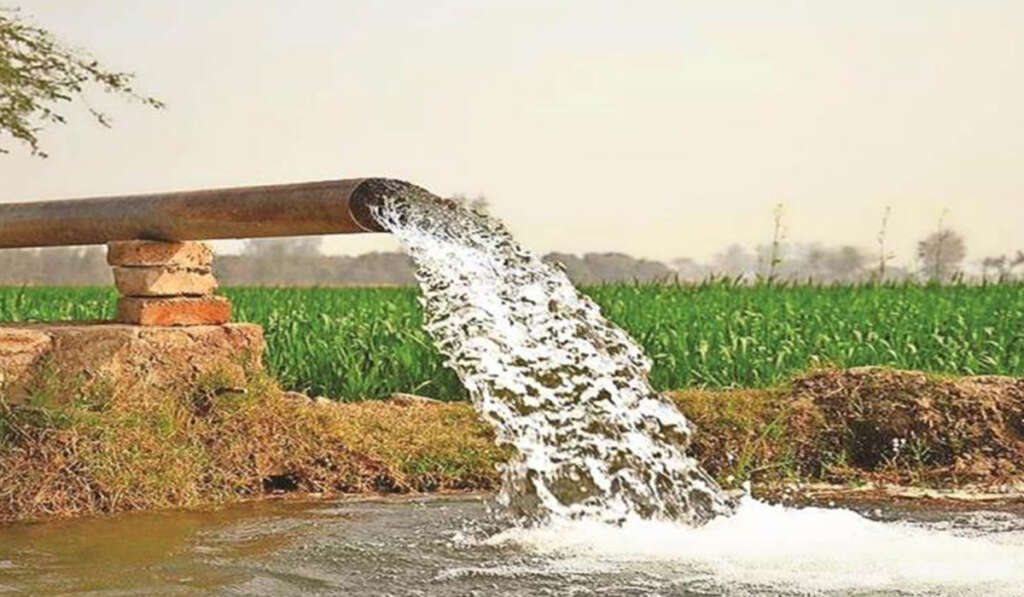
The water-intensive paddy crop, which was never a natural crop and staple diet of Punjab, became the villain of peace as it led to an ever-increasing extraction of ground water with an exponentially increasing number of tube-wells. Over the period of time there developed an ‘agri-water nexus, nay, ‘paddy-water nexus’ as wheat is less water intensive crop. To meet the increasing demand for irrigation, especially for rapidly increasing area under paddy (highly water-guzzling crop), the dependence on ground water increased in a big way. As a matter of fact, ground water played a significant role to make Punjab a success story of green revolution. It reduced the risk of drought’s adverse impact on yield as high yielding varieties of wheat and paddy are highly responsive to assured irrigation. The public support and global agri-business had also encouraged the installation of installation of private tube wells for irrigation.
This, in turn, led to a mind-boggling increase in the number of tube-wells. It increased from 1.92 lakh in 1970-71 to currently 15 lakhs. Thus, the number of tube-wells increased by more than 7 times; much higher than the increase in net sown area (NSA) and the gross cropped area (GCA). The NAS increased from 40.53 lakh hectares in 1970-71 to 41.18 lakh hectares in 2023-24 (an increase of only 1.02 times or 1.60 per cent). The gross cropped area (GCA) on the other hand increased from 56.78 lakh hectares in 1970-71 to 78.39 lakh hectares in 2023-24 (an increase of 21.61 lakh hectares; 38.06 per cent). Evidently, the number of tube wells registered highly disproportionate rise as compared to the rise in net area sown and gross cropped area. The many-fold increase in the number of tube-wells is having very high correlation with the rising area under paddy. The number of tube-wells increased by 668.75 percent while the area under paddy increased by 764.34 percent during the span of 50 years.
Clearly, Punjab is over-exploiting its ground water in producing and contributing rice to the central pool of the country. During the triennium ending (TE) 1980-81, the rice production in Punjab consumed 16643 billion litres of water out of which the component of contribution of rice to the central pool accounted for 13449 billion litres (81%). On an average, between 73 and 81 per cent of the water consumption in rice production is virtually meant for the central pool. It is the classic case of virtual water export from Punjab to the rest of India.
An ever-increasing over-draft of ground water led to higher and higher number of over-exploited blocks over the period of time. The number of over-exploited blocks increased from 53 (44.92 per cent) in 1984 to 105 (76.09 per cent) in 2013 and further to 109 (78.99) per cent in 2017. The number of safe/white blocks decreased from 36 in 1984 to 22 in 2017. In 13 out of total 22 two districts 100 per cent blocks are in the overdraft category. In another two districts 80 per cent blocks fall in this category.
Such a fast depletion in water table, along with degrading quality of water, shall have a negative effect on environmental. That, in turn, would have negative impact on the total factor productivity in agriculture. Due to increasing dependence on ground water irrigation, depleting water table and frequent deepening of tube-wells, the demand for energy in agriculture has increased many folds. The electricity consumption in agriculture increased from 463 million KWH in 1970-71 to 12484 million KWH in 2017-18. Over 1970-71, the electricity consumption in 2017-18 witnessed an increase of nearly 27 times. As compared to it, the gross cropped area increased only by 1.38 times while the irrigation intensity increased by just by 29 percentage points during the same period. The percentage increase of electricity in 2018-19 over 1984-85 for the then total 12 districts varied between 59 per cent (Amritsar) to 573 per cent (Sangrur). Bathinda registered an exceptionally higher increase (1133%) during this period. Significantly, the higher increase has been witnessed, inter alia, in those districts which are predominantly rice growing.
Crop diversification is must but how?
The enormously over exploited ground led to water-energy-paddy nexus in Punjab which is going to put a great challenge to the sustainability of agriculture under the business-as-usual moder. Paddy’s consumptive use of water is much higher than the other seasonal crops. The availability of free electricity has also led to injudicious use of water for irrigation. The judicious and optimum use of water is, thus, the need of the hour. Inefficient and sub-optimal use of ground water is bound to put a serious question mark on the economic viability of wheat-paddy crop rotation and would augment the farmers’ distress and agrarian crisis.
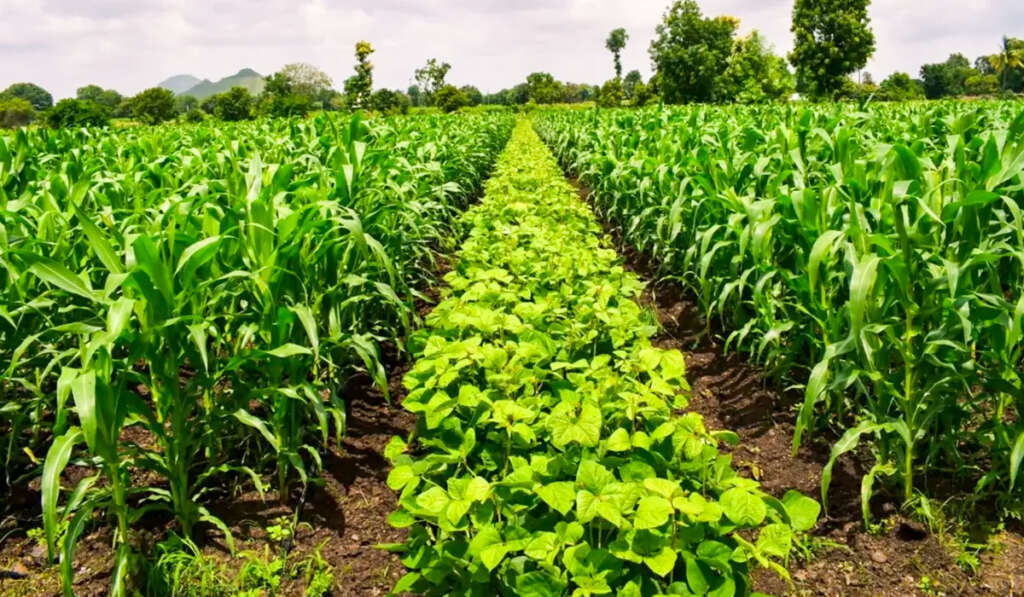
However, despite some of the efforts for developing alternative crops, there is hardly anything on ground. The economic viability of alternative crops is a major hurdle in the way of crop diversification. There is absence of enabling environment for the promotion of alternative crops such as maize, cotton, basmati rice (fine quality rice), pulses and oil seeds, vegetables and fruits. Crop diversification has been the subject of debate for the last about 35 years but nothing tangible came out on the ground. The two committees (GoP,1986 and 2002), constituted by the government of Punjab for restructuring and diversifying agriculture, made a significant recommendation for shifting substantial area (20 per cent) from under paddy but it did not cut any ice. The Draft Agricultural Policy (2013) and 2019, prepared by the Punjab State Farmers’ Commission, also recommended crop diversification by shifting substantial area from under paddy but so far, the state has neither an agricultural policy nor a water policy. Paradoxically, even the Punjab Water Development and Regulatory Authority, constituted in 2020, has not included irrigation under its purview.
On the other hand, when Punjab is facing serious water table depletion (because of meeting country’s need for food grains) the central government is advising Punjab to go in for crop diversification, without any policy prescription and financial aid. It needs to be understood that paddy was promoted by an enabling environment created by the policy-set of high yielding variety seeds and open-ended procurement at the MSP by the government agencies. The moot question is that when ground water situation is so precarious then why the area under paddy is so high in Punjab? Why despite the felt need for crop diversification it is not taking place, especially when a number of less water consuming and high value crops (such as maize, pulses, oilseeds, vegetables and fruits, etc.) are available? Why the farmers are not going in for alternative crops? Though these questions need a larger debate, yet, the policy-support and open-ended assured public procurement at minimum support price ever since mid-1960s and the free power to agriculture from 1997 may be the most prominent reasons for such a scenario.
The phasing out paddy or shifting substantial area from under paddy would require a policy mix and incentives to farmers, both by the central and state governments. The farmers would have to be assured for at least the same amount of net income from alternative crops which they are getting from wheat-paddy crop rotation. This requires an enabling environment for developing and growing such crops which could become at least economically viable alternative to paddy. If the central government is really interested in crop diversification, then it should be done by compatible policy intervention. The farmers would certainly go in for crop diversification if they are assured at least the same amount of per hectare net income from alternative crops. That, inter alia, would require R&D in alternative crops, procurement of those crops at the MSP and compensate the difference if any. Both the centre and state government would have to join hands for any effective crop diversification.
Clearly, under the business as usual – the monoculture of wheat-paddy crop rotation – the Punjab agriculture is not going to be sustainable for long as the water table in Punjab is going down at a very fast pace. The estimated electricity demand by the agriculture sector would also increase to 24-39 billion kwh from currently 11-13 billion kwh. To address the problem, Punjab will have to go in for crop diversification and intelligent water saving technologies.
Challenges and Way-out
The farmers’ unrest in Punjab is mainly the manifestation of agrarian crisis and framers’ distress. The ever-increasing costs of cultivation due to over-mechanisation, depleting water table and shrinking profit-margin is aggravating the framers’ unrest. The shrinking employment opportunities in agriculture and absence of employment opportunities in non-farm sectors is adding fuel to the problem. Due to all these reasons, agriculture is not an attractive proposition for the youth. Given the opportunity, even the farmers are willing to leave agriculture as there is an atmosphere of hopelessness among the framers and their wards.
Such a scenario necessitates a holistic policy to address the agrarian distress and farmers’ crisis. The second green revolution is being advocated by the experts and policy makers but no body is clear about what it would be. To usher in second green revolution the system would have to have a road map in terms of cropping pattern, high yielding and high-value crops and a workforce equipped with commensurate skill-set. In other words ,the system would have to have an enabling environment for the second green revolution with a compatible policy and strategy. But so far there is much ado about second green revolution with no sustainable road map.
Crop-diversification and production of high-value crops is also being pleaded but there is no roadmap. There is no clear road-map for shifting area from under paddy. The non-viability of small farmers is another serious challenge. As a matter of fact, the farmers’ distress cannot be addressed within agriculture alone as there is little scope for raising farmers’ income under the business as usual. Along with the so called second green revolution, the system would have to develop the rural non-farm sector with a specific focus on generating employment opportunities for the rural youth especially for the surplus workforce in agriculture and thereby enhancing the farmers’ income both from agriculture and non-farm sectors. This would necessitate processing and value addition of the agri-produce by farmers’ cooperatives leading to additional employment and income. Such a policy would also engage the educated and skilled rural youth.
Dr. Ranjit Singh Ghuman, Professor of Eminence, Punjab School of Economics, Guru Nanak Dev University, Amritsar
Leave a Comment