
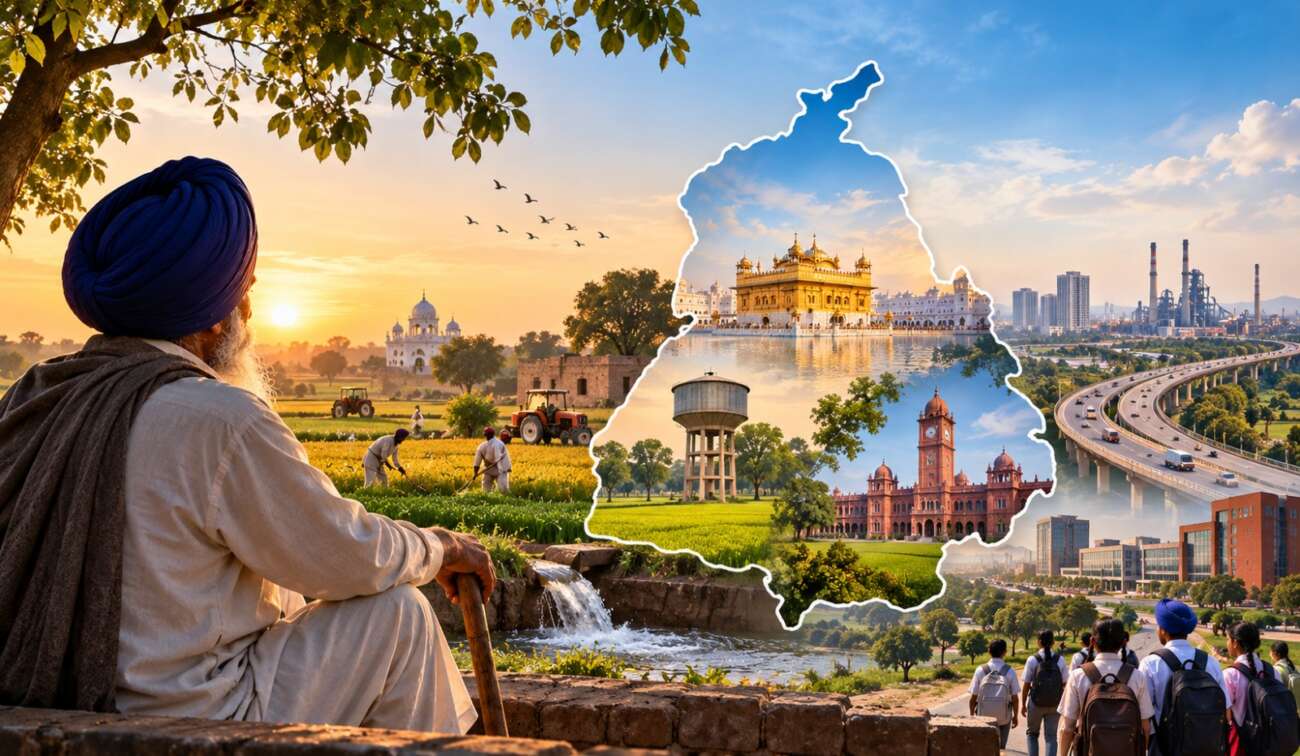

Sixty, and Still Becoming
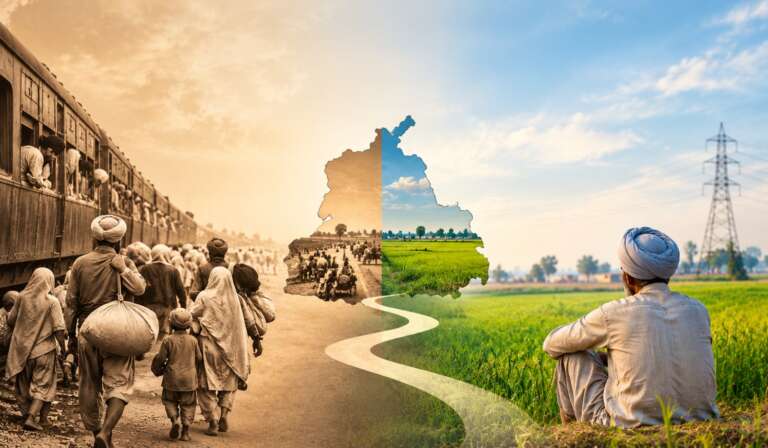
On 1 November 1966 I was five years old, and I have no memory of the day the map was redrawn. My father, a PCS officer, would have known what the Punjab Reorganisation Act, 1966, did to districts, tehsils and revenue records, and to the files that had to travel from one State to another. A child knows only that the grown-ups are talking in lowered voices. Sixty years later, Punjab Day falls on a Sunday, and the State born that morning is old enough to draw a pension.
Yet it feels unfinished rather than old, and I find “unfinished” the more hopeful word.
The editor has asked me what Punjab I aspire for, economically, socially and politically: three adjectives, which an old Finance hand cannot help reading as three columns of a ledger. I have spent thirty-seven years in government and five outside it. Rather than offer a fourth framework from a seminar room, I have borrowed one from Talwandi. Sri Guru Nanak Dev Ji gave the Sikh householder three instructions: kirat karo (earn by honest labour), vand chhako (share what you earn), and naam japo (keep the Creator in mind), which in the public square becomes sarbat da bhala, the welfare of all. Kirat is economics. Vand is society. Sarbat da bhala is politics as it ought to be. I will take them in that order.
1. Kirat: Earning Our Way, Not Borrowing It
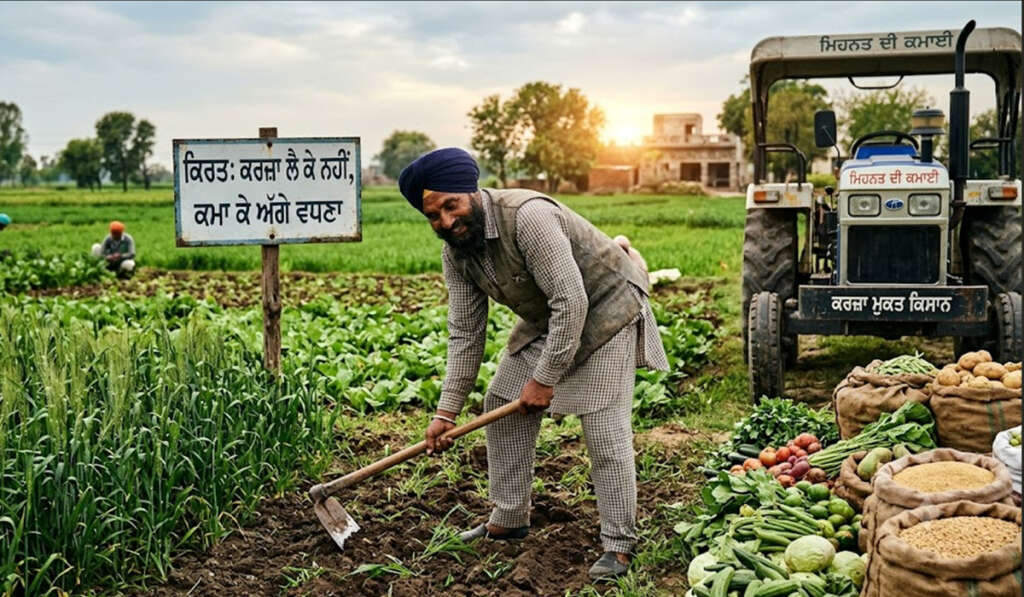
The ledger before the lalkaar
Begin with the number nobody on a stage wants to read aloud. Punjab’s outstanding debt has crossed ₹4.5 lakh crore. A large part of each year’s fresh borrowing goes to repaying old borrowing and paying interest on it. Salaries, pensions and subsidies take most of what is left, and capital spending (the money that builds a road, lines a canal or puts up a cold store) is squeezed into a corner of the budget. I was Principal Secretary (Finance) from 2010 to 2012. The arithmetic was worrying then. It is alarming now.
The Punjab I aspire for does not wait for a central write-off. That write-off is not coming, and a State that rests its hopes on it has given up governing itself. It can earn its own way out. Collect property tax properly in our cities, where it is still largely a polite suggestion. Make the stamp-duty and registration system honest, so that land changes hands on paper at the price it changes hands in cash. Look after the shamilat land that panchayats hold in trust, and lease it in the open instead of letting it be quietly occupied. And target the free-power subsidy that has run since 1997: let it reach the small and marginal farmer who needs it, and let the large landholder with a tube-well on every killa, and a son in Brampton, pay something. Every one of these can be done without a loan from Washington or a package from Delhi; each needs a government willing to be unpopular for one budget cycle in order to be solvent for the next ten.
From paddy to plenty
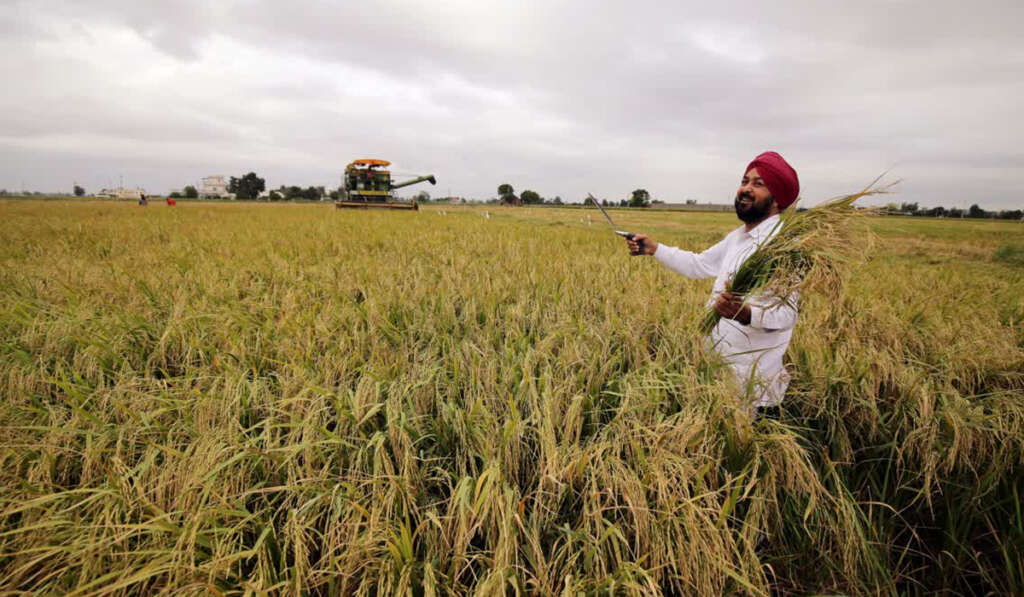
The Green Revolution made Punjab the granary of India, and its success set a trap. Paddy, a crop that does not belong to our semi-arid soil, now sits on that soil like a lodger who refuses to leave. It has drained aquifers in more than two-thirds of our blocks. Tube-wells that once struck water at twenty feet now go down two hundred and more. And farmers who were the pride of the nation are asked to explain the smoke over Delhi every November, even when the evidence points in several other directions as well.
The Punjab I aspire for treats water as its first currency and its scarcest one. I learnt as Principal Secretary, Irrigation, that water policy is made in the field channel as much as in the tribunal. Diversification needs an assured market for maize, pulses, oilseeds, fruit and vegetables, so that the farmer who leaves paddy is not punished for taking the government’s advice. Procurement guarantees, a working ethanol and food-processing chain, and cold storage at the block level would do more than any sermon at a Kisan Mela. Our canals need lining, and our tail-end villages need the water they are owed.
I would also like to see the farmer own a share of what happens to his crop after the mandi: the feed mill, the starch plant, the distillery that turns his maize into ethanol. Cooperatives built Amul in Gujarat. The Punjabi farmer has the same instincts. What he lacks is the institution.
Mandi Gobindgarh, Ludhiana and the road to Kabul
Punjab was never only an agricultural State. Mandi Gobindgarh rolled steel when the rest of North India bought it from elsewhere. Ludhiana knitted the sweaters that kept half of India warm, and Jalandhar made the bats and balls the world’s cricketers played with. These clusters declined because a border State far from the ports carried a freight penalty, lived through a decade of militancy and then watched investment move to neighbouring States that offered tax holidays we could not match. Punjabis did not forget how to work.
The Punjab I aspire for asks the Centre for a fair hearing, without whining. National schemes such as PM GatiShakti and the National Steel Policy – Vision 2047 should carry a line that names Gobindgarh and Ludhiana. When gas pipelines from Central Asia are planned, Fazilka should be on the map as a point of entry. And the State should, at the right time, press for trade through Attari–Wagah to reopen. A land-locked border State needs its land routes the way a coastal State needs its harbours; trade through Attari would do for Amritsar what the ports do for Gujarat and Tamil Nadu. That case is best made calmly, in a letter, with numbers, and it is more likely to be heard that way than from a rally stage.
The harat and the bucket
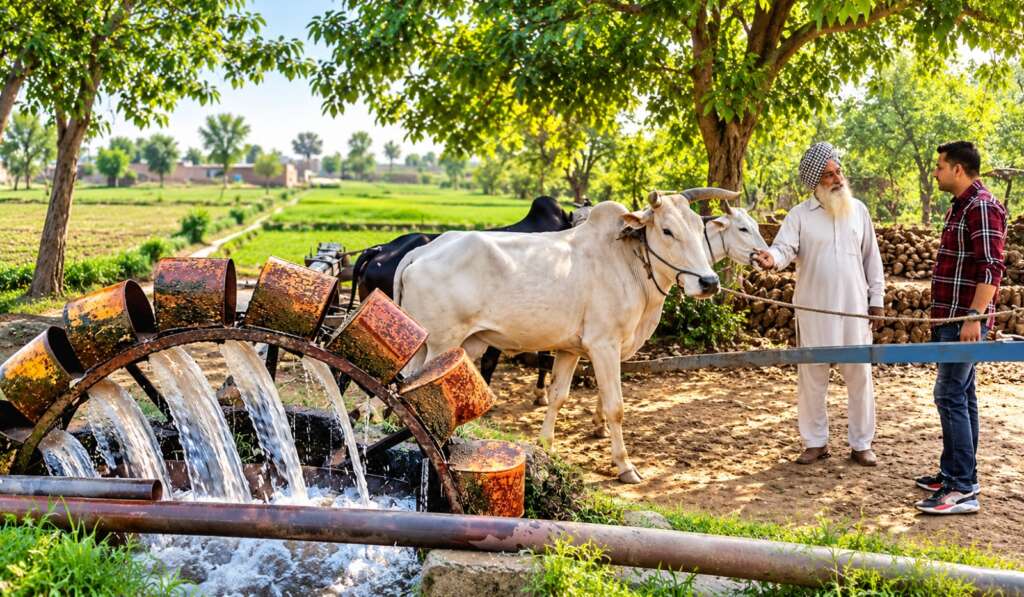
When I was a boy on the edge of Patiala, the harat, the Persian wheel, still turned in some fields. A bullock walked in circles, blindfolded, and an endless chain of small buckets rose from the well. Each bucket brought up only a little water, and the field was irrigated all the same.
Punjab’s economic revival will come the same way, bucket by bucket: a property-tax reform here, a cold store there, a lined canal, an upgraded cluster, a reopened trade route. Mega-projects, summits and announcements make news but lift little water. The bullock may feel it is going round in circles while the water rises anyway. What it must not do is stop, and what the farmer must not do is change the bullock every five years, with each new one beginning its term by tearing out the buckets the last one installed.
II. Vand: A Society That Shares the Langar and the Ladder
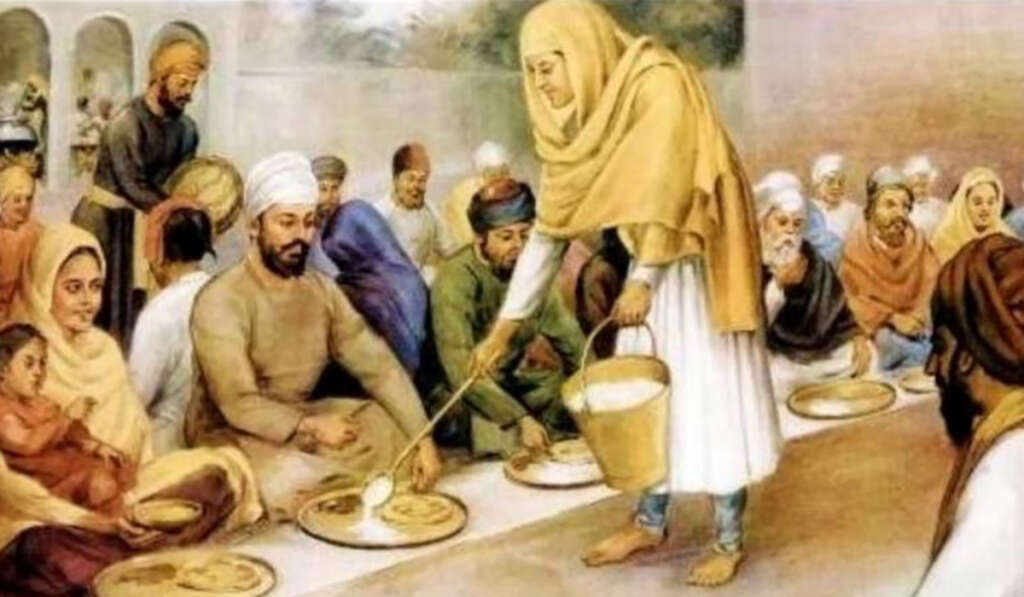
Sangat, pangat and a seat at the table
Punjab gave the world the langar. In the langar a maharaja and a mazdoor sit in the same row, the pangat, and eat the same dal served by the same hands. Sri Guru Amar Das Ji is said to have asked even Emperor Akbar to eat in the pangat before he could have an audience.
Our practice has not always matched our scripture. Punjab has the highest proportion of Scheduled Caste population of any State, close to a third, and yet separate gurdwaras and separate cremation grounds still exist in too many villages. Dalit families who till the land seldom own it, and the reserved share of panchayat land meant for them is too often captured through proxies. Closing that gap between the Guru’s word and the village’s deed needs less new law than honest enforcement of the laws we have: the shamilat lease that actually reaches the landless, the scholarship that arrives before the examination rather than after it, the gurdwara committee that opens its doors without waiting for a court order.
The daughter who stays, the son who returns
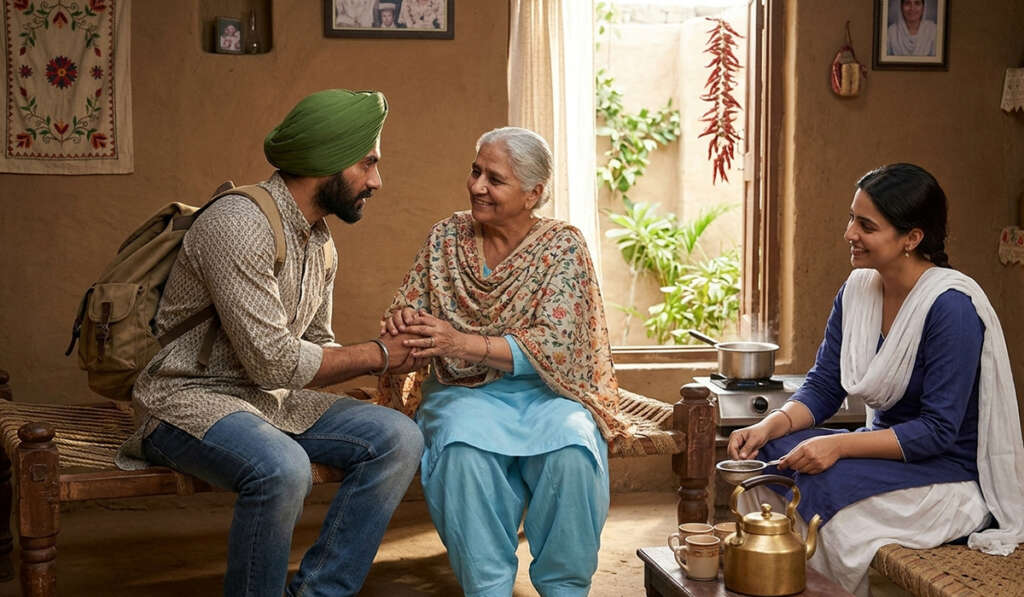
Every Punjabi family knows the IELTS centre. In many district towns it occupies the building where the cinema hall used to be. Our young people, the brightest and most restless of them, are leaving in numbers no census quite captures; some go to study, some to work, and many simply to get away. The diaspora is our pride, but a State whose main export is its own youth is bleeding slowly.
I want a Punjab that a young man in Moga or a young woman in Mansa chooses to stay in, or chooses to come back to. Jobs are part of that, and I have dealt with them above. Dignity is the other part. Applying for a certificate should not require a middleman. A teacher’s transfer should not require a political patron. A daughter going to college should not have to wait for her brother to escort her home. When I was Special Chief Secretary for Social Security and Women and Child Development, Punjab won the national first prize for Beti Bachao, Beti Padhao in 2017–18. I took that prize as a start, and I will count the job done when a family in Mansa no longer needs a scheme to persuade it to send a daughter to school.
Chitta, and the spectre behind the effigy
No honest piece on Punjab’s society can leave out drugs. Every Dussehra now, the effigy of the chitta demon burns alongside Ravan, and every year the trade carries on untouched. The Punjab I aspire for follows the money: to the supplier, the financier and the protector, whether he wears a uniform or khadi, and not merely to the addict picked up from a ditch. It treats addiction as a disease, in de-addiction centres run as hospitals and not as detention camps. And it gives the village sports ground back to the village boy, with a coach, floodlights and a district tournament to train for.
III. Sarbat da Bhala: Politics for All, Not Only for the Next Rally
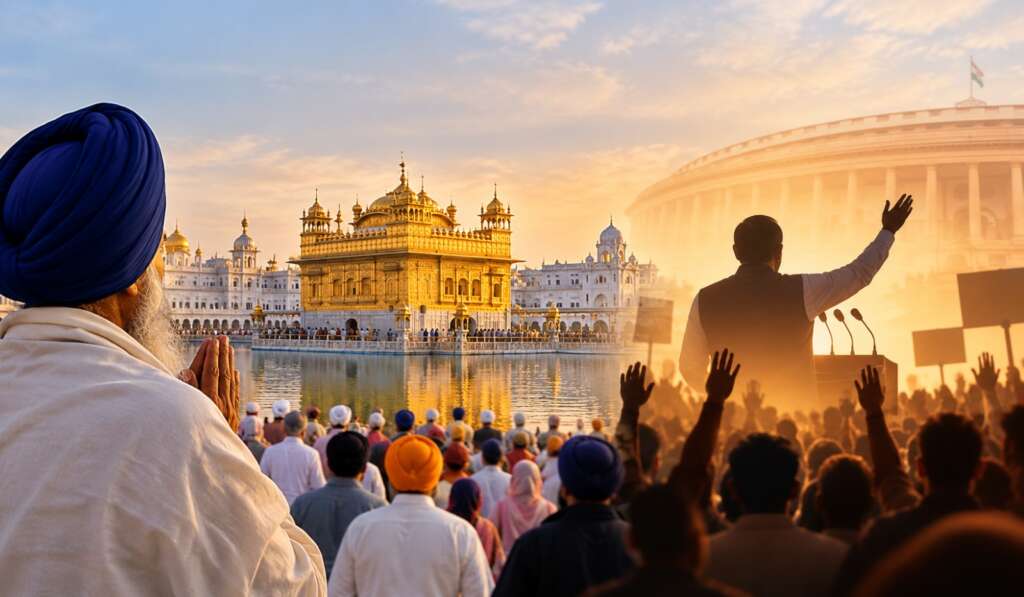
Many leaders, some leadership
I have written before that Punjab has many leaders but little leadership. Leaders win rallies. Organisations win Assemblies, and institutions govern States. I want to see political parties in Punjab built from the bottom up, as a federation of 117 working constituency units, with a district tier that functions beyond its letterhead and an opposition spokesperson for each department of government who has actually read its budget. Politics in such a State is a twenty-four-hour job, every day of the five years, and does not start with the model code of conduct and end with the counting of votes.
I make this wish for every party. I have served Chief Ministers of different parties and have taken no assignment from any of them since superannuation. Whichever party forms the government in 2027, I hope it arrives with a programme it can execute within the Constitution and within the fiscal space it actually has. A long list of promises the treasury cannot honour does not qualify.
Neighbours, not ramparts
Punjab’s relationship with the Centre has swung too often between supplication and confrontation, and neither has served us. Cooperative federalism, taken literally, means cooperating where the national interest and Punjab’s interest coincide, as they do on border infrastructure, defence, food security and trade, and arguing firmly, with documents and data, where they diverge, as they sometimes do on river waters, on Chandigarh and on the share of central taxes. A State that shouts all the time stops being heard, and one that stays silent stops being noticed. Punjab must find the register in between: firm, factual and unhurried.
The same applies within the State. Panchayats and municipal bodies should receive the funds, functions and functionaries that the 73rd and 74th Amendments promised them more than three decades ago. A sarpanch who must travel to Chandigarh to get a village drain sanctioned is, in practice, a petitioner with a rubber stamp.
The Panth and the polity
Punjab’s politics will always be coloured by its faith, and there is nothing shameful in that. The Sri Akal Takht Sahib and the SGPC carry a moral authority that no elected office can match. I would like to see that authority kept clear of party convenience: Sikh institutions strong enough to speak frankly to every government, and independent enough that no government expects otherwise. Punjab has paid dearly in the past whenever the Panth’s institutions were drawn into party quarrels.
Sixty, and Still Becoming
Let me return to the five-year-old who did not notice the map being redrawn.
Punjab at sixty does not need pity. I have said elsewhere, and repeat here, that Punjab wants no sympathy, only empathy. What it needs is the discipline of a household that has overspent for too long and has decided to live within its means without losing its laughter. The Chali Mukte of Sri Muktsar Sahib were forgiven by Sri Guru Gobind Singh Ji at the very last hour; a late redemption is still a redemption. In that spirit I set out forty points last winter, Chali Nukte, as a Common Minimum Programme (explicitly not an election manifesto) for any party or government to adopt, adapt or improve. Most of its remedies cost more in political will than in money, and whoever governs Punjab after 2027 is welcome to every one of them.

Leave a Comment