

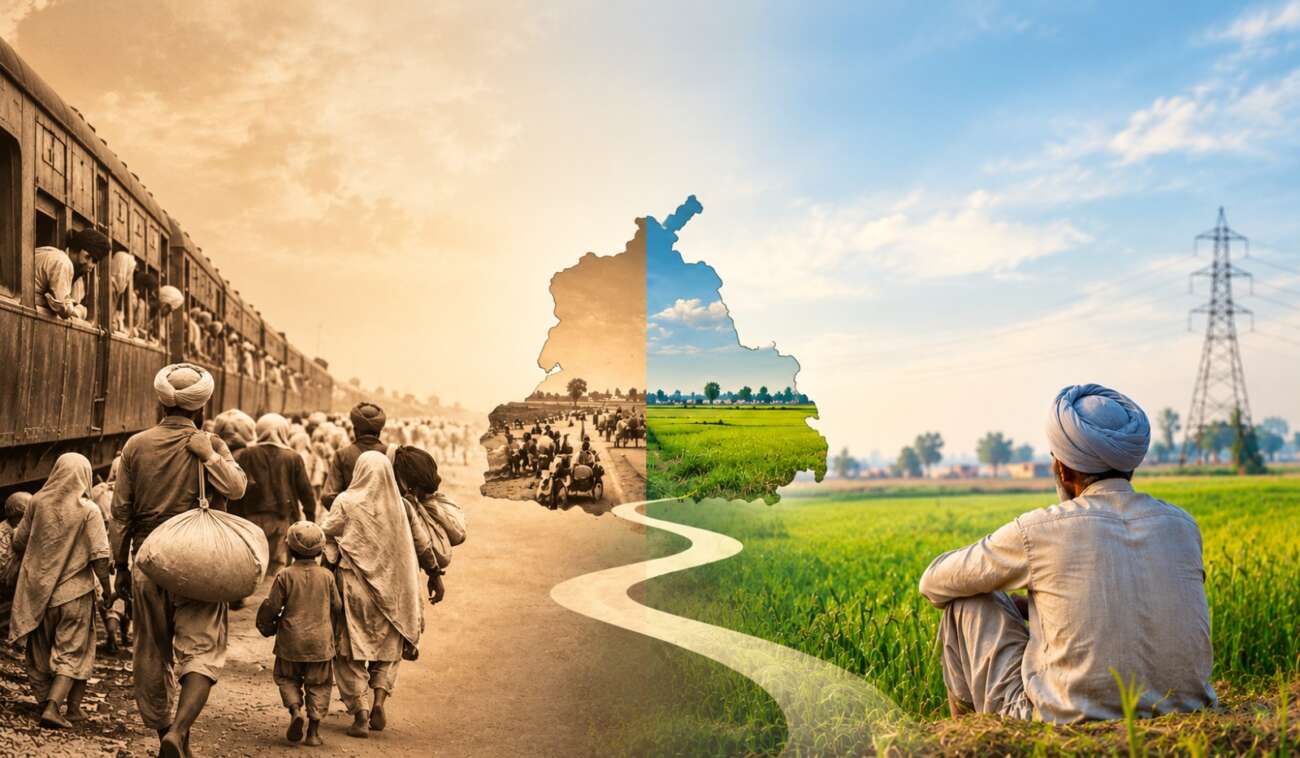

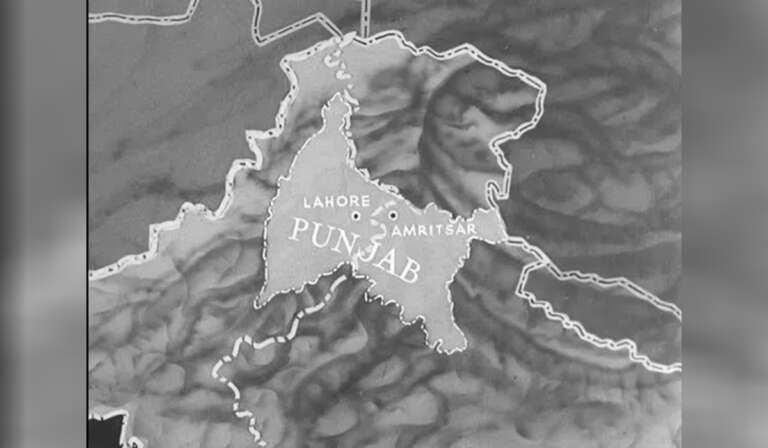
There is a signboard on the Jaipur-Delhi highway that I have never forgotten. Welcome to Haryana. Rewari District. Delhi: 120 km. An ordinary road sign. But I stopped. Rewari. One hundred and twenty km from Delhi. And once — in the memory of the living, in the age of those of us still alive — this was Punjab.
Part I recounted the history of Punjab from the Indus Valley Civilization to November 1, 1966. Part II is the accounting: what was the cost of Tribhajan, who is responsible for it, and whether Punjab has any way left to reform.
I. The Building of Weakness
The Punjab Reorganisation Act of 1966 was not a natural disaster. It was a political construct, and its terms were shaped as much by what the Akali leadership failed to ask for as by what Delhi chose to give.
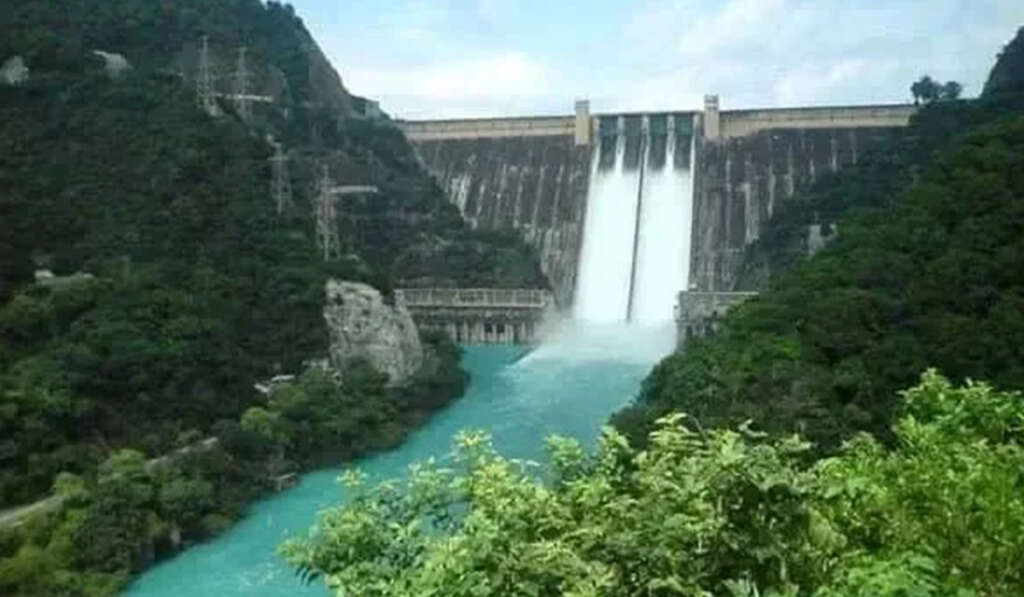
Sections 78 and 79 of the Punjab Reorganisation Act placed the Bhakra-Nangal Dam and the inter-state river system under a statutory body — the Bhakra-Beas Management Board — constituted and controlled by the central government. Punjab, which had given its river system, its land and its labour for the construction of these projects, now became a beggar in its own right. No negotiation, no tribunal, no Supreme Court case in six decades has been able to restore Punjab to any real control over its waters.
Parliamentary figures paint the clearest picture. Undivided Punjab sent thirty-nine members to the Lok Sabha. The present Punjab sends thirteen. In a first-past-the-post democracy where numerical coalitions determine power in politics, this halved representation has been a permanent strategic weakness.
II. Who were the culprits
There is a conversation that Punjab has never honestly had with itself. The enemies who weakened this state — the bureaucrats of Delhi, the litigators of Haryana, the lobbyists of Rajasthan — are usually named. Those from within Punjab who stabbed them are not named.
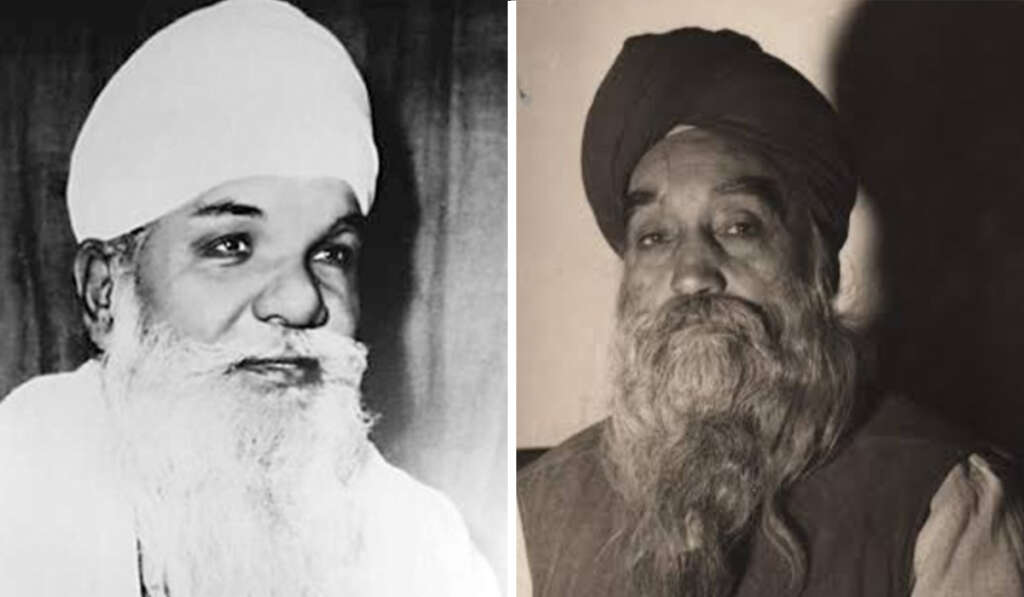
The Akali leadership of the Punjabi Suba era — Master Tara Singh, Sant Fateh Singh and those around them — executed a legitimate grievance in a strategically disastrous manner. The grassroots activists who went to jail were honest. Many were brave. They were also misled. The activists of every mass movement trust their leaders to turn sacrifice into strategic victory. The leaders of the Punjabi Suba Morcha turned sacrifice into a flag — and left everything else on the table. This is the criminal negligence that Punjab has been paying the price for for sixty years in lost water, lost seats, and lost factories.
III. Water: The Slow Flow of Blood
Punjab’s river water crisis is not a recent development. It is a sixty-year-old consequence of 1966. The Ravi, Beas and Sutlej — which once flowed entirely through Punjab — now flow in a legal maze of inter-state divisions, tribunal decisions, Supreme Court actions and central government interventions.
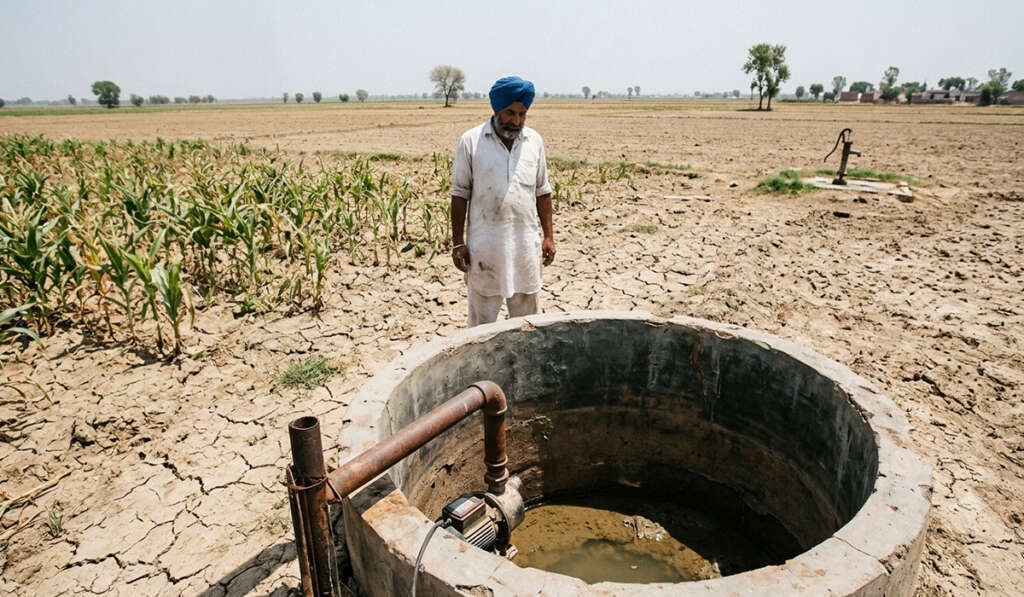
Meanwhile, the destruction of groundwater deepens. Canal irrigation, which once covered a large part of Punjab’s agricultural area, today accounts for only 26-27 per cent of total irrigation. The remaining over seventy per cent comes from tubewells that are sucking up groundwater. In some districts of central Punjab, the water table is falling by up to a metre every year. This is not just an agricultural problem. It is an existential threat to Punjab’s long-term habitability.
IV. Terrorism and its consequences
The terrorism that spread in Punjab from the late 1970s to the early 1990s cannot be understood outside of 1966 and its consequences. The political and economic marginalization that followed Tribhajan—the unresolved Chandigarh issue, the water dispute, the labeling of the legitimate federal demands of the Anandpur Sahib resolution as separatist—created an explosive atmosphere that external forces, especially Pakistan’s ISI, took full advantage of.
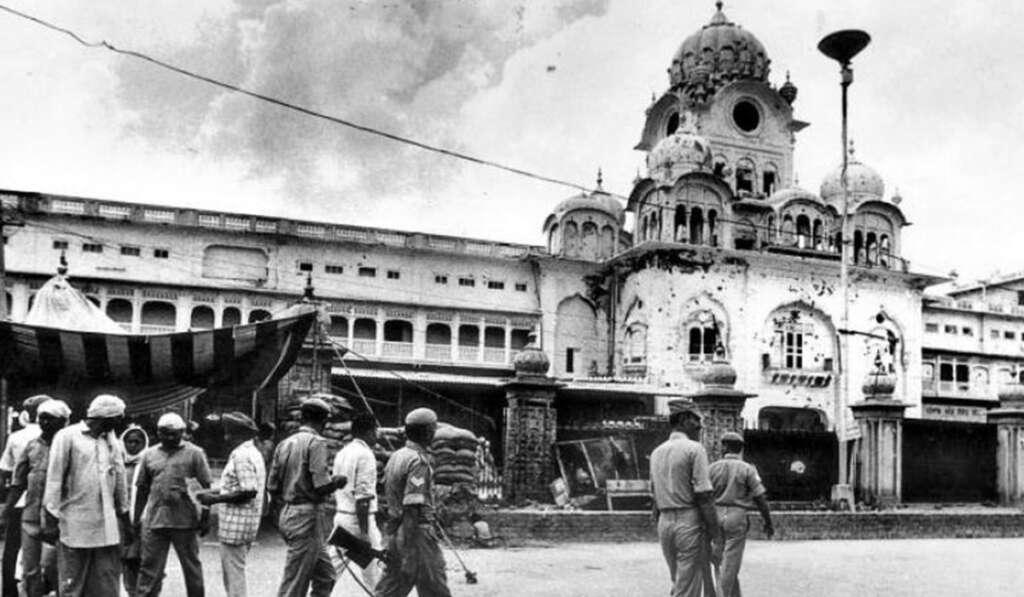
Operation Blue Star in June 1984—the Indian Army’s offensive to flush out Jarnail Singh Bhindranwale’s militants from the Darbar Sahib complex—was an atrocity whose wounds have not fully healed even after forty years. The assassination of Prime Minister Indira Gandhi by her Sikh bodyguards in October 1984, and the anti-Sikh riots in Delhi and other cities, added to the pain. Peace returned in the early 1990s. The majority of Punjab’s population never supported Khalistan; they demanded justice — over water, over Chandigarh, over federal equality — and they did not get it.
V. The economy of stagnation
Punjab’s economic journey since 1966 is a study in the compounding of early losses. The state, which ranked first among the major Indian states in per capita income at the time of reorganization, now ranks about nineteenth.
The wheat-paddy cycle, sustained by minimum support price purchases, provides income stability to farmers but at a heavy hidden cost: groundwater depletion, soil loss, stubble burning that fills northern India with smoke every winter. The romantic image of the prosperous Punjabi farmer is a statistical illusion. The farmer with three to four acres — the average landowner — earns no more than a domestic worker in Chandigarh.
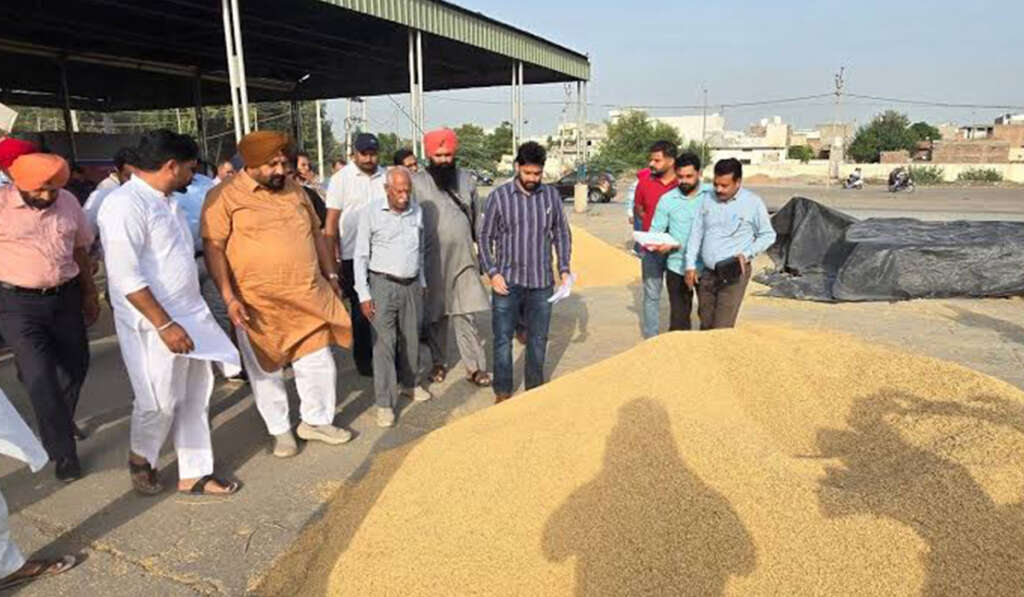
The industrial infrastructure that undivided Punjab had has never been rebuilt. Punjab’s fiscal position has worsened under governments of all stripes. The state’s debt-to-GSDP ratio is now over 45 percent. Power subsidies eat up resources that could be used for infrastructure, education or health. The drug crisis — drug terrorism fed by supply chains from across the border — is both a cause and a consequence of this stagnation.
VI. Chandigarh: The Unhealed Wound
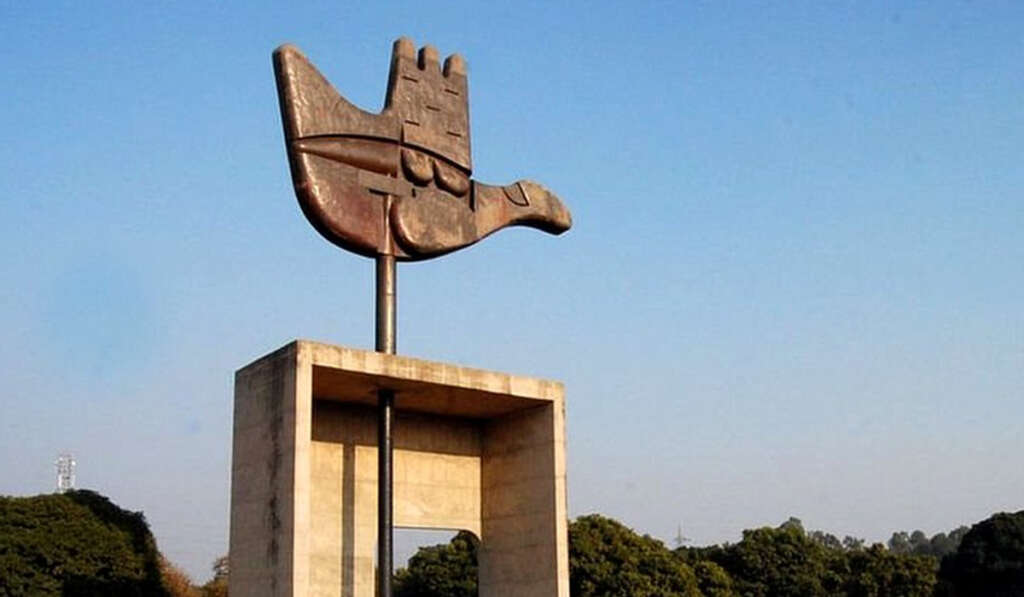
Chandigarh is still a Union Territory, the joint capital of Punjab and Haryana, administered by the Centre. Le Corbusier’s planned city — conceived as the capital of undivided Punjab after the departure of Lahore, built largely with Punjabi resources and labour — is today a strange place: a city that Punjab partly runs, keeps within its geographical boundaries, but does not control. Every prime minister since 1966 has promised at one point or another to resolve the Chandigarh issue. None has.
VII. The Way Forward
Punjab has no shortage of hope. But in Punjab’s case, hope will have to be earned through structural change rather than political promises. Four paths emerge — none easy, all necessary.
The first is water sovereignty. Punjab should use all the legal reasoning and political will to amend or repeal sections 78 and 79 of the Punjab Reorganisation Act. The structure of the BBMB should be challenged. A statutory authority for Punjab’s river waters — as proposed in the Citizens’ Draft of the Sutlej and Eastern Rivers Water Authority Bill — offers the institutional framework that can anchor this claim in law rather than sentiment.
The second is agricultural transformation. The dependence on a single crop of wheat and paddy will have to end — not through administrative orders but through market incentives: investments in cold chains, food processing, floriculture and horticulture that can yield three to five times more income per acre than paddy. Punjab’s farmers are not afraid of change; they are rational economic actors who will switch crops when the economy is right.
The third is financial reform. Rationalizing the electricity subsidy structure — not eliminating it, but limiting it to those who really need it — and changing the trajectory of debt. This requires governments that are willing to reason with their voters. Punjab has not had such a government in living memory. It must be demanded.
Fourth, and perhaps most importantly, is harnessing the power of the Punjabi diaspora. Punjabis in Silicon Valley, Bengaluru, Toronto, London and Sydney have built world-class institutions and networks. The pandemic has shown that professional work can be done remotely. Punjab has the infrastructure, connectivity and cultural appeal to bring back the intellectual and entrepreneurial capital of its diaspora — if it creates the necessary regulatory environment, honest governance and quality of life.
VIII. Decision and Challenge
Punjab’s fall from first to nineteenth place in per capita income is not a God-given event. This is the cumulative result of the strategic mistake made in 1966, magnified over sixty years by a political leadership that, in every party and every generation, preferred the comfort of grievances to the hardship of structural reform. The culprits of 1966 have been named. Their successors will have to give their own separate account.
The Punjab of pre-November 1, 1966, cannot be brought back. The division of rivers cannot be reversed. Parliamentary seats will not magically come. No government that fears the wrath of Haryana will give Chandigarh. These are the facts of the Punjab situation, and no honest analysis can cover them up with sentiment.
But what can be changed is Punjab’s response to these facts. This land has survived Mughal empire, British colonialism, the violence of Partition and a decade of terrorism. The question is not whether Punjab can rise again. The question is whether its people are ready to stop looking to Delhi or any political party for salvation and build it themselves.
The Rewari plaque still stands. One hundred and twenty kilometres from Delhi. Welcome to Haryana. Punjab should read this — not with despair, but with determination.
Part One — The Land of Five Rivers — has been published earlier.

Leave a Comment