

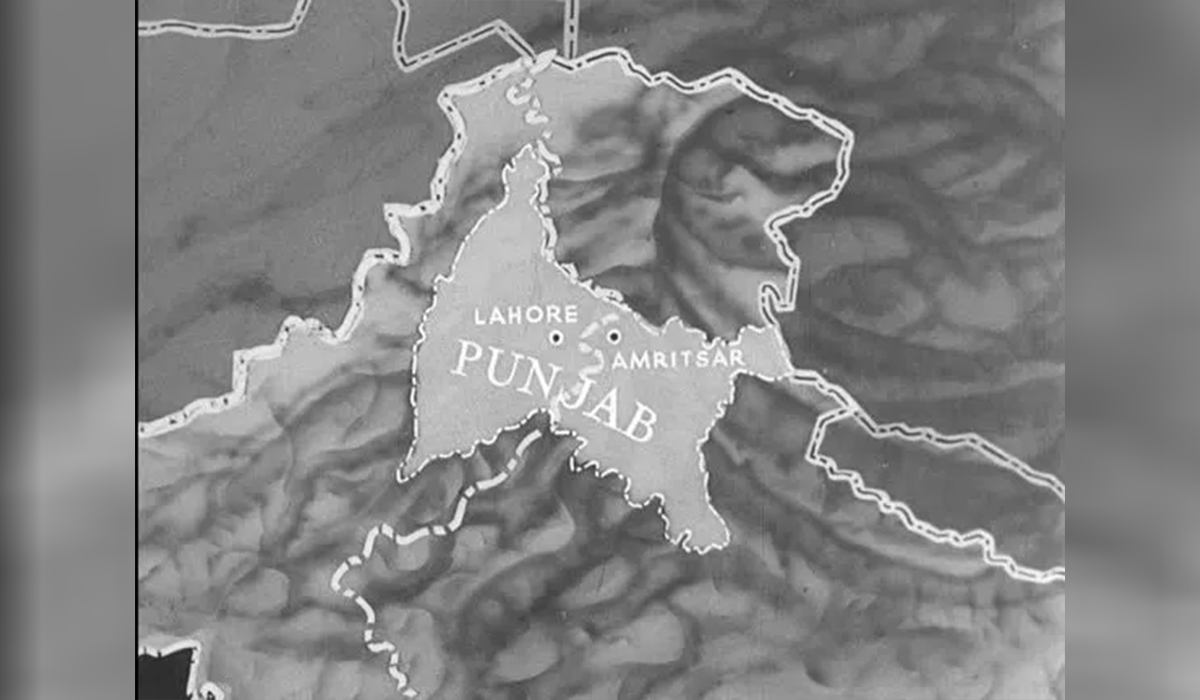

In the case of Punjab, history is not a thing of the past. This is the administrative structure on which today’s existence rests. Whatever crises Punjab has faced — of river waters, of land, of identity, of existence — have their roots in decisions that were taken centuries ago. To understand what Punjab is today, we have to start not from 1966, not from 1947, not even from 1849, but from that primeval time when five rivers were the arteries of this land and this land did not even have a name yet.
I. Punjab of five rivers
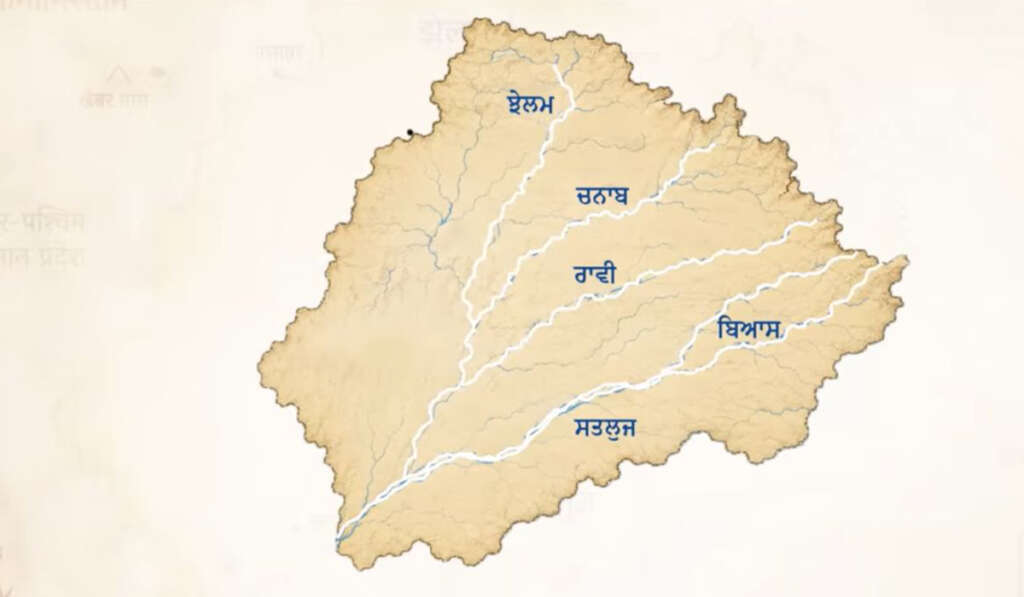
The name Punjab — and the British always said ‘The Punjab’, as a specific word for a particular place — comes from Persian: panj meaning five, and aab meaning water. The Jhelum, Chenab, Ravi, Beas and Sutlej — the five tributaries of the Indus — not only created the geographical structure of the land, but also laid the foundations of its cultural character. The Indus Valley Civilization, which flourished from about 3300 BCE, built cities of extraordinary scale at Harappa, Mohinjodaro and many other places. The achievements of this Bronze Age civilization in Mesopotamia and Egypt still amaze today.
Rivers were not only sources of water. They were the origin of settlement, agriculture and trade. This fertile plain, watered by snow water from the Himalayas and the Hindu Kush, was one of the most fertile regions in the world. But the same geography also made it the gateway to the Indian subcontinent from the northwest. For more than three thousand years, traders, immigrants and invaders came through these routes.
II. Crossroads of Civilizations
The geographical location of Punjab made it one of the most invaded lands in the ancient and medieval world. The Indo-Aryan migration, the Persian Achaemenid Empire, the eastern campaign of Alexander the Great, the Kushans, the Huns, the Ghaznavis, the Ghoris — each left its mark on the land of the Punjab. Civilizations don’t just collide; They also mix with each other. The Urdu language is the most beautiful example of this fusion — Persian script, but basically Hindustani grammar.
The Arab conquest of Sind under Muhammad bin Qasim in 712 CE established the first direct contact of Islamic political power with the western frontier of the subcontinent. The Delhi Sultanate established in 1206 made Punjab the administrative and military base of the North Indian Empire. Lahore, Multan and the cities of central Punjab became centers of Persian literary culture and Sufi devotion. Sikh religion was born in this environment.
III. Guru Nanak Sahib and the light of a religion
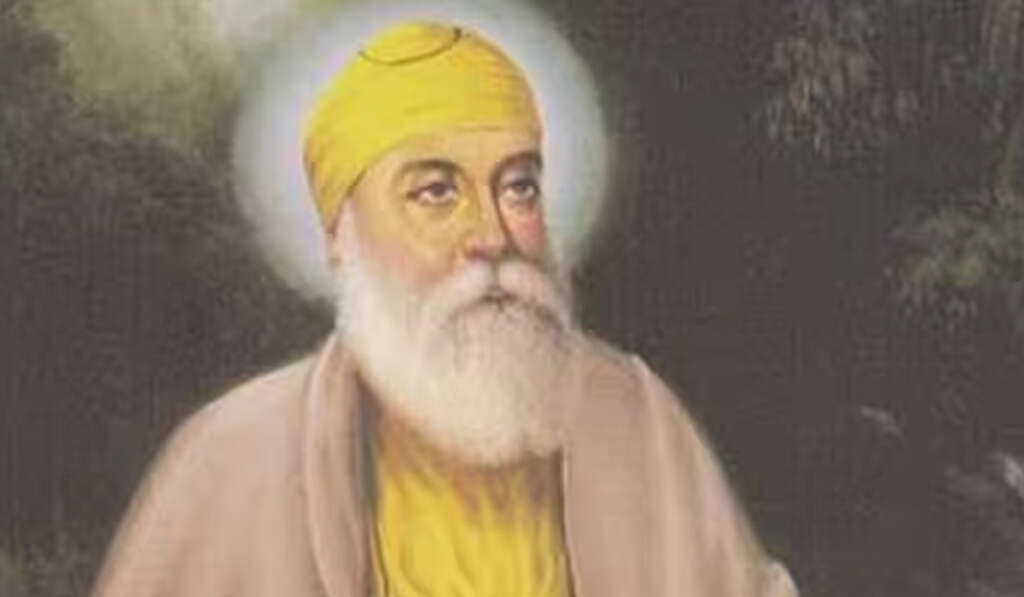
Guru Nanak Sahib was born in 1469 at Nankana Sahib, which is today in Punjab, Pakistan. His life and teachings emerged from a period of profound religious, political and social upheaval. The Babarvani recorded in the Guru Granth Sahib — the poem that describes the devastation and plight of women during Babur’s invasion in 1526 — is a contemporary spiritual testimony of that period. Guru Nanak Sahib did not only see this world; He addressed it with a theology in which universality, one God, honest earning and non-distribution were the basic tenets.
Ten Gurus built on this foundation over two centuries. Guru Arjan Dev Ji compiled the Adi Granth in 1604. Guru Hargobind Sahib Ji gave the principle of Miri-Piri. Guru Tegh Bahadur Sahib Ji laid down his head in 1675 to protect the religious rights of Hindus — an unparalleled example of inter-communal sacrifice in the history of world religions. And Guru Gobind Singh Sahib Ji created the Khalsa at Anandpur Sahib in 1699.
IV. The Sikh Empire and the Arrival of the British
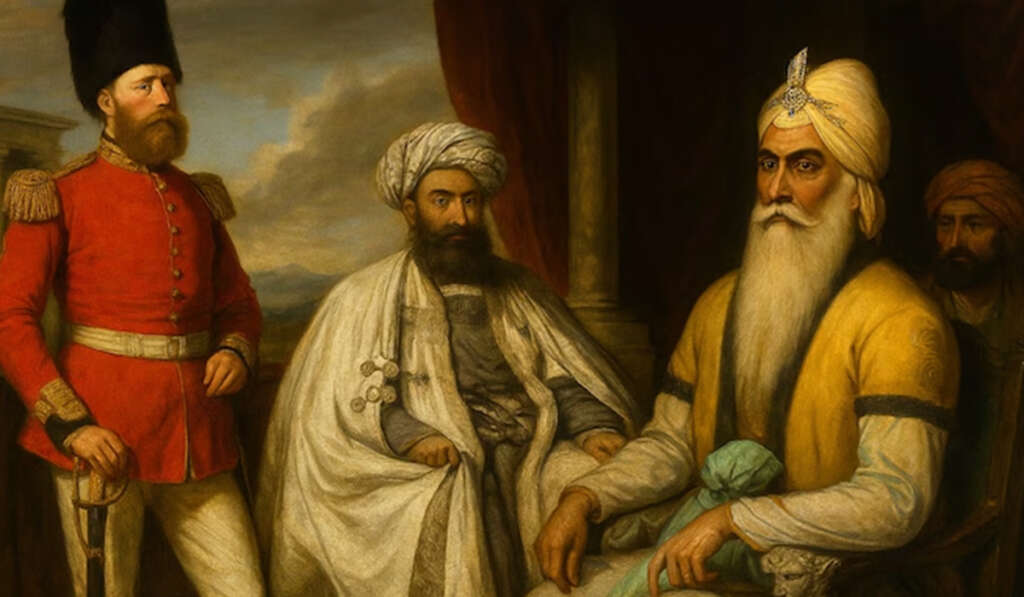
After the fall of the Mughal Empire and the rise of the Sikh Misls in the eighteenth century, Maharaja Ranjit Singh Ji established the first and only sovereign Sikh Empire by 1799, with Lahore as its capital. At its peak, the empire stretched from the Sutlej in the east to the Khyber Pass in the west and from Kashmir in the north to the Sindh in the south. It was a secular empire in its rule — Ranjit Singh never discriminated among his subjects on the basis of religion. Fakir Azizuddin was his foreign minister. The empire was a miniature of the cultural heritage of Punjab’s own commonwealth.
After the death of the Maharaja in 1839, a crisis of succession began. After two Anglo-Sikh wars, the Sikh Empire was taken over by the British in 1849. The only period of Punjabi sovereignty in history came to an end.
V. English Punjab: Irrigation, Army and Jallianwala Bagh

By the standards of colonial administration, English Punjab was a model province. The canal colonies of western Punjab — an extraordinary feat of water management that transformed arid land into Asia’s most fertile agricultural land — attracted settlers from all over the region. The canal system of Punjab, at its peak, was the largest irrigation network in the world.
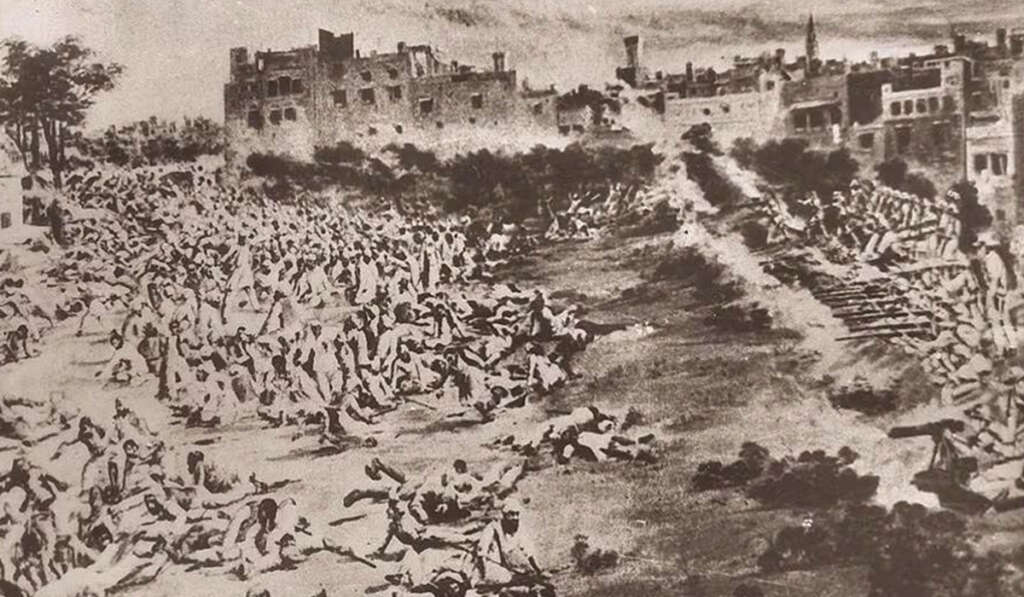
The Jallianwala Bagh massacre of 13 April 1919 — when Brigadier-General Dyer ordered the firing on an unarmed crowd in Amritsar — marked a turning point in Punjab’s relationship with the colonial state. The martyrs were Sikhs, Hindus and Muslims. The freedom movement in Punjab was a national affair, not a communal one.
VI. Partition: The Great Controversy
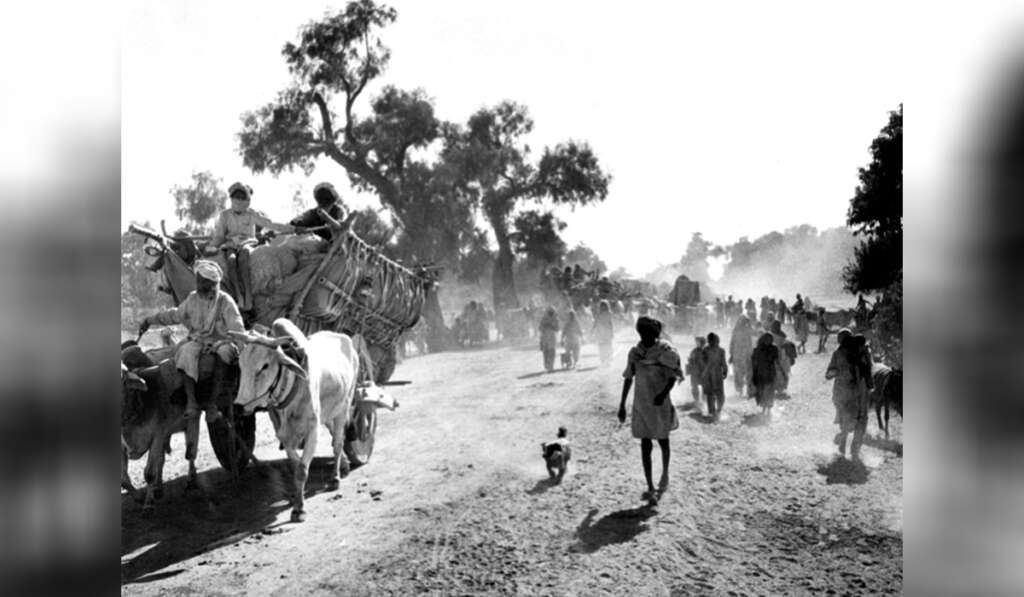
Independence came on 14-15 August 1947. For Punjab, it brought freedom and destruction at the same time. The Radcliffe Line — drawn in weeks by an English lawyer who had never visited the subcontinent — divided Punjab along a line that cut through villages, canal headworks, railway lines, families and centuries of communal housing. The violence that followed was one of the most horrific events of the twentieth century. Nearly one crore people were displaced — the largest forced migration in recorded history.
The role played by the administration of East Punjab in resettling millions of refugees, settling land claims and restoring economic activity in a decade is one of the least appreciated administrative achievements of independent India. The Bhakra-Nangal Dam, the restoration of the canal system and the construction of Chandigarh — all were done under the shadow of the trauma of Partition.
VII. Punjabi Suba Movement and the Deadly Demand
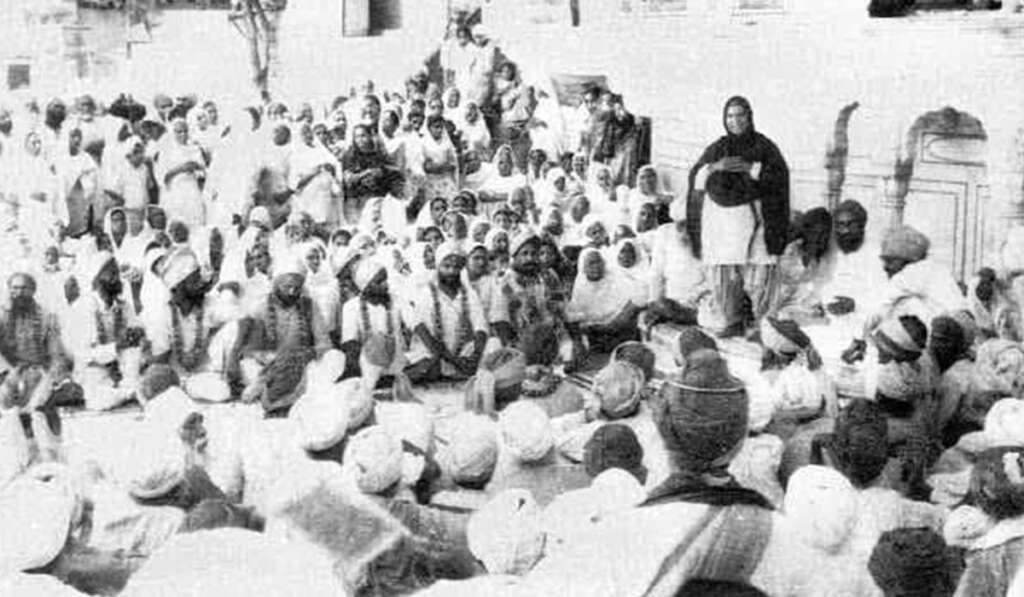
The 1956 States Reorganisation Commission redrawn the internal map of India on linguistic lines. Andhra Pradesh, Maharashtra, Gujarat, Karnataka and Kerala got states for their linguistic communities. The only reason for not granting this reorganisation to Punjab was a combination of political calculations and communal suspicion.
The Shiromani Akali Dal, under the leadership of Master Tara Singh and then Sant Fateh Singh, launched the Punjabi Suba Morcha. Thousands went to jail. Hunger strikes were held. The struggle was real and the sacrifices were real.
But the leadership made mistakes that proved irreversible. By demanding reorganisation on the basis of language alone, the Akali leadership gave the opposition the weapon of census manipulation. In the 1961 census, urban Hindus in undivided Punjab overwhelmingly declared Hindi as their mother tongue — not because they spoke Hindi at home, but because to say Punjabi meant joining the Sikh-majority state. And the ultimate strategic commitment is clearly reflected in the words of an Akali leader of that period: Even if we got Gurdaspur district and Ambersar district, we wanted Punjabi Suba — let us go for the river, let us go for the industrial corridor, let us go for the parliamentary seats — we wanted the flag.
On the night of November 1, 1966, the Punjab Reorganization Act came into effect. Punjab was divided into three parts: the Hindi-speaking plain became Haryana; Hill districts became part of Himachal Pradesh; And the rest of the Punjabi speaking region became the present state of Punjab. Chandigarh became a Union Territory. The center took control of the rivers. Punjab, which used to send ninety-nine members to the Lok Sabha, now sends thirteen members. The state, which ranked first in per capita income, was deprived of its sovereign rights over its industrial corridors, hill districts, capital and rivers.
What happened after November 1, 1966, is a different story — and that is told in Part Two.


Leave a Comment