

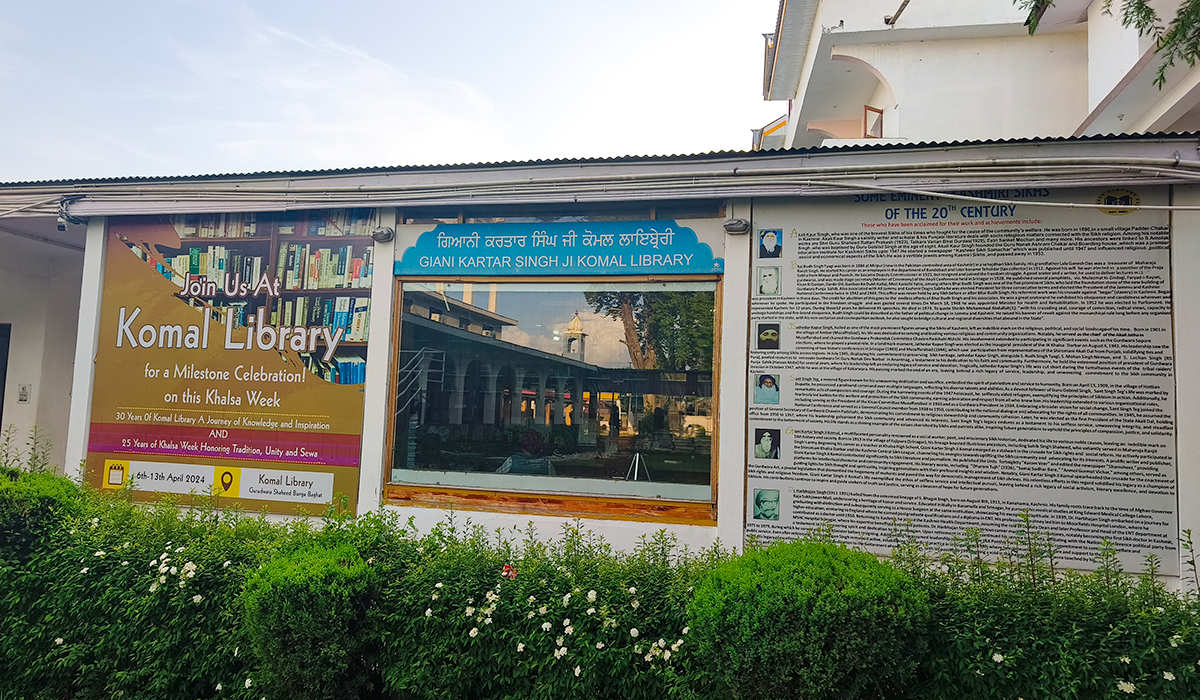

Established in 1994, Srinagar’s Komal Library provides free educational resources and a peaceful study environment to the local Sikh community. The library is also helping young readers spend less time on their mobile phones and develop stronger reading habits.
A few years ago, Sehaj Kaur was looking for a quiet place to study in Srinagar. She found it at Komal Library, located within the Gurudwara Shaheed Bunga Sahib complex in Bhagat Barzulla.
The library offered her a peaceful environment, access to study material and an opportunity to connect with other young people from her community. Away from the rush of daily life, Sehaj began spending several hours at the library.
Within a year, she started volunteering there, helping organise reading sessions, community events and educational activities for young people.
Sehaj, who is pursuing a bachelor’s degree in Psychology, said, “The library helped me in two ways. It gave me resources for my studies and also connected me with community service. Both have played a very important role in my life.”
How Komal Library Began
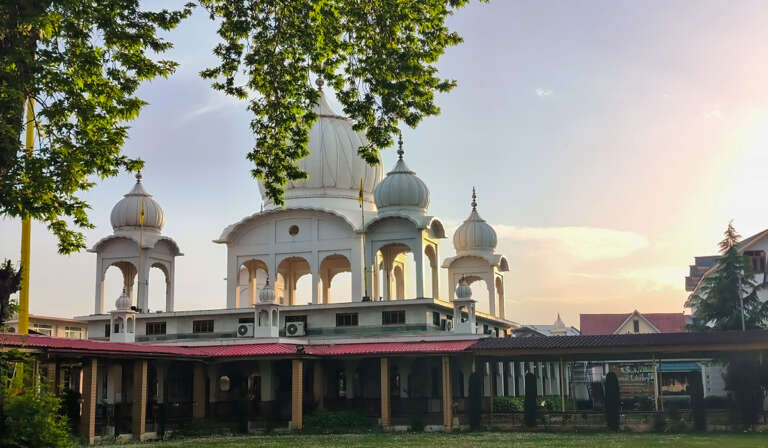
Komal Library has a rich history rooted in community service.
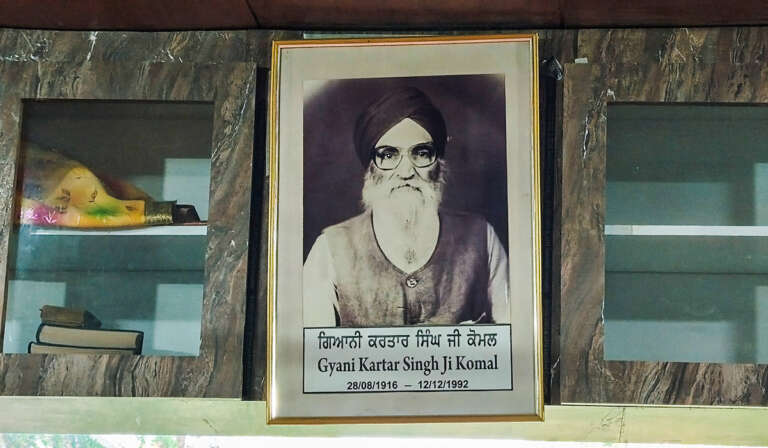
Started as a community library in 1994, it was named after Giani Kartar Singh Komal, a noted Sikh scholar, writer and editor from Kashmir.
Giani Komal was known for his contribution to Urdu literature and journalism. In the 1960s, he founded the Urdu newspaper Karamveer and served as its editor.
After his death in 1992, members of the Sikh community decided to honour his legacy by establishing a public library in his name. They believed that the best tribute to a scholar would be a place where knowledge could be shared.
Jagjit Singh, the library’s current in-charge, said, “This library was started to serve the Sikh community of Kashmir. Our objective was simple. We wanted students to have access to books and a quiet place to study.”
When the library was established, Kashmir was going through a difficult period. Educational institutions were frequently closed and access to study resources was limited.
Jagjit Singh told DNN24, “The library became a major support system for students, particularly those living in Srinagar.”
Over the years, the library has served the Sikh community in significant ways and continues to provide students with a peaceful study environment and useful educational resources.
Jagjit Singh said that many students who once spent their evenings studying here are today working as doctors, engineers, civil servants, teachers and professionals in various fields, both in India and abroad.
Whenever they return to Kashmir, he said, many of them make it a point to visit the library.
Competing With Mobile Phones
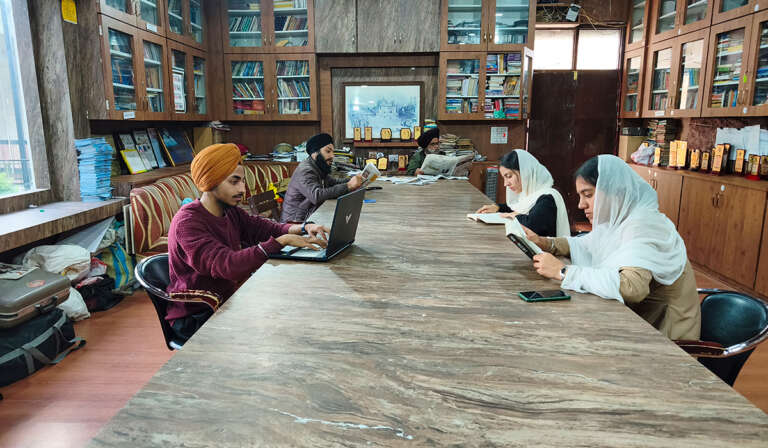
More than three decades later, the library’s biggest challenge is no longer closed schools but mobile screens.
Jagjit Singh said, “Today, children have access to almost every kind of information at their fingertips, but they spend much less time reading books. Libraries are among the few spaces where the habit of reading can still be developed.”
To encourage students, the library has introduced new ways of drawing young people towards books.
Jagjit explained, “Last year, we announced that anyone who completed 15 books in one year would receive a cash prize. The purpose was not merely to give an award, but to motivate students to read consistently.”
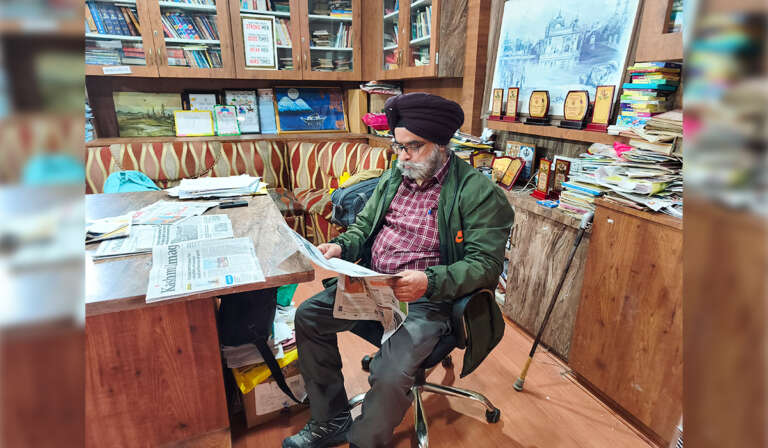
The library also organises a weekly Digital Detox session.
According to Jagjit, “We ask students to keep their phones aside for a few hours and spend that time only reading, discussing or writing. Many initially find it difficult, but by the end of the session they realise how refreshing the experience can be.”
More Than Just a Reading Room: A Community Centre
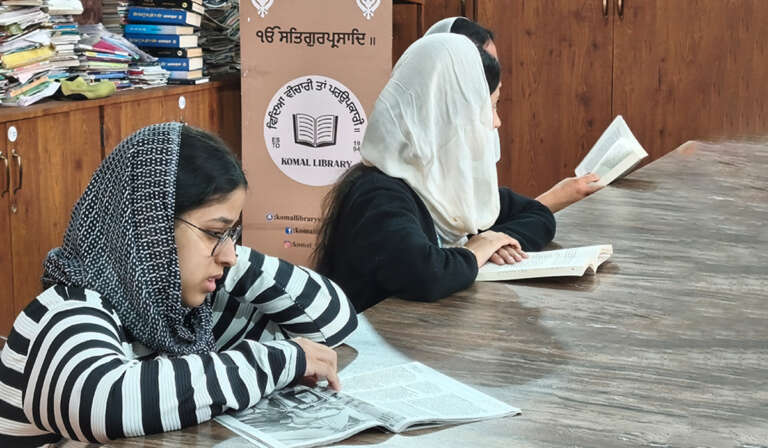
Apart from providing reading space and educational resources, Komal Library has also become a centre for cultural and community activities.
Every year during Baisakhi, it organises a week-long Khalsa Week, in which students from different age groups participate in lectures, photography competitions, painting, essay writing, debates, quizzes and sports competitions.
Jagjit said, “Our aim is to support the intellectual, personal, spiritual and emotional development of young people. These activities help students recognise their abilities beyond academics.”
Sehaj Kaur has experienced this transformation herself.
Recalling her journey, she said, “I first participated in Khalsa Week as a student. As I became more connected with the library, I started volunteering. For the past two years, I have been helping organise the programme. Seeing younger students participate gives me a great sense of satisfaction.”
For Sehaj, Komal Library has also become a place to make friends and build confidence.
She said, “We discuss books, current affairs, social issues and many other subjects here. These conversations have broadened my thinking and made me more confident in expressing my views.”
A Library Sustained by Community Support
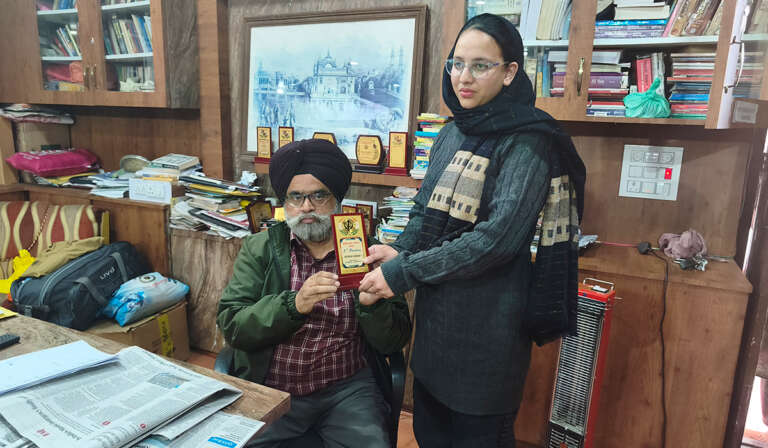
Membership at Komal Library is free, and the institution is run entirely with the support of the community.
Former students, many of whom have now established successful careers, regularly contribute funds. These donations help the library purchase new books, magazines, newspapers and educational material.
Jagjit told DNN24, “This library belongs to the community. Every book on these shelves represents someone’s contribution and their belief that education can transform lives.”
More than three decades after its establishment, Komal Library continues to keep alive Giani Kartar Singh Komal’s belief that education and ideas have the power to strengthen both individuals and society.
Leave a Comment