
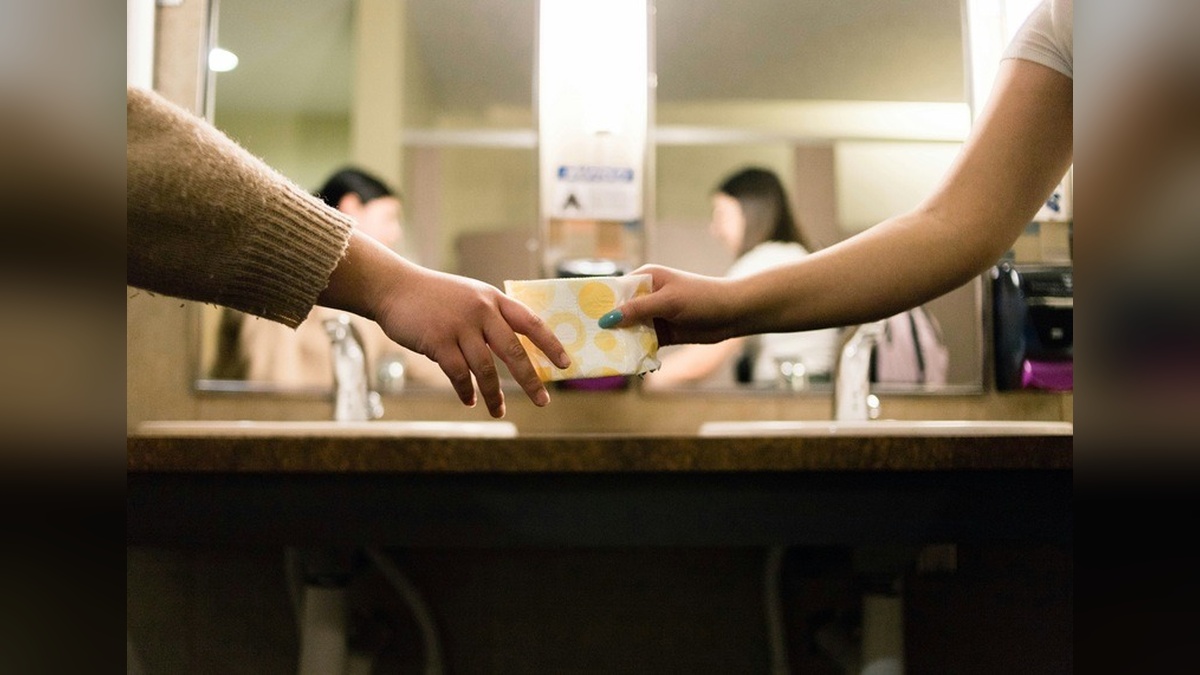

Through the ‘Pahal’ project, reaching approximately 1,500 women and adolescent girls across seven villages and two schools, discussions were held on menstruation, reproductive health, nutrition, and social taboos.
In any village, awareness about menstrual health does not simply mean providing sanitary pads to girls. It is also connected to questions that girls hesitate to talk about openly even after menstruation begins. How many opportunities do women get to receive proper information about reproductive health, and how do concepts and social restrictions associated with menstruation affect their daily lives? The Center for Women’s Studies at Punjabi University attempted to initiate dialogue on these questions by reaching out to rural communities.
Under the university’s ‘Pahal’ project, conducted in collaboration with the Global Sikhs organization, approximately 1,500 women and adolescent girls across seven villages and two schools were reached. The scope of this initiative was not limited solely to the distribution of menstrual hygiene products. It focused on generating awareness regarding issues related to menstruation, reproductive health, nutrition, physical well-being, social taboos, and access to healthcare services.
A report regarding this initiative was released by Punjabi University, detailing the work done during the project, the response received from the community, and its achievements. However, the significance of this project is not limited to the release of the report. It draws attention to the fact that improving menstrual health is not possible through the mere availability of sanitary pads. For this, women and girls also need accurate information, a supportive environment to ask questions, and the freedom to talk about their health without hesitation.
Initiating Conversations on Menstruation in Villages
Menstruation remains a topic about which many girls hesitate to speak openly, especially when they do not receive age-appropriate information about it before their first period. In rural communities, traditional notions, social restrictions, and hesitation to talk about reproductive health can further limit opportunities to ask questions or seek medical advice.
The ‘Pahal’ project sought to bridge this gap in information through direct community engagement. By reaching out to seven villages and two schools, the initiative encompassed adult women as well as adolescent girls. Behind this approach was the understanding that awareness about menstrual health should begin at a young age and continue through the various stages of a woman’s life.
In addition to hygiene practices during menstruation, the project also incorporated topics such as nutrition, physical well-being, and reproductive health. Consequently, menstrual health was viewed in connection with women’s overall health and well-being.
Understanding this distinction is essential because discussions on menstrual hygiene are often restricted to the question of whether women can afford sanitary pads. Access to appropriate products during menstruation is undoubtedly necessary, but it does not automatically grant girls an understanding of their bodies, knowledge of their menstrual cycles, the ability to identify abnormal symptoms, or the difference between common myths and medical facts.
Dr. Sukhjit Kaur, Director of Planning and Monitoring at Punjabi University, highlighted the broader objective of this initiative while discussing it. According to her, the project was not restricted to the distribution of sanitary products; rather, it served as an effort to provide women and girls with a safe platform to talk openly about menstruation, reproductive health, nutrition, and social taboos.
Menstrual Hygiene Statistics in Punjab Reveal Rural-Urban Disparities
Statistics related to menstrual hygiene in Punjab also point to the need for such initiatives.
According to the National Family Health Survey-5 (2019–21), 93.2 percent of women aged 15 to 24 in Punjab used hygienic methods of protection during their menstrual period. However, in rural areas, this proportion was 91.9 percent, whereas it was recorded at 95.4 percent in urban areas.
The survey noted the use of cloth among rural women of this age group at 31.3 percent, while for urban women, the figure stood at 20.5 percent. It is worth noting here that the figures for the use of various methods are not mutually exclusive, as respondents in the survey could report using more than one method.
Although the overall proportion of women using hygienic methods in Punjab is high, the disparity between rural and urban areas demonstrates that facilities and practices are not uniform across the state.
More importantly, these statistics only provide information about the methods used, not the quality of information available to women. They do not indicate whether girls understand the menstrual cycle, which symptoms prompt them to seek medical advice, or whether they have access to adequate facilities to maintain safe hygiene during menstruation.
This is precisely where awareness programs can complement existing efforts to increase access to menstrual products.
The Continuing Problem of Disposal Even After Sanitary Pad Use
Another crucial issue in discussions on menstrual health is the disposal of used sanitary products, which often receives less attention.
A study published in June 2026 in the International Journal of Community Medicine and Public Health examined the disposal methods used by adolescent girls for menstrual products in rural villages of Fazilka district.
The research revealed that despite the widespread use of sanitary napkins among the surveyed girls, there were several shortcomings in the safe disposal of used products.
According to the study, 34.7 percent of girls discarded used menstrual products in village dumping sites, while 18 percent reported burning them. Additionally, 17 percent of girls buried the waste, and 14.7 percent threw it into ponds or other water bodies.
The study also assessed the disposal facilities available inside schools, revealing gaps in the availability and functionality of incinerators.
These findings highlight a significant challenge facing rural areas. If the use of disposable sanitary pads is promoted without facilities for their safe disposal, it can create another issue concerning public health and the environment.
Throwing used menstrual products into open spaces or water bodies can cause hygiene-related problems, while improper burning poses the risk of harmful smoke.
Therefore, awareness regarding menstrual hygiene must also include information on safe disposal methods and the importance of necessary facilities in schools and villages.
Menstrual Health is Also Linked to Girls’ Education
Spending time at school during menstruation can be difficult for adolescent girls, especially when toilets lack water, privacy, or facilities to change menstrual products.
Fear of clothing stains, embarrassment, and a lack of a supportive environment at school can cause girls to hesitate to attend classes during menstruation.
A study published in 2022 in the International Journal of Community Medicine and Public Health concerning menstrual hygiene and school absenteeism among adolescent girls in Jalandhar district highlighted the correlation between menstrual difficulties and school attendance.
These findings reinforce the view that merely supplying sanitary products cannot solve all the challenges girls face during menstruation.
It is equally essential for schools to have functional toilets, water, waste disposal facilities, and an atmosphere where girls can seek help without feeling embarrassed.
For this reason, educational institutions play a crucial role in raising awareness about menstrual health. When girls receive accurate information before and after the onset of menstruation, they can take better care of their health during this period and decide to seek help when necessary.
The Need to Translate Policies to the Ground Level
At the national level as well, menstrual hygiene has gained greater recognition as an issue tied to public health and education.
The Union Ministry of Health and Family Welfare approved the National Menstrual Hygiene Policy for school-going girls in November 2024. The objective of this policy is to promote access to safe and affordable menstrual products, age-appropriate information, better sanitation facilities, and environmentally responsible disposal.
Under the Menstrual Hygiene Scheme of the National Health Mission, efforts are also made to increase awareness and improve access to sanitary napkins among adolescent girls in rural areas. Accredited Social Health Activists (ASHAs) also play a vital role in spreading awareness at the community level.
However, the success of these programs depends on how effectively they are implemented in villages and schools. Regular awareness sessions, functional toilets, safe disposal facilities, and reliable health information—all of these must come together.
Community projects like ‘Pahal’ can complement these efforts because they reach out directly to women and girls who have limited opportunities to acquire such information.
Moving from Awareness to Long-Term Change
The ‘Pahal’ project demonstrates that universities and social organizations can play a role in taking women’s health issues beyond academic discussions and bringing them to the general public and rural communities.
Through this project, Punjabi University’s Center for Women’s Studies and Global Sikhs reached out to approximately 1,500 women and adolescent girls across seven villages and two schools, attempting to work directly on issues related to menstrual health.
Releasing the project report in September, University Vice-Chancellor Dr. Jagdeep Singh emphasized the importance of raising awareness about women’s health and menstruation-related issues, particularly in rural areas. He also commended the collaboration between the university’s center and Global Sikhs.
The core message of this project is that menstrual health is not merely a matter of product availability. It is imperative that women and girls also receive accurate information, access to healthcare services, and the opportunity to speak about their bodies without any hesitation.
The true success of awareness campaigns will be measured by whether the understanding generated through them persists over time, whether girls feel more comfortable asking their own questions, and whether facilities suited to their needs are made available in villages and schools.
Understanding menstruation as a normal health issue rather than a subject of shame or silence should be the most important goal of such initiatives.



Leave a Comment