
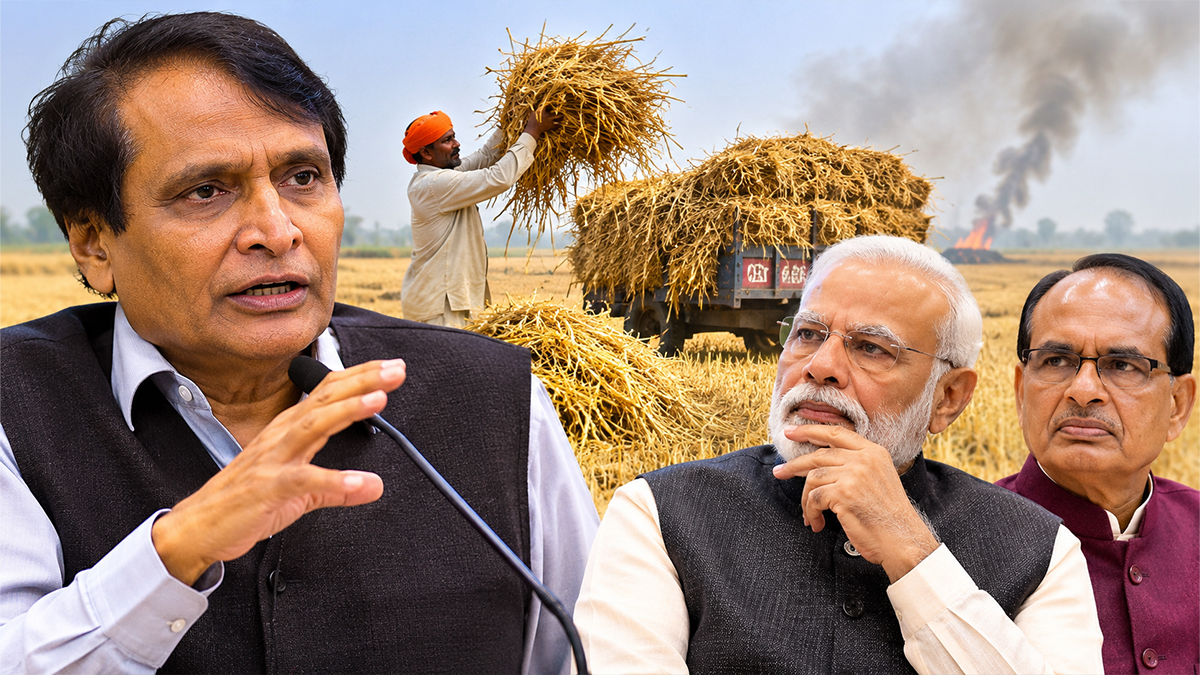

515 cases of stubble burning in Punjab on November 11, total number reaches 5,517; Former Union Minister Suresh Prabhu suggests buying stubble at MSP and using it for power generation.
Amid the rising incidents of stubble burning in Punjab and the problem of air pollution in Delhi-NCR, senior Bharatiya Janata Party leader and former Union Railway Minister Suresh Prabhu has given an important suggestion to the Central Government. He said that like wheat and paddy, stubble should also be purchased from the farmers of Punjab at the Minimum Support Price (MSP).
Suresh Prabhu suggested to Prime Minister Narendra Modi and Union Agriculture Minister Shivraj Singh Chouhan that the government should also make arrangements to collect stubble from the farmers’ fields. After this, the stubble can be used as biomass for power generation and other industrial purposes.
Farmers should get economic benefits to stop stubble burning
According to Suresh Prabhu, if the government fixes an MSP for the purchase of stubble, farmers will get a financial incentive to sell it instead of burning it.
He said that the government should not limit itself to just fixing the price of stubble but should also make arrangements to lift it from the fields and transport it for further use.
Prabhu believes that such a system will increase the income of farmers and can help in reducing the pollution caused by stubble burning.
He emphasized the need to look at the prosperity of farmers and a clean environment as interconnected.
Stubble can be used for power generation
The former Union Minister suggested that the purchased stubble can be sold as biomass to power generating plants and other industries.
Stubble can be used in the production of biomass fuel, biogas, and other energy products.
This can provide an opportunity to turn agricultural waste into an economic resource.
However, to make such a scheme successful, it will be necessary to resolve issues like stubble collection, transportation, storage, and procurement price.
Suresh Prabhu said that farmers, agricultural institutions, state governments, and the central government should work together to solve this problem.
5,517 stubble burning incidents in Punjab till November 11
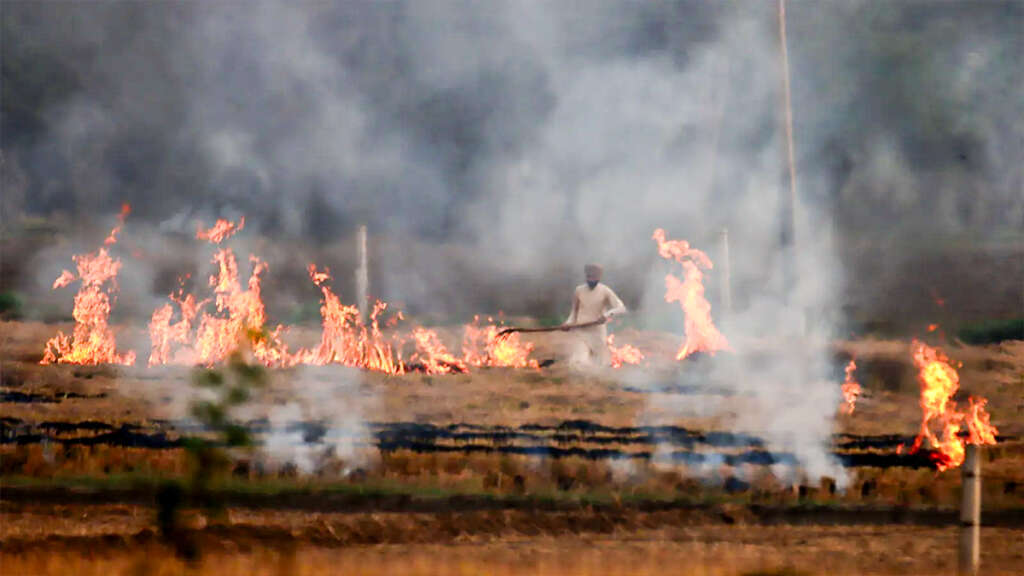
Incidents of stubble burning in Punjab continue to remain a matter of concern.
According to the data of the Punjab Pollution Control Board (PPCB), 5,517 incidents of stubble burning were recorded in the state from September 15 to November 11, 2026.
During the same period in 2025, 4,507 cases were reported. Thus, 1,010 more incidents have been recorded this year compared to last year.
On November 11 alone, 515 incidents were reported in Punjab, while 312 cases were recorded on the same day last year and 418 in 2024.
These figures show that despite the efforts being made to stop stubble burning, the problem persists.
96 percent of paddy harvesting completed, yet fire incidents continue
According to reports, harvesting of about 96 percent of the approximately 32.87 lakh hectares of area under paddy in Punjab has been completed.
Despite this, incidents of fires in the fields are continuing.
A major reason for this is considered to be the lack of time between paddy harvesting and wheat sowing.
During the month of November, farmers have to quickly prepare their fields for sowing the next crop. Because of this, some farmers adopt the method of clearing the field by setting the stubble on fire.
According to experts, providing cheap and easily available alternatives to farmers is crucial to solving this problem.
Environmental compensation of Rs 85.90 lakh imposed
Administrative action is also being taken by the Punjab government to stop stubble burning incidents.
According to government data, environmental compensation totaling Rs 85.90 lakh has been imposed in 1,695 cases.
Out of this, Rs 37.55 lakh has been recovered.
Apart from this, the Punjab Pollution Control Board has made 1,637 red entries in the land records of farmers in cases related to stubble burning.
Due to such entries, the concerned farmers may face difficulty in selling their land or taking a bank loan based on it.
Air quality poor in many cities of Punjab
Amidst the cases of stubble burning, the level of air pollution in many cities of Punjab also remains a matter of concern.
On November 11, the Air Quality Index (AQI) of Jalandhar was recorded at 207, Patiala 227, Ludhiana 278, and Khanna 241.
All these figures fall in the ‘poor’ air quality category.
Compared to this, the AQI in the industrial city of Mandi Gobindgarh was recorded at 111.
Some private monitoring platforms showed even higher pollution, although PPCB officials have questioned their measurement methodology and the reliability of their equipment.
Multiple reasons responsible for Delhi’s pollution
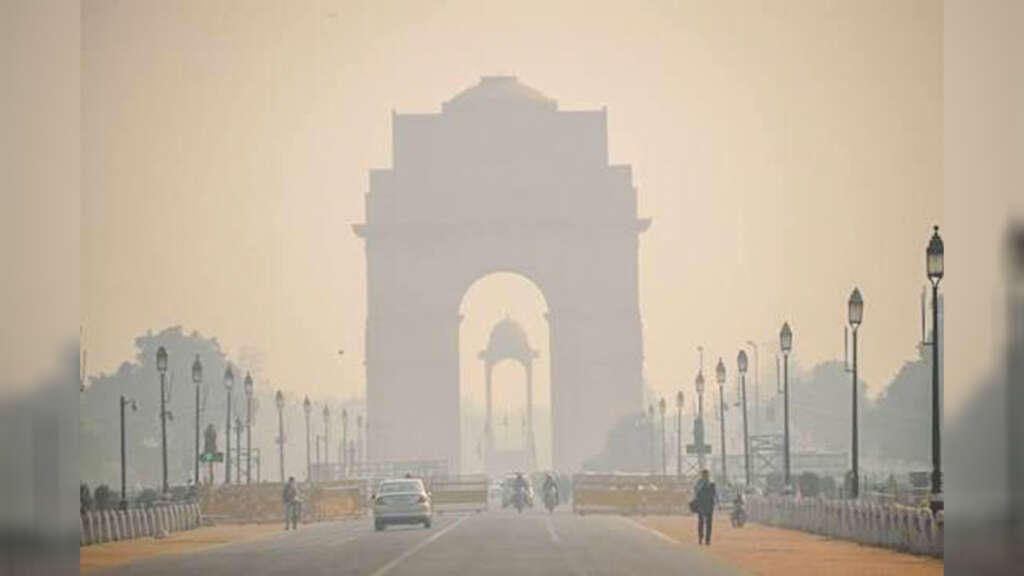
The issue of increasing air pollution in Delhi-NCR during winter comes into discussion every year.
Apart from stubble burning, vehicular smoke, industrial emissions, road dust, and weather conditions also affect air quality.
Therefore, the solution to the pollution problem cannot be limited to any one state or one source.
Experts believe that coordination between different states and the central government is necessary to reduce air pollution.
Can procurement of stubble at MSP become a solution?
Suresh Prabhu’s suggestion focuses on providing an economic incentive to deal with the problem of stubble burning.
If farmers get a fair price for the stubble and the government arranges to lift it from the fields, the need to burn stubble can be reduced.
This can create an additional source of income for farmers while also providing raw material to biomass-based industries.
However, this is currently just a suggestion given by Suresh Prabhu. The Central Government has not officially announced any new scheme to buy Punjab’s stubble at MSP.
Discussions on providing financial assistance, technical facilities, and an effective procurement system to farmers on the issue of stubble management may become more important in the coming times.


Leave a Comment