

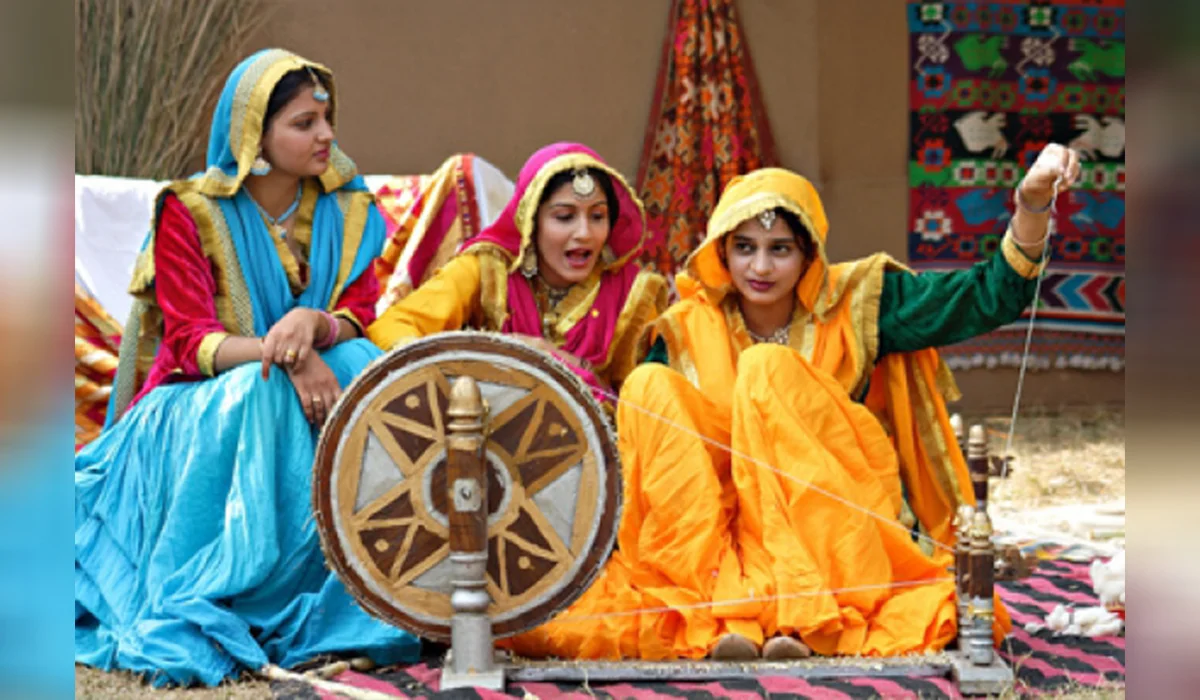

In Punjabi culture, some objects are not merely tools, but part of our way of life and emotions. Among them, the charkha holds a special place. The charkha was the axis of Punjabi rural life, around which the social and emotional world of women revolved. It was not just a wooden machine for spinning yarn, but a symbol of a mother’s affection for her daughter, a witness to the love of friends, and a sign of economic independence.
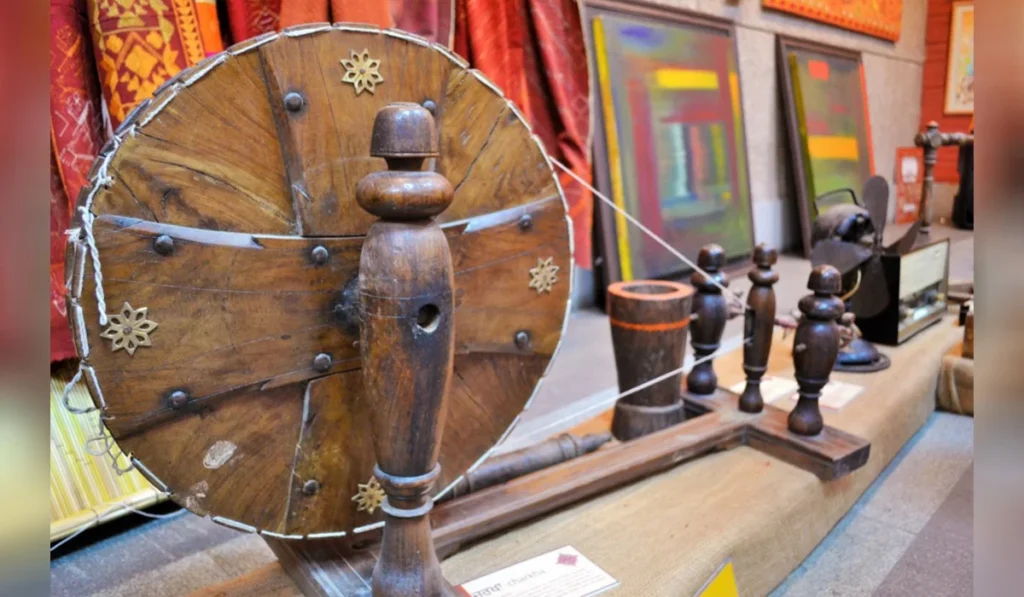
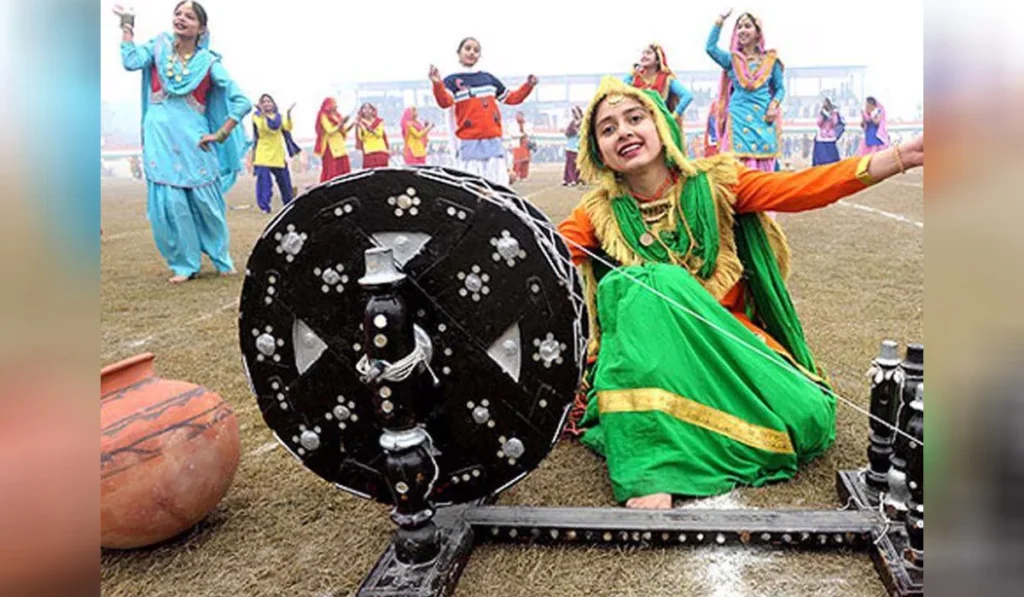
Making a charkha was a special craft of Punjabi carpenters. Every part of it had its own name and significance. Mahal was the cord that connected the wheel of the charkha to the spindle. Takkla was the iron rod on which the yarn was spun. Charmakhan were the leather pieces that supported the spindle. Hathi was the handle used to rotate the wheel. Munne were the two upright wooden pillars that held the wheel. In earlier times, charkhas were beautifully carved and decorated. Colourful charkhas, studded with mirrors, were the pride of Punjabi women.
Social Importance of the Charkha
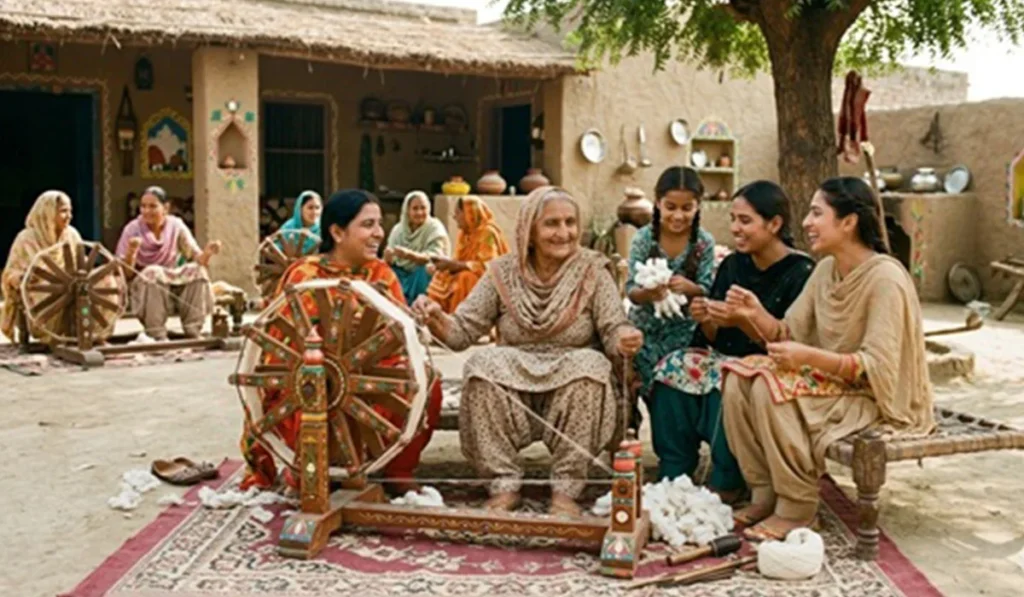
The real charm of the charkha could be seen in the trinjan. When village girls and women gathered in one house or open courtyard to spin yarn together, it was called trinjan. Trinjan was not just a place of work, but a space where joys and sorrows were shared. Along with the hum of the charkha, young women sang long, melodious folk songs, mahiyas and ghoris. Many folk songs related to the charkha remain part of our heritage even today, such as:
“Charkha mera rangla, vich sone diyan mekhan,
Main tainu yaad karaan, jadon charkhe vall vekhan.”
A Gift in Dowry and Threads of Affection
In Punjabi society, the tradition of giving a charkha to a daughter in dowry was very old. It was believed that the charkha went with the daughter to her new home like a companion. Spinning the charkha taught a daughter patience, contentment and grace. Making poonis and gohre reflected a young woman’s skill and craftsmanship.
A Symbol of Economic Independence, Sufism and Spiritual Meaning
In old Punjab, the charkha was the centre of the household economy. Women spun yarn from cotton, after which weavers used the handloom to make khaddar. Clothes, khes, durries and lois for the household were prepared from this hand-spun yarn. In this way, the charkha made Punjabi homes self-reliant in clothing.
Sufi poets used the charkha as a spiritual metaphor. Baba Bulleh Shah and Shah Hussain connected the human body with the charkha and the spinning of yarn with righteous deeds.
“Katt kurey ni katt, ki tera charkha naulakha.”
Here, the charkha becomes a symbol of human life, in which the threads of breath are being spun.
Present Condition and Fading Heritage
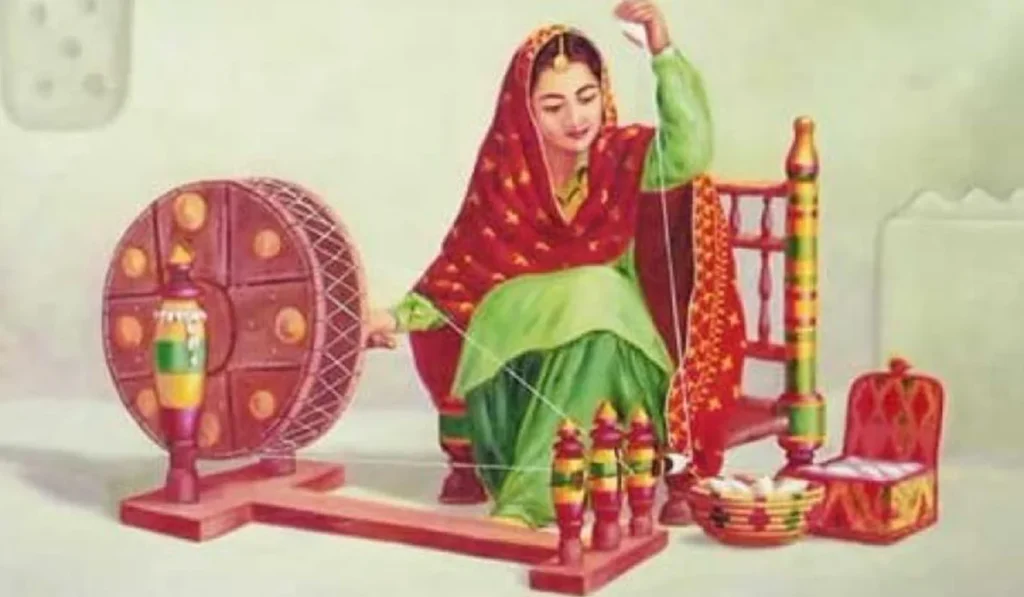
In today’s mechanical and digital age, the charkha has almost disappeared from Punjabi homes. Readymade clothes and textile mills have ended its practical need. The lively gatherings of trinjan are no longer seen in villages. Today, the charkha appears mostly in museums, fairs, cultural stages or as a decorative prop.
The charkha is not just an old wooden structure, but a mirror of our ancestors’ way of life. Even though there is no longer an economic need to spin yarn, it is important to preserve the values of patience and labour associated with it. We should not allow this great symbol of our heritage to become merely an exhibition object. Instead, we must introduce the new generation to its history and importance. As long as Punjabi folk songs remain alive, the hum of the charkha will continue to echo in our memories.
Leave a Comment