

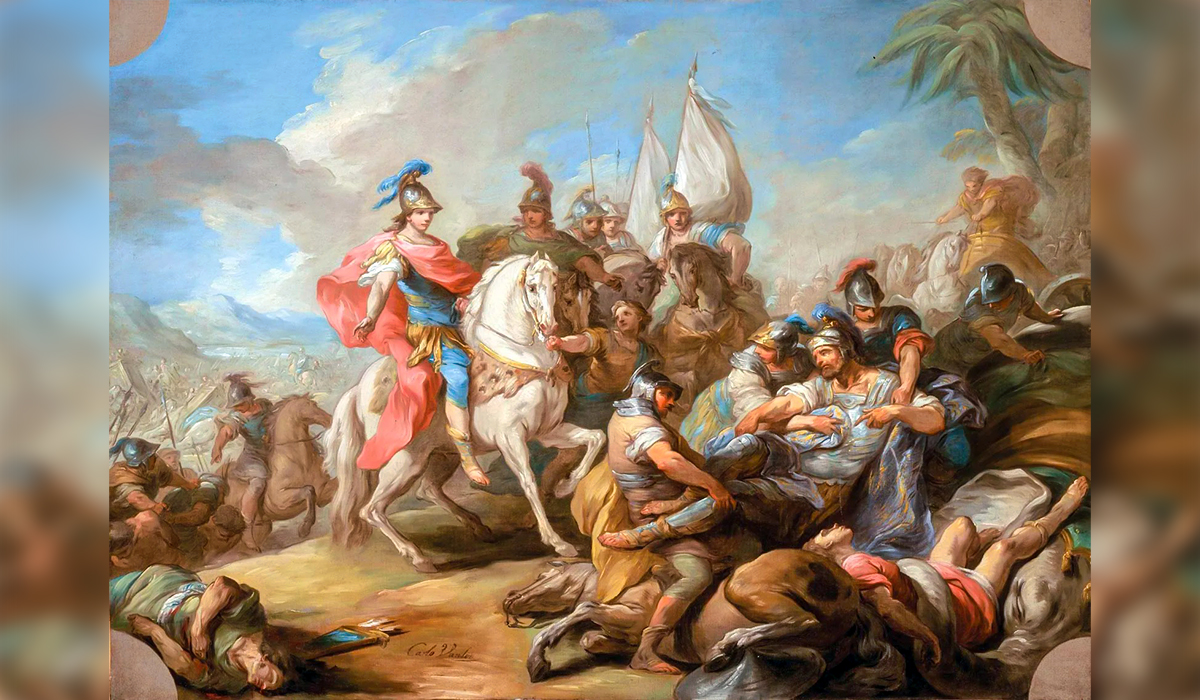

For centuries, the land of Punjab has been home to warriors, brave heroes, and people of great honour. It was on this sacred land that, during the pre-Christian era, a great king emerged who not only halted the advance of the Greek conqueror Alexander the Great, who had set out to conquer the world, but also shattered the morale of his army. The name of this great Punjabi warrior was King Porus (also known as Raja Puru, Paras, or “Poros” in Greek historical accounts).
King Porus was the ruler of the ancient Paurava Kingdom (Porus Empire). His kingdom extended between the two major rivers of Punjab—the Jhelum and the Chenab. Historians believe that his capital was located somewhere near present-day Lahore (now in Pakistan). King Porus is remembered throughout world history for his bravery, sense of justice, imposing stature, and deep love for his homeland.
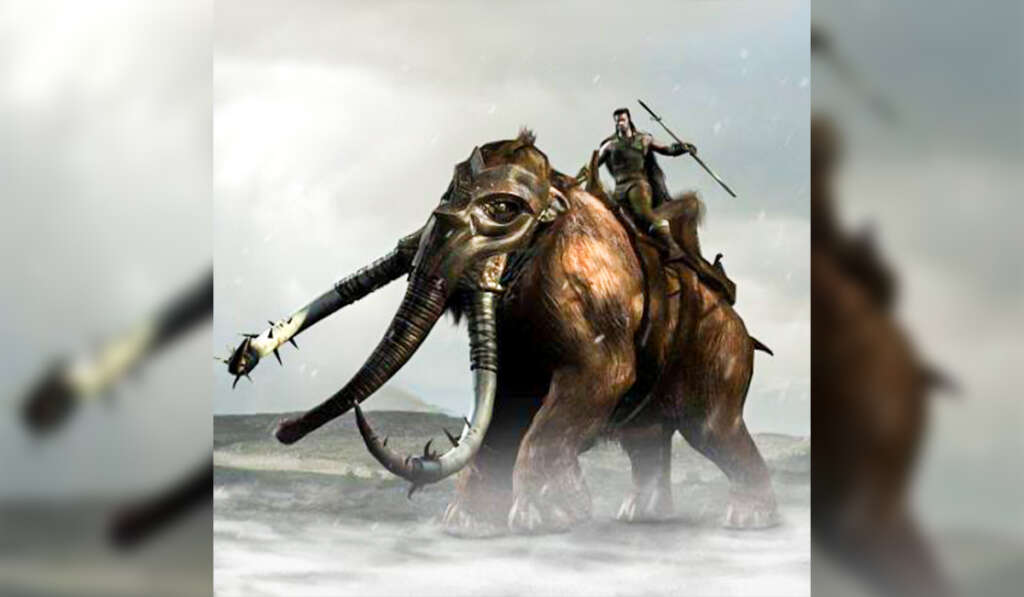
King Porus was born in a village near the river Jhelum. Although there is no concrete information about his exact date of birth due to the lack of ancient documents, his main reign is believed to be from 326 to 317 BC. Raja Poras belonged to the Vedic Sanatan culture of Hinduism and belonged to the Janamejaya clan of Puru lineage. Greek and Indian historians marveled at Porus’ physical prowess. According to the inscriptions, the height of King Porus was 7 feet 4 inches. He was extremely beautiful, handsome and possessed of strong physical organs. When he rode on his giant elephant, he looked like a god.
The name of his princely state was ‘Paravat’. The present geographical area of Lahinde (West) Punjab i.e. district Gujarat, Mandi Bahauddin, Sargodha and part of Jhang was then the main center of Porus empire. This princely state was rich in natural resources, rich and very strong in terms of trade.
Alexander’s dream of becoming a world conqueror and his move to India
King Alexander of Greece left his country with the dream of conquering the whole world. He crossed the Hindu Kush hills and reached the principalities of present-day Peshawar and Taxila (Takshshila), crushing the great empires of Egypt, Iran (Persia) and Syria.
King ‘Ambhi’ of Taxila was a cowardly and greedy ruler. Seeing Alexander’s vast army, he knelt before fighting and welcomed Alexander. Ambhi not only surrendered his principality to Alexander, but also promised to give Alexander his military help against King Porus. After the easy conquest of Taxila, Alexander’s spirits were high, but he did not know that he was going to be confronted next by a charming and unruly son of Punjab.
Historical challenge- “I will do your Istaqbal with a sword”
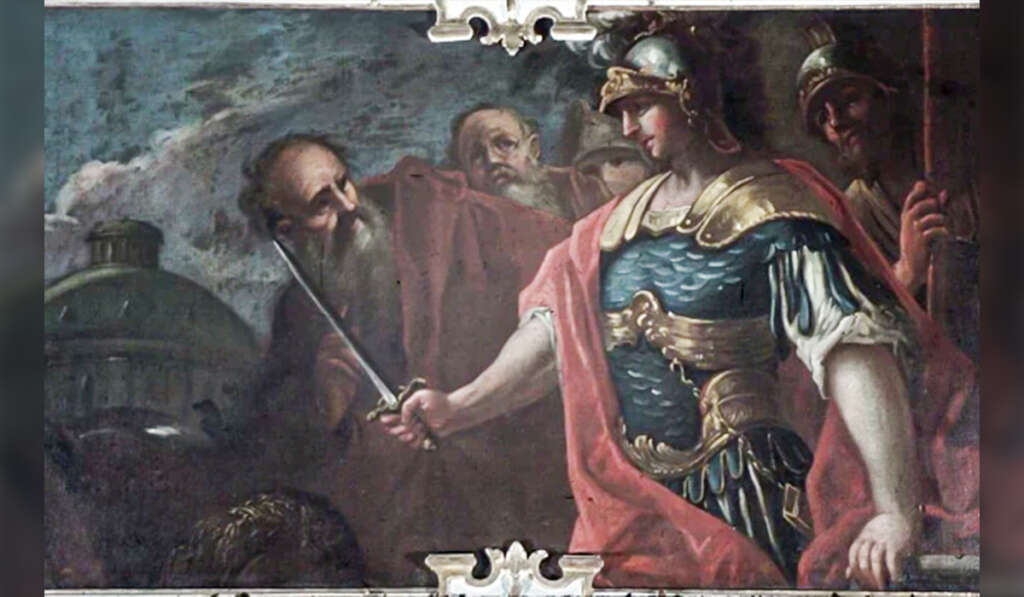
When Alexander took complete control of the principality of Taxila, he sent a haughty message to King Porus, as was his custom. Alexander’s messenger went to Porus’s court and said, “Come to Taxila to welcome me, or hand over your kingdom to me and declare my rule and submission.” Hearing this arrogant message, the blood of Porus, the undisciplined king of Punjab, rose. He gave the answer which became part of the golden pages of history till the living world. Porus said, “Alexander, I will certainly do your will, but not by bowing down at Taxila, but by the sword in the field-of-battle! And this sword alone will decide the fate of my country.” This answer surprised Alexander. Now war was inevitable.
Jang-e-Jihlam- 326 AD East
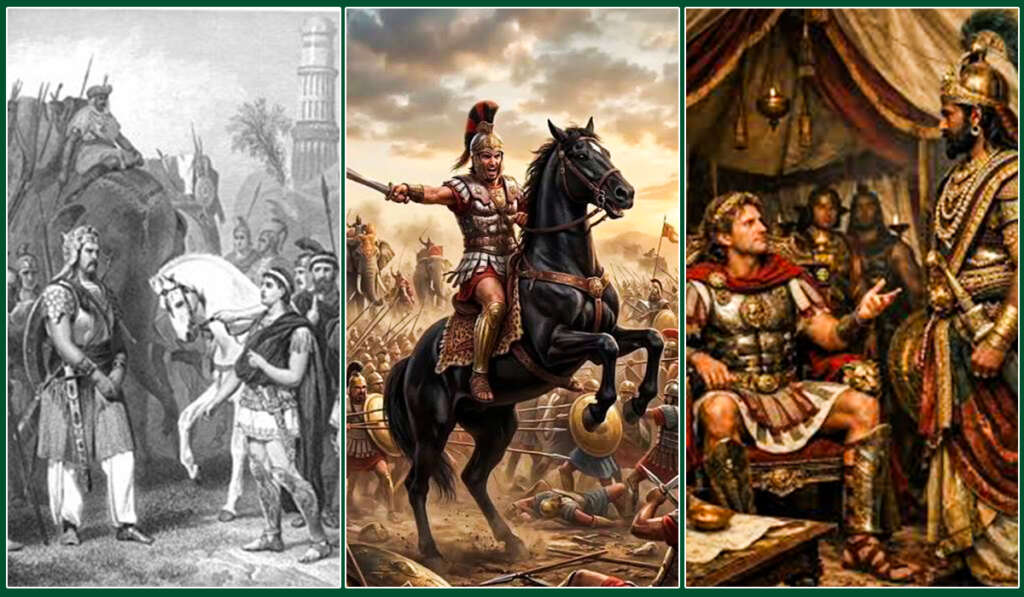
This historic and bloody war was fought in the month of July 326 BC. It was the harvest month and the Jhelum river was at its peak due to heavy monsoon rains. Porus’s forces were facing each other on the eastern bank of the river Jhelum and Alexander’s on the western bank near the town of Haranpur. At present this place is near a village called ‘Nikasa’, which is now called ‘Maung’, 10 km away from Mandi Bahauddin district of Lehinde Punjab.
The flow of water in the river Jhelum was very fast, due to which it was impossible for Alexander to cross the river directly. Taking advantage of heavy rain and storm one night, Sikandar started to cross the river by stealth from Jalalpur near Haranpur. King Porus’s spies were keeping a close watch on the banks of the river. The command of this spy squad was in the hands of the 19-year-old young son of King Porus. As the Greek army crossed the river, the son of Porus with his small force made a fierce attack on Alexander’s leading army.
In this unexpected clash, the Greek army suffered heavy losses. In this battle, Alexander’s most beloved and historic horse ‘Bucephalus’ was killed. In memory of his beloved horse, Sikandar later settled the city of ‘Falia’ there, which is today a tehsil of Mandi Bahauddin district. In this battle, Sikandar himself was badly injured and fell face down on the ground, which was saved by his bodyguards with great difficulty. However, the Greek army was outnumbered and the brave son of King Porus was martyred fighting on this field.
The bloody landscape of Maidan-e-Jang! Punjabi elephants and Greek screams
On hearing the news of his son’s martyrdom, King Porus himself came to the battlefield. They were riding their biggest and strongest elephant. When Alexander saw Porus on the battlefield for the first time, his historic words came out of his mouth, “Today before me is such a young man who matches my courage, courage and dignity. Today I have to fight Porus’ brave soldiers and wild elephants.” This war was the bloodiest and most terrible of all the previous wars of Alexander’s life. The main reason for this was the mighty war elephants of Porus. The Greek army had never before encountered elephants on such a large scale. Porus’ elephants began to crush the Greek infantry under their feet.
The fiercest clash lasted for eight hours continuously. The wheels of Porus’ chariots stuck in the ground due to mud and rain, which made it difficult for the Indian archers, but despite this, Porus’ soldiers defeated the Greeks. A large part of Alexander’s army was destroyed. King Porus himself was fighting in the front and during this battle he received nine serious wounds on his body, the largest of which was on his right thigh.
Western historians often claim Alexander’s victory, but ancient documents such as the Abyssinian Covenant and other neutral sources tell a different story. In the ‘Abyssinian Treaty’ it is written referring to the condition of the Greek army; “Alexander’s soldiers were howling loudly like dogs. Seeing the fury of the Porus army, they wanted to throw down their weapons and meet Porus. When Alexander came to know about this, he immediately went to them and tried to cheer them up, but the truth is that Alexander himself was very tired. He also wanted this bloody war to end somehow. Go.” Similarly, the famous Jewish historian Joseph Bin Goryan writes in his book ‘History of the Jews’; “The battle was so fierce and dangerous that a large part of Alexander’s army was destroyed. The idea of Alexander’s soldiers was that we should all rebel against Alexander, take him prisoner and join the forces of Porus.” When the war escalated, Alexander realized that it was impossible to defeat this warrior from Punjab.
According to the ‘Abyssinian Covenant’, Alexander broke the alliance in the field and said in a loud voice, “O king of Hindustan! O king of Punjab! I have estimated your strength. Let us not kill more of our soldiers. Come, stop the war and fight each other (or make peace).”
The famous Iranian poet and historian Firdausi in his immortal work ‘Shahnama’ has mentioned the battle between Alexander and Porus in a very beautiful alfaaz. Firdausi writes that when the war ended in destruction and bloodshed, Alexander called out to Porus in a loud voice, “O great man of the Punjab! Our armies are tired of fighting. The wild beasts, the elephants, are crushing the skulls of the troops. The hoofs of the horses are breaking the legs of the soldiers. We are both brave men, and we are zahin (intelligent) and strong according to each other. Then why are we killing our troops?”
When this bloody war did not yield any result, Alexander’s attention was completely turned towards reconciliation. The famous Greek writer Aryan writes that Alexander first sent his messengers to Porus with a message of reconciliation. But King Porus was so angry that he shot an arrow at the messenger, although the man survived. Porus was not in favor of reconciliation at any cost, but he was determined to fight the war until his last breath.
Finally, Alexander found a person who was a very old and close friend of King Porus. This person’s name was ‘Miroze’. Alexander sent Miroz to Porus with a request for reconciliation. Miroz went to Porus and explained to him the death of innocent soldiers and the welfare of the country. Believing his best friend, King Porus agreed to meet Alexander on a common ground on the basis of equality.
The Lies of European Writers Exposed
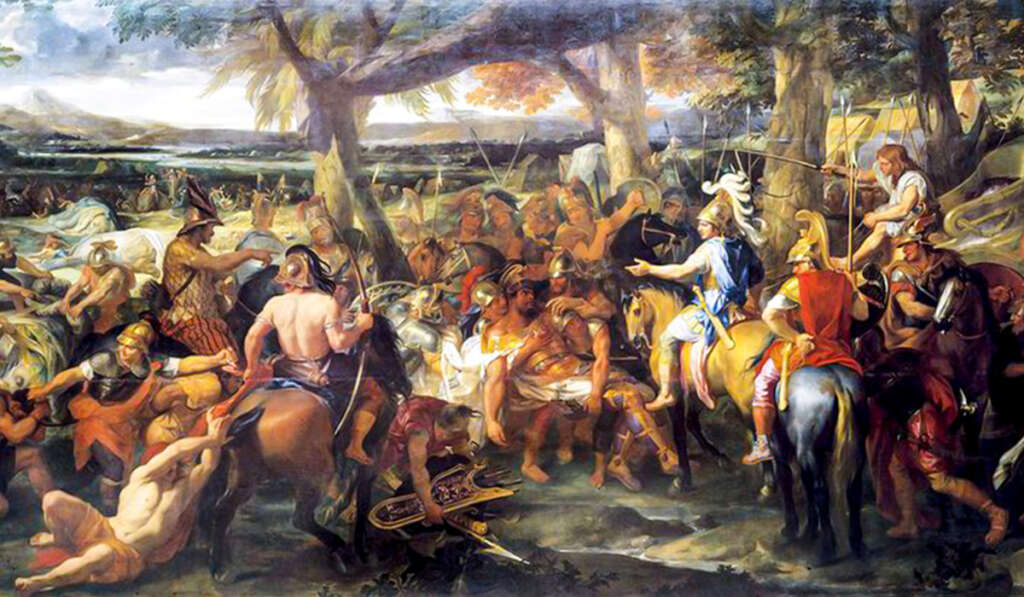
When Alexander and Porus first met, Alexander was astonished by Porus’s huge stature and fearless face. Alexander was only 5 feet 5 inches tall, while Porus stood like a 7 feet 4 inches tall figure. Alexander was terrified by the power of Porus’s personality. Taking the initiative in the conversation, he extended his hand and said, “I want a truce. I will also respect (respect) all your conditions. What can we both do for each other?” Without any fear or submission, King Porus looked Alexander in the eye with a very strong will and firm character and said, “Everything that one king can do for another king.”
Western and European writers have distorted this incident and created a fabricated story that Alexander asked, “Tell me how you should be treated?” and Porus said, “As one king does to another king.” This is completely wrong and biased history. King Porus was not a defeated prisoner of war, who was brought to Alexander’s court in chains. This meeting took place on the banks of the river on the basis of equality between the two kings. Porus neither showed any weakness in front of Alexander nor apologized. He kept the pride of Punjab high in the same way that in modern times, Shaheed Bhagat Singh had maintained Indian pride in front of the British Empire.
Two main points of this historic peace treaty, which was based on equality, were quite clear; first, Alexander accepted the full rights and sovereignty of King Porus over the Persian Empire (the empire of Porus). Second, Porus assured the war-weary Greek army of safe passage through his territory. After this peace treaty, Alexander and Porus became close friends. After the ceasefire, Alexander spent about a month in Porus’s kingdom, where Porus took full care of him according to Punjabi hospitality. When Alexander started advancing beyond Porus’ kingdom, impressed by Porus’ bravery, he also handed over many other conquered territories to King Porus. With the addition of these new territories, Porus’ empire became much larger and more powerful than before. The area of these areas was larger than Porus’s own kingdom, which included Khariya, Lalamusa, Jalalpur, Marala, Bhimbar and many other nearby areas.
After this, a fierce war with King Porus shattered the Greek army. When Alexander decided to advance from Porus’ kingdom to the Magadha Empire (Nanda Dynasty) and advanced towards the Beas River, his soldiers flatly refused to advance. The soldiers said that if Porus, a small king of Punjab, had done this to us, then millions of elephants and soldiers from the big empires of India would not leave us alive. Finally, Alexander, who dreamed of becoming a world conqueror, turned back from the Beas River in despair. During his return journey, he died of illness in Babylon in 323 BC. Thus, indirectly, the bravery of King Porus marked the end of Alexander’s world journey.
Some historians also write that after the departure of Alexander, there was a new turn in the politics of India. Acharya Chanakya (Kotilya) and the legendary warrior Chandragupta Maurya, dreaming of turning India into a sutra, plan to end the corrupt Nanda dynasty of Magadha. For this great task they needed the support of a powerful and experienced king like Porus.
King Porus and Chandragupta Maurya joined hands. This powerful north-western alliance attacked the Magadha Empire. The vast army of King Dhanananda of the Nanda dynasty could not stand against the military strategy of the Porus and the bravery of Chandragupta. This historic alliance successfully ended the Nanda dynasty completely and laid the foundation of the ‘Morya Empire’ in India.
According to some historical references and ancient dramas like Mudrarakshas, under this conspiracy a Greek general (Eudemus is mentioned in some places) tried to occupy Punjabi territories after the death of Alexander and in the same struggle killed King Possus as part of the conspiracy. In response, King Porus’ son killed Eudemus.
The life and martyrdom of King Porus is an invaluable heritage of the history of Punjab and India. Although the Porus were treacherously killed, the bravery they displayed on the plains of Jhelum taught future generations a lesson of patriotism and honor. They proved that no matter how big the enemy may be, if there is a mountain of courage and the spirit of dying for the motherland, then even the pride of the world conquerors can be reduced to dust. Even today, when the Veer-Gatha of Punjab is mentioned, the name of King Porus is mentioned first with great honor and pride.

Leave a Comment