
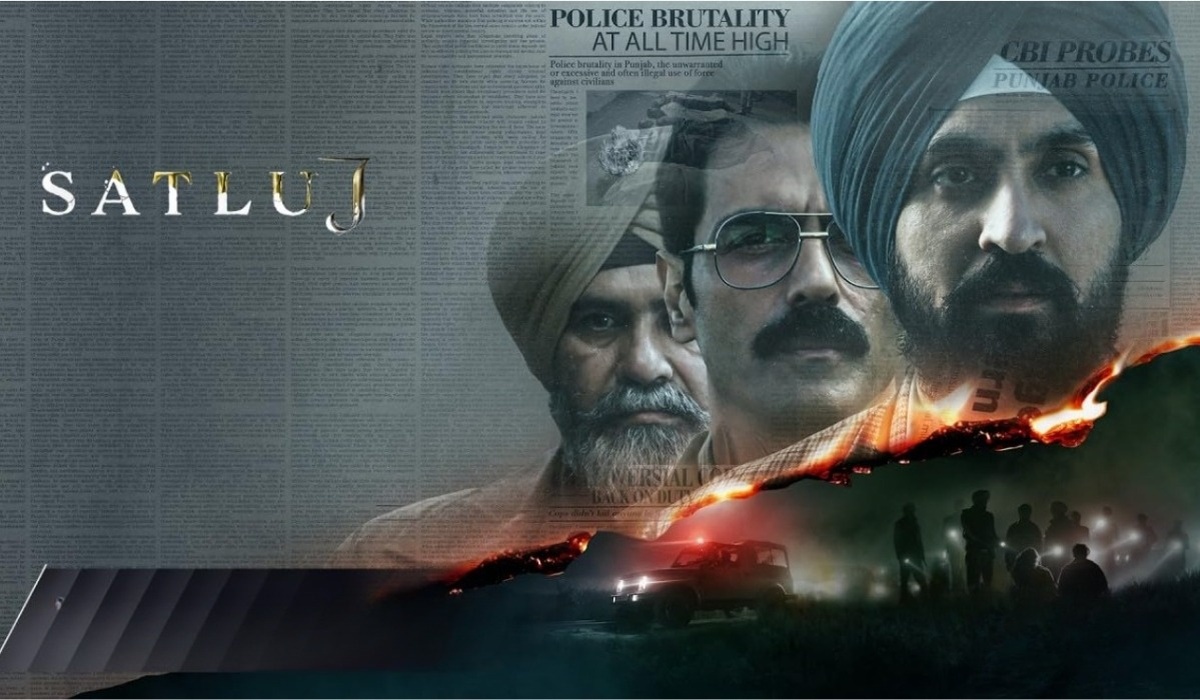

The controversy over the abrupt removal of the film ‘Satluj’ from the OTT platform Zee5 within 48 hours of its release continues, with political leaders calling for an examination of events in militancy-hit Punjab during the 1980s and 90s.
The Shiromani Gurdwara Parbandhak Committee (SGPC) has announced a protest march in Amritsar on July 10 against the ban on the film. SGPC president Harjinder Singh Dhami said the film portrays the atrocities committed against Sikh youth and the government’s decision to ban it was an attempt to suppress the truth.
Meanwhile, the Akal Takht has announced it will hold an ardas on the banks of the Sutlej at Harike Pattan on July 14 for the Sikh youths whose cases were brought to light by human rights activist Jaswant Singh Khalra. Officiating Jathedar of the Akal Takht Kuldeep Singh Gargaj extended an open invitation to all victim families to attend the prayers for the eternal peace of Sikh youths who disappeared during the militancy period.
Amidst the turmoil, Prime Minister Narendra Modi is expected to visit Punjab on July 17. This was announced by Union Minister Ravneet Singh Bittu in Jalandhar on Wednesday. He alleged that the makers of the film wanted to disrupt peace in Punjab but they would not be allowed to do so. He accused popular actor-singer Diljit Dosanjh, who plays the lead role in the film, of supporting a “terror narrative” even as he asks Sikh separatists to leave his overseas concerts.
The film portrays the real-life story of Jaswant Singh Khalra, a bank employee-turned-human rights activist, who exposed the extrajudicial killing and secret cremation of over 25,000 unidentified persons by Punjab Police during the counter-insurgency operations in the early 1990s. He himself suffered the same fate at the hands of police personnel who were convicted a decade later in 2005. The film was stuck with the censor board for three years before the makers decided to release it on the OTT platform.
Meanwhile, the film seems to have got a second life as downloaded copies are being screened in villages across Punjab. Dozens of screenings have been reported from Moga, Sangrur, Patiala, Hoshiarpur, Rajpura, Gurdaspur, Barnala, Bathinda, Amritsar, Ludhiana and other districts of Punjab. Local sports clubs, gurdwaras or even families are organising these well-attended screenings.
In a statement, Delhi Sikh Gurdwara Management Committee (DSGMC) President Harmeet Singh Kalka also announced that the committee will organise screenings of the film to ensure it reaches the public. He said they will hold seminars on Khalra’s life and legacy in schools and colleges in order to highlight the impact a single social activist can have on society.
Punjab BJP president Kewal Singh Dhillon said he had raised the issue with the central government following which the Ministry of Information and Broadcasting had ordered a review of the circumstances surrounding the removal of the film. Dhillon said Punjab’s cinema and its artistes represented the voice, history and cultural identity of the people of the state. He said while the rule of law must always be upheld, genuine concerns of the Punjabi film fraternity and the public deserved a fair and objective hearing.
Meanwhile, voices demanding a fresh look into the events during the militancy period grew louder. Former IAS and senior BJP leader Dr Jagmohan Singh Raju has written to Punjab Governor Gulab Chand Kataria demanding the formation of a Truth, Accountability and Reconciliation Commission to examine events during Punjab’s militancy period.
“Punjab cannot move on until the truth behind the incidents that happened during the insurgency period from 1980 to 1995 are acknowledged and multiple narratives are countered through facts. A Truth Commission is not for retribution but for political accountability and to verify what we know as ‘reported truth’,” Raju said.
He argued that Punjab could not build a peaceful future on disputed memories and that an independent, credible process was necessary to establish facts, determine political accountability and promote reconciliation.
Congress MP from Patiala Dharamvira Gandhi said the issue transcended day-to-day politics and concerned human rights. Claiming Punjab witnessed one of its darkest periods from the late 1970s to the early 1990s, Gandhi said Khalra sought to document encounter killings by visiting cremation grounds, particularly in the Majha region, where militancy was at its peak.
He urged, “Let us not cover the wound. Let it remain open so everyone can see the roles played by the state, terrorists, the police and various agencies. Let people understand who pushed the state into such a situation, why it happened and how much Punjab suffered.”
also condemned the decision to remove the film, calling it unjust and unconstitutional. “Truth can never be permanently suppressed,” he said.

Leave a Comment