
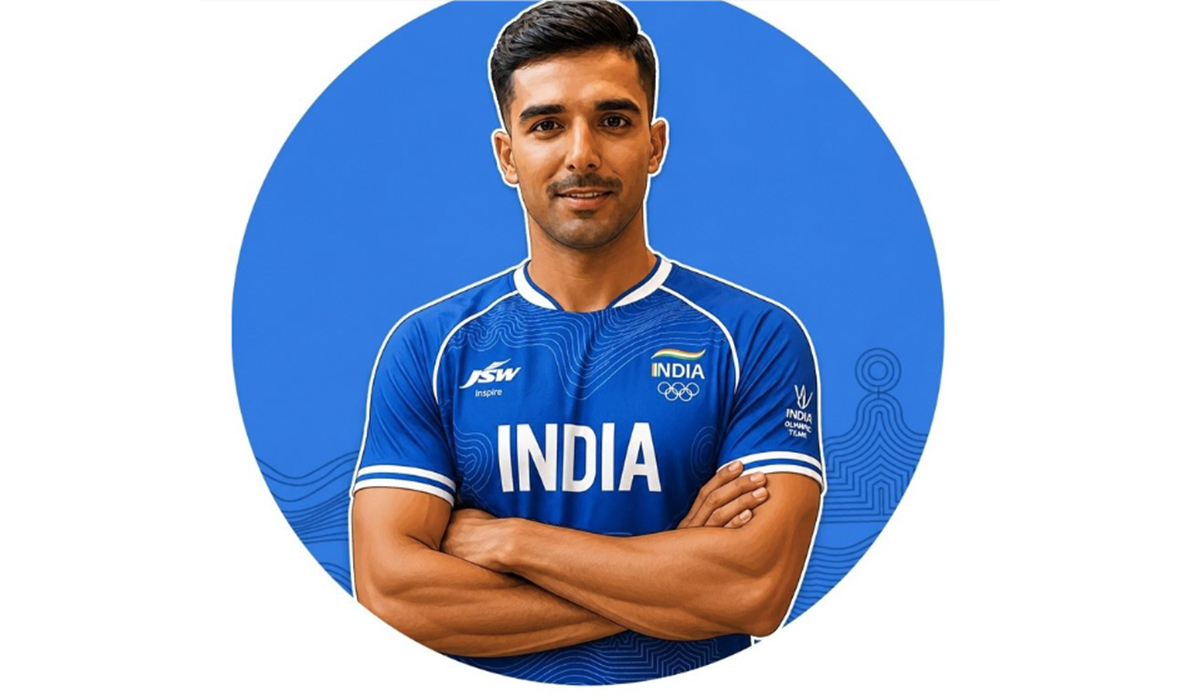

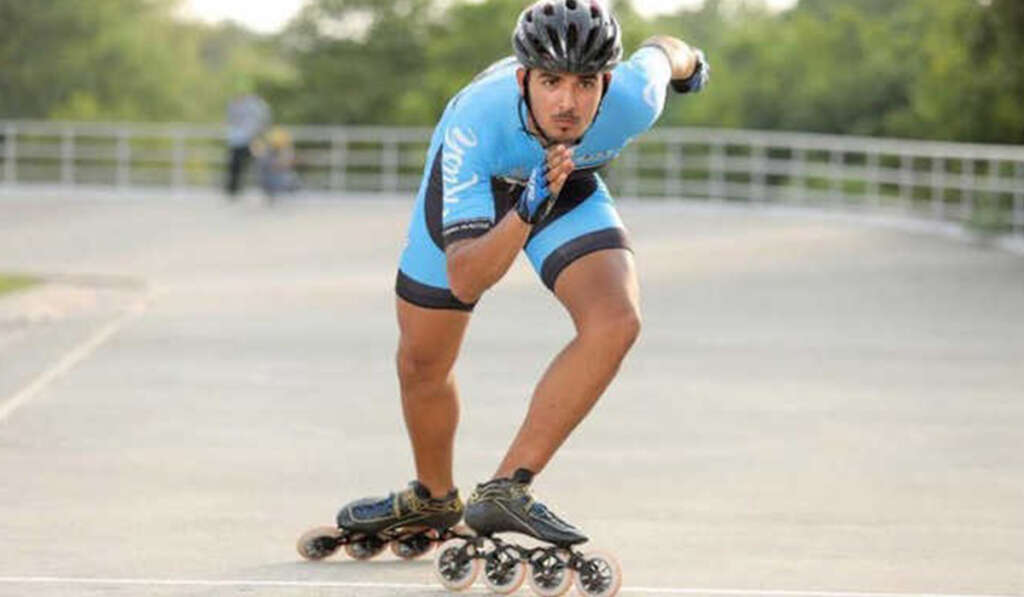
From being teased as an overweight six-year-old in Ludhiana to representing India at the Asian Games in two different sports, Harshveer Singh Sekhon’s journey is one of reinvention, family rivalry and Punjabi resilience. Now, he is in Nagoya, Japan for his third Asian Games, this time in three track cycling events.
Before the bicycle, there were eight wheels.
Before the India cycling jersey, the international velodromes and the Asian Games, there was a six-year-old boy in Ludhiana who was being teased at school because he was overweight.
Harshveer Singh Sekhon took up roller skating to change himself. He could not have known then that those skates would eventually take him to the Asian Games—or that years later he would walk away from that sport and build an entirely new international career on a bicycle.
That makes Harshveer’s story unusual even by the standards of elite sport.
He has represented India at the Asian Games in two different sports.
Jakarta 2018: roller skating.
Hangzhou 2023: cycling.
Aichi-Nagoya 2026: cycling again, with selection in the men’s keirin, omnium and Madison.
Three Asian Games. Two sports. One dream that never changed.
And perhaps there is no more appropriate place for that story to come from than Ludhiana—a city whose identity has been closely linked to bicycles and bicycle manufacturing for generations. Hero Cycles, founded by O.P. Munjal, began its journey in Ludhiana in 1956.
Harshveer’s sporting journey, however, began on skates.
The boy who wanted to stop being teased
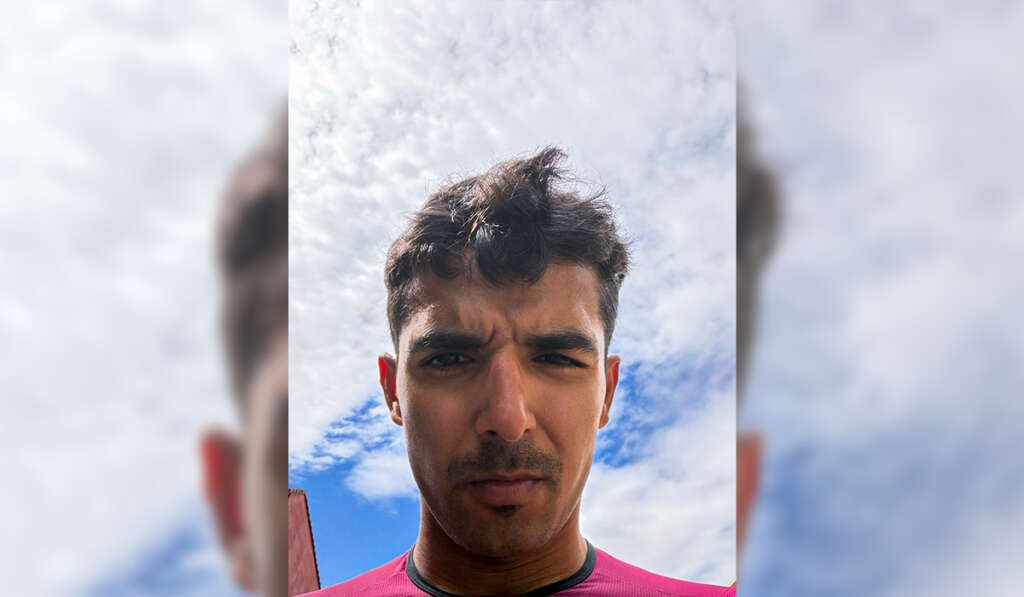
Harshveer started skating at the age of six after schoolmates made fun of him for being overweight. A family friend introduced him to skating at Leisure Valley in Ludhiana, where coach JS Dhaliwal began training him. The boy took to it.
He progressed through state, national and university competitions and eventually won a silver medal at the Asian Skating Championships. In 2018, he represented India in roller skating at the Jakarta Asian Games.
For many young athletes, an Asian Games appearance would represent the culmination of a dream. For Harshveer, Jakarta became something else: a point at which he began questioning the future of his sport.
He had travelled to international competitions using family savings and felt that there was not enough financial support to make roller skating a sustainable career. His conclusion was blunt.
“I realised that there was no point wasting my time in a sport which doesn’t support its athletes.”
So Harshveer left skating. But he did not leave sport. That distinction changed his life.
Then came the bicycle
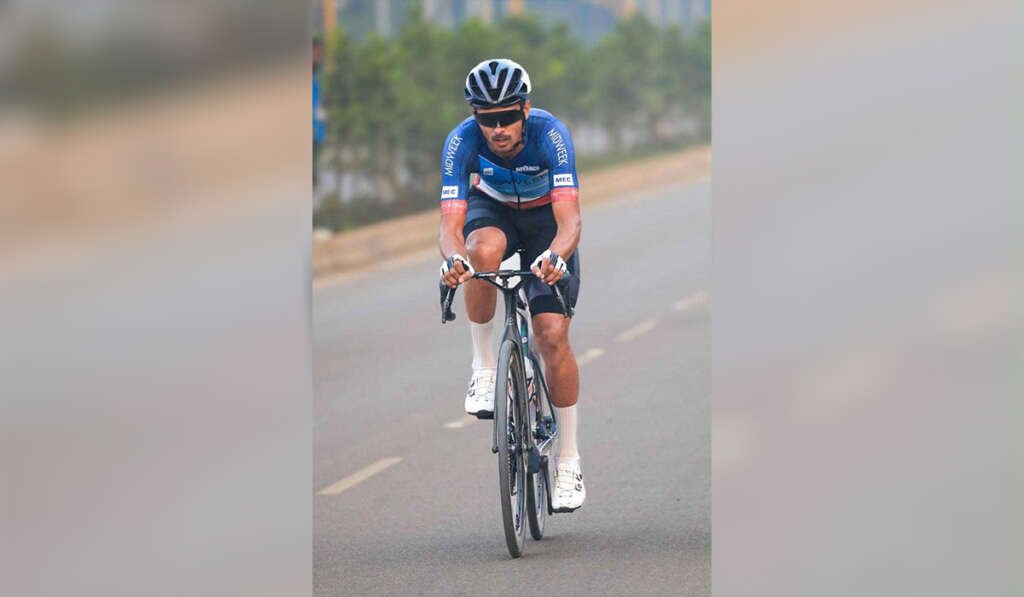
In 2018, Harshveer was introduced to cycling.
His first serious outing came at the All-India Inter-University Championships, where he entered track cycling. His natural transition from skating was helped by the physical qualities he had already developed—leg strength, balance, speed and the ability to handle intense bursts of effort.
His first coach, Gurbaz Singh, saw something in him too. There was just one practical problem. Harshveer needed a racing bicycle. Gurbaz lent him his own track bike. That bicycle became the starting point of a second sporting life.
Harshveer later recalled how important that early faith had been. His coach’s support, he said, made the transition much easier. The results began arriving quickly.
By 2019, Harshveer had won silver in the 4km team pursuit at the Asian Track Cycling Cup. It was a narrow defeat, with India losing the final by just 0.33 seconds. The former roller skater was becoming a cyclist.
The numbers behind the reinvention
The emotional story explains why Harshveer changed sports. His results explain why the second career worked.
Harshveer went on to represent India at the 2022 Commonwealth Games and won the men’s 119km road race at the 2022 National Games. In 2023, he returned to the Asian Games at Hangzhou as a cyclist. His Asian record grew too.
HARSHVEER SEKHOΝ — THE NUMBERS
| Milestone | Performance |
| 2019 Asian Track Cycling Cup | Silver — Team Pursuit |
| 2022 National Games | Gold — 119km Road Race |
| 2023 Asian Track Cycling Cup | Silver — Omnium |
| 2023 Asian Track Cycling Cup | Silver — Points Race |
| 2024 National Road Championships | Gold — 40km ITT |
| 2024 UCI Track World Championships | First Indian endurance cyclist to compete |
| 2025 National Road Championships | 51:36.295 — 46.51 km/h |
| 2025 Track Nationals | Gold — Madison |
| 2025 Track Nationals | Silver — Omnium |
| 2026 UCI Summer Slam III | Silver — Points Race |
| Asian Games 2026 | Keirin, Omnium, Madison |
In 2026, his international programme continued to expand. He won silver in the men’s Points Race at the UCI Summer Slam III in California and was the top Indian rider at the inaugural Pune Grand Tour.
There was no single magical qualifying ride that suddenly earned Harshveer his Asian Games place.
His selection is better understood as the result of consistent national performances, Asian-level results, international racing and continued participation in the high-level track programme.
The sibling rivalry at home
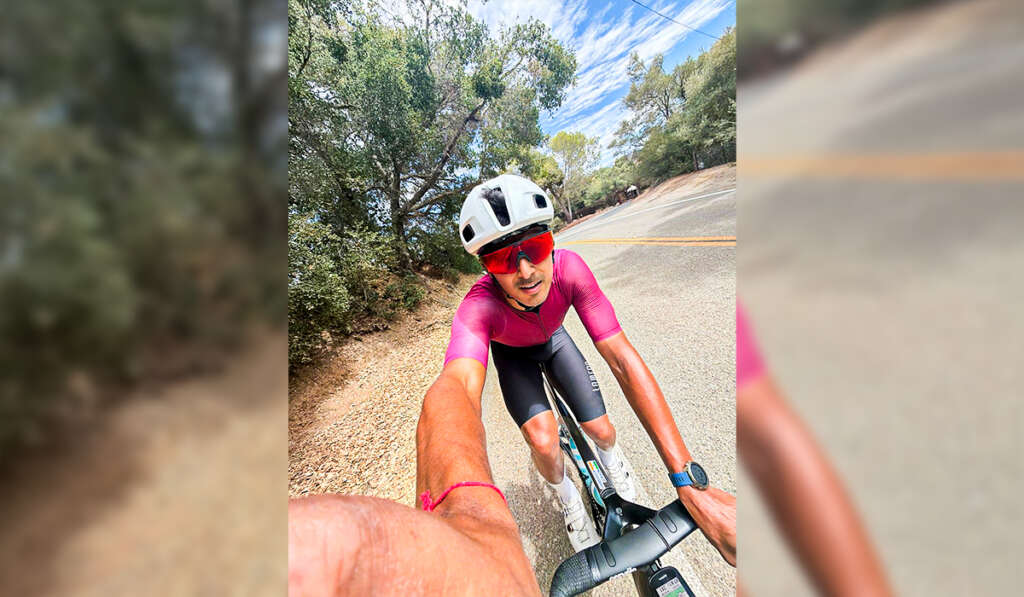
Perhaps the most human part of Harshveer’s story happens away from the velodrome. At home, he is not only an international cyclist. He is also an elder brother. His younger sister, Jasmeek Kaur Sekhon, has followed him into cycling and has developed into an international-level rider herself.
During the Covid period, the siblings trained together in Ludhiana. Harshveer worked on his indoor trainer while Jasmeek began doing similar exercises. What started as training gradually became something more competitive.
They challenge each other. They compare performances. They push each other. And the rivalry is not simply for fun.
At the 2024 National Road Cycling Championships, Harshveer won the men’s elite 40km individual time trial while Jasmeek won the women’s 30km equivalent. After finishing his own race, Harshveer was out supporting his sister, riding alongside her and giving her instructions and encouragement. Both eventually finished with gold medals.
That is the part of elite sport a medal table cannot capture. The older brother who wants his sister to improve. The younger sister who refuses to remain in her brother’s shadow. The family that turns training into competition—and competition into motivation.
Harshveer’s parents also brought their own sporting background into the family. His father, Baljeet Singh, played kabaddi, while his mother, Baldeep Kaur, was a hockey player.
Sport, in other words, was never far from the Sekhon household.
From Ludhiana to California
Harshveer’s latest phase has taken him well beyond Punjab.
In 2026, he has been training in the United States under cycling coach Freddie Rodriguez, while also competing in international ranking events. His father has said that the programme was being used to improve Harshveer’s international ranking and exposure. The overseas training is another step in a career that has gradually become more international.
The athlete who once borrowed a track bicycle from his coach is now training and racing in high-performance environments in the United States and competing against riders from established cycling nations. But his roots remain in Ludhiana. And the connection is more than symbolic.
Ludhiana has spent generations manufacturing bicycles and bicycle components. Harshveer has taken that everyday association with the bicycle and turned it into elite sport.
There is something satisfying about a city known for making bicycles producing an athlete who wants to take one to the highest level.
The Asian challenge
At the 2026 Asian Games, Harshveer will compete in three very different track events.
Omnium
A four-part endurance competition combining the Scratch, Tempo, Elimination and Points races. It demands versatility because a rider cannot rely on one particular strength.
Madison
A two-rider team event in which riders alternate through hand-slings and work together to collect points and gain laps. Harshveer will partner Vishavjeet Singh for India.
At the 2026 Asian Track Cycling Championships, Harshveer and Vishavjeet finished fifth in the Madison, completing the 50km race at an average speed of 55.18 km/h.
Keirin
The most explosive of his three assignments. Riders begin behind a motorised pacer before the race opens into a high-speed sprint, where positioning and timing become critical.
The Asian field will be demanding.
Japan, China, Korea, Kazakhstan and Malaysia all have established track-cycling programmes, while Japan will have the additional familiarity of racing on home soil.
Harshveer knows many of these cycling nations from previous Asian competitions.
And he is arriving with a considerably longer international racing history than the young rider who first appeared at Hangzhou.
The numbers that tell another story
The 2026 Asian Track Cycling Championships provided a useful measure of the level at which Harshveer is now competing.
In the men’s 4km team pursuit qualifying round, India—with Harshveer, Vishavjeet Singh, Sahil Kumar and Dinesh Kumar—clocked 4:08.360, averaging 57.98 km/h. China topped the qualifying round in 3:51.139, followed by Japan and Kazakhstan.
The numbers reveal the challenge without needing to label anyone an underdog. At this level, fractions of a second matter. Positioning matters. Tactics matter. And sometimes the difference between a medal and finishing outside the podium is measured in a handful of pedal strokes. Harshveer has spent years learning precisely that.
The sport changed. The dream did not.
There will be experienced riders from some of Asia’s strongest cycling nations in Nagoya. There will be high-speed races, tight tactical battles and a scoreboard that will ultimately tell the story in numbers. But Harshveer Sekhon has already overcome a different kind of challenge. He has shown that starting again does not necessarily mean starting from zero.
The boy from Ludhiana who once put on skates to escape the teasing of classmates eventually became an Indian international cyclist. His sister is now racing alongside him. His coaches have continued to invest their faith in him. And the city that has been making bicycles for generations now has one of its own taking that bicycle to the Asian Games.
For Punjab, there is pride in that journey. Not simply because Harshveer is going to Japan. But because of how he got there. He changed his sport without abandoning his ambition. He accepted setbacks without allowing them to become his identity. He found another road when the first one stopped working. And now, for the third time, he will line up at the Asian Games.
In Jakarta, Harshveer Singh Sekhon arrived on eight wheels. In Hangzhou, he returned on two. In Nagoya, he will race once again for India—carrying the faith of a family, the competitive spirit of a sister, the lessons of a borrowed bicycle and the pride of Ludhiana with him.
Sometimes, you do not have to give up on the dream. You simply have to find another way to reach it. The cycling events start on 29th September.
Leave a Comment