

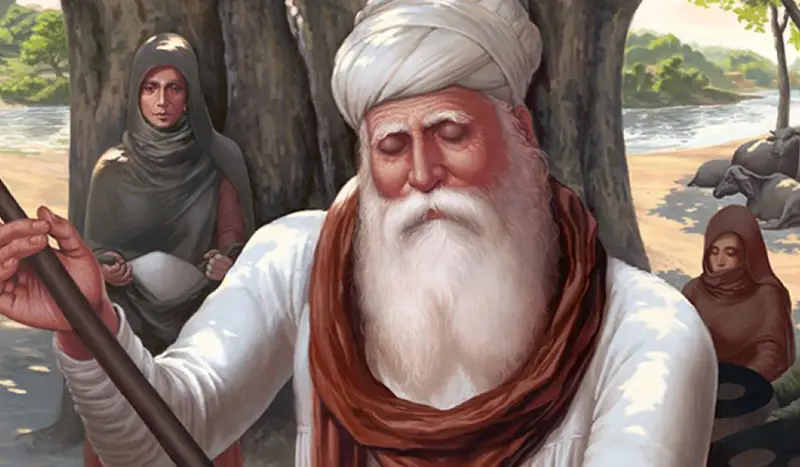

He was sixty-one years old when he found his teacher. What followed changed the social order of an entire civilization.
Guru Amar Das was born in 1479 in the village of Basarke, in the Amritsar district of Punjab, to Tej Bhan and Mata Lakhmi. He spent more than six decades following Vaishnav traditions, making barefoot pilgrimages to Haridwar each year, observing fasts, and performing the rituals prescribed by his faith. By any conventional measure, he was a pious man.
However, something was absent. On one of his returns from pilgrimage, a wandering ascetic called him “nigura,” one without a spiritual teacher. The word cut deeper than any insult could. It was named a vacancy he had long felt but never spoken of.
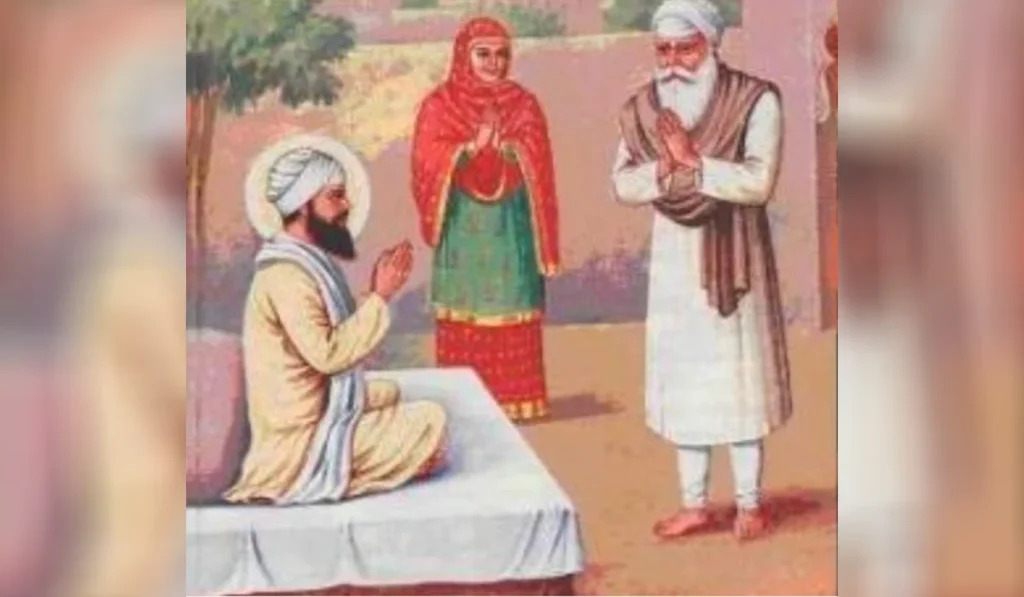
The turning point arrived quietly, before dawn. He heard a woman in his household, Bibi Amro, daughter of the second Guru, Angad Dev, and wife of his nephew, reciting verses from the compositions of Guru Nanak. The sound of that sacred poetry stilled something in him. He asked to be taken immediately to the source of those words.
When Amar Das arrived at Khadur Sahib and sat before Guru Angad Dev, he was sixty-one years old. That detail alone carries a lesson that no sermon could state more plainly: the road toward understanding has no age limit. Sincerity of seeking matters more than the year a man was born.
Twelve Years of Unbroken Service
What followed his initiation into the Sikh fold was not merely devotion. It was a daily discipline that few men half his age could have sustained.
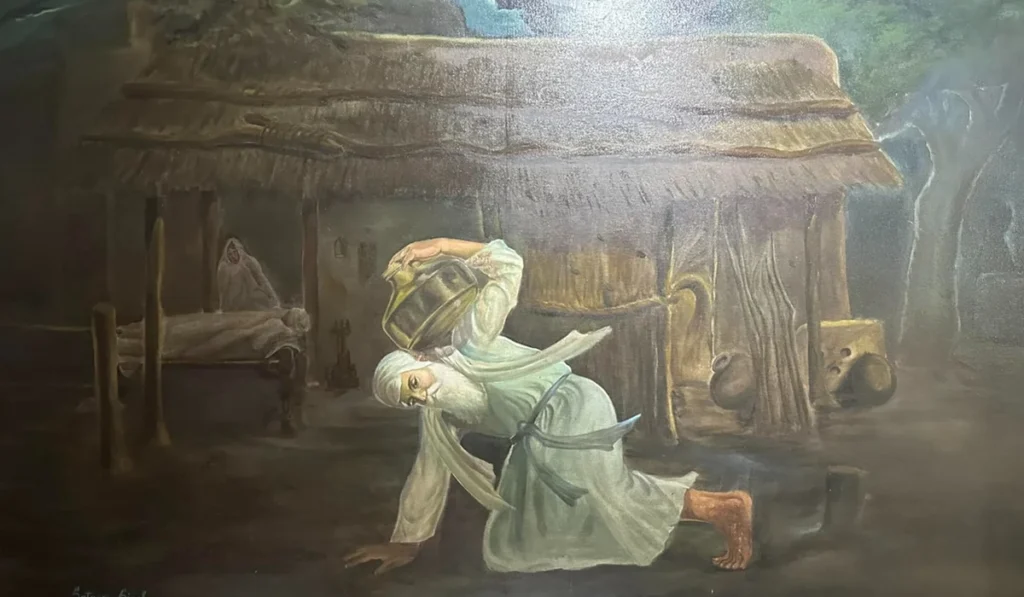
Every morning before daylight, Amar Das walked three miles to the River Beas, filled a vessel with water, and carried it back so that Guru Angad Dev might bathe. Rain, wind, cold, none of it interrupted the routine. He gathered firewood for the community kitchen, washed utensils, and attended to every small task in the congregation without complaint or acknowledgment.
This continued for twelve years.
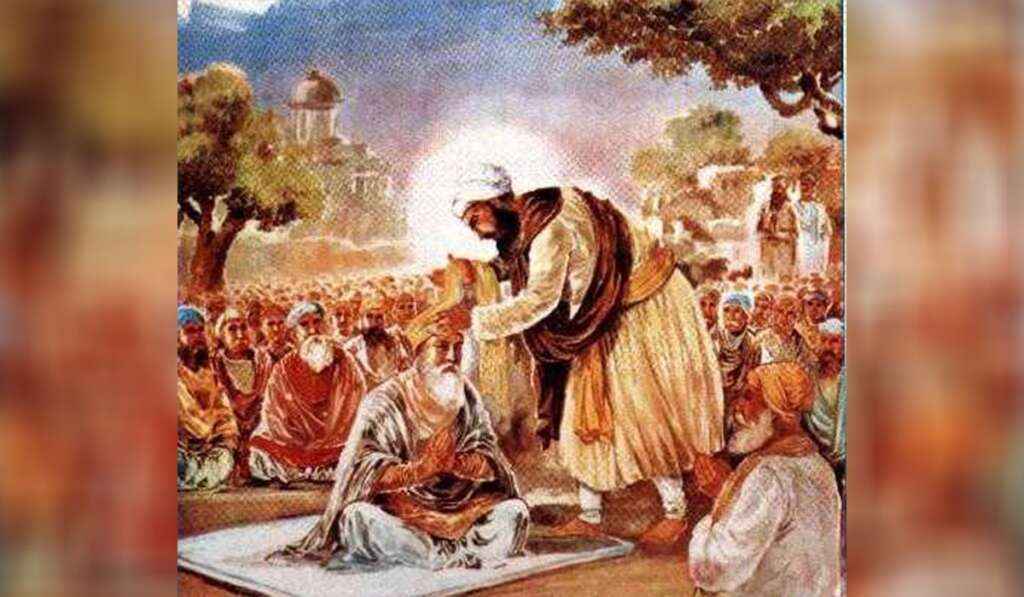
The depth of that service was recognized in the titles Guru Angad Dev conferred upon him: “the honour of the dishonoured,” “the strength of the weak,” “the refuge of the helpless.” In 1552, Amar Das was named the third Guru of the Sikh faith.
His own verse on this way of living reads:
Gur ki kaar kamaavni bhai, aapu chhod chit laai. Sadaa sahaj phir dukh na lagaee bhai, Har aap vasai man aai.
The meaning: one who surrenders self-regard and serves with a focused heart lives in steady calm, and within that calm, the divine takes residence. It is not mystical language so much as a description of how the ego, when quieted, ceases to manufacture suffering.
The Langar and a Mughal Emperor on the Floor
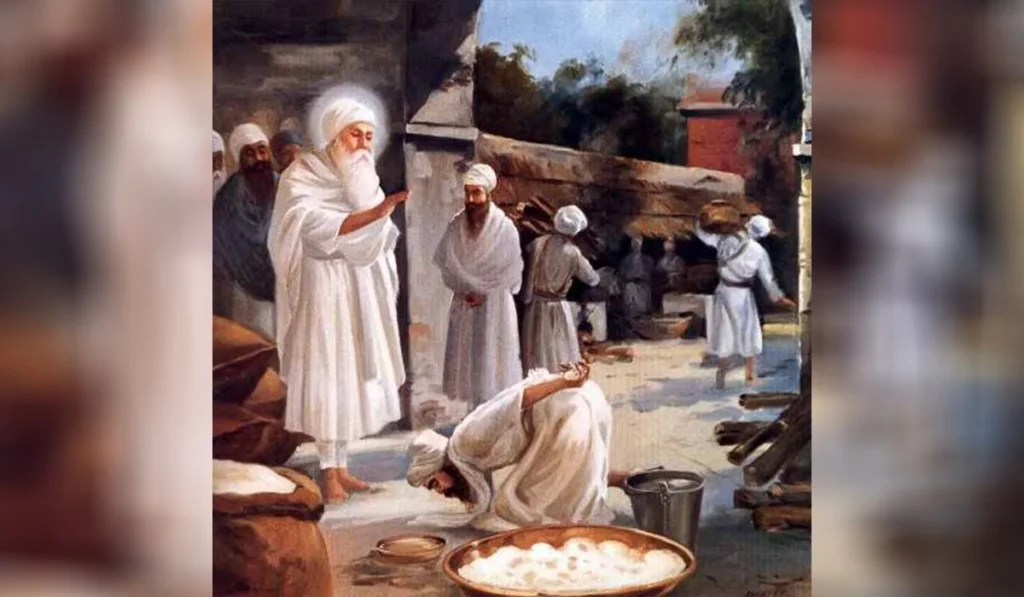
The institution of the community kitchen, the langar, was established by Guru Nanak. Guru Amar Das gave it both structure and an unyielding rule that carried enormous social weight.
At Goindwal Sahib, where he made his headquarters, he decreed that no visitor could seek an audience before first sitting in the communal row and eating alongside everyone else. The rule had no exceptions. A farmer and a nobleman ate from the same kitchen, seated on the same ground.
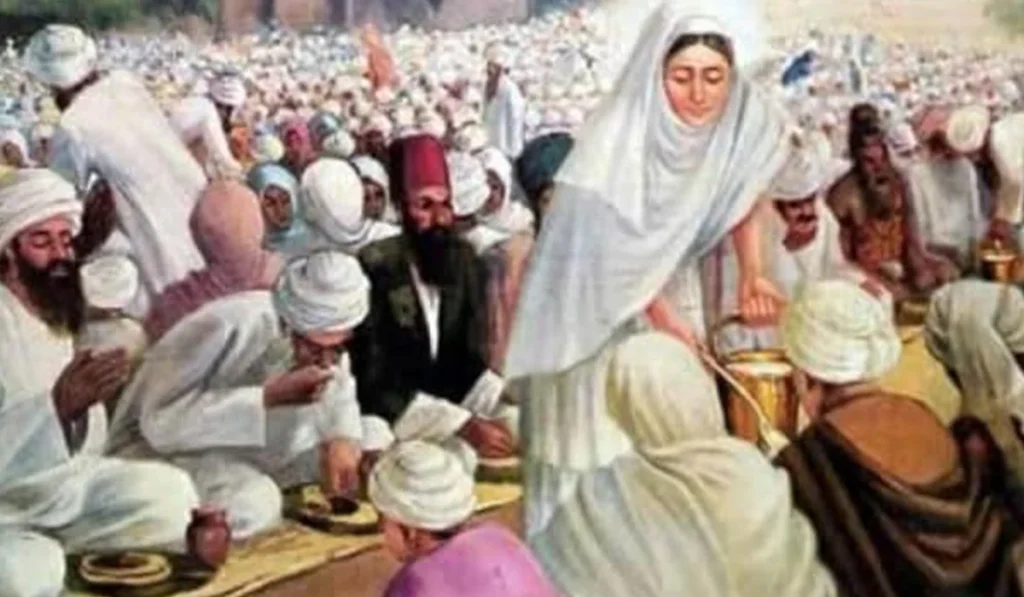
When the Mughal Emperor Akbar came to Goindwal to meet the Guru, he sat in that row. He ate maize bread and black lentils from the common provision, as any traveller might. Reportedly so affected by the experience, he offered to endow the langar with a large grant of land. Guru Amar Das declined. The kitchen, he said, was sustained by the honest labour and voluntary contribution of working people, which was its nature, and no royal endowment should alter it.
This refusal was not a theater. It was a statement about the source of the institution’s integrity. A langar funded by a king’s generosity becomes the king’s charity. One funded by congregants’ earnings belongs to the congregation. The distinction, in the deeply hierarchical society of sixteenth-century India, was radical.
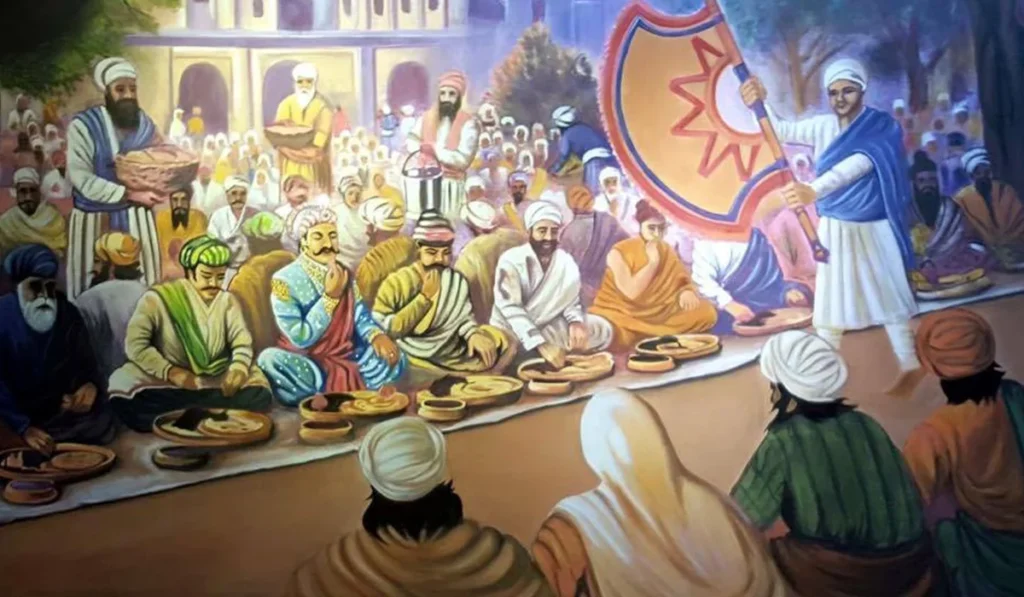
The principle “pehle pangat phir sangat,” first the communal meal, then the assembly, remained the governing motto. It dismantled the very grammar of caste that regulated who could eat with whom, who could share a vessel, and who could sit beside whom. In that era, it was less a dietary custom than a social earthquake delivered through a shared meal.
Women, Reform, and the Limits of Custom
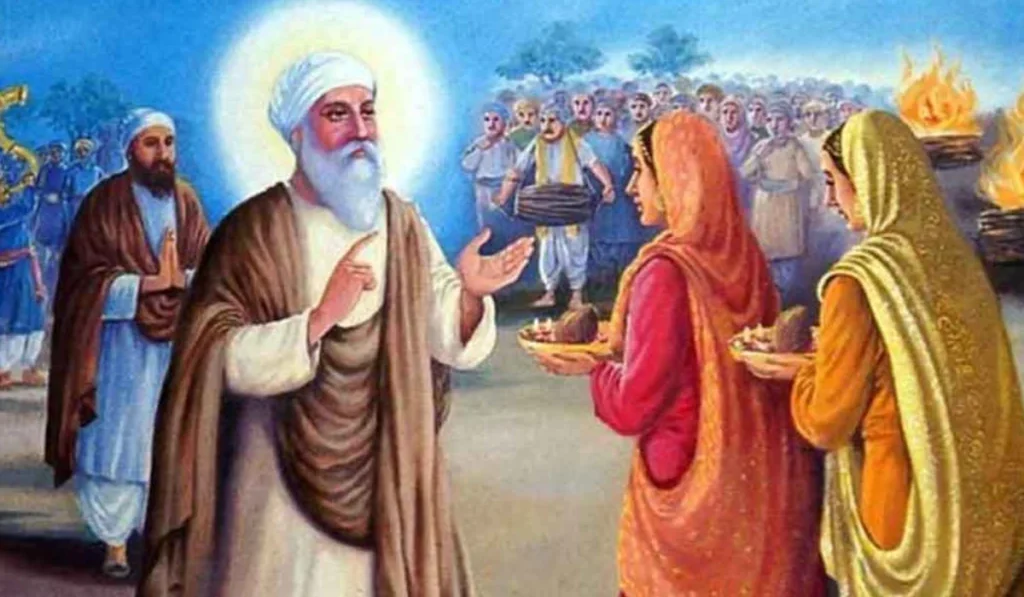
The society into which Guru Amar Das was born practiced sati, the immolation of a widow on her husband’s funeral pyre. It also enforced purdah, the seclusion of women behind veils, and restricted them entirely from positions of religious instruction.
Guru Amar Das addressed each of these directly.
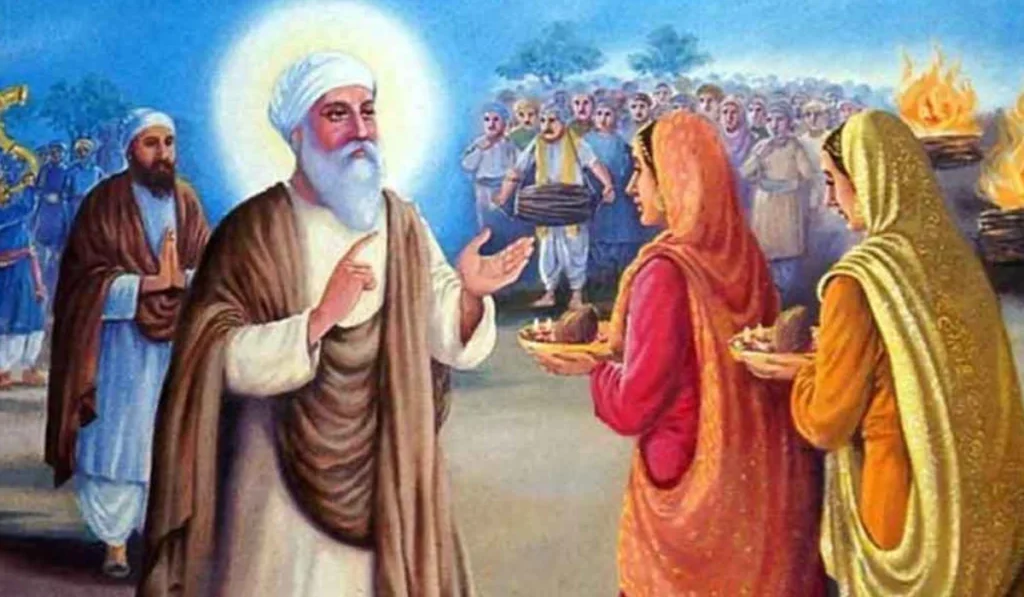
On Sati, his compositions argued that a woman’s virtue lay not in self-destruction but in the character she sustained through grief. The logic was simple and devastating: a practice that required the death of a woman to demonstrate loyalty to a dead man was not piety. It was violence dressed in the language of honour.
He prohibited purdah within the Guru’s congregation. Women came before the assembly as themselves, not behind cloth. More significantly, he appointed women as preachers within the Manji system, the network of regional missionary posts he established to carry Sikh teachings across the subcontinent. The country was divided into twenty-two districts, and women served as religious instructors in several of them. In the sixteenth century, that appointment was not a gesture. It was a structural change.
The Manji System and Baoli Sahib

The Manji system was perhaps the most durable organizational contribution of Guru Amar Das’s tenure. Twenty-two regions, each with a designated Sikh of proven character responsible for teaching, resolving disputes within the community, and maintaining contact with Goindwal. The framework created a church-like structure across a wide geography at a time when communication was slow, and roads were uncertain.
At Goindwal itself, Guru Amar Das oversaw the construction of the Baoli Sahib, a stepped well with eighty-four stairs descending to the water. The structure had practical value, reliable water in a permanent form. However, its purpose was also social. At a time when caste determined which well a person could approach, the Baoli Sahib was open to all. People of every background drew from the same water and bathed in it together.
The Anand Sahib and Spiritual Composition
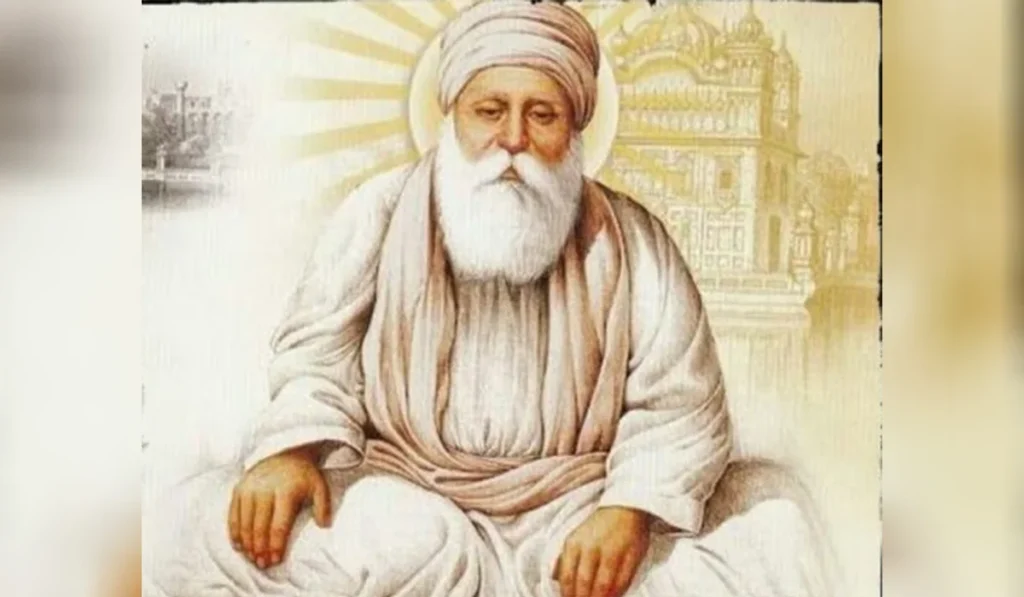
Guru Amar Das contributed 907 hymns to the Guru Granth Sahib, composed in 17 musical modes. Among these, the Anand Sahib in Ramkali raga is the most widely known.
Anand bha-i-aa meri maa-ay, satiguroo mai paa-i-aa.
It speaks of a joy that does not depend on circumstances, a state arrived at through surrender to the Guru’s teaching. The Anand Sahib is recited at the close of Sikh religious ceremonies births, deaths, weddings, and congregational prayers. It is, in that sense, the liturgical constant of Sikh life, present at every crossing of the threshold.
On Humility: One Episode
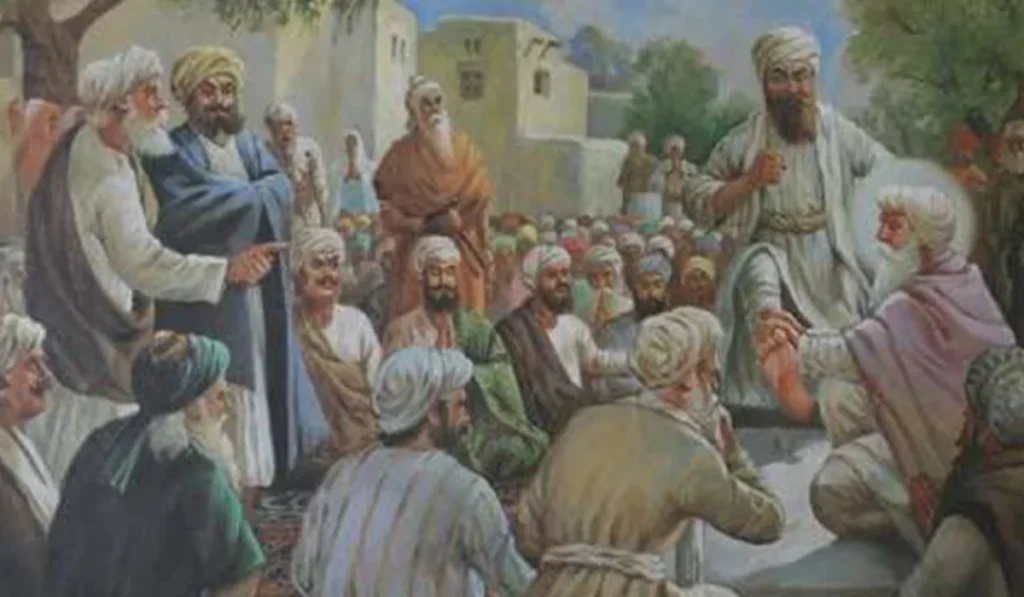
An account from Guru Amar Das’s life at Goindwal describes the day Datu, the son of Guru Angad Dev, entered the court in a state of jealousy and kicked the elderly Guru in the chest, knocking him from his seat.
Guru Amar Das rose, took Datu’s foot gently in his hands, and said: “I am afraid my old bones may have hurt your foot.”
The response is striking for what it is not. There is no recorded anger, no public rebuke, no appeal to the indignity of the act. Those present in the court witnessed, in a single moment, a man whose sense of self required no defense.
Whether one reads it as spiritual attainment or simply as exceptional self-command, the effect is the same: the absence of retaliation made the act of the aggressor smaller and the character of the injured man larger.
The Record That Endures
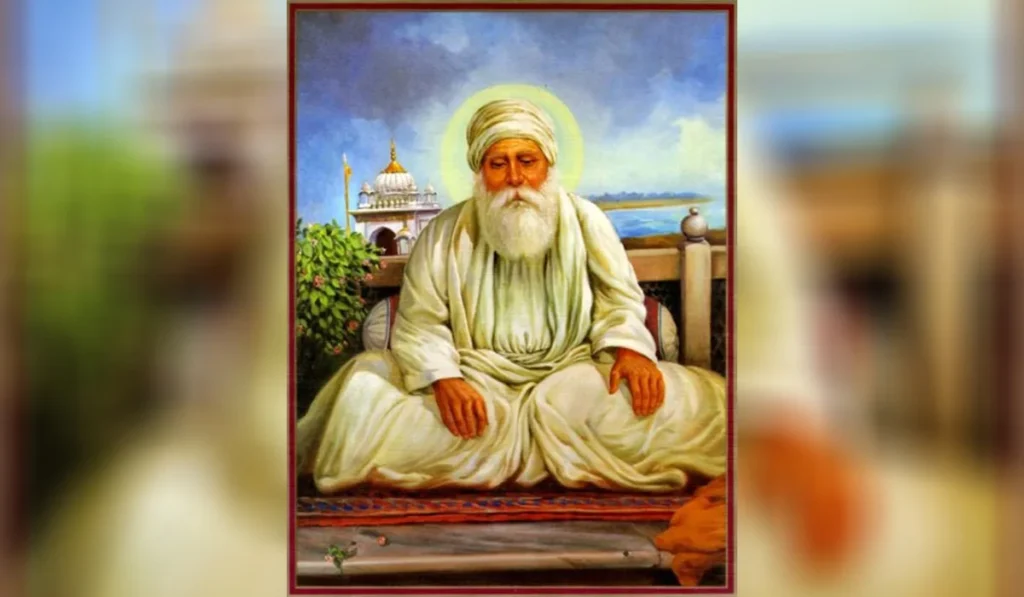
The Prakash Purab of Guru Amar Das, observed on 23 May according to the Nanakshahi calendar, marks the birth of a figure whose contributions to Sikh society were institutional, spiritual, and social in equal measure. He formalized the langar as a test of equality, organized a missionary network that included women, abolished practices that diminished or killed women, and drew water for his teacher each morning for twelve years.
His biography does not rest on miracles or conquest. It rests on the argument, enacted daily, that a life of service freely given without expectation of credit or rank is not a sacrifice of the self but the clearest expression of it.
That argument remains unfinished business for every century that follows.


Leave a Comment