

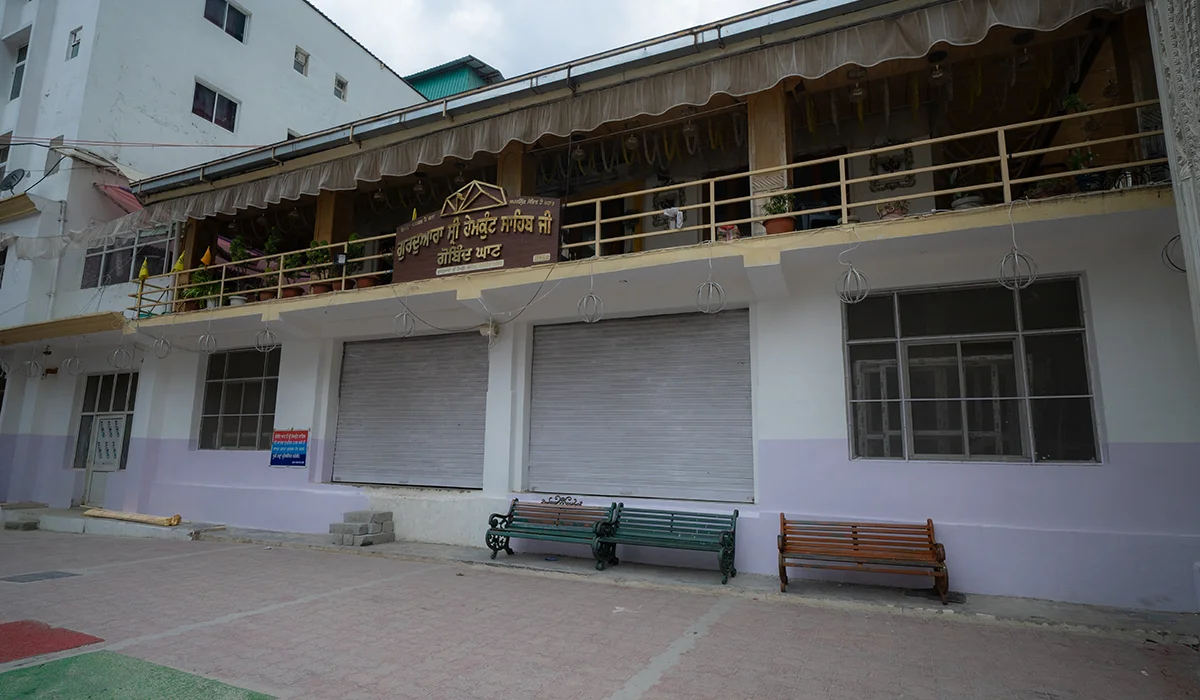

Jagaraj Singh was seventeen years old when he decided the rest of his life would be spent in service. His beard had not yet grown. His village of Sariyali Kalan in Amritsar district was behind him, and ahead lay hundreds of kilometres of road ending at a Himalayan settlement called Gobindghat.
That was 1998. He has not left since.
Where the Mountains Begin
Gobindghat sits in the Chamoli district of Uttarakhand, at the point where the road to the high Himalayas effectively ends, and the pilgrimage on foot begins. It serves as a major halt on the Badrinath route and lies 19 kilometres below the shrine of Hemkunt Sahib, the Sikh place of worship perched above 4,300 metres. From Gobindghat, pilgrims walk 13 kilometres to Ghangaria, now formally known as Govind Dham, and from there climb a further six kilometres to reach the shrine.
The geography is severe. Even in summer, the weather shifts without warning. The terrain is a succession of steep ridges, dense forests, and glacial streams. For most of the year, the entire region is buried under snow.
This is where Jagaraj Singh chose to remain.
A Shrine Found in the Wilderness
The origins of the gurudwara at Gobindghat go back to the 1930s, when the construction of Hemkunt Sahib first brought sustained attention to this remote corner of the Garhwal Himalayas. The site holds particular significance in the Sikh tradition: it is regarded as the place where Guru Gobind Singh meditated in a previous life, as described in the Bachittar Natak.
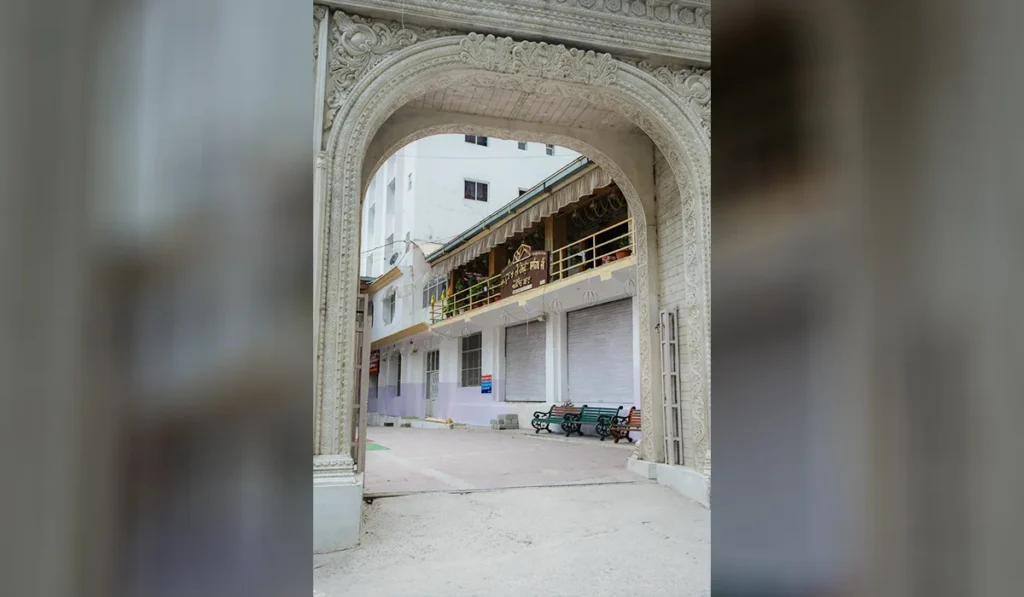
In those years, reaching the shrine was a matter of personal determination and considerable risk. There were no proper roads, no organised arrangements for pilgrims, and no shelter along the route. Travellers made their way through forest undergrowth and across unmarked rock faces, relying on whatever provisions they had carried from the plains.
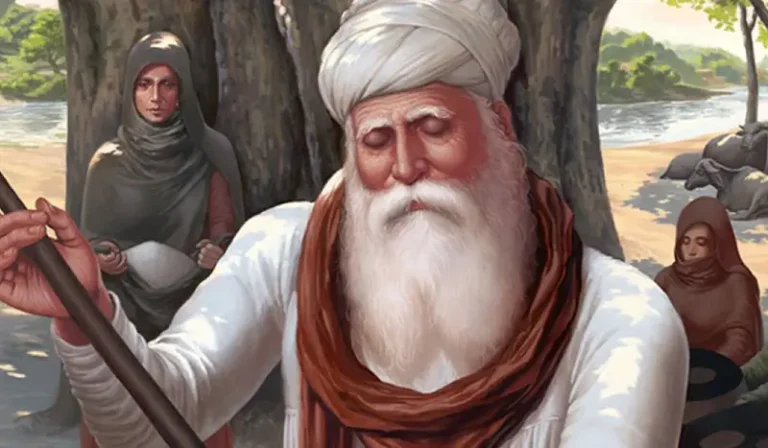
Two figures stand at the centre of the effort to change this. Baba Sohan Singh and Baba Modan Singh are remembered with deep respect among those who know the history of Hemkunt Sahib. It was these two men who first established the foundations of the gurudwaras at both Govind Dham and Gobindghat.
The Path That Did Not Exist
Between Govind Dham and Hemkunt Sahib, there was no established trail. Pilgrims had to find their own way through the forest and the rock. Baba Modan Singh resolved to build one.
Each day, he went up into the hills to work on the path. Each evening, he returned to Govind Dham, where he slept in hollow tree trunks, there being no other shelter available. The forest was full of wild animals. He kept a gun with him and fired shots to drive them off. His daily sustenance was chickpeas, jaggery, and water.
In 1944 and 1945, with the practical assistance of a contractor named Hayat Singh Bhandari, Baba Modan Singh built a place of worship at Gobindghat. Regular kirtan, katha, and ardas began there from that point. Two rooms were constructed, one for pilgrims and one for the saint himself, and he often stayed on to look after those who passed through.
He understood that pilgrims arrived at Ghangaria already exhausted from the walk. Rest and food were not secondary concerns; they were essential. At Govind Dham, he persuaded Sant Thandi Singh to establish a rest facility, and donations were gathered from the congregation in Delhi. Together, the two men built a room for pilgrims at that location as well. Langar, the community kitchen that provides free meals without distinction of any kind, was started at both places. Baba Modan Singh funded part of this by selling his own agricultural produce.
The walking trail was eventually completed. The gurudwaras were in place. What had been trackless forest was now, in a modest but functional sense, a route.
What the Founders Made Possible
The thousands of pilgrims who reach Hemkunt Sahib each season do so, in large part, because of what Baba Modan Singh and his companions built in conditions that would have discouraged most people. The physical hardship they accepted was considerable. The absence of recognition did not appear to trouble them.
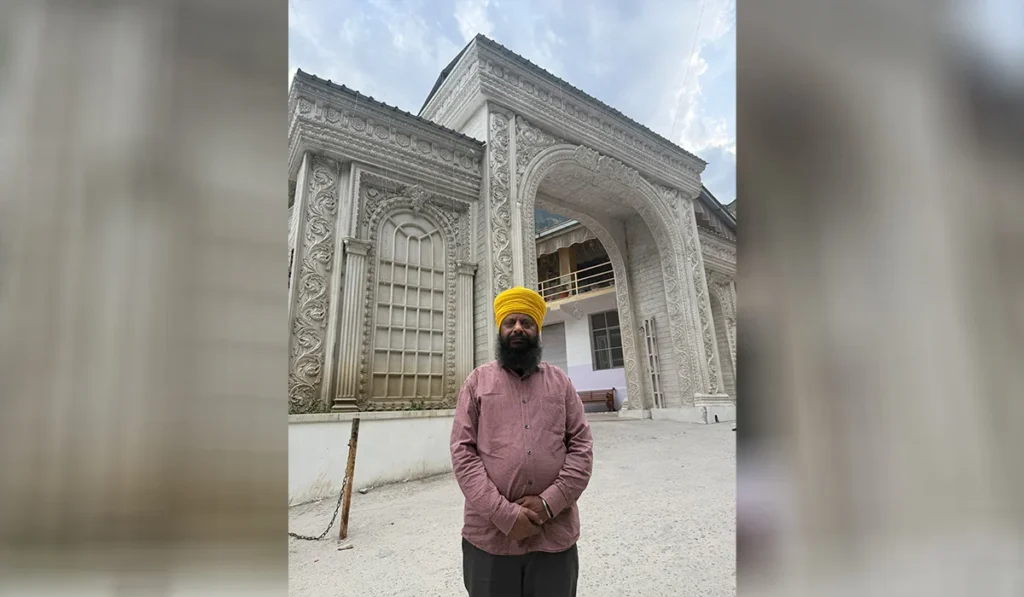
Jagaraj Singh, who now serves as assistant manager of the Gobindghat gurudwara and oversees the langar operation, describes what the complex provides today. Every day during the pilgrimage season, it accommodates and feeds five thousand visitors. Donors from across the country contribute to the operation. The head manager is Sardar Seva Singh; the granthi, who leads the congregation in scripture reading, is Manoj Singh, originally from Bijnor.
Over the course of an entire pilgrimage season, roughly 250,000 people pass through the gurudwara, staying the night and eating at the langar.
A Community Without Boundary
The gurudwara at Gobindghat draws its workforce and support from both Sikh and non-Sikh communities. The local population of Uttarakhand has contributed steadily to its functioning over the decades.
When Jagaraj Singh speaks about this, he is careful to mention one name in particular: Jaideep Bhandari, whose grandfather Hayat Singh Bhandari helped complete the construction of Hemkunt Sahib. The connection between the two families and the shrine spans three generations.
The day this correspondent was preparing to leave, a very poor man walked into the gurudwara compound. Without any delay, he was directed to the langar.
“Everyone is equal here,” Jagaraj Singh said by way of farewell. “These are the teachings of the Guru.”
The same words are inscribed on the walls of the gurudwara in the Gurbani verse:
Aval Allah noor upaya, kudrat ke sab bande.
God’s light created all creation; all of humanity is His people.
What Remains
Jagaraj Singh arrived at Gobindghat at seventeen without a beard, without a formal assignment, and without, one suspects, a clear sense of how long he would stay. He is still there. The langar still runs, the rooms still fill, and pilgrims still walk in from the cold.
What Baba Modan Singh began in the 1930s and 1940s, sleeping in tree hollows and eating chickpeas and jaggery, has grown into an institution that serves a quarter of a million people each year. The path he cut through the forest is now walked by those who do not know his name. That, by most measures, is precisely how he would have wanted it.


Leave a Comment