



The man who feeds the nation cannot feed himself. That single fact explains everything wrong with Indian agricultural policy.
Punjab’s farmers carry a combined debt of Rs 97,471 crore across approximately 25.23 lakh loan accounts. This figure was presented in a written reply by Union Minister of State Pankaj Chaudhary in the Rajya Sabha on 16 December 2025. The debt spans commercial banks, cooperative banks, and rural regional banks. It is not a new crisis. It has been building for three to four decades, and successive governments have responded with the same instruments: loan waivers before elections, free electricity as a campaign promise, and symbolic gestures that dissolve within a season or two.
The question worth asking is not how much debt Punjab’s farmers carry. It is why the debt never leaves them, and what genuine relief would actually require.
Waivers Without Reform Change Nothing
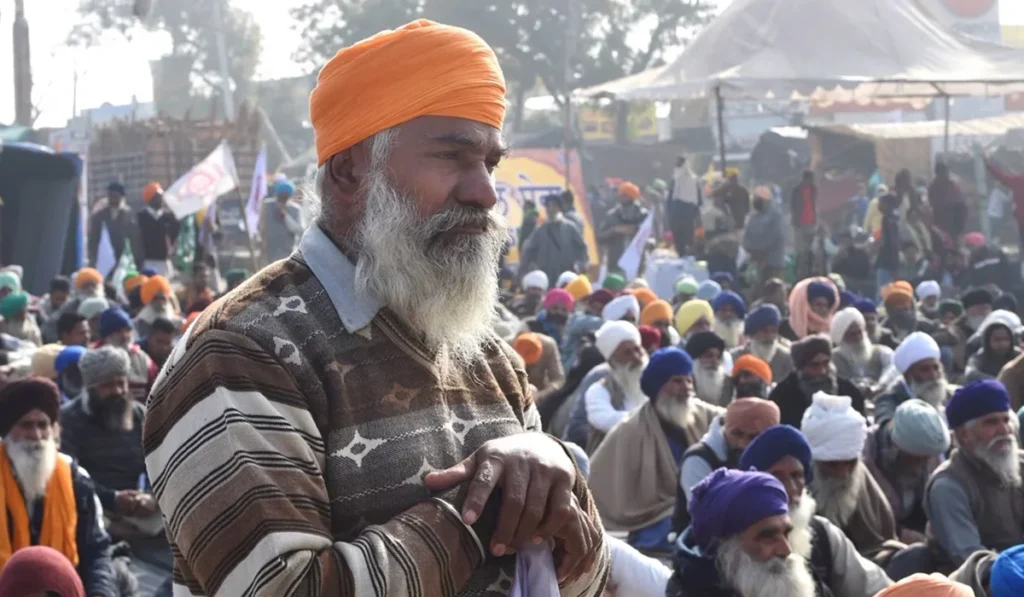
Every political party, when it approaches an election, speaks of farmer debt. What none of them discuss is how to make farmers structurally debt-free. A loan waiver clears the ledger once. It does nothing about the conditions that created the debt in the first place. When the next crop fails, when medicine costs rise again, when a flood takes the harvest, the farmer returns to the same lender. The slate is blank only briefly.
Punjab’s land and water have been under sustained stress for years. Soil fertility has declined. Groundwater has been over-extracted and, in many areas, contaminated. A good harvest is no longer something a farmer can count on as a default outcome. Under these conditions, a one-time waiver is roughly the equivalent of bailing out a boat without repairing the hole.
The deeper problem is that the political class treats freebies as solutions. Farmers who rely on free electricity and waived loans are being kept dependent, not helped toward independence. The goal should be to create agricultural conditions in which a farmer does not need to wait for government charity.
How Corporate Expansion Displaced Fertile Land
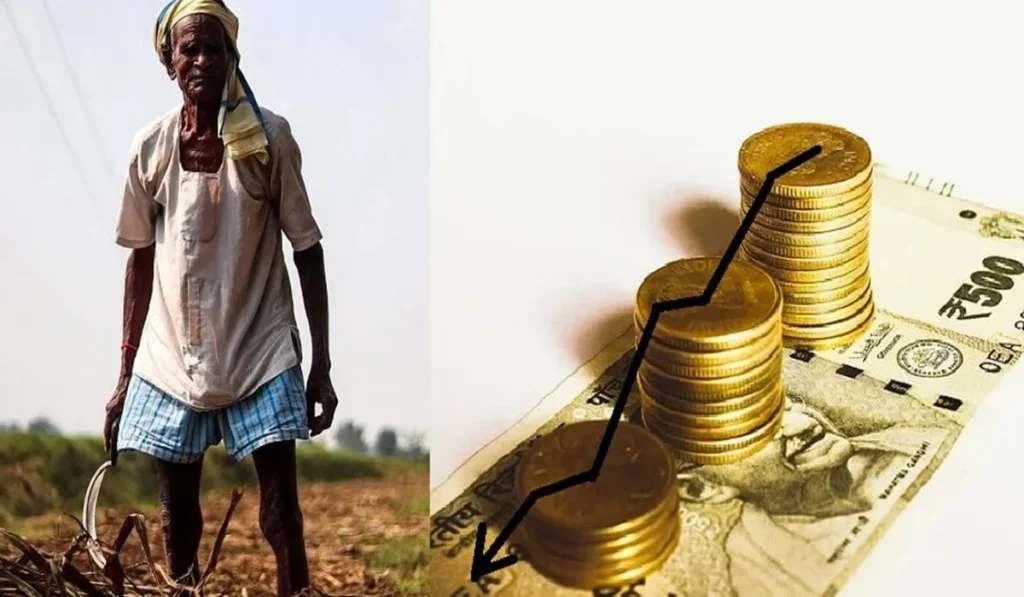
Over the past three to four decades, large portions of Punjab’s productive agricultural land have been consumed by highway construction, residential colonies, hotels, and industrial facilities. Farmers who sold land during this period received substantial sums. Many spent through those proceeds within a generation. Their children and grandchildren, accustomed to a certain standard of living and no longer in possession of the land, began borrowing.
This is not a story about individual failure. It is the outcome of a development model that extracted value from agricultural land, unevenly distributed it, and left behind communities with diminished productive capacity and rising expectations. Governments permitted and, in some cases, encouraged this conversion, without building an alternative economic base for the displaced farming households.
Government Schemes That Reached the Wrong People
The failure of state and central welfare schemes for farmers is not a secret. Larger, wealthier landholders or intermediaries have consistently captured programmes designed to reduce agricultural debt and raise farm incomes. In contrast, the ordinary farmer with two or four lakh rupees of debt received little or nothing. This has been documented repeatedly, yet the same scheme-delivery model continues.
What farmers actually received from these initiatives was, in many cases, false hope. They were shown figures and promises. The relief itself went elsewhere. The small farmer who needed a buffer against a poor harvest or a medical emergency had no cushion. He borrowed from wherever credit was available, formal or informal, and the debt accumulated.
Natural Disasters and the Absence of Compensation
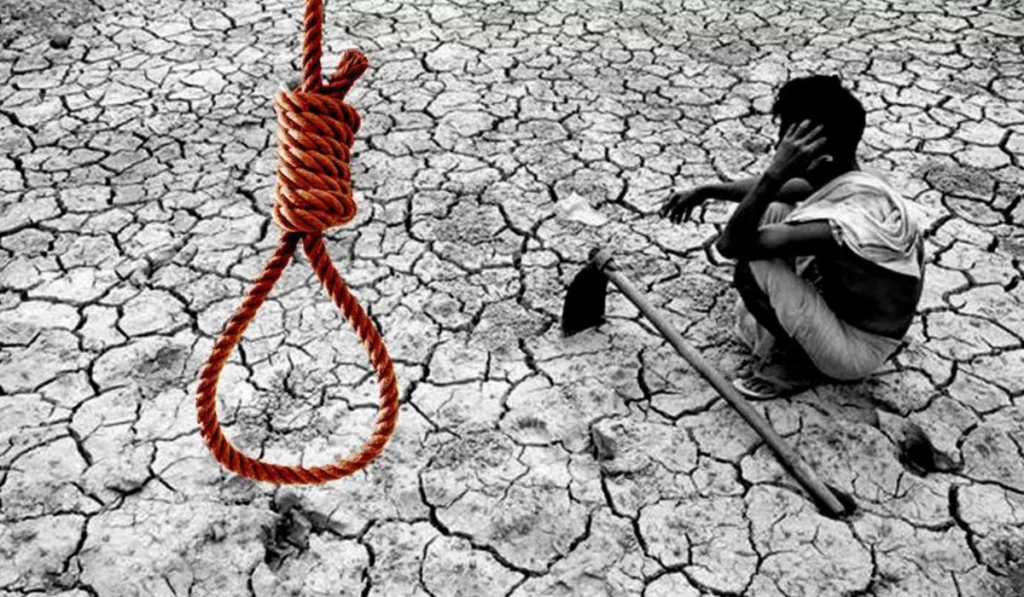
When crops are destroyed by floods, unseasonal rains, or pest attacks, the farmer alone absorbs the loss. In recent years, Punjab has experienced repeated flooding that has damaged agricultural land. Each flood season leaves behind depleted soil, damaged infrastructure, and farmers with no income for the cycle just lost.
Neither corporate input suppliers nor the state government treats crop loss as a liability they share with the farmer. Compensation, when it comes at all, arrives late and falls short of actual loss. The farmer borrows to replant, borrows to survive the gap, and enters the next season already behind.
Expensive inputs, particularly pesticides and fertilisers sold by private companies, have added to the cost structure of farming without reliably improving yields. The cost of cultivation has risen steadily while the price a farmer receives at the market has not kept pace. That arithmetic, sustained over years, produces debt.
The Market Failure at the Centre of the Crisis
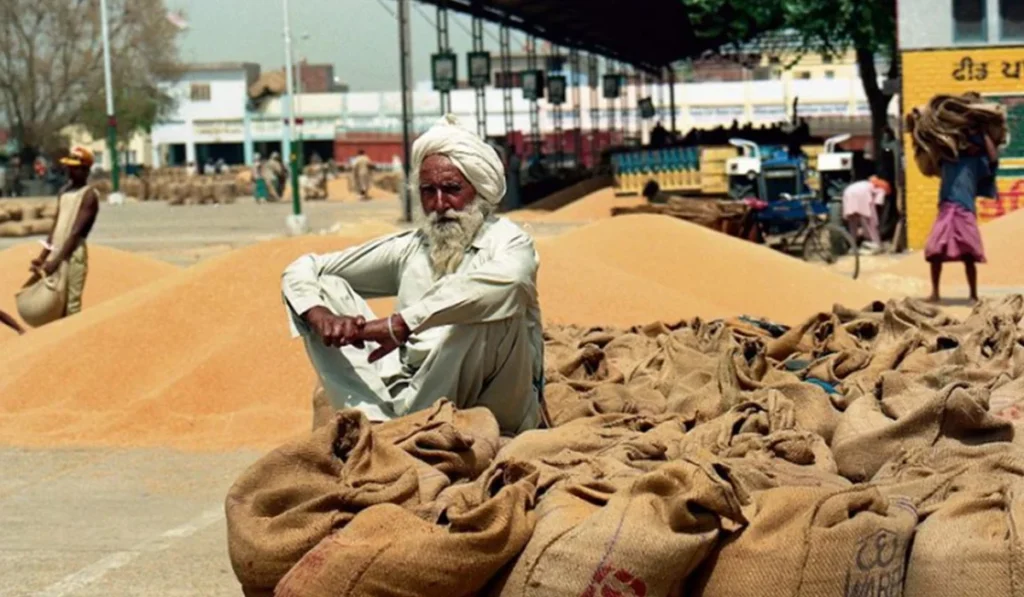
Farmers in Punjab once grew sugarcane, cotton, and a range of other crops in significant quantities. These have largely disappeared from the cropping pattern because farmers could not get adequate prices for them. The shift toward wheat and paddy was itself partly a response to guaranteed procurement, but even within that narrow pattern, farmers are price-takers with very little leverage.
The mechanism is straightforward and damaging. A farmer sells a crop at a price set by the buyer. That buyer, whether a trader or a corporate aggregator, moves the same commodity to market at three or four times the purchase price. The farmer who grew it earns less than his costs in a bad year and barely more in a good one. The entity that packaged and sold it accumulates wealth. This gap between the farm-gate price and the consumer price is not a market anomaly. It is the ordinary result of a system in which farmers have no power to set terms.
Farmers have been seen ploughing potatoes, maize, shimla mirch, and cotton back into the ground rather than harvesting them. This happens when the market price is lower than the cost of harvesting and transporting the crop. It is a visible measure of how completely the pricing system has failed the producer.
MSP Coverage Must Be Extended to All Crops
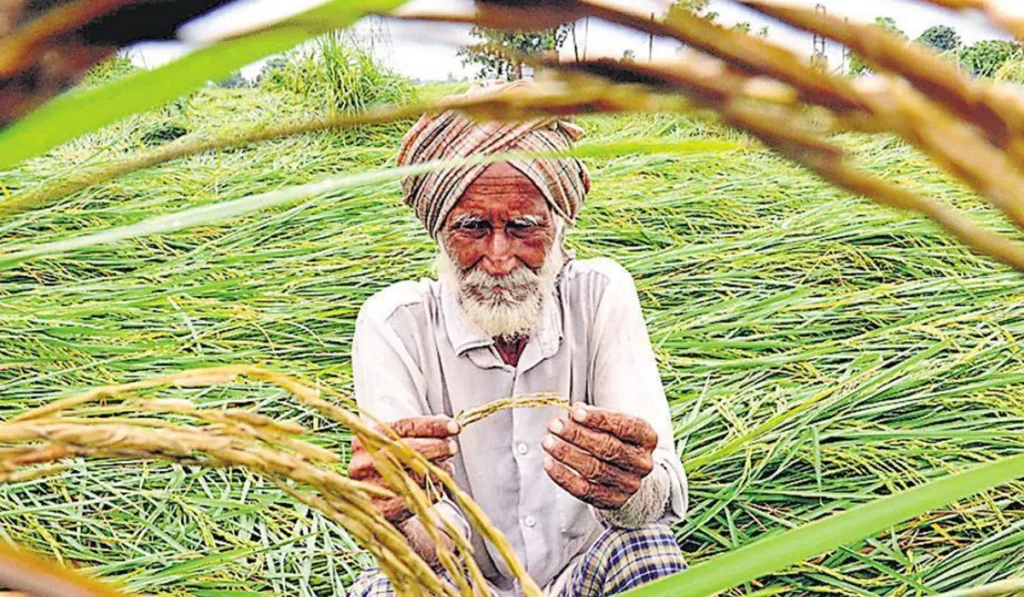
The most direct remedy available is to extend minimum support price coverage to all crops, not just wheat and paddy, and to enforce procurement at that price through functioning government markets. Without a guaranteed floor price, farmers growing any crop outside the protected two face the full risk of market volatility with no safety net.
Until governments build and maintain that floor across the full range of crops, and until those policies are implemented at ground level rather than announced on paper, the situation will not change in any structural way. Farmers will continue to borrow. Some will not survive the debt. The rest will keep farming on thinner and thinner margins, waiting for the next waiver that will clear the balance briefly before the cycle begins again.
The farmer who feeds the country should not need charity to survive the year. That he does is a policy failure, not a personal one. Addressing it requires genuine reform of procurement, pricing, input costs, and compensation for crop loss. Everything else is a lollipop.


Leave a Comment