

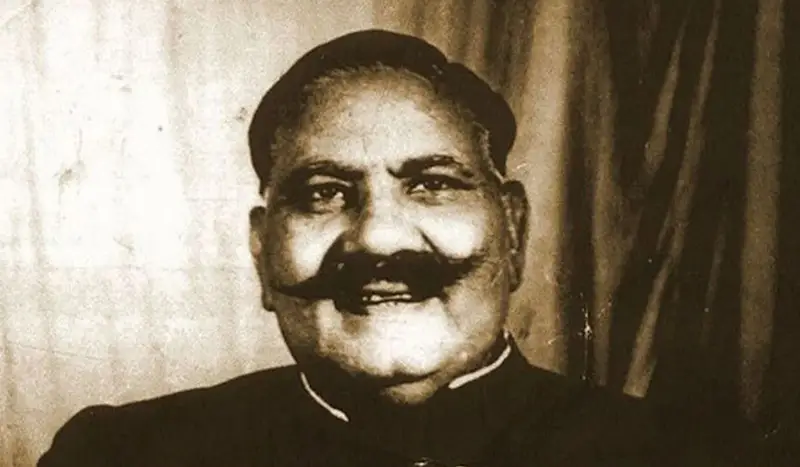

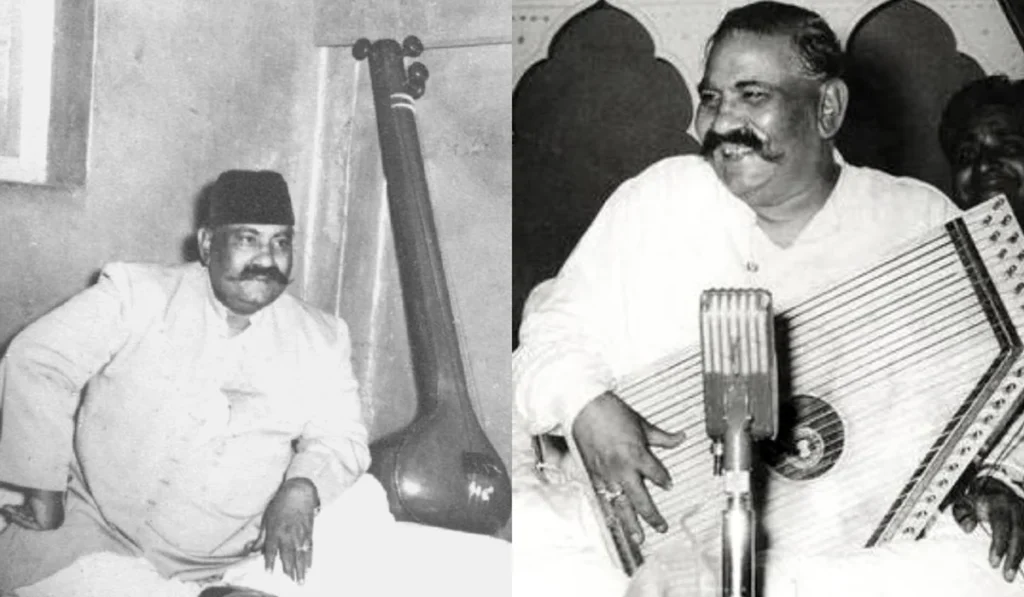
Listen to Bade Ghulam Ali Khan Sahib’s singing. In all his compositions, you can hear soft, delicate bandishes interwoven with powerful melodies. With a wrestler-like build and a moustache, Khan Sahib, when he sings “Ka Karun Sajni Ai Na Balam,” “Yaad Piya Ki Ai,” or “Bajuband Khul Khul Jaye,” it feels like a couplet proposing love. A unique feminine yet lively masculinity is the hallmark of his voice. This quality applies to his entire Patiala Gharana.
The Bade singers belonging to this family of Hindustani khayal singing became known for their melodies. The musical tradition of Delhi, Gwalior and Jaipur-Atrauli gharanas emerged in the last years of the nineteenth century and is credited with the inception of this gharana by Ustad Ali Baksh (1850 – 1920) and his friend Ustad Fateh Ali Khan. Some historians consider Ustad Ashiq Ali Khan as the father of the Patiala gharana, while others consider Ustad Tarnas Khan and others Ustad Jasse Khan. However, the majority is in favour of the pairing of Ali Baksh and Fateh Ali Khan.
During the British rule, the Mughals fell, and many musicians left the Delhi court and migrated to various princely states of Punjab in search of patronage. Apart from Patiala, they found refuge in places like Nabha, Sham-Chaurasi, Talwandi, Kapurthala and Lahore.
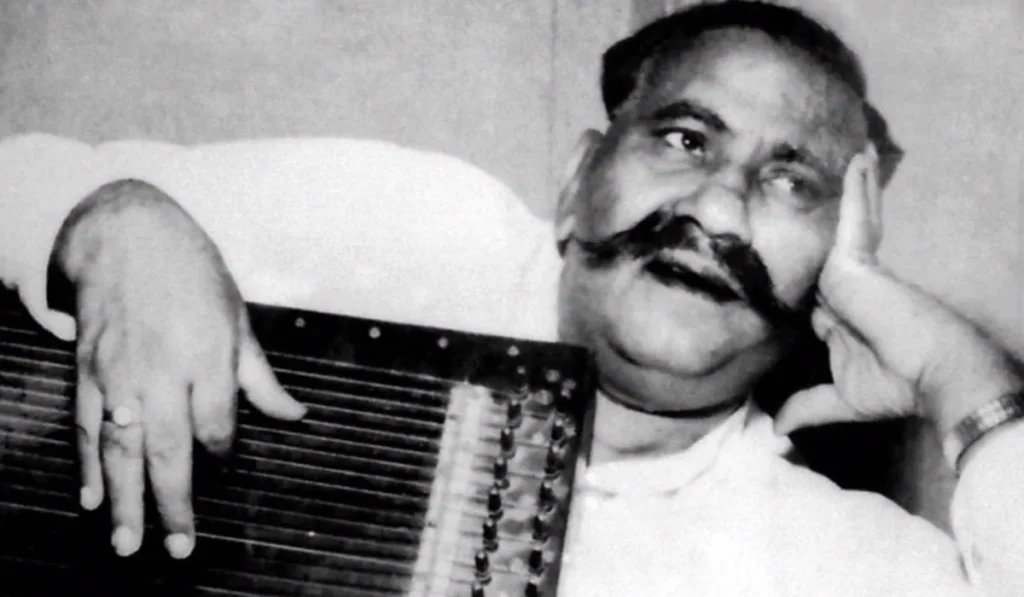
The magnificent compositions composed in fast rhythms and fast rhythms are the greatest beauty of the Patiala Gharana singing. In this singing style, there is a tradition of creating miracles with the help of complex combinations of melody, rhythm and words. Today, many big names of classical music are found associated with the Patiala Gharana in some way or the other.
The duo of Ali Bakhsh and Fateh Ali Khan gained fame all over the world under the name of Alia-Fattu. These two founders of Patiala singing were also known as Jarnail and Karnail. Their work was seen in the same way as the general-colonel of the army leads the army with their bravery.
To preserve their charisma for generations, enchanting compositions have been composed in praise of their tunes. Gwalior Gharana singer Ramkrishna Buwa has composed a composition in Raag Hamir:
“Guni Jan Me Jab Gave
Alia-Fattu, Kehat Gun Paave”
Of this Jarnail-Karnail duo, Ustad Fateh Ali Khan was known as the Khalifa of Taal, i.e., the Captain of the tune. There is a wonderful composition in Raag Adana:
“Taan Kaptan Kahayo Jag Me Fateh Ali Khan
Taan Kaptan Jab Gave Tab Guni Rijhave Guni Bhaye Meharbaan
Taan Kaptan Ki Aisi Firat Hai Jaise Arjun Ji Ke Baan”
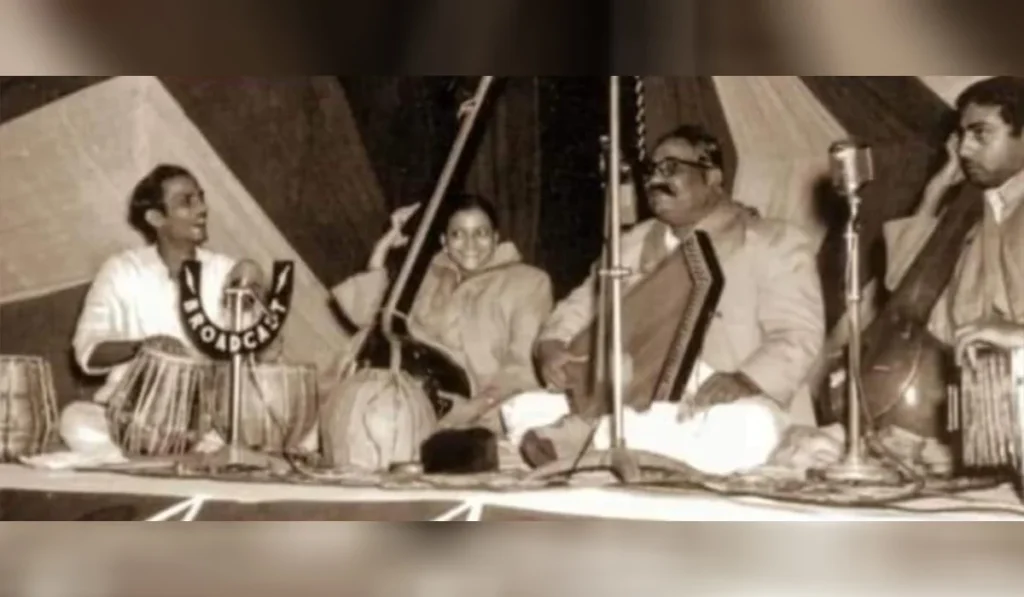
Twenty-five years ago, Music Today released an album, Great Voices of India. The Rajan-Sajan Mishra brothers have sung this second verse beautifully. While listening to it, it is natural to remember Taan-Kaptan.
Most people, like me, don’t even know the ABCs of folk music. So what if Tansen couldn’t be made? Kansen can be made.


Leave a Comment