
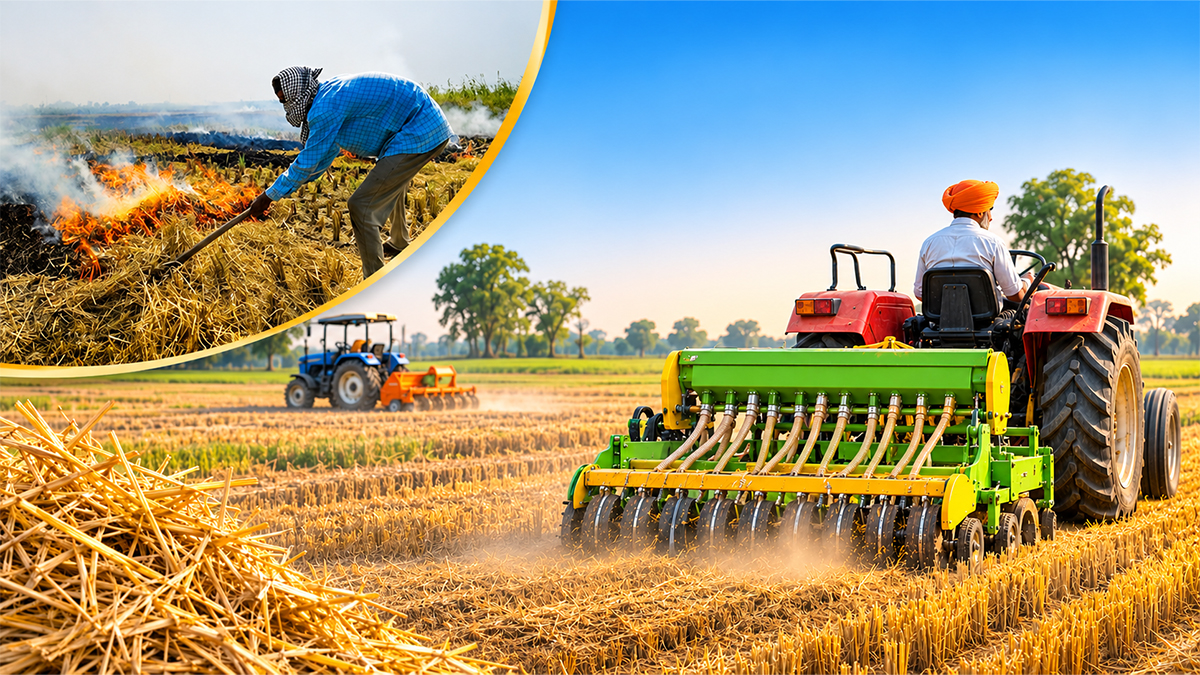

According to PAU experts, mixing crop residue into the soil will improve soil health, reduce the need for fertilizers, and also curb pollution.
The solution to the problem of stubble burning in Punjab is not limited only to reducing pollution. According to experts from Punjab Agricultural University (PAU), scientifically managing crop residue can increase wheat yield by 3 to 13 percent. Along with this, it can also help in improving soil health, reducing the need for fertilizers, and increasing water-use efficiency.
PAU Principal Soil Physicist Dr. M.S. Kahlon said that instead of burning paddy and maize residue, keeping it in the field or mixing it into the soil is an important step towards sustainable agriculture. According to him, continuously mixing the residue into the soil can gradually improve the amount of organic carbon in the soil, along with increasing the wheat yield.
Beneficial for the environment along with the farmers

Soil Physicist Dr. Naveen Gupta said that the scientific management of crop residue is beneficial for both farmers and the environment. This preserves the nutrients present in the soil, improves soil quality, and can increase water-use efficiency.
Paddy and wheat are cultivated in about 32 lakh and 36 lakh hectares respectively in Punjab. More than 2 crore tonnes of paddy straw is produced every year in the state. Due to a short window of only 15 to 20 days between paddy harvesting and wheat sowing, farmers face the challenge of managing the stubble rapidly.
Nutrients are also destroyed by burning stubble
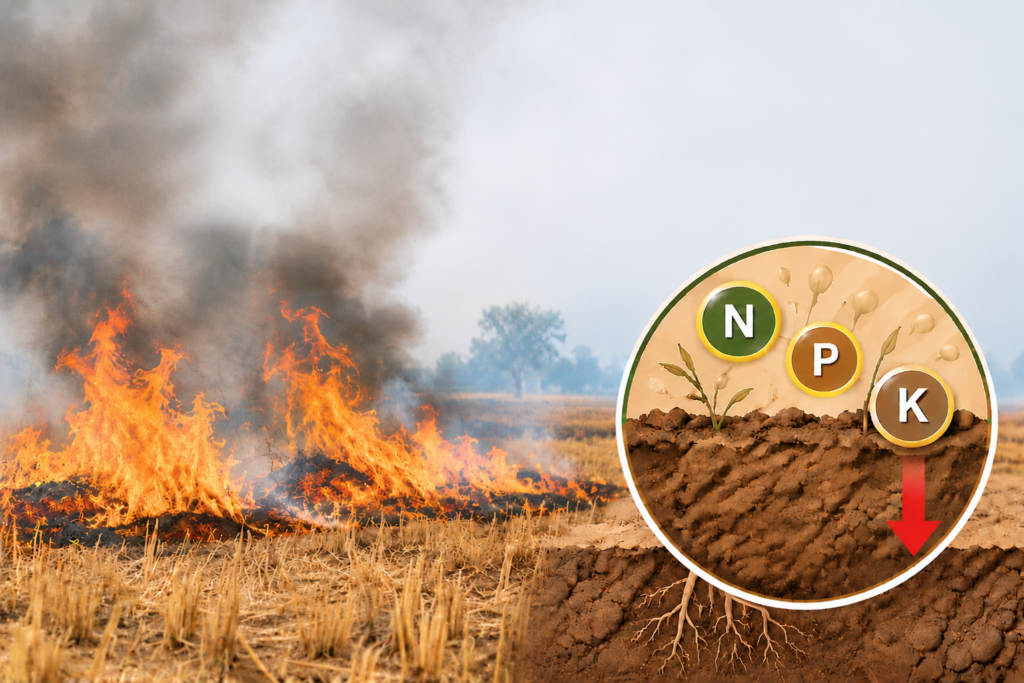
According to experts, burning one tonne of paddy straw releases about 1,460 kg of carbon dioxide along with other harmful gases into the environment. Apart from this, burning stubble also destroys valuable nutrients present in the crops and microorganisms beneficial to the soil.
It is estimated that the burning of crop residue in Punjab emits about 66 lakh tonnes of carbon dioxide-equivalent gases every year.
Wheat can be sown using machines without burning stubble
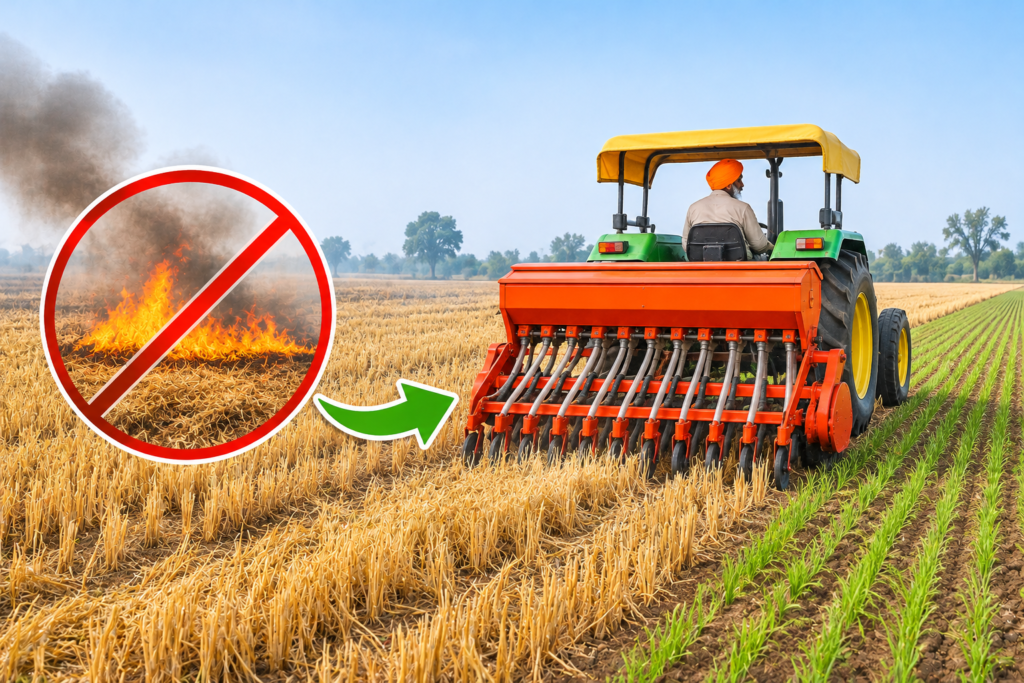
According to PAU, wheat can be successfully sown in standing paddy residue without burning the paddy straw. For this, machines like the Happy Seeder, Super Seeder, and PAU Smart Seeder can be used. Before this, it is necessary to properly chop and spread the stubble in the field.
According to experts, keeping paddy straw in the field or mixing it into the soil for more than three years has shown an improvement in wheat yield and soil health. This can also reduce the need for chemical fertilizers in the subsequent years.
Yield can also increase with maize residue
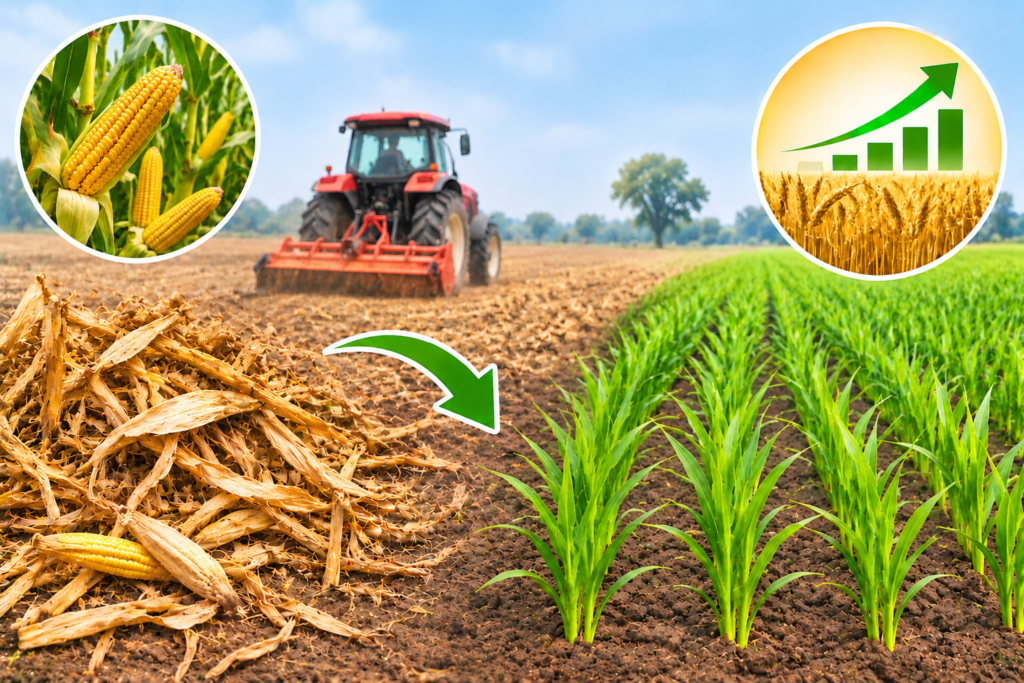
Citing the maize-wheat crop cycle, experts said that mixing maize residue into the soil can increase wheat yield by about 10 percent. Along with this, the amount of organic carbon in the soil can also increase by about 13 percent compared to a residue removal system.
Therefore, instead of considering stubble merely as waste or a burden, it can be used as a valuable resource for the field. Scientific management can not only provide yield and soil health benefits to farmers but also help in reducing the air pollution caused by stubble burning.



Leave a Comment