
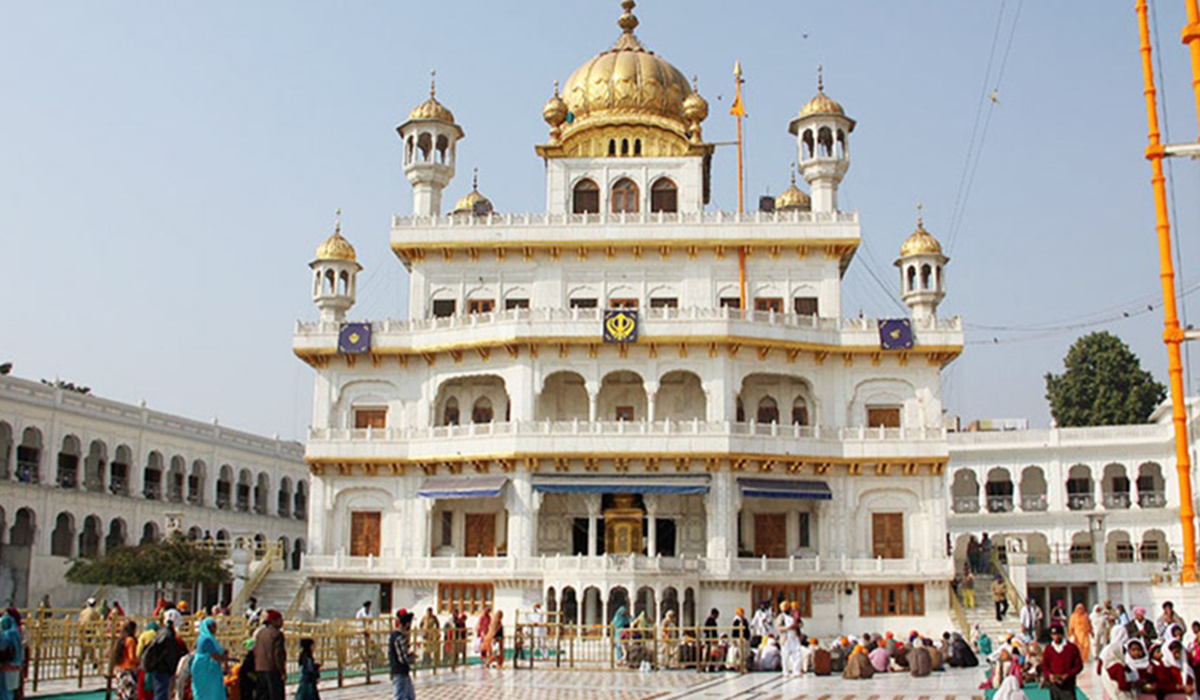

A Question Requiring Respect, Not Rhetoric
The debate around Sri Akal Takht Sahib and constitutionally elected representatives requires restraint, respect and clarity, not sensational headlines or adversarial framing. For Sikhs, Sri Akal Takht Sahib is not merely an institution; it is the highest temporal seat of the Panth, carrying immense moral, historical and spiritual significance. Elected representatives, at the same time, function within the constitutional framework of India, which prescribes their duties, powers and limitations. The real question is not confrontation between faith and the Constitution, but how to maintain a proper balance between the Sikh religious domain and the constitutional domain of the State.
The Immediate Background
The controversy has arisen from proposed legal provisions concerning sacrilege, especially offences relating to Sri Guru Granth Sahib and other sacred scriptures. The pain caused by repeated incidents of beadbi is real and profound, and the demand for stricter punishment is entirely understandable. But the matter becomes more complex when the State, while strengthening punishment, appears to enter areas connected with Sikh Rehit Maryada — the handling of Sri Guru Granth Sahib, printing, custody, transportation or internal religious practice. The State can punish sacrilege, legislate criminal offences, and maintain public order. It cannot become the interpreter of Sikh Maryada. That is the essential line, thrown into sharp relief by the events of 2 December 2024, and again when MLAs were summoned before Sri Akal Takht Sahib on 29 June 2026. That authority is spiritual, moral and panthic in character — it is not identical to the legislative sovereignty of a constitutional Assembly.
Two Domains, One Constitutional Framework
Sri Akal Takht Sahib occupies a unique place in Sikh history and consciousness. Established by Guru Hargobind Sahib, it embodies the doctrine of Miri-Piri — the inseparable relationship between spiritual authority and temporal responsibility. No Sikh can ever disregard its sanctity; on matters touching Sikh Maryada and the honour of Sri Guru Granth Sahib, its role is central and unavoidable. But this does not make the Punjab Vidhan Sabha subordinate to it — the two occupy distinct domains, one moral-panthic, the other constitutional-legislative, and confusion arises only when the two are treated as one.
Articles 25 and 26 supply the framework for keeping them distinct. Article 25 guarantees freedom of conscience and the right to profess, practise and propagate religion, subject to public order, morality and health. Article 26 gives every religious denomination the right to manage its own affairs in matters of religion, subject to the same limits. Courts applying this scheme have long relied on the “essential religious practices” test, first articulated in the Shirur Mutt case (1954), to separate what is genuinely religious from what is secular or administrative and therefore within the State’s legislative competence. That logic maps onto the distinction this article draws: doctrine and Maryada belong to the religious domain; punishment belongs to the legislature and courts. Where the two overlap, consultation and constitutional prudence are required, not the unilateral assertion of either domain over the other.
Punishment and Maryada: Distinct, Not Opposed
The Punjab Legislature alone is competent to enact or amend criminal law within constitutional limits. If punishment for sacrilege is inadequate, it is for the legislature — not Sri Akal Takht Sahib, not the SGPC — to enhance it. Equally, the legislature should not frame religious codes for Sikhs. A sound approach strengthens penal provisions against sacrilege while leaving the internal Sikh code of conduct untouched, and wherever a provision touches the Maryada of Sri Guru Granth Sahib, recognised Sikh institutions must be respectfully consulted. Consultation is not surrender. It is responsible law-making.
Can Elected Representatives Be Summoned?
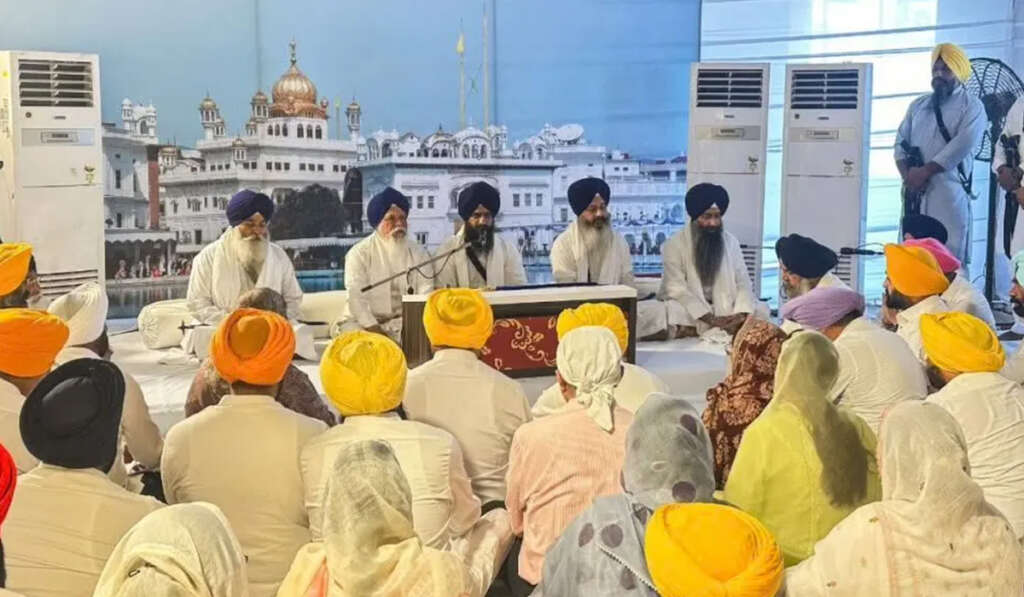
The more delicate question is whether Sri Akal Takht Sahib can call elected representatives before it, as it did on 29 June 2026. A Sikh MLA or Minister does not cease to be a Sikh upon taking oath, and in that personal capacity may well be morally answerable to Sri Akal Takht Sahib on matters of Sikh interest. But the Punjab Vidhan Sabha as an institution is summoned only in the manner the Constitution prescribes: by the Governor, presided over by the Speaker, functioning under legislative rules. A gathering of MLAs — even all 117 of them — is not thereby a session of the House; it may express sentiment or give assurances, but it cannot legislate.
The distinction matters procedurally as well. A Private Member’s Bill may register concern or open debate, but it lacks the departmental vetting and Cabinet ownership that criminal law reform of this magnitude ordinarily requires; that institutional weight cannot be conferred by moral authority, however deeply respected. Whatever assurances are given before Sri Akal Takht Sahib, the substantive legal work — drafting, Cabinet approval, introduction as a Government Bill, debate and passage — must still occur within the Assembly according to constitutional procedure.
Consultation, Not Dictation
A broad consensus has emerged among responsible Sikh voices: the legislature may enhance punishment for sacrilege, but may not regulate Sri Guru Granth Sahib or Sikh Rehit Maryada; the framing of “Sri Akal Takht Sahib versus the Constitution” is itself misconceived; and Sri Akal Takht Sahib did not oppose stricter punishment — it flagged flaws in the draft bill and helped de-escalate what could have become a far more fraught situation. My own position aligns with this: the State can and must punish sacrilege firmly, but must not become the arbiter of Maryada. What would be constitutionally problematic is mechanical compliance without deliberation; what is entirely proper is consultation followed by the Cabinet’s own reasoned decision.
Answering a Fair Objection
A more serious objection deserves engagement. If Sri Akal Takht Sahib’s moral suasion can shape a Punjab Government Bill, does this not create an Article 14 asymmetry relative to faiths whose bodies possess no comparable convening authority — should not an equal law protect the Bible, the Bhagavad Gita, the Quran and other venerated scriptures, and does its absence not suggest unconstitutional preference?
The objection assumes these scriptures occupy an equivalent theological position, and they do not. Each is held sacred, authoritative and revealed within its own faith — a reverence commanding full respect. But none is formally invested with the office and personhood of a living Guru. In 1708, Guru Gobind Singh conferred Guruship upon the Granth itself, ending the line of personal Gurus and installing the scripture as Guru in perpetuity — not a book containing the Guru’s word, but the Guru in living, embodied form, seated, rested and attended upon accordingly. No comparably codified doctrine of personal embodiment attaches to the other scriptures within their own traditions.
This is not a Sikh claim of superiority but a description of doctrine on its own terms — and it is exactly this that Sikh sacrilege law protects: an offence against Sri Guru Granth Sahib is, in Sikh belief, an offence against a living Guru, not merely a text. Article 14 requires like cases to be treated alike, not unlike claims flattened into sameness. Where any community can demonstrate a comparable claim of living embodiment, that claim would merit equal legislative seriousness. Its absence elsewhere is not discrimination — it is an accurate reading of each faith’s own doctrine.
Guarding Against a Mischievous Narrative
A subtle but dangerous narrative needs to be guarded against: the suggestion that Sikhs, through their reverence for Sri Akal Takht Sahib, are placing themselves above the Constitution. This is a distortion. The temporal authority of Sri Akal Takht Sahib belongs entirely to the Sikh panthic and religious domain, rooted in Sikh history, doctrine and collective conscience — it has never been advanced, by any recognised Sikh institution, as a claim to constitutional immunity or a challenge to State sovereignty.
Careless or motivated commentary can misrepresent Sikh reverence for Sri Akal Takht Sahib as separatist or fissiparous. That would be unfair, inflammatory, and would misdescribe the record. Sikhs have participated fully in India’s constitutional democracy — as citizens, legislators, soldiers, judges, civil servants and public representatives — since its founding. Respect for Sri Akal Takht Sahib and loyalty to the constitutional order have coexisted comfortably throughout that history, and this issue must not become a vehicle for painting Sikhs as being in conflict with the Constitution they have helped build and defend.
Avoiding the False Framing
Two extremes should be avoided. It would be insensitive and historically ignorant to say Sri Akal Takht Sahib has no role in a matter touching Sri Guru Granth Sahib. It would be equally mistaken to say an elected legislature is bound to enact whatever any external body demands or desires. The accurate formulation lies between: Sri Akal Takht Sahib is supreme within the Sikh religious and panthic domain; the elected legislature is supreme within its own legislative domain, subject to judicial review. Where a matter concerns criminal punishment, the legislature must act. Where it concerns Maryada, the Panth must guide. Where the two overlap, consultation must precede legislation.
In summary
This need not be described as “Sri Akal Takht Sahib versus elected representatives.” The accurate framing is simpler: Sri Akal Takht Sahib exercising rightful authority within the panthic domain, elected representatives exercising rightful authority within the constitutional domain, and respectful consultation wherever the two meet.
Sikh MLAs may appear before Sri Akal Takht Sahib in their personal capacity as Sikhs, and there is nothing irregular in this. The Punjab Vidhan Sabha, however, can be constituted and summoned only as the Constitution prescribes — a safeguard protecting the legislative process for every institution and community alike, carrying no implication about Sri Akal Takht Sahib’s own standing. A gathering of MLAs is not a session of the House. A moral appeal is not a legislative act. A panthic concern must be honoured, but a law must still be made through constitutional procedure.
That is the path of balance. It honours Sri Akal Takht Sahib. It reflects genuine respect for Sikh sentiment. It preserves the integrity of the Constitution. And it allows Punjab to respond firmly to sacrilege — without manufacturing an unnecessary, and wholly avoidable, conflict between faith and law.


Leave a Comment