

A unique flavour of the colours, melodies, and words of life
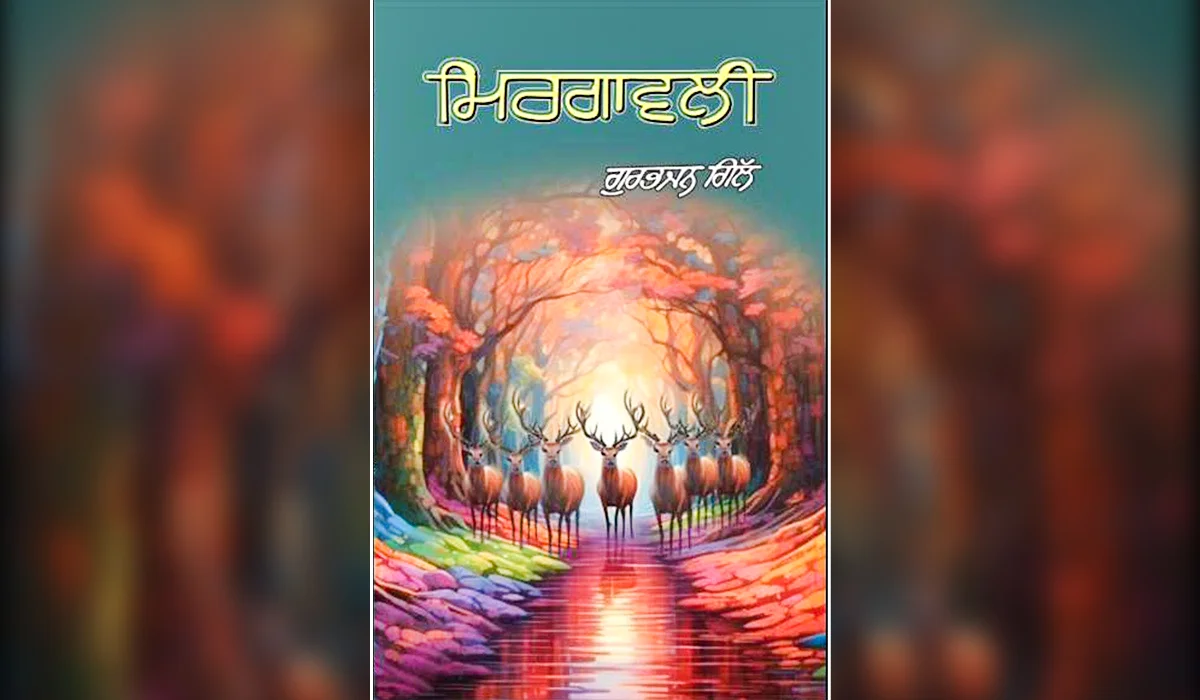
I got the opportunity to read and appreciate Mirgaavali, the ghazal collection of Gurbhajan Singh Gill, the well-known all-round literary personality of Punjabi literature, art, and culture. The discussion around this freshly printed edition in literary circles reflects the popularity of Mirgaavali and Gurbhajan Gill among readers. The cover page, adorned with Asif Raza’s artwork, Imroz’s calligraphy, a “herd of deer,” and heart-touching colours, adds great beauty to the spirit and flavour of the ghazals included in this collection.
Poetry, ghazal, or any creative work offers a graceful expression of the stirrings of the human heart, and its true significance lies in the perspective contained within it. Gurbhajan Gill’s ghazal is the spontaneous flow of his emotions and feelings. There is aesthetic delight and a positive message in the work, which leaves a deep and lasting impact on the reader’s mind. The choice of words and their magic leave a strong impression on the reader. The reader, almost naturally, begins to converse with the work and walks along with it. That is the mark of a master creation by a good writer.
The vast literary world of Gurbhajan Gill…

The eminent Punjabi poet Gurbhajan Gill, dedicated to Punjab, Punjabi, and Punjabi identity, needs little introduction. The circle of people who know and admire him is wide. He is a versatile and capable writer who has left a distinct mark in songs, ghazals, poetry, and prose. Along with this, he is also fully active as a literary commentator, editor of agricultural science literature, and patron of rural sports and cultural fairs. He is the current Chairman of the Punjabi Lok Virasat Academy, Ludhiana. Honoured with many awards, this pole star of Punjabi literature has made and continues to make a valuable contribution to literature. Gurbhajan Gill, “Punjabi from the depths of the soul,” carries creative energy in his very genes, and it keeps expressing itself naturally. Walking a literary journey of more than half a century, he has inspired many new poets and lovers of literature to move alongside him. This caravan of literary companions keeps growing and moving forward.
Even a quick glance at Gurbhajan Gill’s writing reveals the depth of his creative strength. His first poetry collection, Sheesha Jhooth Bolda Hai, appeared before readers in 1978. Sixteen poetry/ghazal collections, five poetry/ghazal volumes edited by others, one prose work, one Hindi poetry collection, editing of two song collections, and the publication of six poetry collections in Shahmukhi, all symbolize Gurbhajan Gill’s popularity in East Punjab, West Punjab, and the global Punjabi world.
To gather a sea-like personality such as Gurbhajan Gill into a small vessel is beyond my capacity. I am glad that whenever I speak with him, I feel as though my elder brother is talking to me in the colours, melodies, and flavours of vibrant Punjab. He speaks strongly against the decline of human values, injustice, and exploitation. For the welfare of all humanity, he speaks of optimism, high spirits, positive thinking… conversations… and reflections. He is a sweet-spoken, warm, loving, and learned personality.
Mirgaavali… a unique flavour of the colours, melodies, and words of life!
This 120-page ghazal collection, adorned with a beautiful title page, has been dedicated by Gurbhajan Gill in the following way, in the name of the love he received for word-creation during his literary and teaching life:
Rang, raag te shabad mukammal zindagi andar ras bharde ne.
Inhan ton bin rooh de panchhi, gagan udaari kad bharde ne.
Within the soul of the ghazal collection Mirgaavali, one can clearly glimpse the writer’s wisdom, sensitivity, loving spirit, and the style of a fearless mind. The words that express experience, colour, and flavour stir the soul; they feel beautiful and, like the turning wheel of time, inspire one to keep moving towards one’s destination and to lay down finer paths.
Friends, whether for some reason or even without any reason, modern man keeps wandering in search of himself. He does not look within. His feet too have been uprooted from the ground. When a bird looks down from great heights, the whole world appears small and far below. In difficult times, when someone falls from the sky, only mother or Mother Earth catches him. When one stumbles, from the silent mind or the mouth comes, of its own accord, the cry: “Hai maa.” The following beautiful lines from the ghazal Satt Samundar Paar say this:
Satt samundar paar gawaache phirde haan.
Khud nu labhde phirde kinne chir de haan.
Maan hi chete aave jaan phir dharti maan,
Vich museebat jad vi aapan ghirde haan.

Leave a Comment