
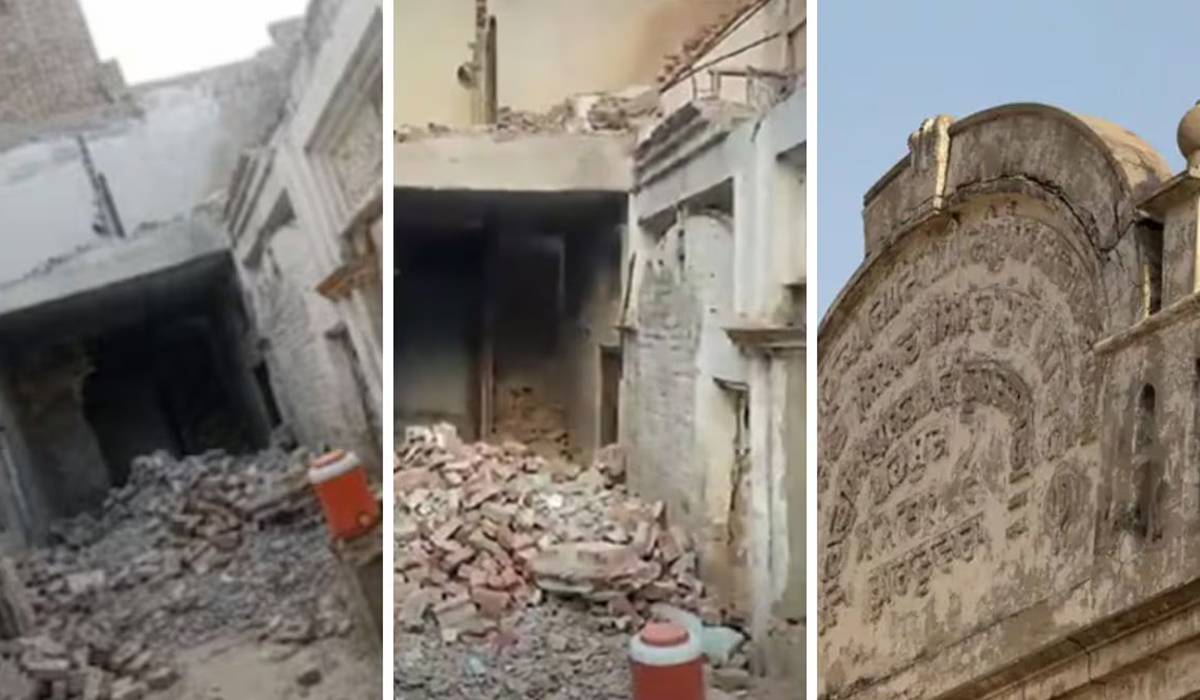

The demolition of a historic gurdwara in Pakistan’s Punjab province last week has sparked protests from the Sikh community and drawn strong condemnation from India.
More than 125 years old, Gurdwara Sri Guru Singh Sabha Sahib in Farooqabad was reportedly demolished on June 24 by a local businessman without obtaining the mandatory no-objection certificate from the authorities. The incident came to light after members of the Sikh community staged protests against the demolition.
Pakistan’s Punjab Minister for Minorities Affairs, Ramesh Singh Arora, visited the site on Wednesday along with senior district officials, representatives of the Auqaf Department and the local administration. Following an inspection, he ordered the immediate restoration of the historic gurdwara and reiterated the provincial government’s commitment to protecting the rights of religious minorities and preserving places of worship.
India strongly condemned the demolition. Responding to media queries, Ministry of External Affairs spokesperson Randhir Jaiswal described the “targeted act of vandalism against a revered Sikh shrine” as “highly deplorable”. He said, “Its destruction, along with reports of no meaningful action being taken by local authorities or the Evacuee Trust Property Board (ETPB), is a matter of grave concern.”
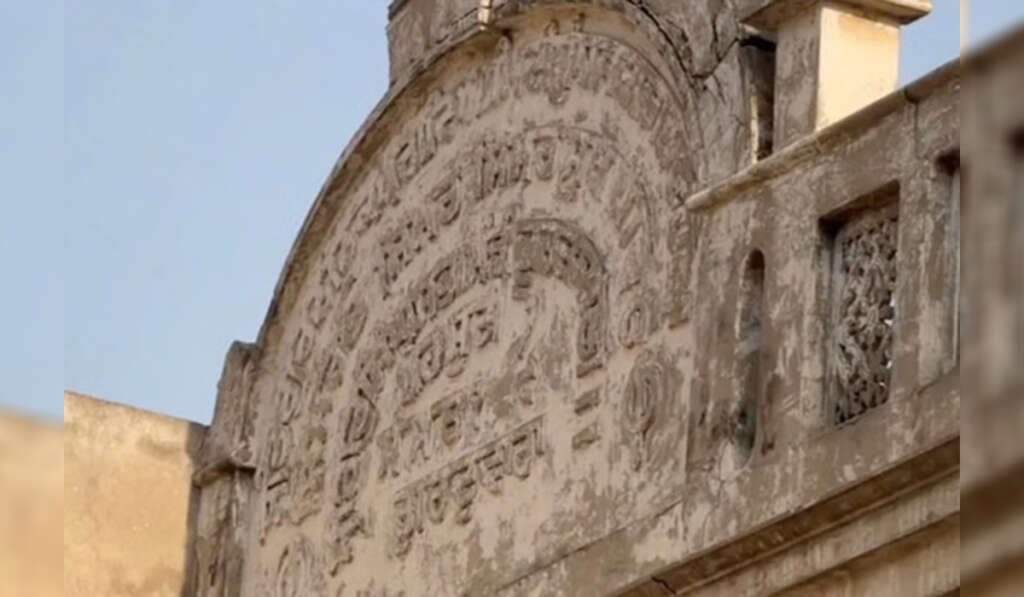
Jaiswal said the demolition was not an isolated incident and alleged that the systemic targeting of religious minorities and their places of worship in Pakistan continued unabated. India called upon Pakistan to conduct a swift investigation, punish those responsible, and fulfil its obligations to ensure the safety and security of minority communities and their religious sites.
A delegation of the Delhi Sikh Gurdwara Management Committee (DSGMC) met officials of the Ministry of External Affairs on Wednesday, seeking India’s intervention. In a memorandum, the DSGMC urged the government to lodge a strong diplomatic protest with Pakistan, expressing the Sikh community’s concern over what it described as repeated attacks on minority religious sites and stressing the need to safeguard religious freedoms.
In a post on X, Bharatiya Janata Party leader Amit Malaviya accused Pakistan of failing to protect its Sikh minority. “This is not merely an act of vandalism; it is a stark reminder of the systematic neglect and deliberate erasure of Sikh heritage in Pakistan,” he said. He further alleged that Pakistan’s hypocrisy was evident: “On one hand, Pakistan’s agencies seek to mislead and provoke Sikhs against India. On the other, the Pakistani state is allowing the destruction of Sikh history, faith and identity within its own borders.”
The demolition comes barely two weeks after an elderly Sikh couple was shot dead inside a gurdwara in Babu Mohalla in Pakistan’s Khyber Pakhtunkhwa province. The couple served as caretakers of the shrine in Mardan district, about 60 km northwest of Peshawar. Police have arrested a suspect, though the motive remains unclear.
Bhupinder Singh, a Sikh representative from Nankana Sahib, claimed in a video message posted on social media that the Farooqabad demolition was not an isolated incident. He alleged that Gurdwara Chobacha Sahib in Dharampura, associated with the sixth Sikh Guru, had also been demolished earlier without any meaningful action by the ETPB.

According to Singh, Gurdwara Sri Guru Singh Sabha Sahib occupies an important place in Sikh history as one of the centres from which the Singh Sabha Movement gained momentum. The movement, which began in Amritsar in 1873 and was formally organised in Lahore in 1879, played a pivotal role in the revival of Sikh religious and cultural identity during the late nineteenth century.
Researchers estimate that before Partition there were well over 100 historic Sikh gurdwaras in what is now Pakistan. Around 130 Sikh shrines in West Pakistan were catalogued by Mohammad Waliullah Khan in 1962. Today, only about 20 to 24 remain functional as gurdwaras, while many others have fallen into disuse, been repurposed, lie in ruins, or are undergoing restoration.
Pakistan is home to some of Sikhism’s holiest shrines. Nankana Sahib, near Lahore, is the birthplace of Guru Nanak, the founder of Sikhism, while Gurdwara Darbar Sahib Kartarpur, near the India-Pakistan border, marks the place where Guru Nanak spent the final years of his life.
India has called upon Pakistan to expeditiously investigate this matter and punish the perpetrators. It has also urged Pakistan to discharge its obligations to ensure the safety, security, and well-being of its minority communities and their places of worship, and put a decisive end to the prevailing environment of sectarian violence and religious intolerance.
Disclaimer: The views expressed in this article are solely those of the author and do not reflect the views or opinions of Sadda Punjab or any affiliated organization.

Leave a Comment