
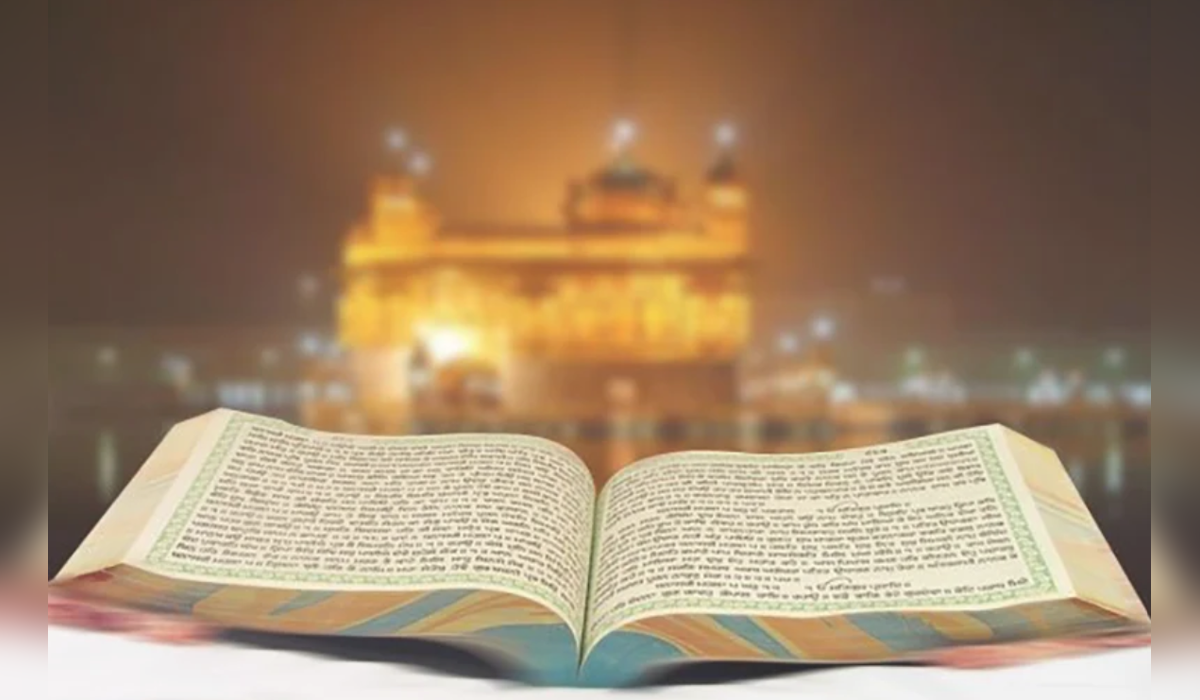

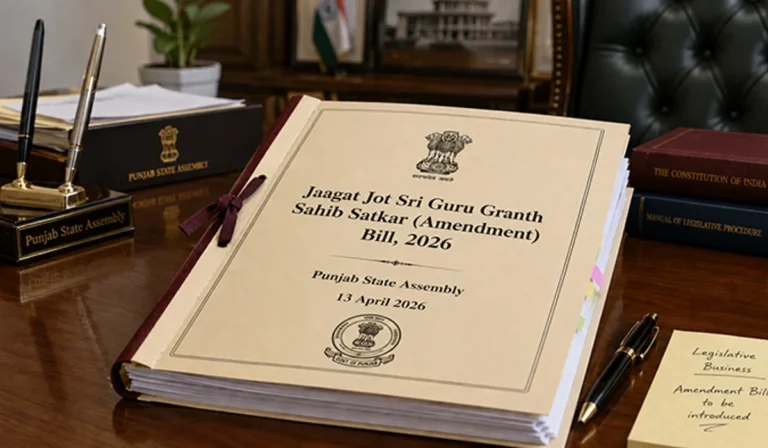
The Akal Takht has prepared a set of objections and recommendations to the anti-sacrilege law in Punjab, according to media reports. The Jaagat Jot Sri Guru Granth Sahib Satkar (Amendment) Act, 2026, which came into force in April this year, has generated political and religious controversy. The key objections are:
- Replacement of “Bir/Birs” with “Saroop/Saroops”
The Akal Takht objected to removing the traditional term “Bir,” used in Sikh Rehat Maryada for centuries to refer to a physical copy of the Guru Granth Sahib, which is also regarded as a living Guru by the faithful. It argued that terminology related to Sri Guru Granth Sahib must be decided by the Khalsa Panth, not the government.
- Definition of “Custodian”
The Takht argued that no human can be “custodian” of the Guru, and decisions about who holds a Saroop are purely internal Sikh matters already overseen by Sri Akal Takht Sahib.
- Central Register with Unique Identification Numbers (UIN)
The Akal Takht rejected the provision for assigning unique numbers to each copy of the holy book for creating a central register, describing it as tampering with their sanctity.
- Public online disclosure of records
The Takht raised strong objections to the provision on uploading custodian/location records on the SGPC website, citing privacy risks and potential misuse.
- Duties of custodians
The Takht has demanded complete removal of the clause that defines the duties of custodians claiming it is government interference in internal Sikh religious administration.
- Punishment under Clause 7(5)(1)
The Takht has demanded clearer safeguards and a more precise definition of the offences to prevent the misuse of the provision for personal vendettas and false cases.
- Rule-making power under Section 6A
The Takht has demanded mandatory consultation with SGPC or Akal Takht Sahib before any rules are finalised.
- Terminology concerns
The Takht has objected to words like “store,” “storage,” and “supply” in reference to the holy book as disrespectful. Instead, it wants terms like “Sewa Sambhal,” “Prakash,” “Sukhasan,” and “Sachkhand” to be used.
- Handling of sacrilege cases
The Takht has recommended establishment of dedicated fast-track courts for expeditious trial of sacrilege cases and demanded that damaged Saroops be cremated respectfully following proper Sikh procedure.
- Final assertion of authority
The Akal Takht reasserts that only it has authority to determine maryada (the panthic code of conduct) concerning Sri Guru Granth Sahib and the Sikh Sangat, rejecting any state legislative role in religious regulation.
- Booking the dera or sect head
The head of the Akal Takht has recommended that if a follower of an ‘anti-Sikh dera’ (sect) commits sacrilege intentionally or as part of a conspiracy, the head of that dera should also be named in the FIR.

Leave a Comment