

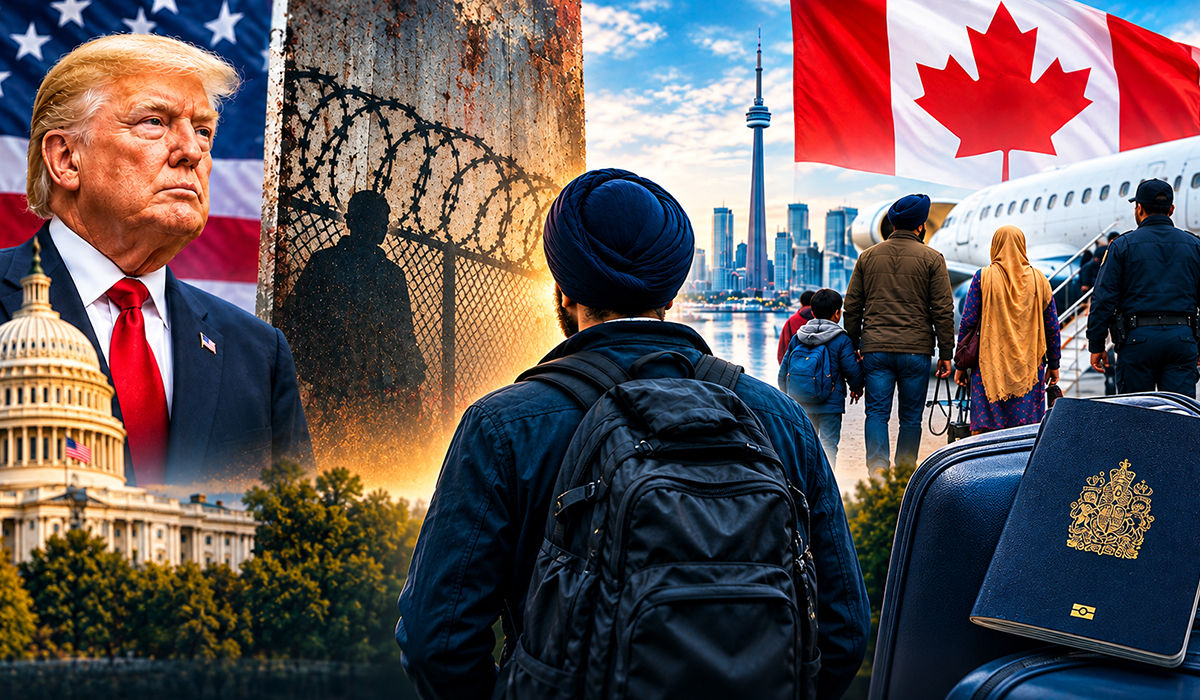

The Dream of Abroad or Preparing for Return? The Tightening Grip on Immigrants in the US and Canada
Amidst the Trump administration’s strict campaign against immigration in the US, a new poster has sparked a fresh controversy. Shared on social media by the US Department of Homeland Security (DHS), this poster is facing severe backlash from Sikh organizations and the Punjabi community.
To promote the ‘self-deportation’ campaign, the department released a poster featuring a warning in the style of the Transformers movie: “Self-deport or find out.” However, the biggest reason for the controversy is another line written on it: “Get off our roads, you don’t know how to drive, Mr. Singh.”
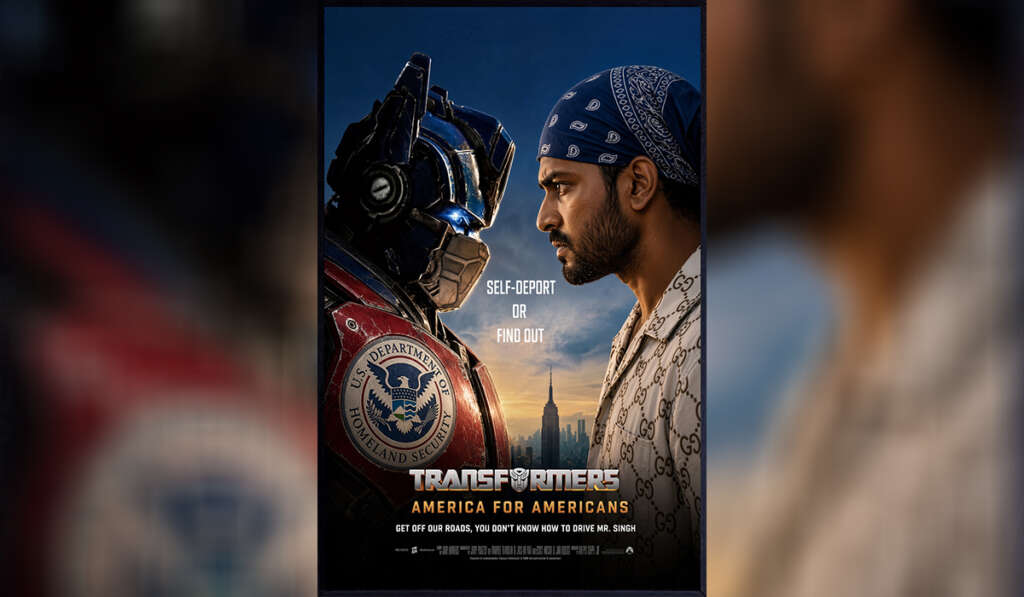
The specific use of the surname ‘Singh’ in the poster has further fueled the anger of the Sikh and Indian-American communities. Sikh organizations allege that this is not merely an immigration policy advertisement, but a message that targets a specific community and promotes racial stereotyping.
This poster, which surfaced amidst the Trump administration’s crackdown on illegal immigration and appeals to ‘voluntarily leave America’, has once again brought the issues of Sikh identity, dignity, and discrimination in the US to the center of discussion.
The root of this controversy is believed to be the line on the poster, “You don’t know how to drive, Mr. Singh.” This comment is being linked to recent road accidents in the US, where in some cases, claims emerged that the truck drivers were undocumented Indian nationals. In light of these incidents, the screening of commercial truck drivers in the US has been intensified, and the Trump administration has further tightened regulations related to Commercial Driver’s Licenses (CDL) and work permits.
However, critics argue that linking a specific surname—especially ‘Singh’—to alleged driving violations is not just a political message, but a clear example of racial and religious profiling. According to them, associating a person’s surname or identity with their professional competence or legal status is tantamount to targeting an entire community.
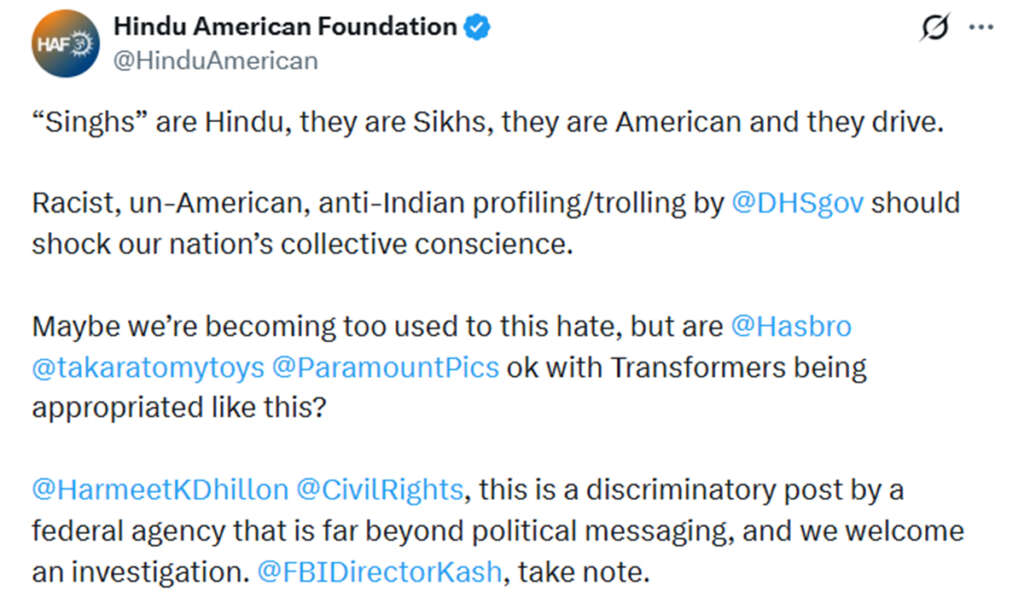
The Hindu American Foundation has also strongly condemned the DHS poster, labeling it as ‘anti-India profiling’. The foundation stated on ‘X’ (formerly Twitter) that people with the surname ‘Singh’ are Hindus, Sikhs, and Americans. Calling the DHS’s comment racist and un-American, the organization has demanded an FBI investigation into the matter. Simultaneously, an appeal has been made to Paramount Pictures, the company associated with the Transformers film, to take notice of this controversy.
It is worth noting that this controversy has erupted at a time when the DHS is promoting its “CBP Home” program. Under this program, eligible undocumented immigrants are asked to register to voluntarily leave the United States. According to the rules, immigrants registering for self-deportation are provided with travel assistance and an “exit bonus” of up to approximately ₹2.2 lakh. This controversial approach was adopted to promote this scheme.
While on one hand, the US administration is urging illegal immigrants to register for voluntary departure and offering travel assistance along with an ‘exit bonus’ of up to ₹2.2 lakh, on the other hand, Canada has deported a Punjabi family back to India after eight years.

Canadian authorities rejected the Punjabi family’s asylum claim and subsequent requests to stay in the country on humanitarian and compassionate grounds. The family originally hails from Jalandhar, Punjab, and had been living in Quebec. They resided in Canada for the past 8 years; both husband and wife were working, paying taxes, and raising their two children.
Harish, who arrived in Canada on a visitor visa in 2018, worked as a truck driver for several years. His wife was also working while raising their 4 and 6-year-old children. He later applied for asylum, stating in his application that he used to run a grocery store in India.
He alleged that the police harassed him under the pressure of a political leader and filed false cases against him. He also claimed that he was illegally detained from August 12 to August 19, 2017, during which he was subjected to severe torture. According to Harish, this experience made him fear for his life and prompted him to seek safety in Canada.
Despite a campaign run by immigrant rights organizations and supporters to stop the deportation, the family was sent back to India.
Harish Kumar, the head of the family, shared that just last week, his wife was detained by the Canada Border Services Agency (CBSA). The family had also applied to stay in Canada on humanitarian grounds, but that was rejected too, after which they sought a judicial review of this decision, which was also dismissed.
Speaking about his situation, Harish’s 14-year-old son Japesh said that he spent his entire childhood in Canada. His friends and acquaintances are all there. Under these circumstances, he fears feeling isolated after returning to India. His 12-year-old younger son Gaulash also mentioned that he is being sent to a country he knows very little about. They added that the two children are being affected the most, as their mindset and lifestyle developed entirely in Canada.
According to an official from the Canada Border Services Agency (CBSA), once a deportation order is issued and a person is detained, the removal process moves forward. Reportedly, the agency has thousands of similar cases and is preparing to deport many of these individuals.
These two incidents have once again highlighted the stark difference between the dream of settling abroad and the changing realities of immigration. From strict immigration policies and controversial statements in the US to deportations in Canada, the challenges facing immigrants are constantly growing. Consequently, for those planning to go abroad, it has become equally important to be fully aware of legal statuses, immigration rules, and changing circumstances, rather than just chasing a dream.


Leave a Comment