
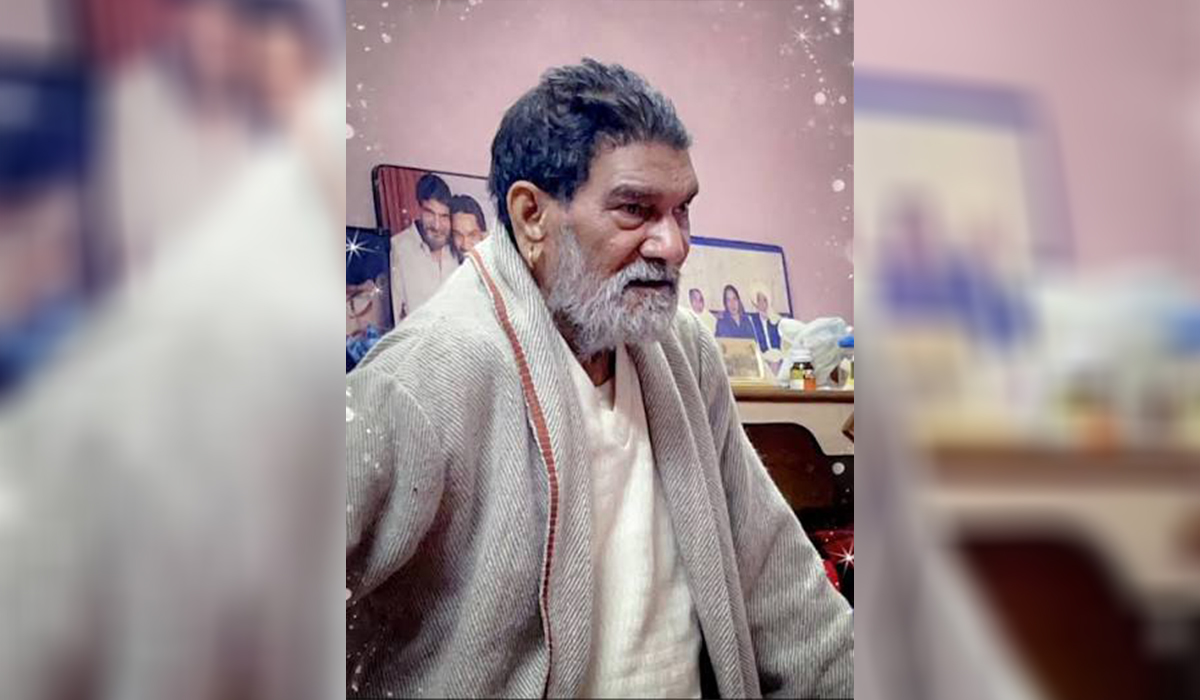

Puran Shahkoti was born on 22 December 1952 in Shahkot, Jalandhar district. His mother’s name was Lajwanti, or Lajo, and his father was Niranjan Das, or Nanju. After Puran’s birth, two more brothers, Mehta and Sagar, were born, but both died. Later came brothers Resham Lal, known as Reshi, Kesham Lal, known as Keshi, and sisters Matti, Chhatti and Fatti. Gradually, Puran Shahkoti became highly skilled in music and singing. He travelled to fairs, gatherings and shrines of pirs and fakirs to sing qawwalis. During these journeys he met Baba Ji of Halti, who possessed deep knowledge of classical music, and began learning from him. While travelling with him, Puran later met Sai Dherian Wale, whose real name was Gurdas. Sai Ji had an eccentric temperament, yet Puran remained with him for around two and a half years. Shahkoti registered his name with the employment exchange. An artist in the Public Relations Department was going on six months’ leave, and Puran was appointed in his place. Within those six months, he presented numerous programmes and established a strong reputation within the department. He received opportunities to perform at prestigious venues and shared stages associated with artists such as Ustad Lal Chand Yamla Jatt, Biba, Bhanwra, Rajan, Surinder Kaur, Ranjana, Swaran Lata, Suresh Kapoor and Chander Kanta. He would sing:
“Meria dhola, tainu Rabb dian rakhan,
Ajj takdian tainu, sare jagg dian akhan.”
And:
“Tere hare khet, tere bhare khet,
Teri kothi de vich dane ne,
Tere rangle mahal vich chahal-pahal,
Tere kamle ajj syane ne.”
One night, it was the final day of the Ram Lila in Model Town, Jalandhar.
The night had grown still. Puran Shahkoti was singing:
“Kithon sikhia fakiran nu satauna,
Mur jogian ne kherin nahion auna,
Moonhon na manda bol, Sehtiye…”
While singing, Shahkoti noticed a white Ambassador car stop behind the crowd. An officer-looking gentleman, his wife and son got out and walked directly towards the stage. Who were they? Shahkoti did not know. They had come there after hearing his voice. The gentleman was Narinder Mohan Bhatia, Director of All India Radio, Jalandhar.
As soon as he arrived, he asked the stage secretary, Didar: “Who is this singer? He sings beautifully. Give him time for one more song.” Didar replied, “We have no time left. The artists for the next scene are already prepared.” Bhatia said, “I am the Radio Director. I really like this artist’s voice. Please, one more song.” Puran Shahkoti was standing behind the curtain and could hear the entire conversation. Eventually, the stage secretary agreed. Puran began singing:
“Mere shauk da nahin aitbaar tainu,
Aa dekh, mera intzaar, aa ja.”
Bhatia Sahib was delighted. He handed Shahkoti a note and asked him to come to the radio station at eleven the next morning. Before this, Shahkoti had made perhaps fifty rounds of the radio station, but no one had ever allowed him inside. Now, remarkably, the head of the station himself had invited him. Puran Shahkoti somehow passed the night in excitement. He stayed that night at Jagat Singh Jagga’s home.
The next morning, Jagga started his car and they reached the radio station, going directly to Bhatia Sahib’s room. After tea, a formal audition was arranged. Puran sang. The Director called other officers and employees into the studio. Ustad Mohan Singh Ji accompanied Shahkoti on the tabla. Perfectly suited to the moment, Puran sang:
“Dunghe painde thalan wale mukde nahin,
Pairin pai gaye ne chhale, hanjhu rukde nahin.”
Within a few days, he was awarded a B-High grade, a category in which leading artists performed. He remained in the B-High grade even later, although declining health in his final years prevented him from travelling to perform for radio and television. Shahkoti Ji used to say that as his programmes began airing on radio, his circle of listeners continued to expand. Bhatia Sahib seemed like an angel to him, someone who had discovered a hidden artist.
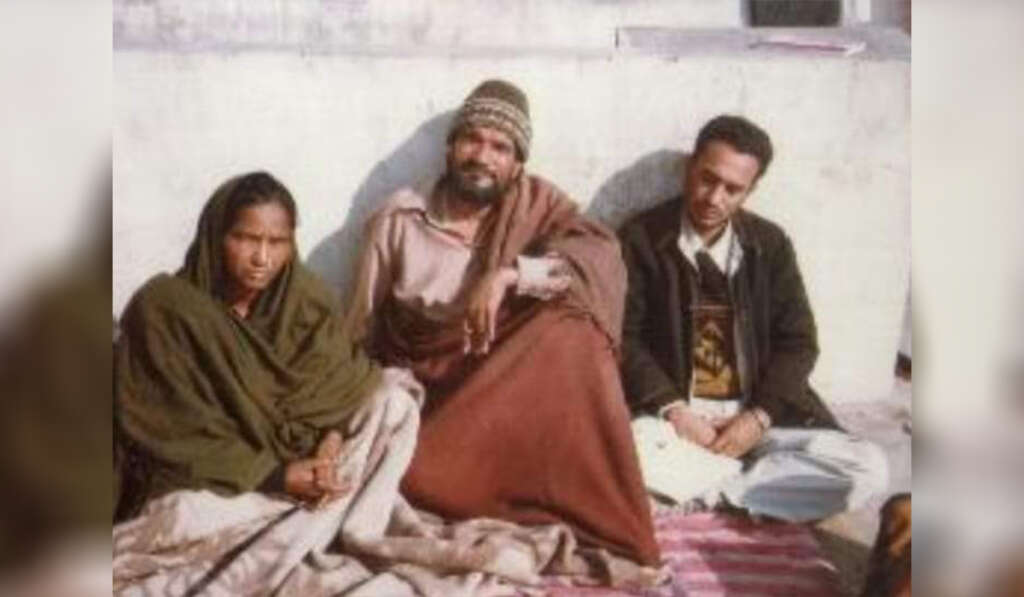
During his musical journey, Shahkoti accepted Ustad Baqar Hussain Khan of the Patiala gharana as his guru. Puran Shahkoti became an ornament of literary gatherings. Sufi poetry sounded so natural in his voice that people began calling him a Sufi singer. From Srinagar Radio, he sang four Gojri songs with Narinder Biba. He also travelled to Bombay to perform during Baisakhi celebrations and received considerable appreciation there. Jagjit Singh, Khayyam Sahib, Sagar Sarhadi, Deepak Parashar and Manmohan Krishna all gave him affection and respect.
At Doordarshan Jalandhar, Prakash Kaur Dhillon began presenting a serial feature based on Waris Shah’s Heer, which continued for around a year and a half.
Mohammed Rafi sang Heer in the programme, Narinder Biba sang it, and so did Puran Shahkoti. It was from here that Shahkoti’s rendition of Heer gained widespread acceptance. By 1980, Puran Shahkoti’s popularity was at its peak.
When a television play based on Nanak Singh’s novel Chitta Lahu was broadcast from Jalandhar Doordarshan, a song written by Jaswant Deed and sung by Puran Shahkoti became widely popular among Punjabis:
“Fakkaran di kulli vich Rabb vasda,
Jag bhaera ainven sanu taane kasda…”
In the same play, Shahkoti also sang:
“Kihne haak maarni si, kehre mur auna si,
Chandre mana tu sanu ainven kyon rulauna si…”
One day Puran Shahkoti decided he wanted his songs recorded on gramophone records and travelled to the HMV office in Delhi. Zaheer Ahmad Zaheer was the director there. After listening to Puran’s Sufi and literary compositions, he gave an awkward laugh and said:
“Who will listen to this kind of singing? Why should the company invest so much money only to lose it? Tell me.”
Puran remained silent. Hurt and deeply disappointed, he picked up his harmonium and turned back without saying a word. For the rest of his life, he abandoned the desire to record gramophone discs.
Meanwhile, Puran Shahkoti increasingly became a subject of discussion in literary circles and developed closer relationships with writers. Once, in the magazine Nagmani, he read some lines written by Devinder Satyarthi:
“Bazian-bazian teevian,
Paun kade na neevian,
Hai o meria Rabba,
Hai o meria Rabba.”
Puran loved them. Years later, when Satyarthi Ji visited the Doordarshan centre, Puran met him and said:
“You should have written complete stanzas. I would have sung them. Now I manage by singing just this much…” And standing there, Shahkoti began singing:
“Hai… o meria Rabba…
Bazian-bazian teevian…”
Satyarthi was so delighted that he could hardly leave Puran’s side. Once, Surjit Rampuri wrote a line to Shahkoti in a letter:
“Gaun valio, shairan de paran utte uddna sikho.”
“Those who sing, learn to fly on the wings of poets.” Puran preserved those words, written in green ink. During an interview at Akashvani Jalandhar, Puran Shahkoti said:
“I am in love with singing. I began by treating art as worship. My life belongs to art. I find joy only in the fullness of art. Even if I die hungry, I will not sing badly.” It is clear that he did not sing for money. Whatever little he earned while singing was enough for him to survive.
Later, of course, Salim transformed the family’s fortunes. He went on to sing many hit songs and also became a playback singer for films. Once I asked Ustad Ji, “Whom do you listen to? What kind of music?” In one breath he named them all:
“I listen to Pandit Jasraj Ji, Begum Parveen Sultana, Bhimsen Joshi. I have tapes of all of them. They are snakes, snakes! Dangerous! “I listen to Hariprasad Chaurasia’s flute and Zakir Khan Sahib’s tabla. Amjad Ali Khan Sahib’s sarod and Pandit Shiv Kumar’s santoor intoxicate my soul. Ustad Bismillah Khan’s shehnai and M. Rajan Biba’s violin…
“Solitude and concentration are also nourishment for me, but I get very little of them. So many people come to steal those things from me. “I search for desperate, wandering artists. I call a beggar walking in the street into my house, serve him, and ask him to sing. If he turns out to be a real artist, I fall at his feet. “I have discovered many artists like that. Such singers are dangerous. They carry rare notes within them. Cruel ones! They can destroy you with music. “Those who beg early in the morning and sing before dawn, I love them. “Let me tell you some lines…”
“Phal neevian rukhan nu lagde,
Simbla tu maan na karin…”
“Naam jap lai nimani jinde meriye,
Ni aukhe vele kam aauga…”
“Pa lai tattian thamman nu jaffian,
Dekhan je tera Ram rakh lu…”
“Sadhe tin hath dharti teri,
Bahutian jagiran valia…”
“Papi hambh gaye sarhian laah ke,
Te Draupadan di patt rakh lai…”
“Words like these… and so much more. Endless.”
When I moved back from Jalandhar to my village in 1999, my meetings with Shahkoti became less frequent. After a long gap, I once went to see him. I had barely begun entering his room when he, sitting on the cot, let out such a loud and prolonged scream that I immediately turned and ran. I was genuinely frightened. Bibi Mathro called after me:
“O son, come back! Come back! Puran won’t say anything to you. He is just in a joyful mood today. That’s why he screamed!”
When I returned, he embraced me and said:
“My son, when I saw you entering the door, I became so happy I could not contain myself. Son, I was sad… terribly sad. The moment I saw you, joy filled me. Where has my child been all this time?
“When my heart becomes happy, I scream. You already know that, son!” And then he began laughing like the villain in some film. Ah, Ustad, what extraordinary colours you carried within you. The memories will keep returning. They will keep tugging at the heart. But Ustad, you will not return.

Leave a Comment