
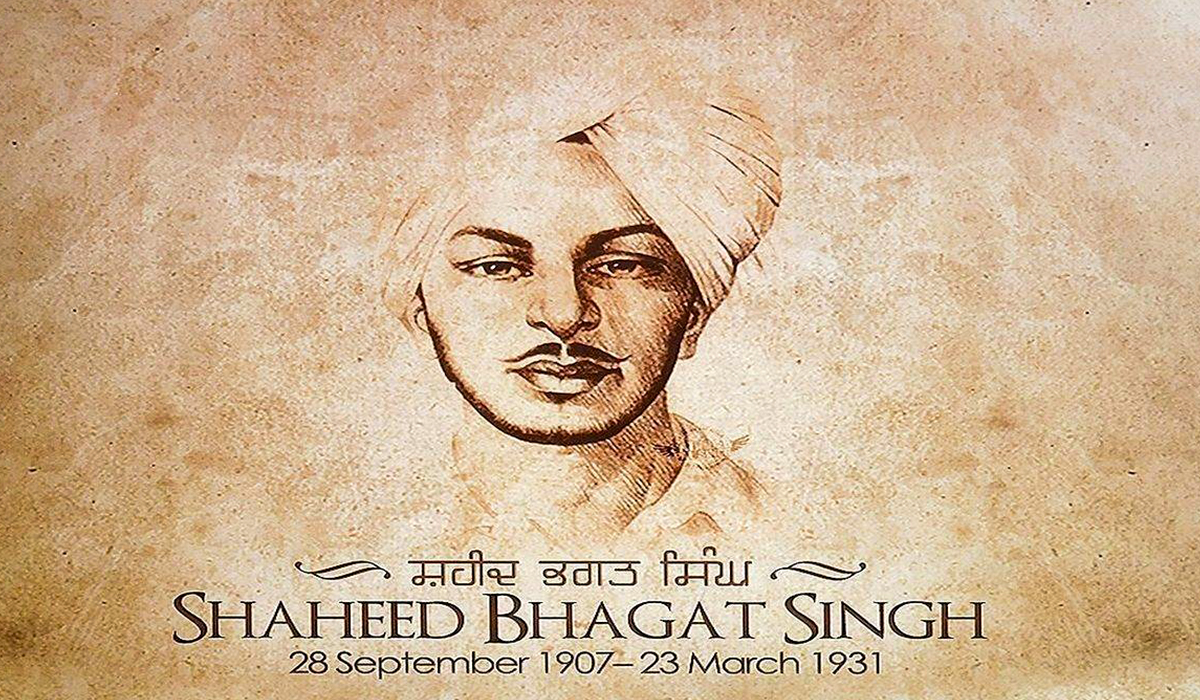

“The love for the homeland will not leave my heart even after death, even my soil will emit the fragrance of loyalty.”
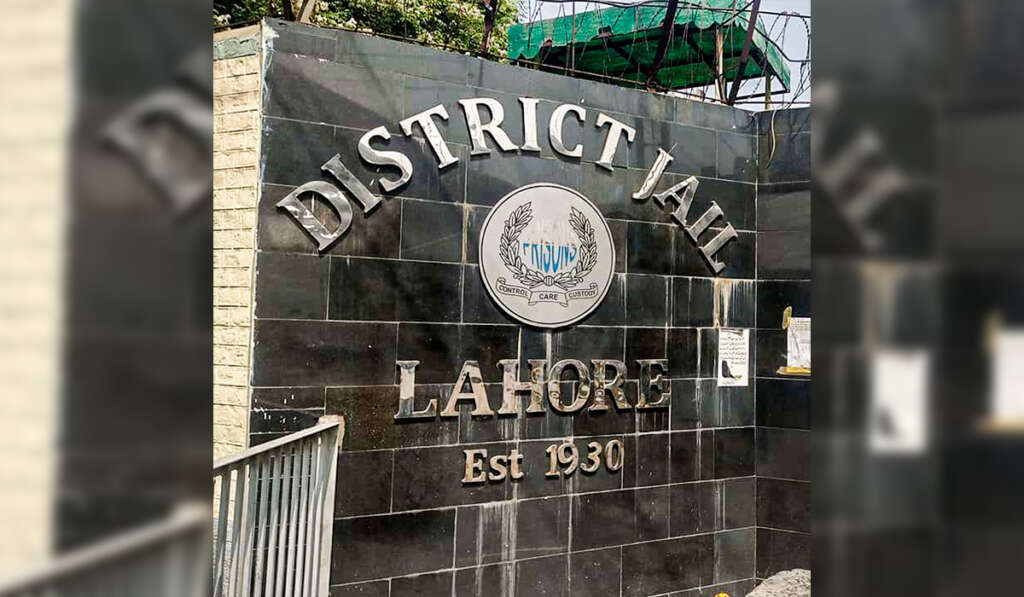
Humming this immortal couplet by Lal Chand ‘Falak’, written in the Lahore jail, the memory of that passionate lover of freedom is refreshed in our minds, for whom the liberation of the country was the greatest purpose of life. His pen was so deeply connected to the emotions of this young man, who happily went to the gallows to free the land of India from the chains of slavery, that whenever he spoke of love, freedom, or justice, the echo of revolution could be heard in his words.
Born on September 28, 1907, in the village of Banga in Lyallpur district (now in Pakistan), in the home of Sardar Kishan Singh and Mata Vidyavati, Bhagat Singh opened his eyes in an enslaved India. The consciousness of patriotism and struggle against British rule already existed in his family. Therefore, from childhood, the idea of the country’s freedom was deeply ingrained in his mind.
The bloody massacre at Jallianwala Bagh left a deep impact on the mind of the young Bhagat Singh. Gradually, he realized that for India’s independence, mere political slogans were not enough; a comprehensive social and ideological change was also needed. This very thought connected him with the revolutionary movement, and moving forward, he became one of the most influential youth icons of India’s independence movement.
Bhagat Singh’s place in the history of India’s independence is unique. He emerges not just as an armed revolutionary, but also as a serious thinker, writer, and an advocate for social change. This aspect of his personality is sometimes buried under the stories of his martyrdom and bravery.
What was the clear difference between the paths of Mahatma Gandhi and Bhagat Singh?
Regarding the method of writing history in India after independence, there has been an ongoing discussion from time to time as to why revolutionary leaders like Bhagat Singh and Subhas Chandra Bose did not receive the same importance in national history as Mahatma Gandhi, Jawaharlal Nehru, and other Congress leaders. This is a subject of historical and ideological debate. In fact, there were different streams present in the freedom struggle, and their methods of struggle, political goals, and social perspectives were also different.
In this context, a clear difference is visible between the paths of Mahatma Gandhi and Bhagat Singh. Gandhi considered non-violent mass movements and Satyagraha as the main weapons of struggle, whereas Bhagat Singh and his comrades adopted revolutionary actions as a means of protest against the British Raj. Bhagat Singh’s view was that intense political action was needed to awaken the people and make their voices reach the rulers.
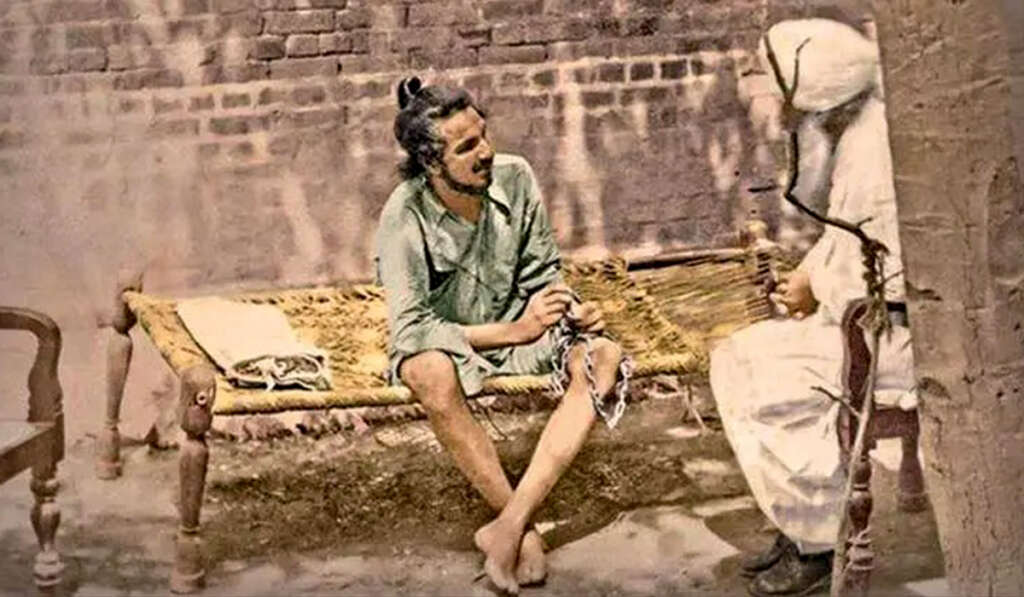
The incident of throwing bombs in the Central Legislative Assembly should be understood in this context. Bhagat Singh and Batukeshwar Dutt threw bombs in a place where their objective was not to cause mass casualties, but to register their protest. After this, instead of fleeing, both remained ready to offer their arrest. Bhagat Singh also made the court a platform for the propagation of his ideas.
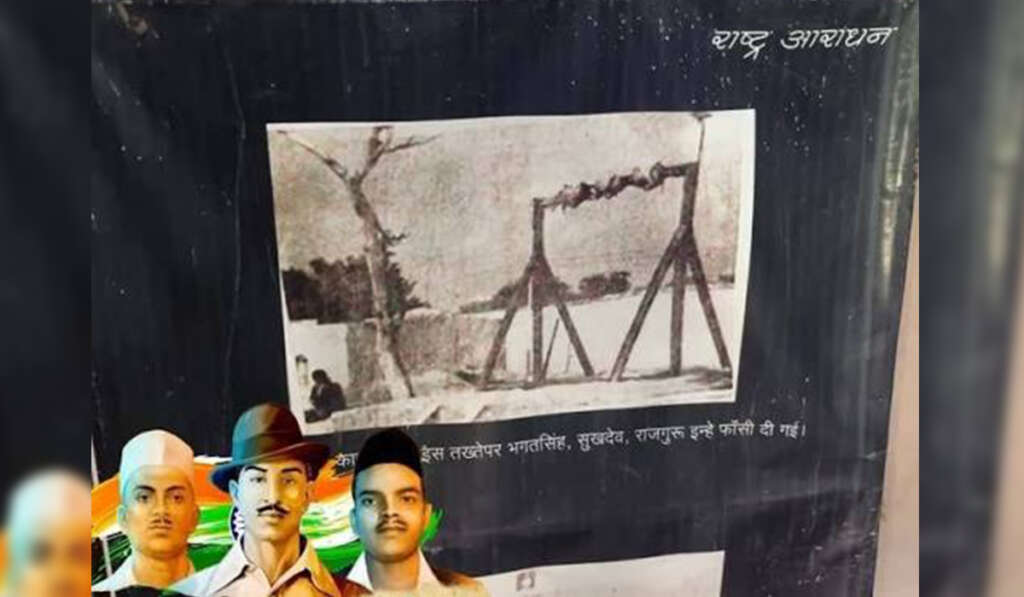
In the Lahore Conspiracy Case, Bhagat Singh, Sukhdev, and Rajguru were sentenced to death. On March 23, 1931, all three were hanged in Lahore jail. At that time, Bhagat Singh’s popularity among Indian youth had grown immensely. His martyrdom turned him into a symbol whose echo can still be heard today in the political and cultural consciousness of Punjab and India.
Bhagat Singh’s Revolution: Not just a change of rule, but a change of society
To view Bhagat Singh solely in association with pistols and bombs is to greatly diminish his ideology. His thought evolved with time. In his early youth, where he joined the revolutionary movement challenging British rule through armed struggle, later on, his ideology moved more clearly towards socialism, scientific thinking, rationality, and human equality.
For him, revolution did not merely mean changing the ruler. He wanted a society where exploitation, inequality, and the exploitation of man by man would end. This thought emerges repeatedly in his writings that if native rulers replace foreign rulers, but laborers, farmers, and common people continue to be victims of economic and social exploitation, then the purpose of freedom remains unfulfilled.
Therefore, Bhagat Singh’s ideology can be understood as a quest for social and economic equality along with political freedom. He was against casteism, religious fanaticism, and superstition. His essay ‘Why I Am an Atheist’ expresses logic, the freedom to question, and the courage to test one’s own ideas.
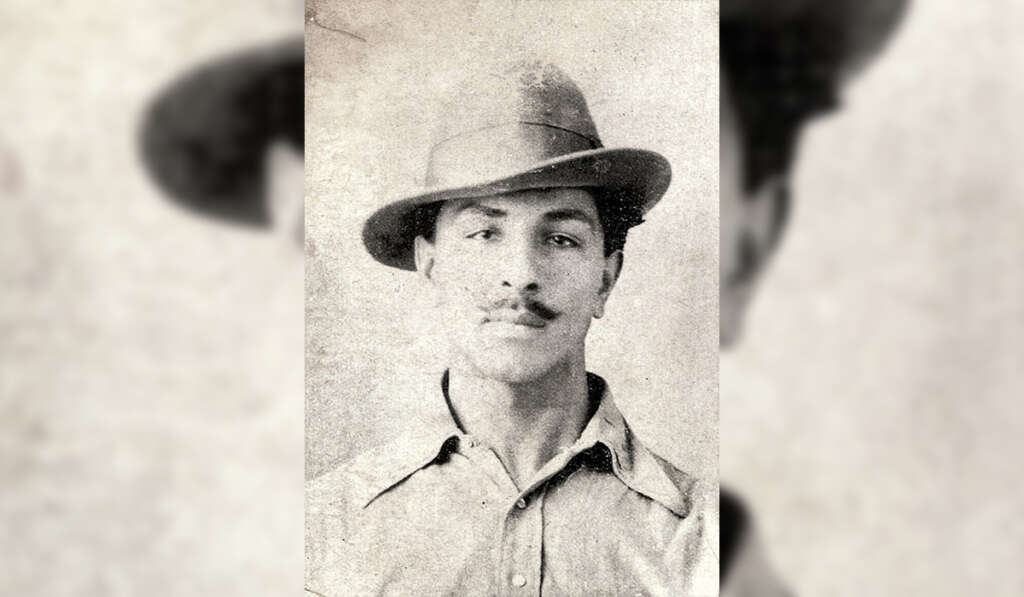
“The sword of revolution is sharpened on the whetstone of ideas!” – Bhagat Singh
Similarly, his famous quote “The sword of revolution is sharpened on the whetstone of ideas” shows that revolution is born not only with weapons, but also with ideas. For him, reading, thinking, reasoning, and creating consciousness among the people was a crucial part of the struggle. To understand Bhagat Singh’s relevance, rather than making a direct comparison between his time and today’s time, it is more appropriate to view his fundamental principles of equality, rationality, secularism, worker-peasant welfare, and social justice in conjunction with today’s challenges.
After the 1990s, the policies of liberalization, privatization, and globalization changed the face of the economy in India. The role of the private sector increased in many areas, and changes also occurred in the role of the public sector. Supporters of these policies link them to economic development, investment, and competition, while critics argue that they have increased income and wealth inequality and harmed employment security. This debate can be understood in the context of Bhagat Singh’s ideas of economic equality.
Today, for the younger generation of India, employment, skills, quality education, and economic security are major issues. Despite acquiring higher education, many youths are searching for employment according to their qualifications. The migration of youth from villages to cities and abroad is also linked to this broader economic challenge.
Bhagat Singh’s life is also important in the sense that he dedicated his youth not just for personal success, but to think about the future of society and the country. Today, his relevance lies in the fact that youth should not only look for employment opportunities but also develop rational thinking about the problems of their society, democracy, and country.
Democratic Rights, Freedom to Disagree, Communalism, and Social Unity
Another important aspect of Bhagat Singh’s life is the right to disagree. He spoke openly against the policies of the British Raj and also paid the price for his ideas. Today, the strength of any democracy is also measured by how much freedom people have there to ask questions, criticize, and express their views peacefully.
In this context, Bhagat Singh’s legacy reminds us of the importance of reason and dialogue. Maintaining a dialogue with people of different opinions despite disagreement is a fundamental requirement of democracy. Bhagat Singh was against the politics of religious division. In his writings, the thought of seeing human beings as humans above religion, caste, and other identities is evident. Today, when tension can arise in society on the basis of religion, caste, and language, this thought of his becomes even more important.
In a highly diverse country like India, social unity is not just a slogan, but a necessity for democracy. Maintaining harmony and mutual respect among people of different religions, languages, castes, and regions is essential for the strength of the country. Shaheed Bhagat Singh’s greatest contribution was his hope towards the youth. He proved at a young age that age does not determine the depth of ideas and the limit of courage.
His struggle teaches us that mere slogans are not enough for change in any society. For this, there is a need to read, understand, question, and raise one’s voice in a democratic manner. Rather than limiting his legacy only to posters, statues, and events, it is much more important to read his writings and ideas.
Remembering Bhagat Singh today can mean that we study his writings and ideas. Encourage scientific and rational thinking. Avoid hatred based on caste, religion, and sect. Engage in dialogue on issues of social and economic equality. Understand the issues connected to laborers, farmers, students, and the youth. Value the right to disagree and express ideas in a democracy.
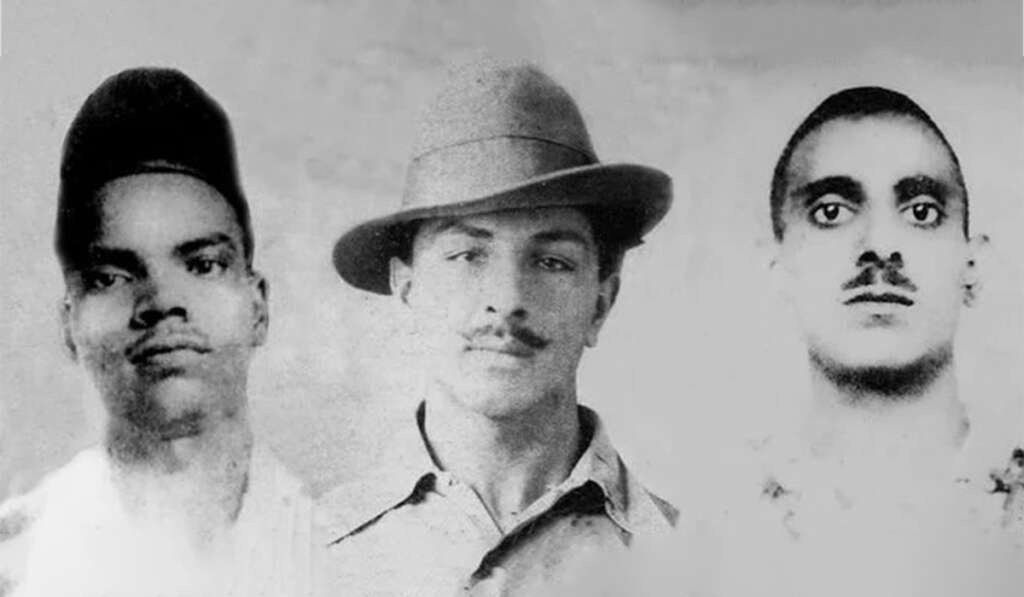
Shaheed-e-Azam Bhagat Singh is not just a historical figure, but such a symbolic personality of the Indian freedom struggle whose legacy every generation reinterprets in the context of the challenges of its time. His martyrdom reminds us of the countless sacrifices made for the freedom of the country, while his writings force us to think about what the real meaning of freedom is. For Bhagat Singh, freedom was not merely liberation from foreign rule. In his ideology, the meaning of freedom was also linked to equality, social justice, rationality, and human dignity. That is why his relevance cannot be limited merely to March 23 or September 28.
Today, when the youth are struggling with unemployment, education, migration, and worries about the future; when questions of economic inequality and division exist in society; and when the importance of dialogue, tolerance, and disagreement in democracy is being discussed, then Bhagat Singh’s ideas make us feel the need to read and understand them again.
A true tribute to him is not merely offering flowers to his portrait, but to read and understand his thinking, and to think rationally about the problems of our times. The message of his martyrdom reminds us that the future of any society is connected to the consciousness, courage, and responsibility of its youth.
Leave a Comment