
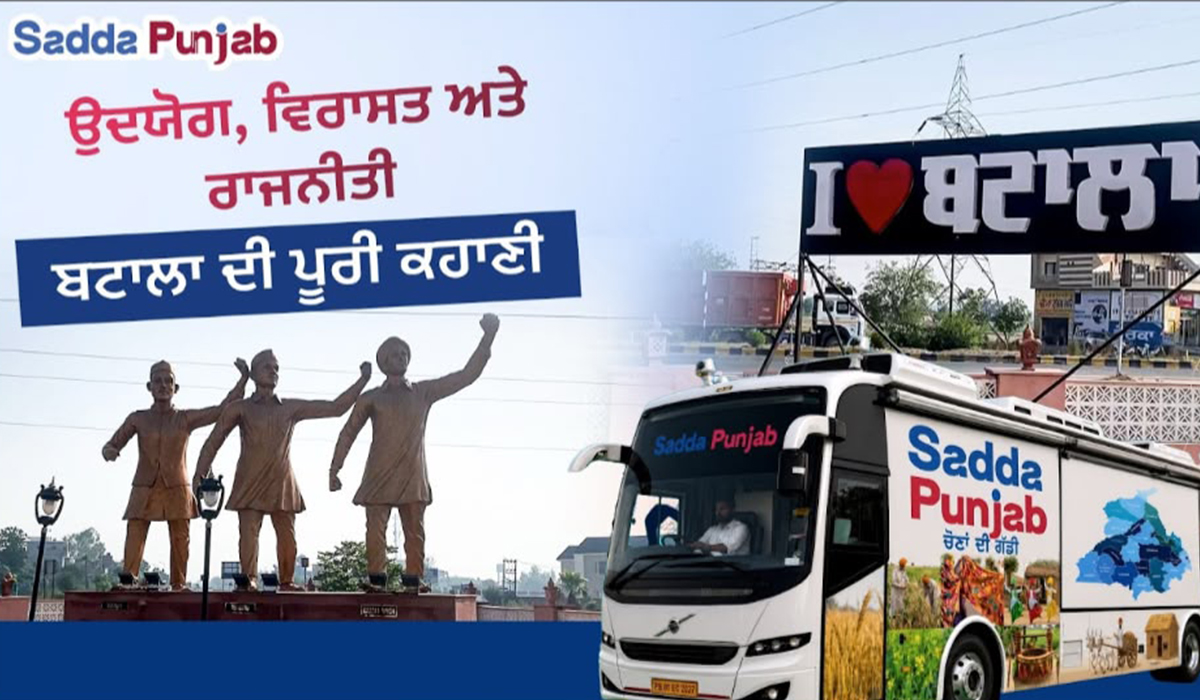

Some cities in Punjab are known for their historical heritage, while others are famous for their industrial identity. But Batala in Gurdaspur district is one such city where many shades of religious history, industrial heritage, agriculture, and politics are seen together. The story of Assembly Constituency Number 7 Batala is also associated with these diverse identities.
Gurdwara Kandh Sahib holds a special place in the religious and cultural identity of Batala. This Gurdwara is associated with the historical memory of the marriage of Sri Guru Nanak Dev Ji and Bibi Sulakhani Ji. Along with this, the nearby historic Achaleshwar Dham is also an important part of the area’s religious heritage. These places give Batala not just the identity of a city, but a unique identity linked to the history and culture of Punjab.

From industrial heritage to employment expectations
Batala’s identity has not been limited to religious places alone. This city has long been known for manufacturing iron goods, machinery, and agricultural implements. Small and large industries here strengthened the city’s economy and created employment opportunities for thousands of people.
There was a time when Batala had a special identity due to its machinery and foundry industry. By the 1980s, there is mention of having more than 2,000 iron foundries and machinery-related factories here. However, along with changing industrial conditions, business, industry, and employment are still important issues in this area today.
Along with the city’s markets, small businesses, and industrial units, agriculture in the surrounding villages is also an important part of the economy of this constituency. Thus, Batala represents a blend of urban and rural life.
Assembly constituency with urban voters
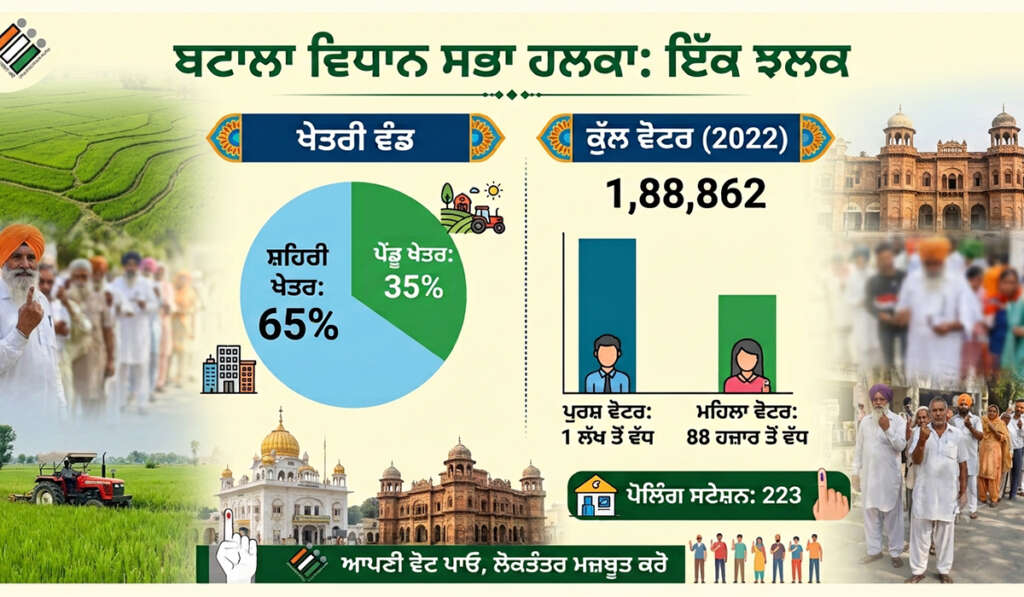
Batala is an assembly constituency with a more urban character compared to many of its surrounding rural constituencies. According to available estimates, about 65 percent of its area is urban and 35 percent is rural.
According to 2022 statistics, there were a total of 1,88,862 registered voters in the constituency. These included more than one lakh male and over 88 thousand female voters. At that time, there were a total of 223 polling stations in the constituency.
The needs of urban traders, industrial workers, youth, and rural farmers are different. That is why issues related to employment, the state of industries, roads, basic amenities, and agriculture become part of the electoral discourse in Batala.
Batala’s politics: From Congress dominance to multi-cornered contests
The political story of Batala has been changing over many decades. In the initial years after independence, the Congress maintained a strong hold here. The victory of the Congress in four consecutive elections from 1952 to 1967 is proof of this.
But in the 1969 elections, the Bharatiya Jana Sangh challenged this political dominance by registering a victory. After this, the contest between different parties increased in Batala. Sometimes the Congress made a comeback, sometimes the Janata Party won, and later the Bharatiya Janata Party (BJP) also registered a strong presence.
Consecutive victories of BJP’s Jagdish Sahni in 1992 and 1997 showed the party’s political grip. On the other hand, Congress’s Ashwani Sekhri emerged as a prominent face in Batala’s politics. Sekhri won in 2002, while Jagdish Sahni won again for the BJP in 2007. In 2012, Ashwani Sekhri again made a comeback in the constituency on a Congress ticket.
2017’s close contest and 2022’s major political shift
The contest in Batala in the 2017 assembly elections was extremely interesting. Lakhbir Singh Lodhinangal of the Shiromani Akali Dal defeated Ashwani Sekhri of the Congress by a margin of just 485 votes. This result showed how close the voters’ decision could be in Batala.
But in the 2022 elections, the political picture of the constituency changed completely. Amansher Singh Sherry Kalsi of the Aam Aadmi Party registered a massive victory. He got 55,570 votes, while Ashwani Sekhri of the Congress got 27,098 votes.
Sherry Kalsi defeated Sekhri by a huge margin of 28,472 votes. In terms of vote share as well, Sherry Kalsi led with 43.79 percent, while Ashwani Sekhri’s vote share was 21.36 percent.
A margin of only 485 votes in 2017 and a victory by 28,472 votes in 2022—both these results are important for understanding the changing political trends in Batala. They also raise the question of whether the wave in favor of the Aam Aadmi Party in 2022 was a one-time political change or a major shift in voter preference.
Voters’ expectations and the challenge of the next election
Election results do not just present a picture of winning and losing candidates. Behind them are also the expectations of the people, local issues, and development-related needs.
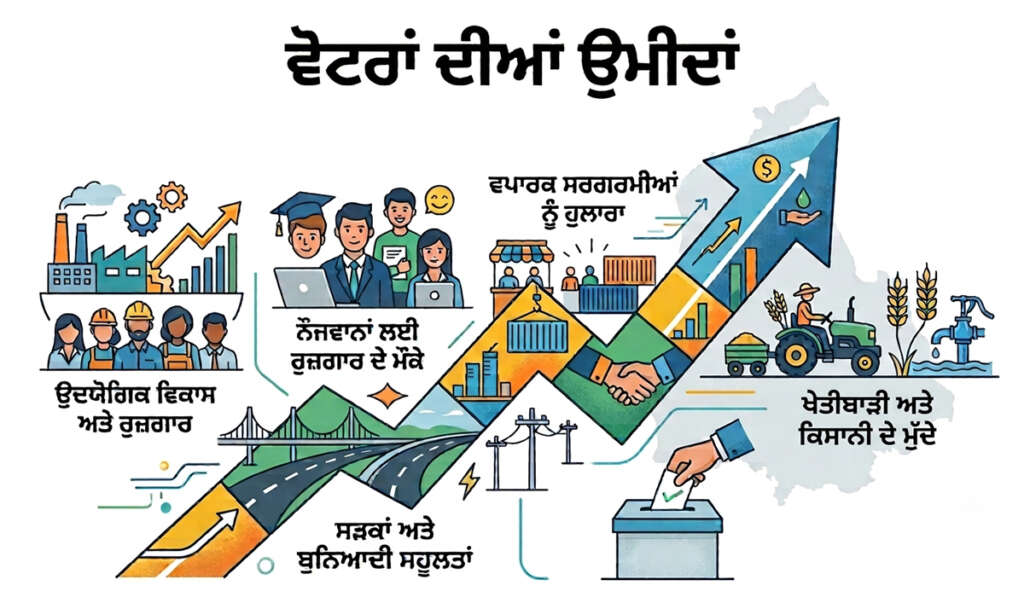
In a city like Batala, industrial development and the restoration of employment hold special significance. Along with this, employment opportunities for the youth, a boost to commercial activities, roads, and other basic amenities are also issues linked to the people’s expectations. Problems related to agriculture and farming in rural areas are also important.
In the next assembly elections, it will be interesting to see how effective the major political change of 2022 remains and on the basis of which issues voters make their decision.
Two interesting facts related to Batala
Batala’s industrial identity has been so strong that it was once specially known for its machinery and iron industries. The foundries and machinery units here gave the city a distinct place on the industrial map.
Apart from this, Batala also has a deep connection with Punjabi literature. The famous Punjabi poet Shiv Kumar Batalvi was born in Bara Pind, Sialkot district, but Batala remained deeply connected to his life and literary identity. His poetry gave a unique voice to separation, love, and human emotions in Punjabi literature.
Batala is thus a shared symbol of religious heritage, industrial history, Punjabi literature, and changing politics. The story of this constituency is not just limited to electoral statistics but is also tied to the hopes that people hold for their city and future.


Leave a Comment