
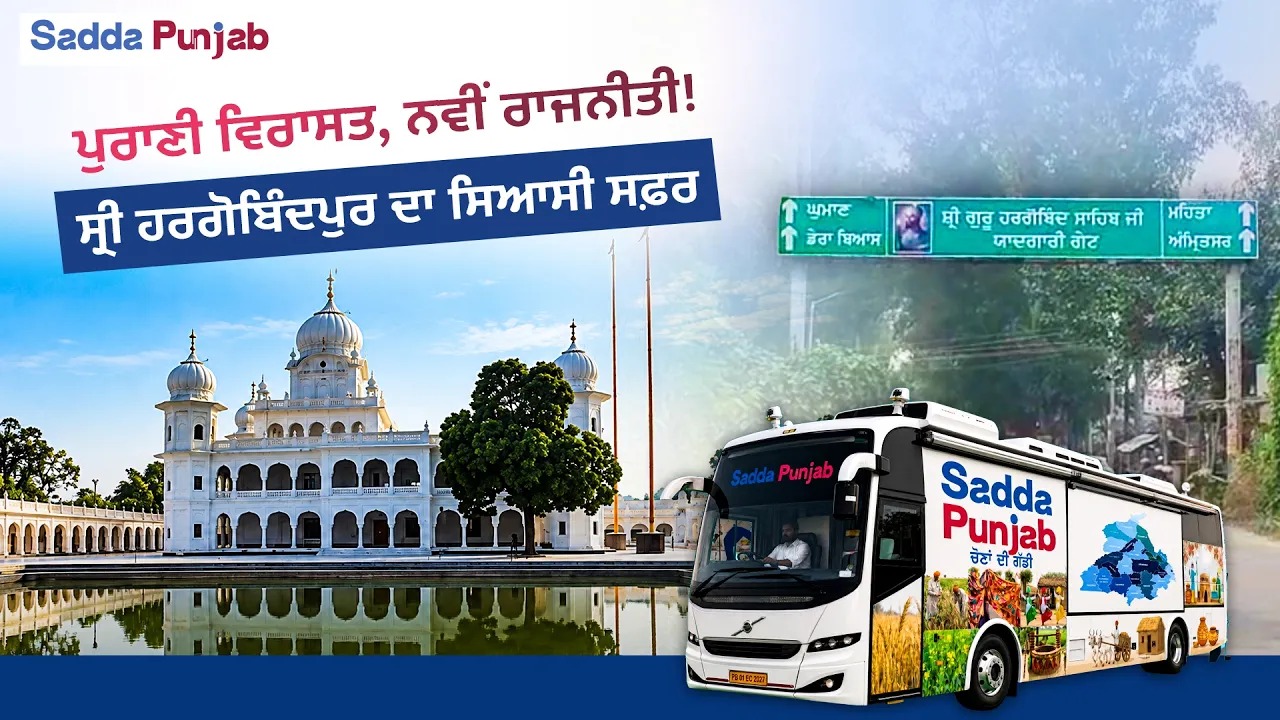

Some assembly constituencies of Punjab are identified by their politics, while to understand the story of some constituencies, it is necessary to understand their historical heritage, geography, and the lives of the people. Sri Hargobindpur Sahib is one such constituency, where centuries-old religious heritage, along with rural life and changing political equations, creates its unique identity.
Historical heritage associated with the Gurus
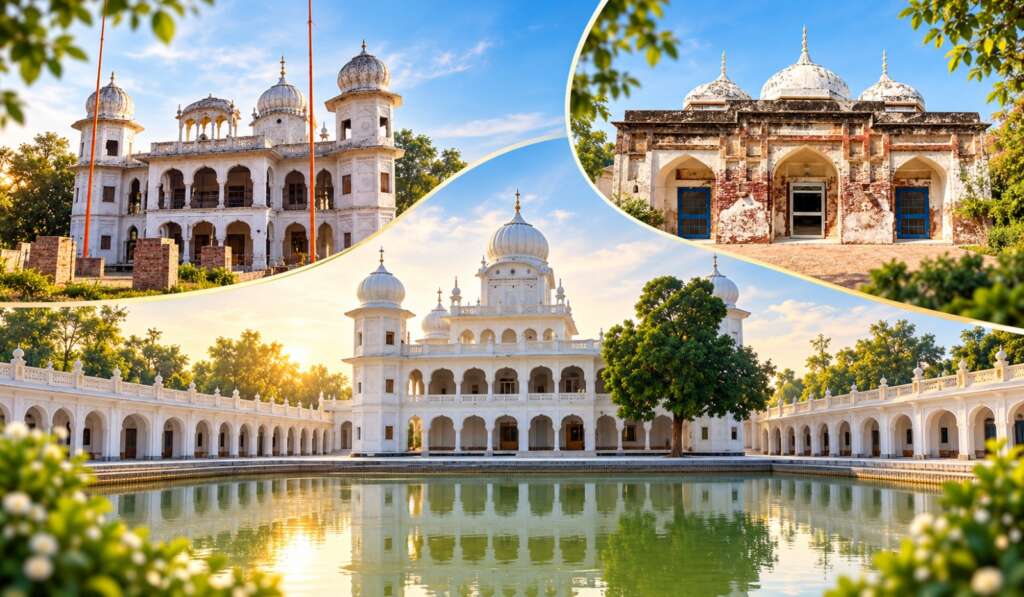
The history of Sri Hargobindpur is deeply connected with the Sikh Gurus. According to historical tradition, Sri Guru Arjan Dev Ji established a settlement here in 1595. Later, it was named Sri Hargobindpur after Sri Guru Hargobind Sahib Ji.
The Guru Ki Maseet situated here is also an important part of the historical heritage of this area. This place preserves the memories of religious harmony and Sikh history.
But the identity of Sri Hargobindpur is not limited to its heritage alone. This constituency is also known for its rural structure and life connected with agriculture.
Importance of agriculture and rural life
Sri Hargobindpur Assembly constituency is reserved for Scheduled Castes. The economy of a large part of this constituency depends on villages and agriculture. Along with farming, agricultural labor and small businesses are also important sources of livelihood for the local people.
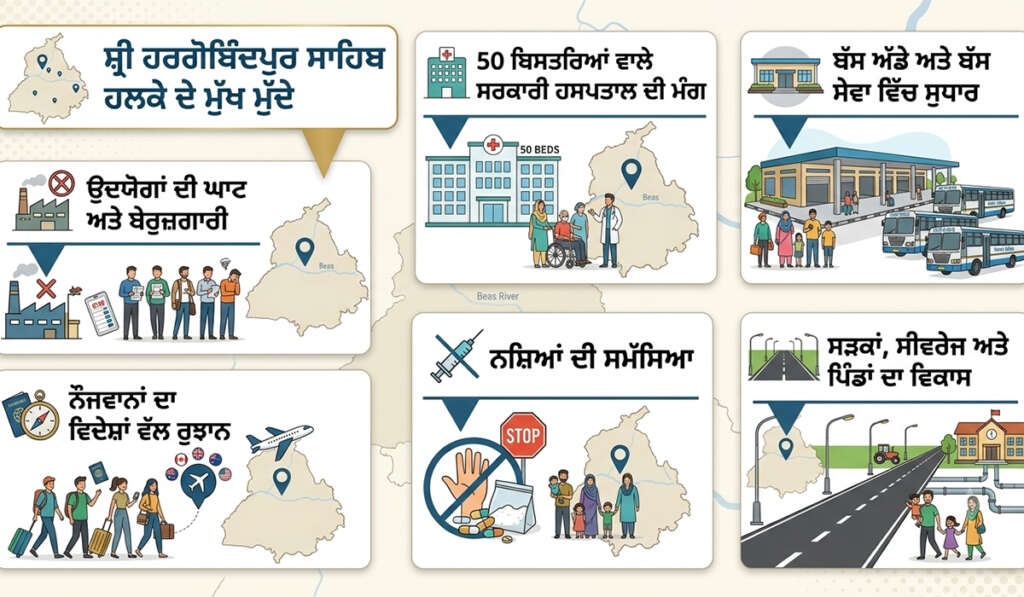
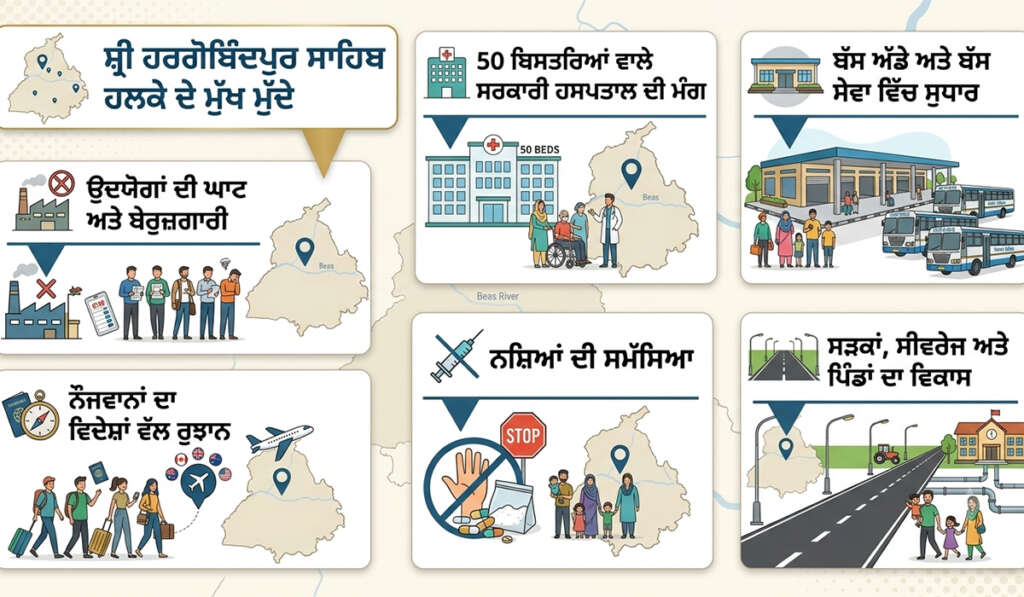
That is why subjects like agriculture, laborers’ income, employment opportunities, roads, health facilities, and other basic amenities are crucial for understanding the local needs of this constituency.
Number of voters and participation in elections
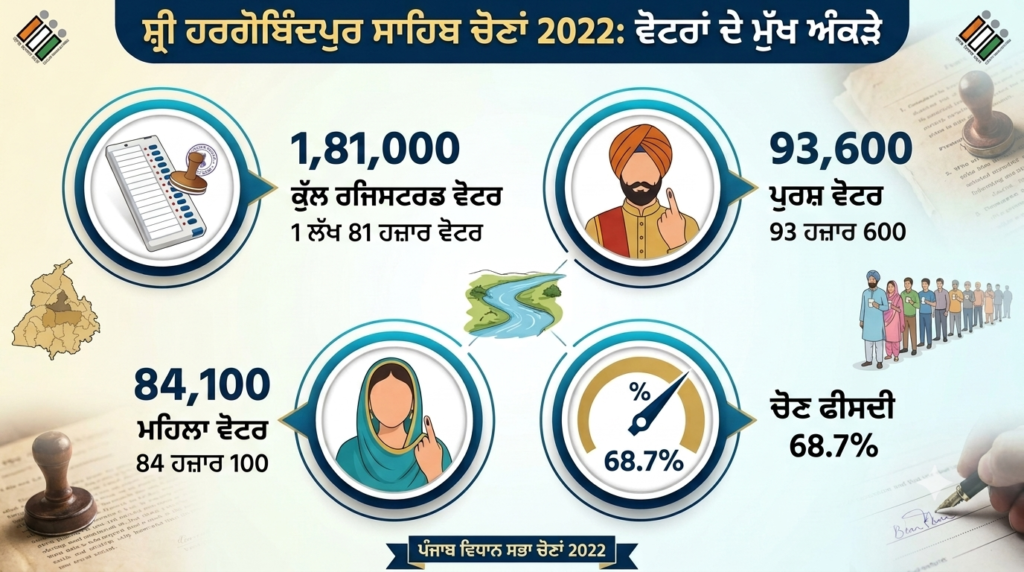
According to available data from the 2022 assembly elections, there were approximately 1.81 lakh registered voters in the Sri Hargobindpur constituency. These included about 93,600 male and 84,100 female voters.
In this election, the total voter turnout was recorded at approximately 68.69 percent. Mentioning that the turnout rate of female voters was higher than that of males is also important to understand the electoral picture of this constituency. However, for an accurate comparison regarding this, it is necessary to look at the official figures of the separate turnout rates of men and women.
From the influence of Akali Dal to the victory of Aam Aadmi Party
The politics of Sri Hargobindpur has gone through several changes over the past few decades. For a long time, this constituency was counted among the areas under the influence of the Shiromani Akali Dal, but the election results also showed the changing preferences of the voters from time to time.
In the 1992 assembly elections, Gurnam Singh of the Communist Party of India (CPI) won. After this, from 1997 to 2012, the Akali Dal once again strengthened its political grip.
Captain Balbir Singh Bath won three consecutive elections, while Des Raj Dhugga continued the Akali Dal’s winning streak in 2012.
In the 2017 elections, Balwinder Singh Laddi of the Congress won and changed the political equations. Following this, Amarpal Singh of the Aam Aadmi Party won the 2022 elections.
According to the 2022 election results, Amarpal Singh received 53,205 votes. Rajanbir Singh of the Shiromani Akali Dal got 36,242 votes, and Mandeep Singh Rangar Nangal of the Congress received 24,563 votes. Thus, the Aam Aadmi Party candidate registered a victory by a margin of 16,963 votes.
These election results show that the position of political parties in Sri Hargobindpur has been changing over time. However, to understand the role of voter preferences and local issues behind these changes, it is also necessary to study the needs and expectations of the people alongside the election results.
Changing identity of the constituency
The delimitation of 2008 also played an important role in the political and administrative identity of Sri Hargobindpur. Before the delimitation, this was a general seat, but after the new delimitation, it was reserved for Scheduled Castes. This change altered the electoral identity of the constituency.
Along with this, the rural structure of Sri Hargobindpur makes it a constituency deeply connected with the rural life of Punjab. However, confirmation from relevant official statistics is needed to state the exact percentage of its rural population.



Leave a Comment