

Delhi minister Kapil Mishra levels allegations against AAP; 4,459 incidents of stubble burning recorded in Punjab according to CAQM.
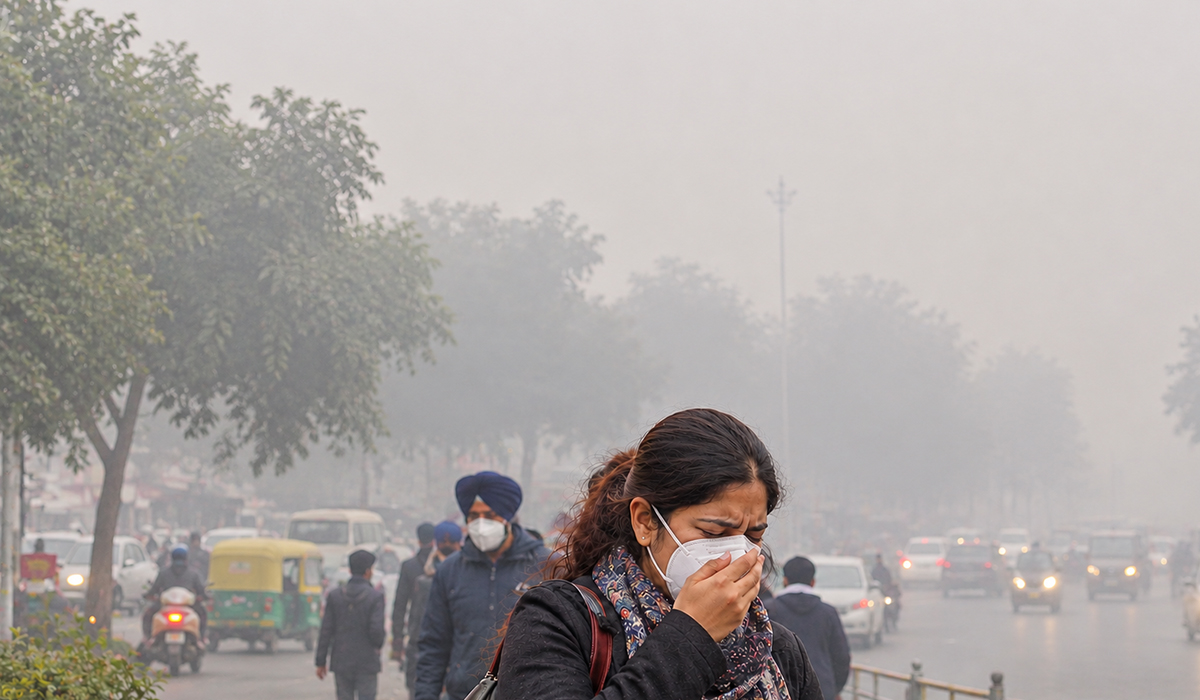
The issue of air pollution in Punjab and Delhi is once again in the spotlight after Diwali. In many cities of Punjab, air quality has deteriorated from poor to severe levels. The AQI in Mandi Gobindgarh was recorded at 445, while Delhi’s average AQI also reached 335. Meanwhile, political rhetoric between the Delhi and Punjab governments over stubble-burning incidents has also intensified.
Allegations of a conspiracy to set fire to Punjab’s fields
Delhi Cabinet Minister Kapil Mishra has accused the Aam Aadmi Party (AAP) of hatching a conspiracy to deliberately set fields on fire in Punjab on Diwali evening. He claimed that from November 5 to 7, about 125 incidents of stubble burning were being recorded daily in Punjab, but on November 8, this number increased to nearly 1,200.
According to Mishra, while farmers were celebrating Diwali with their families, some unidentified people went to the fields, set the stubble on fire, and fled. He demanded the Punjab government register an FIR regarding these incidents and investigate the phone records of AAP leaders. However, these are allegations made by Mishra, and no independent confirmation has emerged.
He also said that farmers and people celebrating Diwali should not be viewed as opponents in tackling pollution.
AQI 445 in Mandi Gobindgarh, air poor in many cities
The severity of the pollution situation in Punjab can be gauged from the AQI of Mandi Gobindgarh. According to the Central Pollution Control Board (CPCB), an AQI of 445 was recorded here on Sunday, which falls in the ‘severe’ category. Earlier on November 6, this figure was 319.
Before Diwali, on November 7, the air in many cities was also recorded as poor. The AQI was 281 in Ludhiana, 260 in Jalandhar, 249 in Khanna, and 184 in Patiala. Air quality in Amritsar was in the ‘very poor’ category.
Despite the time limit set for Diwali night, firecrackers were burst until midnight in many urban areas. This caused smoke to spread across residential areas and streets. Apart from the smoke from firecrackers, stubble burning, vehicular emissions, dust from construction activities, and garbage burning are also being counted among the main causes of pollution.
4,459 incidents of stubble burning in Punjab
According to the Commission for Air Quality Management (CAQM) report up to November 8, a total of 4,459 incidents of stubble burning have been recorded in Punjab. Out of these, a physical verification was conducted at 2,998 locations, and evidence of stubble burning was found at 1,310 places.
According to the report, environmental compensation of Rs 62.55 lakh was imposed in 1,228 cases, out of which Rs 32.60 lakh has been recovered. Apart from this, 884 FIRs were registered under Section 223 of the BNS, and red entries were made in the land records of 1,017 farms.
In district-wise figures, Tarn Taran is at the top with 654 cases. This is followed by 592 incidents in Ferozepur, 488 in Sangrur, 406 in Bathinda, and 288 in Patiala.
People’s health also affected in villages
The impact of pollution is not limited to cities. Due to the smoke from stubble, children and the elderly in rural areas are also facing difficulties. According to Malerkotla-based entrepreneur Naseem Anwar Khan, people in villages have to live in smoke and smog for about two weeks every year during the stubble-burning season.
Another concern in this matter is the lack of arrangements for measuring air quality in rural areas. According to Punjab Pollution Control Board officials, monitoring equipment could not be installed in villages due to a lack of funds, making it difficult to ascertain the actual level of pollution in these areas.
Delhi’s AQI also in the ‘very poor’ category
Meanwhile, according to the CPCB, Delhi’s average AQI was recorded at 335 at 7 AM on Monday, which is in the ‘very poor’ category. In many areas, including Jahangirpuri, Chandni Chowk, and Mundka, the AQI remained above 400 and the air was recorded in the ‘severe’ category. Due to dense fog and smoke, visibility also decreased in many parts of the capital.
The rising pollution in Punjab and Delhi is once again highlighting the need to control stubble burning, firecrackers, and other pollution sources. Along with this, regular air monitoring in rural areas and protecting the health of children, the elderly, and people suffering from respiratory diseases remain key issues.


Leave a Comment